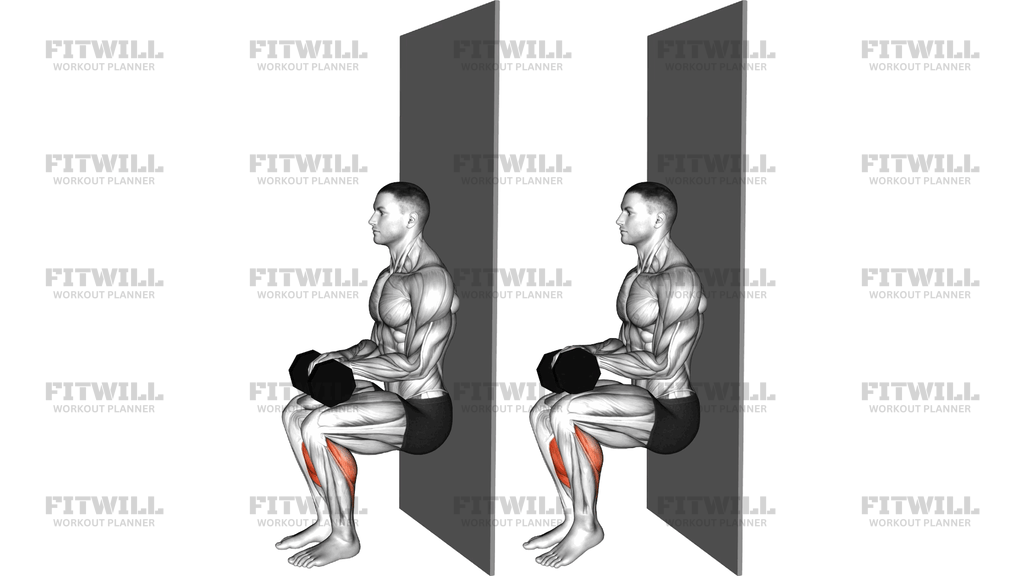
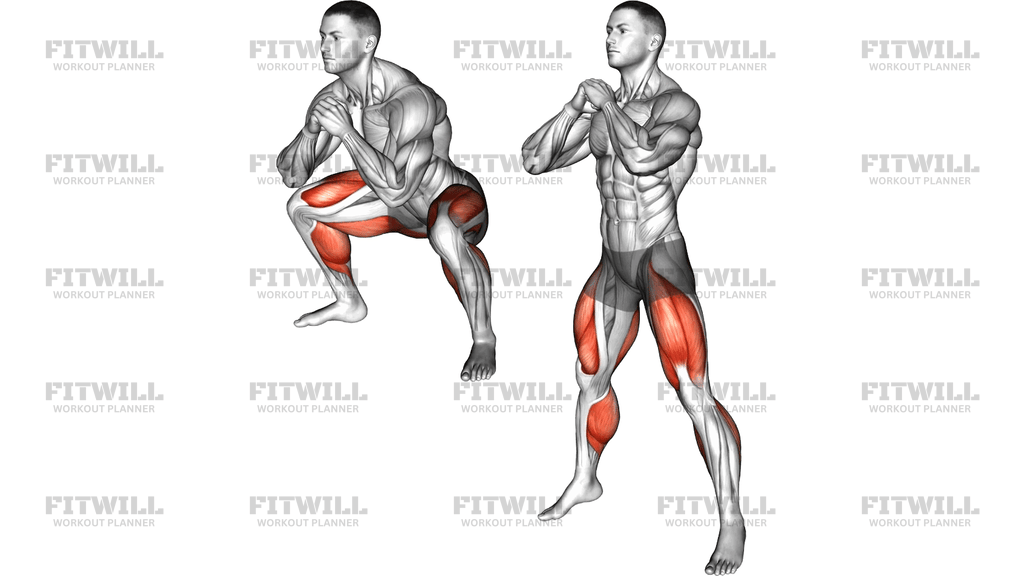
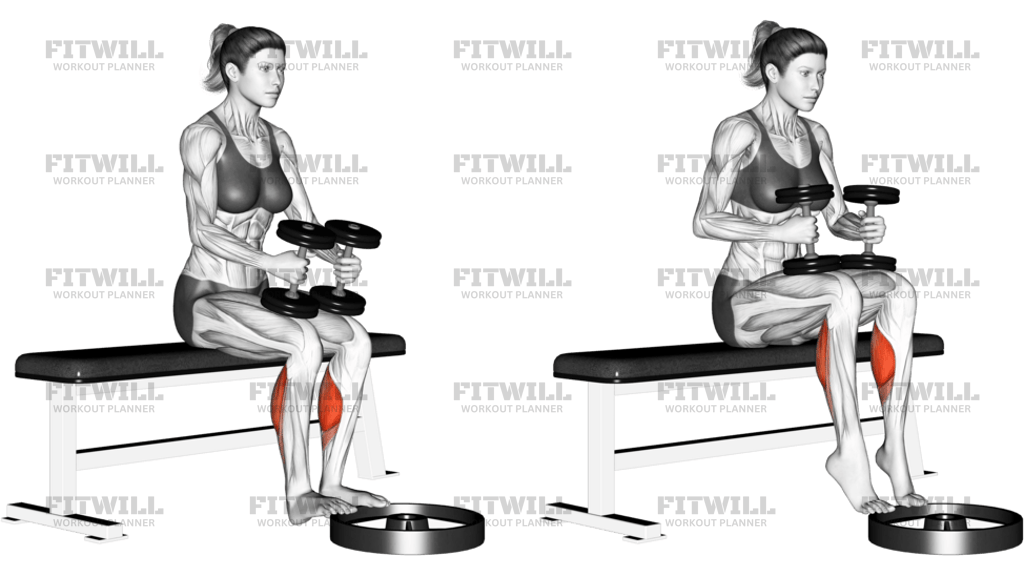
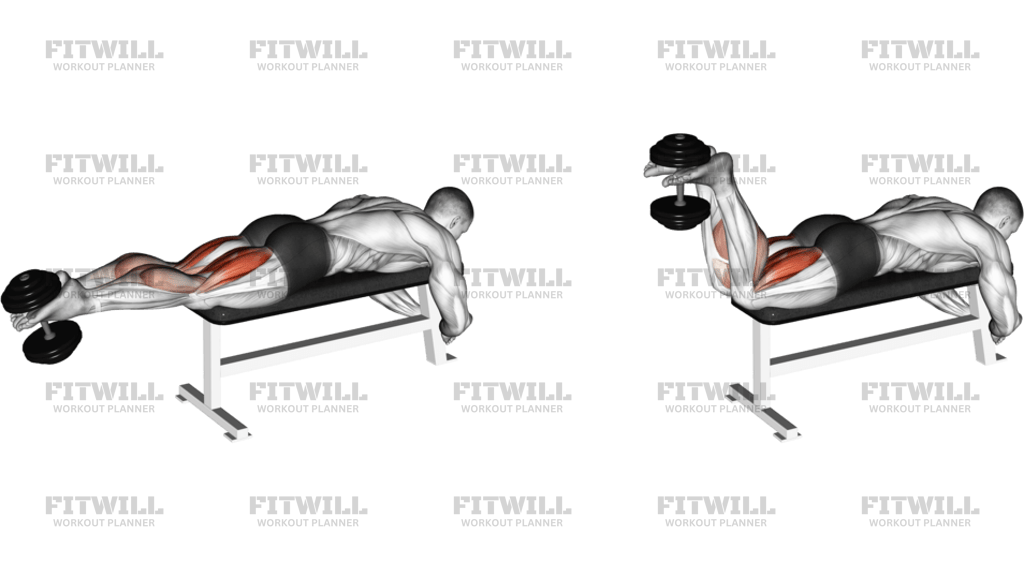
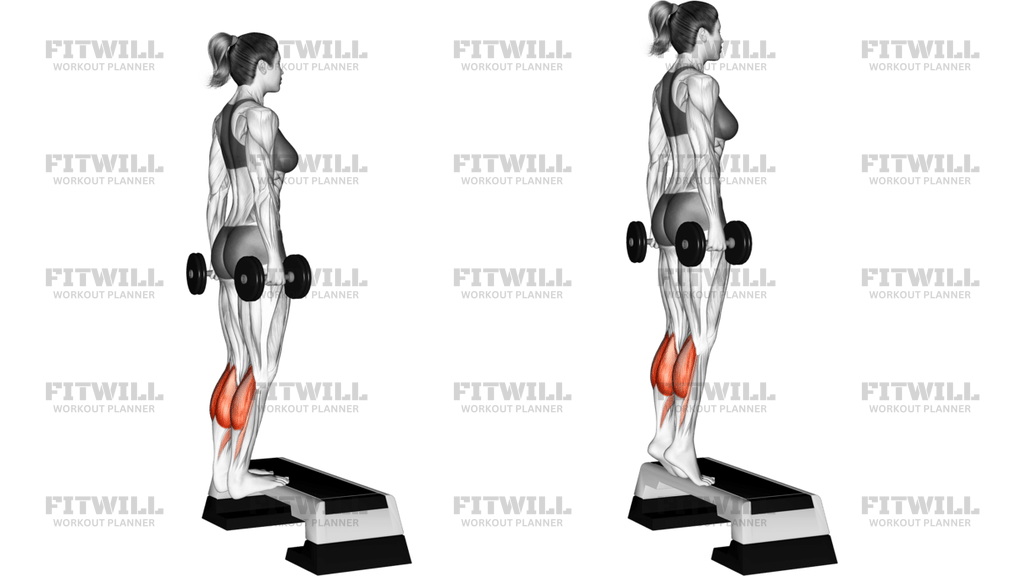
Dumbbell Standing Calf Raise
Dumbbell Standing Calf Raise is a simple but highly specific lower-leg exercise that trains the calves through ankle plantar flexion while you hold dumbbells at your sides. The version shown here is done standing on a step or raised platform so the heels can drop below the forefoot on the way down and rise higher on the way up. That small change in range matters, because it lets the calves work through a fuller stretch-and-contract cycle instead of just bouncing at the top.
This movement is useful for anyone who wants stronger, thicker lower legs, better ankle control, or more calf endurance for running, jumping, field sports, and general strength training. The main work comes from the calves, especially when you keep the knees mostly straight and avoid turning it into a knee bend. The dumbbells add load without changing the basic pattern, but the exercise still depends more on balance, foot pressure, and tempo than on brute force.
The setup should feel deliberate before the first rep. Stand tall on the edge of a step with the balls of the feet on the surface and the heels free to travel up and down. Hold a dumbbell in each hand, let the arms hang naturally, and keep the ankles tracking straight ahead rather than rolling inward or outward. A quiet upper body helps here: ribs down, chin neutral, and weight centered over the big toe, little toe, and heel of the working foot.
On the way up, press through the forefoot and lift the heels until the calves are fully shortened, then pause briefly before lowering under control. On the way down, let the heels sink until you feel a strong calf stretch without losing balance or collapsing the arch. The best reps are smooth and repeatable, with no bouncing off the bottom and no hip sway at the top. Breathing should stay steady so the set never turns into a series of rushed, jerky calf hops.
Dumbbell Standing Calf Raise fits well as accessory work after squats, deadlifts, lunges, or running sessions because it trains a muscle group that often needs direct volume. It is also a practical option for beginners, provided the load is light enough to keep the step position stable and the ankle path clean. If your grip, balance, or foot position starts to drift, reduce the load or slow the tempo before the calves stop doing the work.
[ Workout Log & Planner ]
Put your next workout in Fitwill
Keep your plan and training log ready when you are.


Instructions
- Stand on the edge of a step with the balls of both feet on the platform and your heels hanging free.
- Hold a dumbbell in each hand at your sides with the arms straight and the shoulders relaxed.
- Set your feet hip-width apart, keep the arches active, and point both knees and toes straight ahead.
- Brace lightly through the midsection and stack your ribs over your pelvis before you move.
- Press through the balls of your feet to raise your heels as high as you can without leaning forward.
- Squeeze the calves for a brief pause at the top while keeping the ankles aligned and the dumbbells still.
- Lower your heels slowly below the level of the step until you feel a full calf stretch.
- Repeat for the planned reps, then step down carefully and reset before the next set.
Tips & Tricks
- Keep pressure centered over the big toe and second toe so the ankles do not drift outward.
- If the dumbbells make you lean or shrug, lower the load and keep the shoulders quiet.
- Let the heels drop below the step only as far as you can control without losing foot contact.
- Use a one-second squeeze at the top to avoid bouncing through the ankles.
- A slower lowering phase usually gives better calf tension than fast up-and-down reps.
- If your toes cramp, shorten the set slightly and reset the foot pressure before continuing.
- Do not let the knees bend and turn Dumbbell Standing Calf Raise into a partial squat.
- Use a step height that lets your heels move freely without forcing the ankle into pain.
Frequently Asked Questions
What muscles does Dumbbell Standing Calf Raise train?
It mainly targets the calves, especially the gastrocnemius, with the smaller calf muscle and foot stabilizers helping to steady each rep.
Why do I need to stand on a step for Dumbbell Standing Calf Raise?
The step lets your heels travel below the forefoot on the way down, which increases the stretch on the calves and gives you a fuller range of motion.
Should my knees stay straight or bent?
Keep the knees mostly straight with only a soft unlock. That keeps the emphasis on the calves instead of shifting the work toward the thighs.
How heavy should the dumbbells be?
Use a load that lets you stay balanced on the step and control both the top squeeze and the slow lowering phase. If you have to rock or grip hard just to stand, the weight is too heavy.
Can beginners do Dumbbell Standing Calf Raise?
Yes. Start with light dumbbells or even bodyweight on the step so you can learn the foot pressure, balance, and full ankle travel first.
What is the most common form mistake?
Bouncing off the bottom or swinging the torso to get higher is the biggest issue. The rep should come from the ankles, not from momentum.
Should I hold the top position in Dumbbell Standing Calf Raise?
A short pause at the top helps. It makes the calves work harder in the shortened position and reduces the urge to rush through the set.
Where should I feel the stretch?
You should feel it along the back of the lower leg, especially when the heels drop below the step. Stop short of any sharp ankle or Achilles pain.