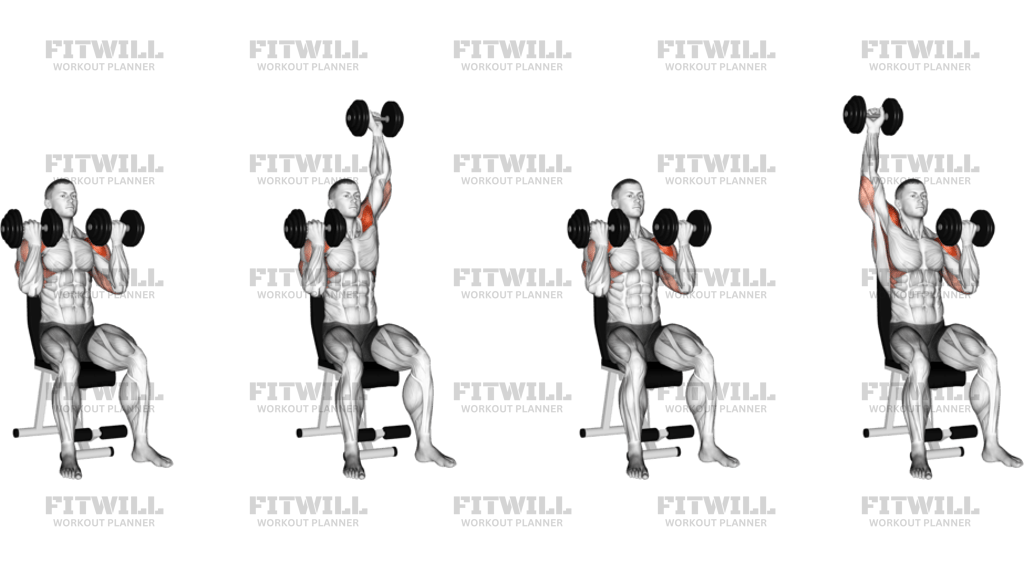
Dumbbell Seated Front Raise
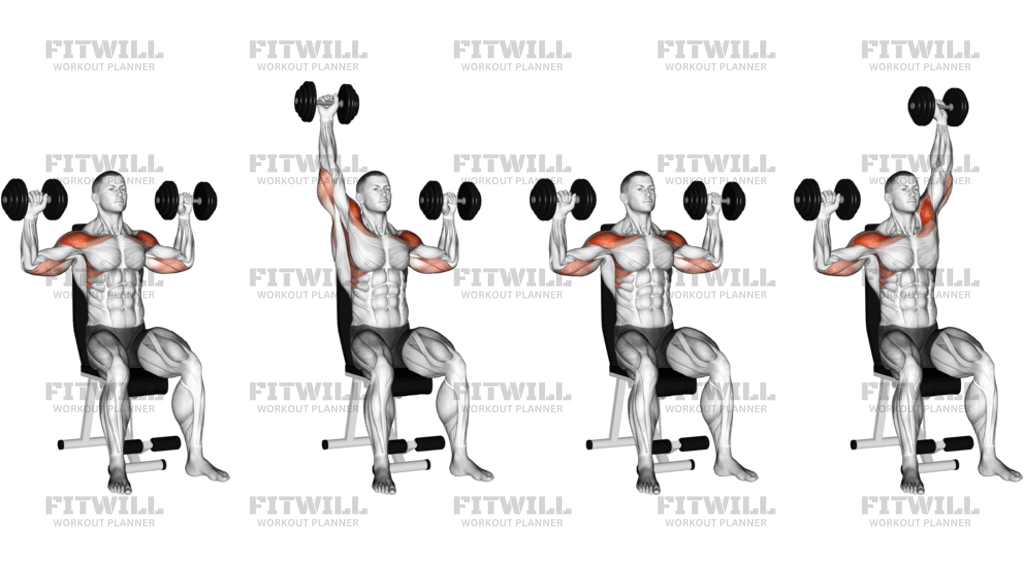
Dumbbell Seated Front Raise is a seated shoulder isolation exercise that emphasizes the front deltoids while the backrest helps remove hip drive and lower-back cheating. The seated setup makes the movement more honest than a standing raise because the torso cannot swing to help the dumbbells upward. That makes it useful when you want a strict accessory lift for shoulder development, warm-up activation, or a controlled high-rep finish after pressing work.
The exercise is built around a simple path: the dumbbells start beside the thighs, travel forward in a smooth arc, and finish around shoulder height. Because the load is held away from the body, the front of the shoulder has to do most of the work, while the upper chest, upper traps, serratus, and core help stabilize the position. The more upright and still the torso stays, the cleaner the resistance feels on the front delts.
The bench matters because it gives you something to brace against, but it should not become a way to lean back and turn the lift into a cheat rep. Sit tall, keep the ribs stacked over the pelvis, and use only a small elbow bend so the dumbbells rise in front of the body instead of turning into a row or a shrug. The top of the rep should feel controlled and deliberate, not thrown upward.
Use a load that lets you control both the lift and the lowering phase. If the weights drift above shoulder level, the traps usually take over and the shoulder line starts to change. If the torso leans back or the legs kick, the front delts are no longer doing the job alone. A cleaner range, a steady tempo, and a calm neck are usually worth more here than a bigger number on the dumbbells.
This movement fits well in shoulder hypertrophy blocks, upper-body accessory work, or light pre-activation before presses. It is especially practical for lifters who want direct front-delt work without standing momentum. If the front of the shoulder feels pinchy, shorten the range slightly, keep the dumbbells a little more neutral, and lower the load until the path stays smooth and pain-free.
[ Workout Log & Planner ]
Put your next workout in Fitwill
Keep your plan and training log ready when you are.


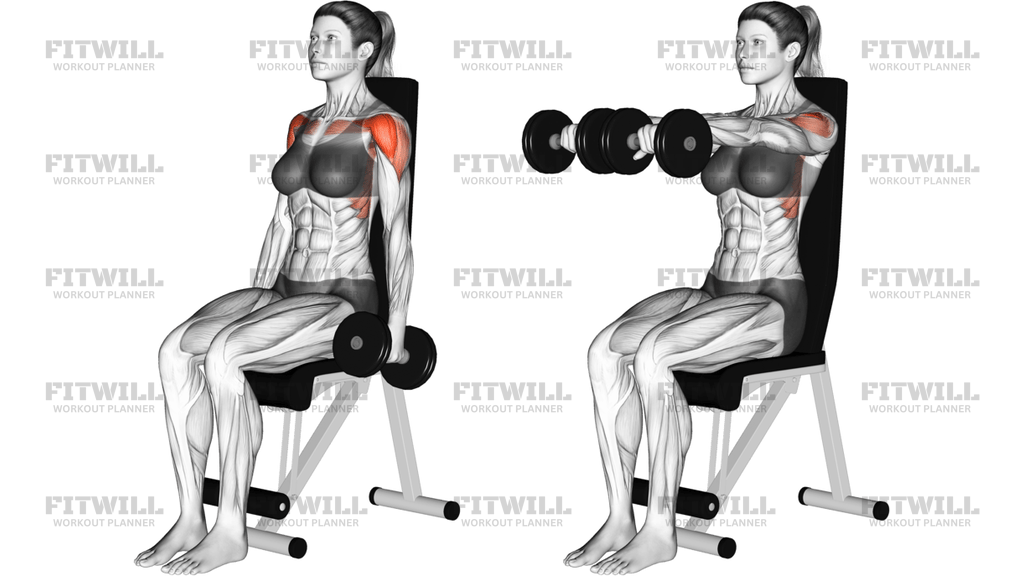
Instructions
- Sit upright on a bench with your back supported, feet flat on the floor, and a dumbbell in each hand resting beside the thighs.
- Hold the dumbbells with a neutral or slightly pronated grip, keep your wrists straight, and let the arms hang with a small bend in the elbows.
- Set your shoulders down, brace your abdomen, and keep your chest tall without arching your lower back.
- Begin the raise by moving both dumbbells forward in a smooth arc, keeping them slightly in front of your torso.
- Lift until the hands reach about shoulder height, stopping before the shoulders shrug or the upper back starts to lean back.
- Pause briefly at the top while keeping the neck long and the ribs stacked over the pelvis.
- Lower the dumbbells slowly back to the starting position beside the thighs, resisting the descent instead of dropping the weight.
- Reset the shoulders and repeat for the planned reps, exhaling as you lift and inhaling as you lower.
Tips & Tricks
- Choose a lighter pair of dumbbells than you would for pressing; front raises get sloppy fast when the front delts fatigue.
- Keep the dumbbells moving in front of the body, not drifting out to the sides where the middle delts and traps take over.
- Stop the raise at shoulder level; going higher usually turns the rep into a shrug instead of a front-delt lift.
- Keep a soft bend in the elbows from start to finish so the forearms do not turn the movement into an arm swing.
- If you feel your torso leaning back, reduce the load and sit deeper into the back pad before the next rep.
- A 2 to 3 second lowering phase keeps tension on the front delts and prevents the dumbbells from falling.
- Keep your wrists stacked over the forearms so the handles do not fold the wrists backward near the top.
- If the front of one shoulder feels irritated, use a slightly more neutral grip and shorten the top range a little.
Frequently Asked Questions
What does the seated dumbbell front raise train most?
It primarily targets the front deltoids, with the upper chest and upper traps helping stabilize the lift.
Why do I need to sit against a bench backrest?
The backrest removes a lot of body swing, so the shoulders have to move the dumbbells instead of the hips and lower back helping.
How high should the dumbbells go?
Stop around shoulder height. Going higher usually shifts the work into the traps and makes it harder to keep the shoulders clean and controlled.
Should my palms face down the whole time?
A slightly pronated or neutral grip both work. Use the version that lets you raise the dumbbells without pinching the front of the shoulder.
Why do I feel this in my neck or traps?
That usually means the shoulders are shrugging or the dumbbells are traveling too high. Lower the load and keep the neck long.
Can beginners use this exercise?
Yes. Start with very light dumbbells and learn a strict arc before adding load or repetitions.
Where does this fit in a workout?
It works well after compound pressing, in a shoulder accessory block, or as a light activation movement before upper-body work.
What should I do if the front of my shoulder feels pinchy?
Shorten the range slightly, use a lighter load, and keep the dumbbells a little more neutral so the movement stays smooth.