Narrow Push-Up On Exercise Ball
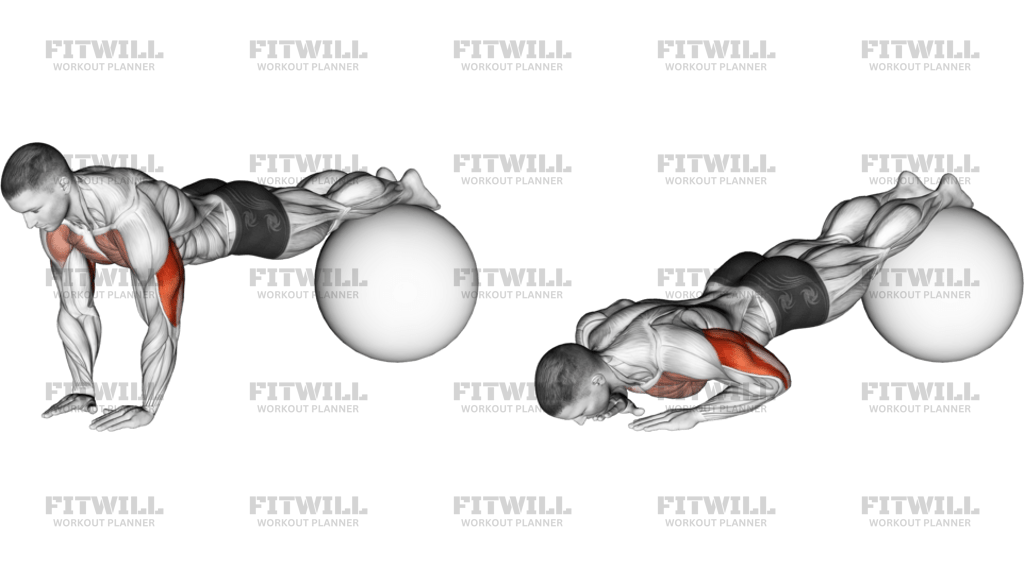
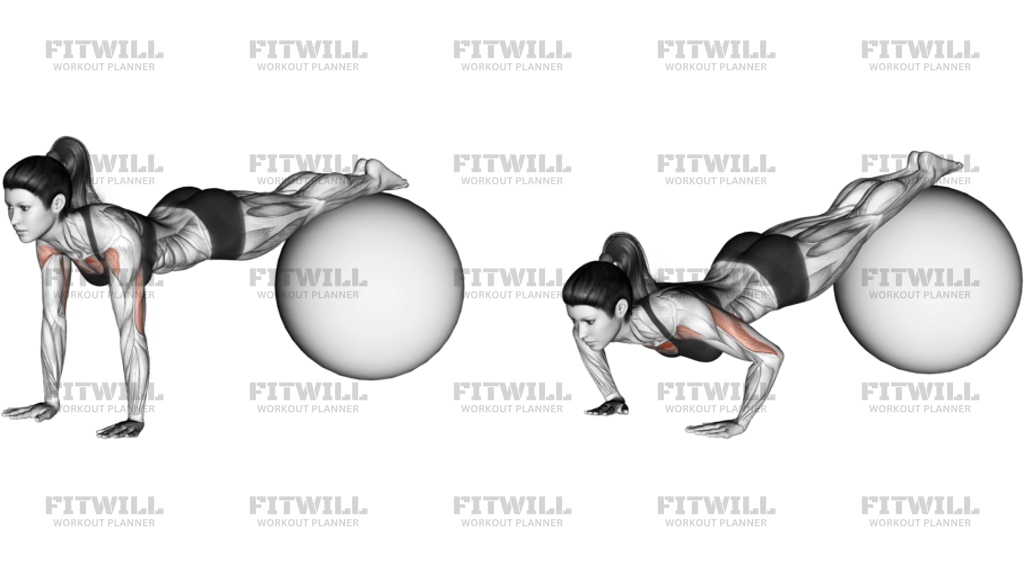
Narrow Push-Up On Exercise Ball is a bodyweight pressing exercise that combines a close hand position with the instability of a stability ball under the lower legs. The narrow setup shifts more of the work toward the triceps than a standard push-up, while the ball asks the chest, shoulders, and core to stay organized from rep to rep. It is useful when you want pressing strength without a barbell or dumbbells, but still want a challenge that rewards control more than speed.
The starting position matters because the ball changes everything about balance. Place your palms on the floor just inside shoulder width, stack your shoulders over your hands, and rest your lower shins or ankles on the top of the ball. Keep your body in one long line from head to heels, squeeze your glutes, and keep your ribs from flaring so the lower back does not take over.
Each repetition should look like a narrow, controlled push-up rather than a dive toward the floor. Bend your elbows close to your sides, lower your chest until it is just above the ground, and keep the ball as still as possible behind you. Press the floor away with a strong exhale, finish with straight elbows without shrugging, and keep the neck neutral instead of reaching the chin forward.
Because the feet are elevated on the ball, this variation is harder on the midline than a floor push-up and is a good fit for accessory work, upper-body endurance, or core-focused circuits. It is also a practical option for home training when you want a single movement that trains pressing strength and body tension together. If your shoulders drift forward, your hips sag, or the ball rolls around, shorten the set and clean up the setup before adding more reps.
Use a smaller range or switch to a floor version if the ball is too unstable to keep the torso straight. When the wrists feel overloaded, spread the fingers, press through the whole palm, and make sure the hands are not tucked so far inward that the wrists collapse. The goal is a smooth, repeatable press that keeps the triceps working and the body rigid from the first rep to the last.
[ Workout Log & Planner ]
Put your next workout in Fitwill
Keep your plan and training log ready when you are.


Instructions
- Place your hands on the floor just inside shoulder width and set the stability ball under your lower shins or ankles.
- Walk your feet back until your body forms one straight line from head to heels and your shoulders stack over your hands.
- Squeeze your glutes, tighten your abs, and keep your neck long so your ribs do not flare.
- Bend your elbows close to your sides and lower your chest toward the floor in a straight, controlled line.
- Keep the ball quiet behind you while your torso descends, and stop when your chest is just above the floor.
- Press through your palms, exhale, and drive back up until your elbows are straight without locking aggressively.
- Keep your elbows angled close to your torso and your hips level as you finish each rep.
- At the end of the set, lower your knees to the floor before stepping off the ball.
Tips & Tricks
- Keep the ball centered under your lower shins or ankles; if it drifts, the set gets sloppy fast.
- A slightly wider narrow grip is easier on the wrists than touching the thumbs together under your chest.
- Think about reaching your chest toward the floor, not letting your shoulders collapse forward.
- Stop the descent before your lower back starts to arch; the core should hold the line, not the spine.
- A slower lowering phase makes the triceps work harder and gives you more control over the unstable end position.
- If the ball rolls as you press, move your feet a little higher on the ball to shorten the lever.
- Keep pressure through the base of the index finger and thumb so your hands do not cave inward.
- Use a floor narrow push-up instead of chasing reps if the ball makes your hips twist.
Frequently Asked Questions
What muscle does Narrow Push-Up On Exercise Ball target most?
It mainly trains the triceps, with chest, front shoulders, and core helping stabilize the body and control the press.
Why is Narrow Push-Up On Exercise Ball harder than a regular push-up?
The close hand position puts more demand on the triceps, and the ball under your lower legs makes your torso work harder to stay steady.
Where should the ball sit during Narrow Push-Up On Exercise Ball?
Keep it under your lower shins or ankles so your body stays long and the ball does not ride up toward your knees.
How close should my hands be?
Place them just inside shoulder width, close enough to bias the triceps but not so narrow that your wrists collapse inward.
Can beginners do Narrow Push-Up On Exercise Ball?
Yes, but it is best to start with fewer reps, a steady ball, and a solid floor-based narrow push-up first if balance is still inconsistent.
What is the most common mistake in Narrow Push-Up On Exercise Ball?
Letting the hips sag or twist is the biggest issue, usually because the core and glutes stop working before the set is over.
How do I make Narrow Push-Up On Exercise Ball easier?
Put the ball under the lower legs closer to the knees, reduce the range of motion, or switch to a standard narrow push-up on the floor.
Should I feel this in my chest or triceps more?
The triceps should do most of the work, but some chest and shoulder involvement is normal because you are still pressing your bodyweight.