Bent-Over Row Back WRONG-RIGHT
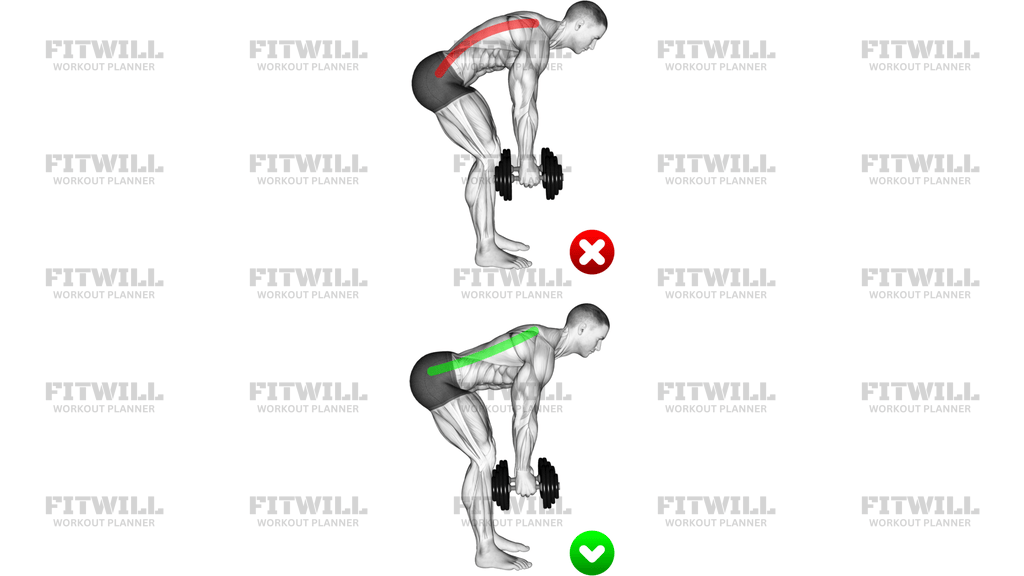
Bent-Over Row Back WRONG-RIGHT is a dumbbell rowing exercise performed from a hip hinge. The image shows the mistake and the correction side by side: a rounded, collapsed upper back at the top and a clean neutral spine in the correct version. The goal is not just to pull weight, but to keep the torso fixed while the arms drive the dumbbells toward the lower ribs or hip line.
This movement trains the lats, mid-back, rear delts, and biceps, while the glutes, hamstrings, and spinal erectors work hard to hold the hinge. That is why the setup matters so much. If the chest drops and the upper back rounds, the row turns into a sloppy pull with less tension where you want it and more stress where you do not.
Use a stance that lets you balance over both feet with soft knees and the hips pushed back. Hinge until your torso is angled forward and the dumbbells hang under the shoulders. From there, keep the neck long, brace the trunk, and row the weights in a controlled arc toward the lower ribs or upper waist without jerking the torso up.
At the top of each rep, squeeze the shoulder blades without shrugging toward the ears. Lower the dumbbells slowly until the arms are straight again and the shoulders stay packed. The best repetitions look the same from start to finish: same torso angle, same spine position, same path on the way up and down.
Because this is a position-dependent row, it is most useful as a back-building accessory, a hypertrophy lift, or a technique drill for learning how to row without turning it into a standing shrug. Light to moderate loads are usually enough to expose bad hinge mechanics early, which makes it a good choice for beginners and advanced lifters alike when the goal is cleaner back tension and better pulling mechanics.
[ Workout Log & Planner ]
Put your next workout in Fitwill
Keep your plan and training log ready when you are.


Instructions
- Stand with your feet about hip-width apart and hold a dumbbell in each hand at your sides.
- Hinge your hips back until your torso is leaned forward and the dumbbells hang straight down under your shoulders.
- Keep a soft bend in your knees, ribs stacked over your pelvis, and your neck in line with your spine.
- Brace your midsection before the first pull so your torso stays fixed while the arms move.
- Pull both dumbbells toward your lower ribs or upper waist, keeping your elbows close to your sides.
- Squeeze your shoulder blades together and back briefly at the top without shrugging your shoulders.
- Lower the dumbbells slowly until your arms are fully extended and your shoulders stay controlled.
- Reset the hinge if your back starts to round, then repeat for the planned number of reps.
Tips & Tricks
- If your lower back rounds before the row starts, raise your chest slightly and shorten the hinge angle.
- Keep the dumbbells close to your legs and torso so the row stays on the back instead of turning into a swing.
- Think about driving your elbows behind you rather than lifting the weights with your hands.
- Do not let the shoulders roll forward at the bottom; keep tension in the upper back between reps.
- Use a load that lets you pause at the top without rocking your torso upward.
- A slower lowering phase makes it easier to keep the spine fixed and feel the lats working.
- Exhale as you row and re-brace before the dumbbells drift back down.
- If your grip fails before your back does, reduce load or use straps so the set still targets the row.
Frequently Asked Questions
What muscles do Bent-Over Row Back WRONG-RIGHT work most?
The main targets are the lats and mid-back, with the rear delts, biceps, glutes, hamstrings, and spinal erectors helping to hold the position.
What is the difference between the wrong and right positions shown in the image?
The wrong version rounds the upper back and loses the hinge; the right version keeps a neutral spine, a fixed torso angle, and a cleaner row path.
Where should the dumbbells travel during the row?
Pull them toward your lower ribs or upper waist, not straight up toward the chest and not out in front of the body.
Can beginners do this exercise safely?
Yes, if they start light and learn the hip hinge first. The row is only effective when the torso stays braced and the spine does not collapse.
Should I keep my elbows tucked or flared?
Keep them mostly tucked and slightly out from the body. That angle usually gives a stronger back line and reduces shoulder shrugging.
Why does my lower back feel this exercise more than my upper back?
Usually the hinge is too deep, the load is too heavy, or the torso is moving with each rep. Shorten the hinge and make the torso stay still.
What is the most common mistake to avoid?
Rounding the upper back and turning the row into a body-English swing are the biggest form breakers.
Is a bench required for this row?
No. This version is done unsupported with a hip hinge, so balance and trunk control are part of the exercise.