Dumbbell One-Arm Kickback
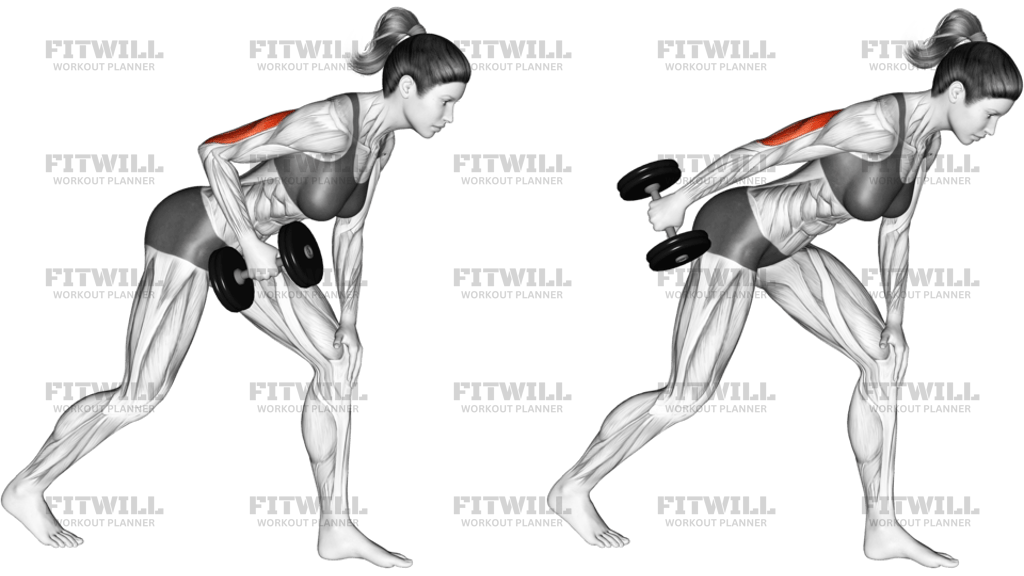
Dumbbell One-Arm Kickback is a bent-over triceps isolation exercise performed in a split stance with one hand supported on the front thigh and the working arm held close to the torso. The image shows a strict hinge position rather than a standing swing, which matters because the exercise only works well when the upper arm stays still and the elbow does the moving. The dumbbell travels from a bent-elbow start to a fully extended finish behind the body, so the triceps can produce tension without help from the back, shoulder, or hips.
This movement is built to train elbow extension, especially the triceps brachii, while the forearm, rear shoulder, and core help stabilize the position. In practical terms, it is a small, precise isolation lift. That makes the setup more important than the load: if the torso shifts, the upper arm drifts, or the wrist bends back, the set turns into a momentum drill instead of a triceps exercise. Keeping the torso hinged and the free hand braced on the thigh helps you stay organized and lets the working arm move cleanly.
Use a light to moderate dumbbell and start with the elbow bent and tucked near the ribs. From there, extend the elbow until the arm is straight and the dumbbell is driven back in line with the torso, then lower it slowly under control. The elbow should stay high and mostly fixed in space while the forearm swings like a hinge. A short squeeze at lockout is useful, but the finish should not turn into a shoulder shove or a hard snap through the elbow.
Dumbbell One-Arm Kickback is useful when you want direct triceps work with minimal equipment, especially in accessory blocks, arm-focused sessions, or as a low-fatigue finisher after heavier pressing. It can also help lifters learn to keep the upper arm quiet while the elbow moves, which carries over to other triceps movements. Because the exercise depends on posture and control, the rep quality should stay strict from the first rep to the last.
If the low back feels overloaded, shorten the hinge slightly or support the torso more firmly on the thigh. If the triceps stop working and the shoulder starts taking over, the dumbbell is usually too heavy. The best reps feel smooth, narrow, and deliberate, with the upper arm locked in place and the elbow finishing each rep by fully straightening the arm rather than by swinging the weight.
Fitwill
Log Workouts, Track Progress & Build Strength.
Achieve more with Fitwill: explore over 9600 exercises with images and videos, access built-in and custom workouts, perfect for both gym and home sessions, and see real results.
Start your journey. Download today!




Instructions
- Stand in a split stance and hinge forward until your torso is angled over the front leg, then brace one hand on the front thigh for support.
- Hold the dumbbell in the opposite hand with your elbow bent and tucked close to your side, palm in a neutral grip, and wrist stacked straight.
- Keep your shoulders square, your back flat, and your neck long before you start the first rep.
- Exhale and extend the elbow to drive the dumbbell straight back until the working arm is nearly or fully straight.
- Keep the upper arm pinned in place so only the lower arm moves through the kickback.
- Pause briefly at the top and squeeze the triceps without arching your back or swinging the shoulder behind you.
- Inhale and lower the dumbbell slowly until the elbow returns to the bent start position with control.
- Reset your hinge and brace on every rep, then switch arms after completing the planned set.
Tips & Tricks
- Choose a lighter dumbbell than you would use for pressing; this exercise gets sloppy fast when the load is too heavy.
- Keep the upper arm fixed beside your torso. If the elbow drifts backward and forward, the triceps lose tension.
- Brace the free hand firmly on the thigh so the hinge stays steady and the torso does not rock with each rep.
- Finish by straightening the elbow, not by flinging the shoulder behind you.
- Keep the wrist neutral. Bending it back makes the dumbbell feel heavier and can irritate the forearm.
- Use a smooth tempo on the lowering phase so the triceps stay loaded instead of the weight dropping.
- If your low back starts working harder than your triceps, reduce the hinge angle or lower the load.
- Stop the set when you can no longer keep the elbow tucked and the torso still.
Frequently Asked Questions
What does Dumbbell One-Arm Kickback train most?
It mainly trains the triceps through elbow extension, with the forearm, rear shoulder, and core helping stabilize the bent-over position.
Why is the support hand on the thigh?
The braced hand helps lock in the hinge and keeps the torso from swaying while the working arm extends.
Should my upper arm move during the rep?
No. The upper arm should stay pinned close to your side so the elbow can do the work.
How far back should I kick the dumbbell?
Extend until the arm is straight or nearly straight, but stop before you have to twist the shoulder or arch the lower back.
Can beginners do this exercise?
Yes, as long as they use a light dumbbell and keep the hinge, elbow position, and tempo strict.
What is the most common mistake?
Using momentum from the torso or shoulder instead of isolating the elbow is the most common error.
What should I do if I feel this in my lower back?
Reduce the hinge depth, brace harder through the support hand and front leg, or choose a more supported triceps variation.
How can I make the exercise harder without cheating?
Use a slightly heavier dumbbell only if the elbow stays fixed, or slow the lowering phase and add a brief squeeze at lockout.