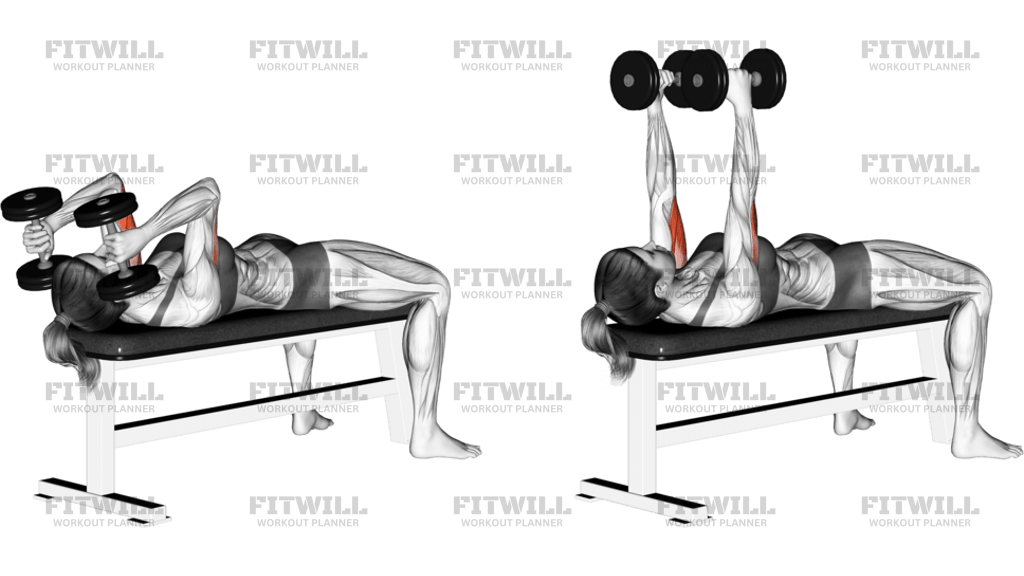
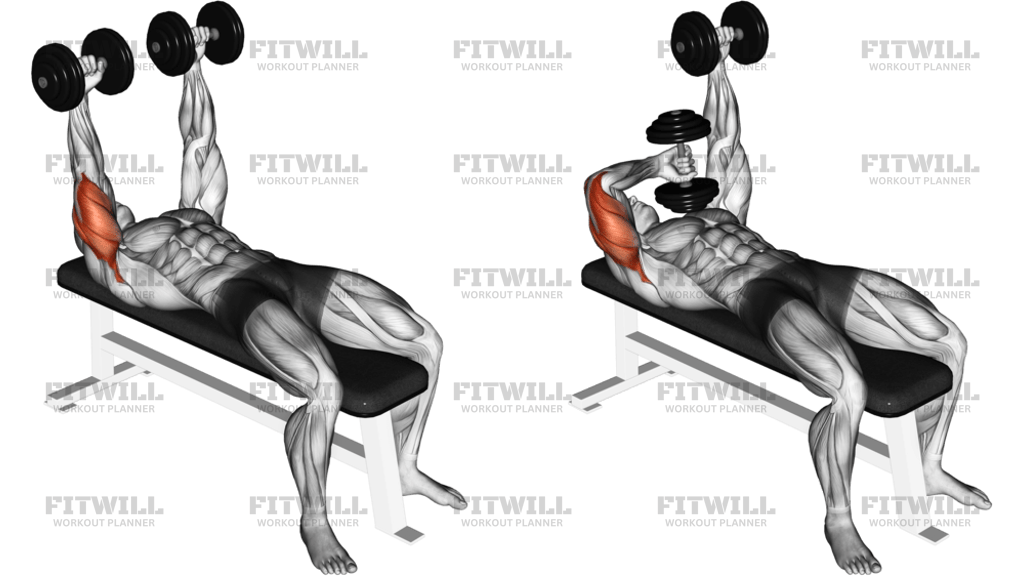
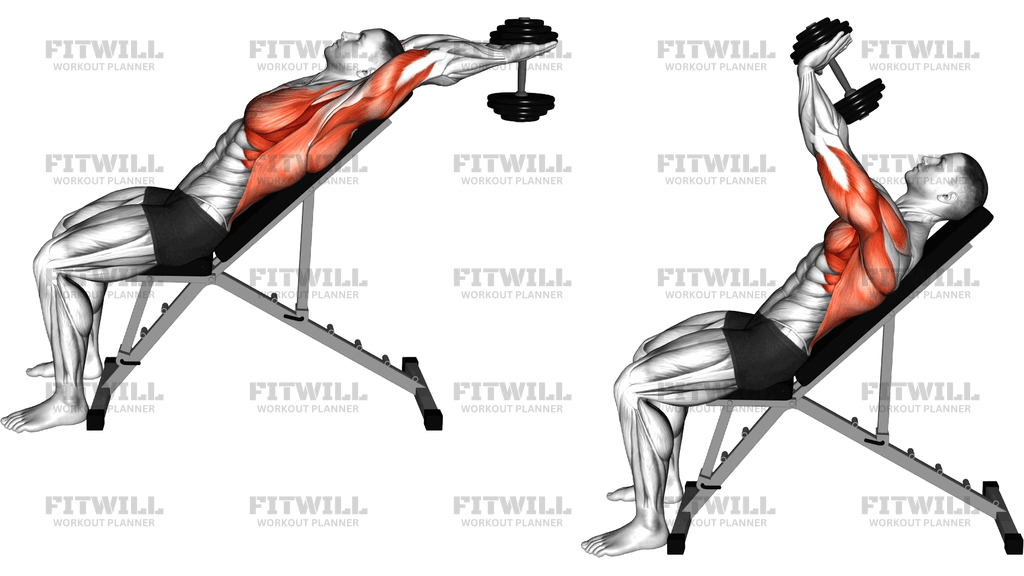
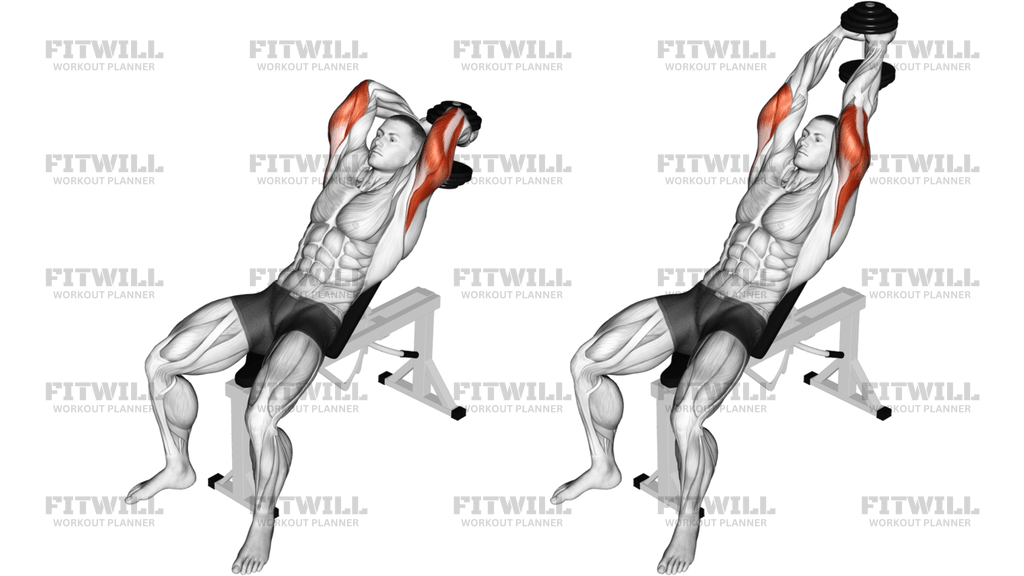
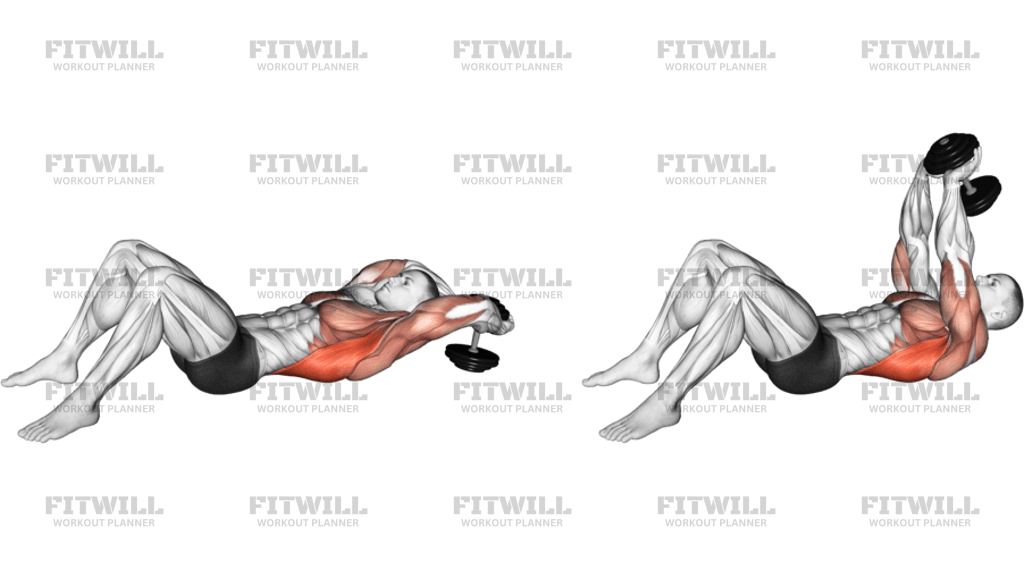
Dumbbell Lying Extension Across Face
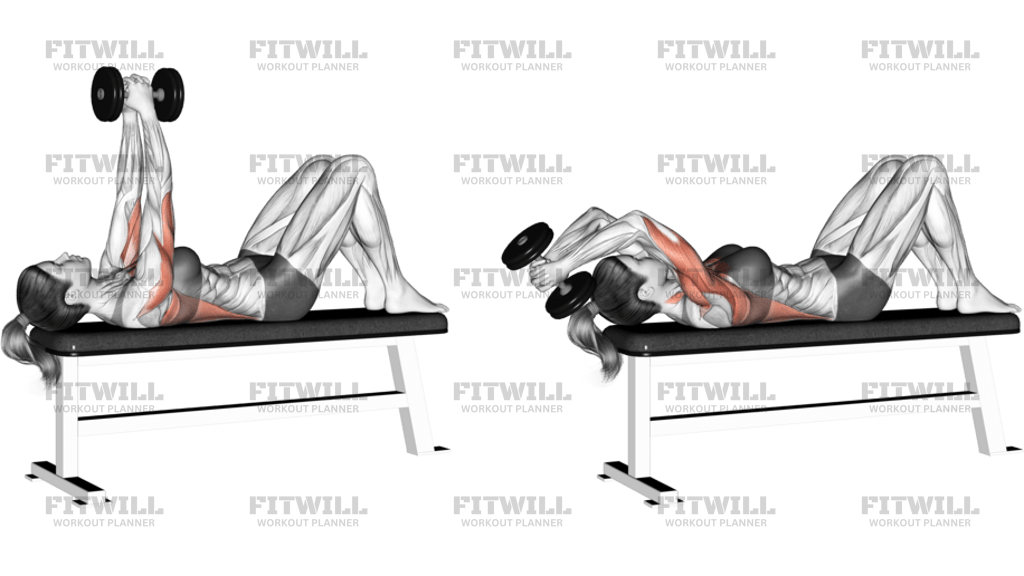
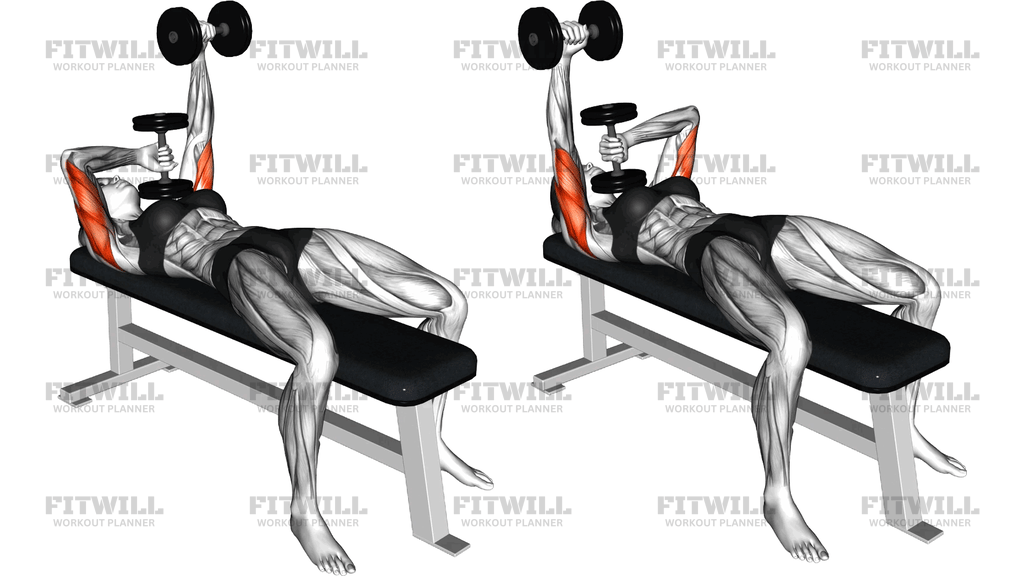
Dumbbell Lying Extension Across Face is a bench-based triceps exercise that keeps the upper arm fairly fixed while the elbow opens and closes through a diagonal arc in front of the face. It is built to train elbow extension strength with a long, controlled range of motion, making it a useful accessory lift for pressing work, arm-focused sessions, or any routine where you want direct triceps loading without standing momentum.
The flat bench matters because it gives you a stable base to pin the shoulders back and keep the torso quiet. Lie down with your feet planted, head supported, and ribs controlled so the weight stays over the shoulder line instead of drifting into a chest press. The movement should feel like the forearm is folding and unfolding around the elbow while the upper arm stays mostly set in space.
This variation places the main demand on the triceps brachii, with the forearms and front delts helping to steady the dumbbell and keep the wrist stacked. Because the dumbbell travels across the face line instead of straight down to the chest, the shoulder position and elbow angle matter more than in a basic press. A clean rep is one where the elbow still points up, the wrist stays neutral, and the lowering phase stays smooth enough that you can reverse it without a shoulder shrug or a bounce.
Use a load that lets you control the bottom position and extend all the way back up without losing the arm path. If the dumbbell starts drifting behind the head, the shoulders roll forward, or the elbows flare wide, the set is too heavy or the setup is off. Beginners can use this movement well with light dumbbells and a short pause at the bottom to learn where the triceps stretch should be felt.
Keep the exercise strict, deliberate, and repeatable. It is not a swinging movement and it should not turn into a chest or shoulder press. Done well, it gives you a strong triceps stimulus with very little joint noise, which is why it works well as accessory volume after compound pushing or as a focused arm movement at the end of a session.
Fitwill
Log Workouts, Track Progress & Build Strength.
Achieve more with Fitwill: explore over 9600 exercises with images and videos, access built-in and custom workouts, perfect for both gym and home sessions, and see real results.
Start your journey. Download today!




Instructions
- Lie on a flat bench with your head supported, feet planted on the floor, and your shoulders set back against the pad.
- Hold the dumbbell above your face or upper chest with a neutral wrist and the elbow pointing upward, not flared out to the side.
- Brace your ribs down and keep your neck relaxed so the upper body stays still before the first rep.
- Bend the working elbow and lower the dumbbell in a controlled arc toward the side of your forehead or face.
- Keep the upper arm almost fixed while the forearm folds, so the movement comes from the elbow rather than the shoulder.
- Stop the descent when you feel a strong triceps stretch and can still keep the wrist stacked over the elbow.
- Extend the elbow to press the dumbbell back along the same diagonal path until the arm is nearly straight again.
- Exhale as you extend, inhale on the way down, and keep the non-working parts of the body quiet throughout the rep.
- Repeat for the planned reps, then lower the dumbbell safely and reset before switching sides if you are training one arm at a time.
Tips & Tricks
- Keep the upper arm pointed mostly toward the ceiling; if it starts drifting, the shoulder is taking over the rep.
- Let the dumbbell travel on a slight diagonal across the face line instead of dropping straight to the chest.
- Choose a bench position that lets your head stay clear of the dumbbell path so you are not cranking the neck back.
- Use a neutral wrist and a firm grip; bent wrists turn this into a forearm exercise and make the elbow feel unstable.
- Lower slowly enough to feel the triceps lengthen, especially near the bottom where the elbow is most bent.
- Do not flare the elbow wide; a wide elbow usually shortens the triceps work and increases shoulder involvement.
- If the rep turns into a pullover or press, the dumbbell is too heavy or the arm angle is too open.
- Keep the ribs down and lower back quiet so you do not turn the bench into an arching cheat rep.
- A brief pause at the bottom can help you own the stretch position before you drive back to lockout.
Frequently Asked Questions
What muscle does Dumbbell Lying Extension (across face) target most?
The triceps are the main target, especially the elbow-extending function of the triceps brachii.
Can beginners perform this exercise?
Yes. Start with very light dumbbells and learn the elbow path before adding load.
Should my upper arm stay still on the bench?
Mostly, yes. The upper arm should stay close to its starting angle while the forearm does the moving.
Why does the dumbbell travel across the face instead of straight down?
That diagonal path matches this variation and keeps the triceps working through a long elbow-extension range without turning the rep into a press.
How low should I lower the dumbbell?
Lower only until you feel a strong triceps stretch and can still keep the wrist, elbow, and shoulder position under control.
Why does my shoulder feel involved?
A little shoulder stabilization is normal, but if the front shoulder is doing most of the work, the elbow is drifting or the dumbbell is too heavy.
Is this the same as a lying skull crusher?
It is very similar, but this version uses a across-face path instead of a straight overhead or forehead line.
What is the biggest form mistake to watch for?
Letting the elbow flare and turning the rep into a shoulder movement is the most common problem.
Can I do this with one arm at a time?
Yes. The image shows a single-arm style, which is useful if you want to focus on one triceps side before switching.