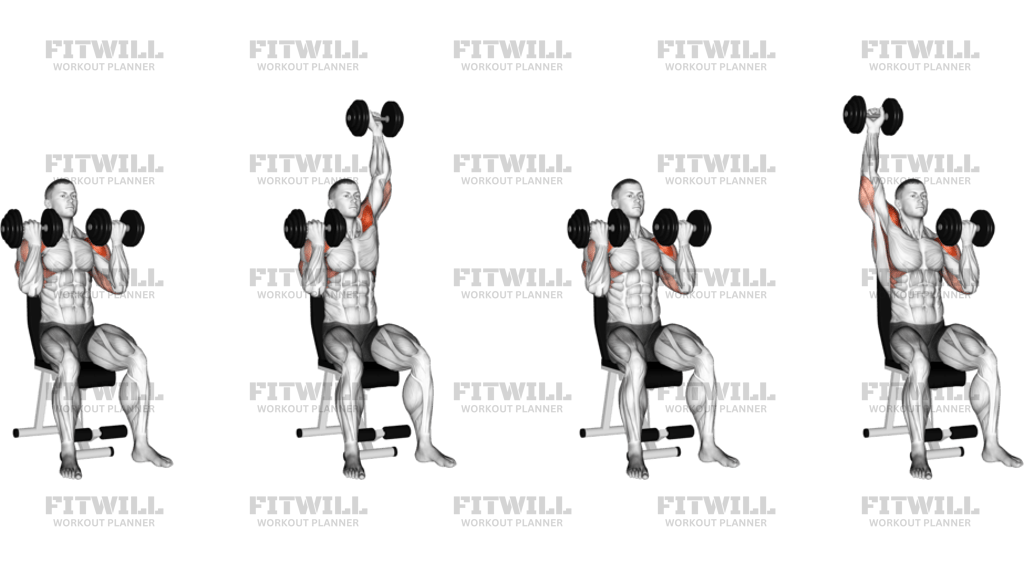
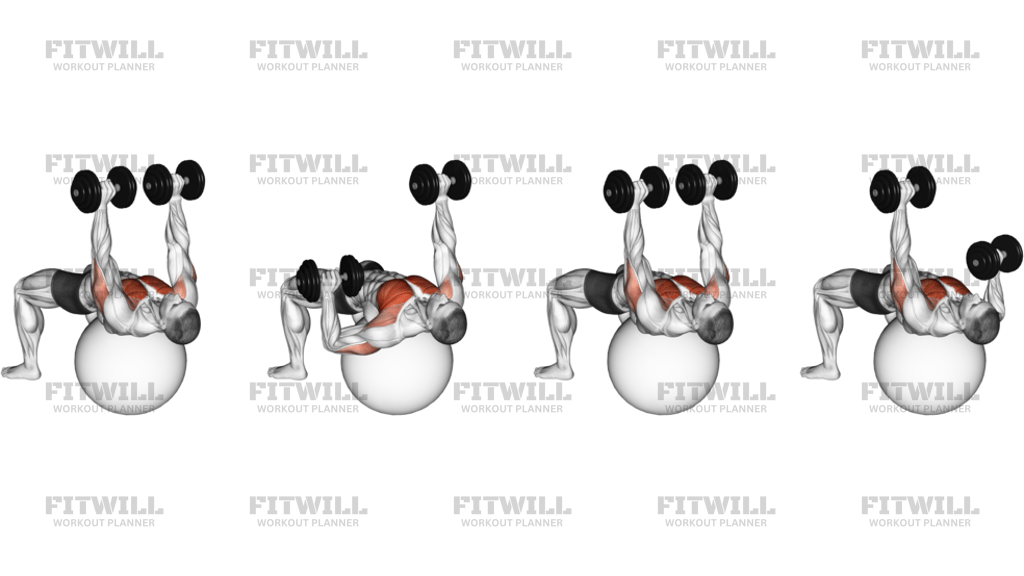
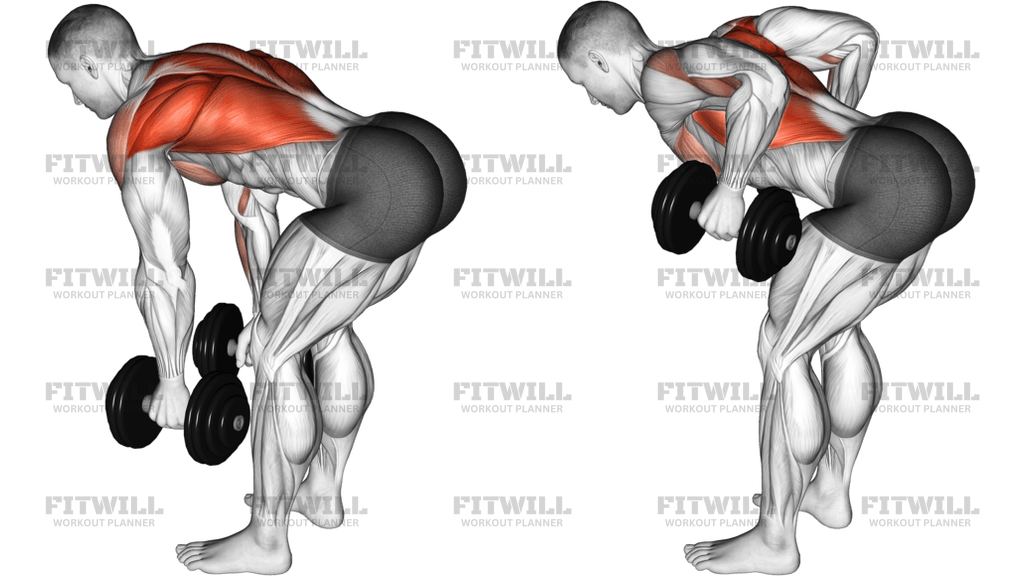
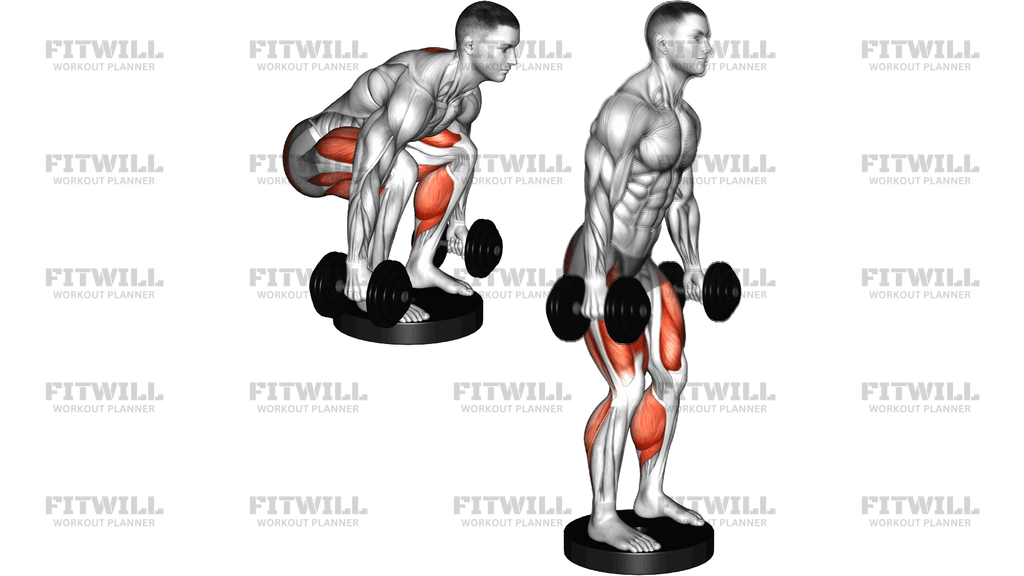
Dumbbell One-Arm Lateral Raise
Dumbbell One-Arm Lateral Raise is a standing shoulder isolation exercise that uses one dumbbell at a time to build the side of the shoulders with clean, controlled reps. It is especially useful when you want to train the lateral deltoid directly while also challenging the small stabilizers that keep the shoulder and trunk steady during a single-arm movement.
The unilateral setup matters because it removes a lot of shared momentum. With one arm working at a time, it becomes easier to feel whether the shoulder is lifting the load or whether the torso is helping by swaying, leaning, or shrugging. A stable stance, a quiet rib cage, and a neutral wrist keep the arm path honest and make the set more productive.
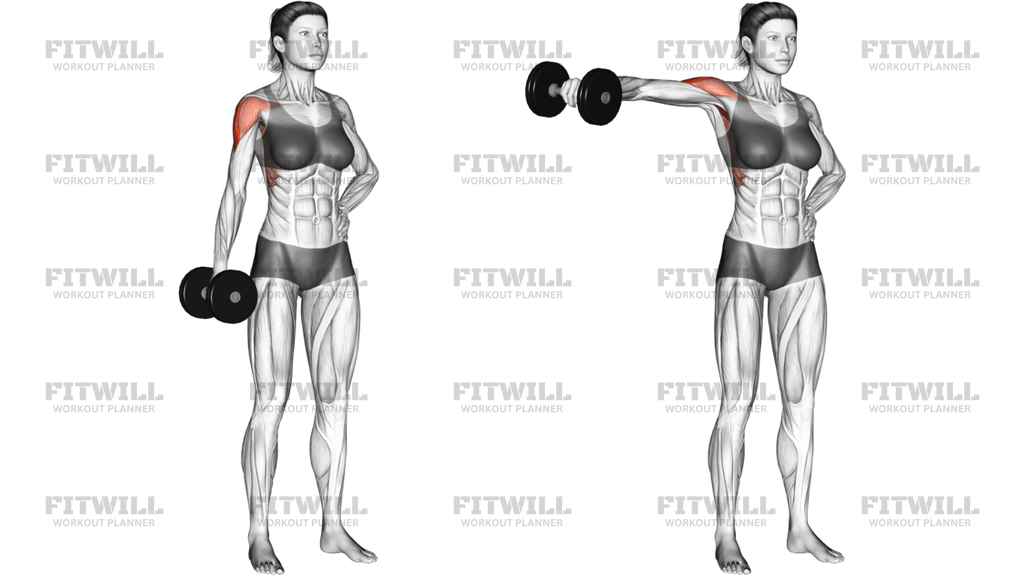
The raise should travel in a smooth arc out to the side, not a jerk upward. Start with the dumbbell at your thigh, keep a slight bend in the elbow, and lift until the upper arm reaches about shoulder height or just below. At the top, the shoulder should still feel organized rather than jammed up toward the ear, and the descent should be slow enough that you can keep tension on the side delts instead of dropping the weight.
Dumbbell One-Arm Lateral Raise is a good accessory choice after pressing work, on a shoulder-focused day, or anywhere you want moderate-to-high repetition volume without heavy loading. It also works well for lifters who want to clean up side-to-side differences, since each arm has to earn its own position and range without the stronger side taking over.
The main form check is simple: if the torso twists, the dumbbell swings, or the top position turns into a shrug, the load is too heavy or the range is too high. Use a light-to-moderate dumbbell, breathe steadily, and stop the set when the shoulder path gets noisy. Done this way, the exercise stays focused on the shoulder cap while still being friendly to beginners and useful for experienced lifters.
[ Workout Log & Planner ]
Put your next workout in Fitwill
Keep your plan and training log ready when you are.


Instructions
- Stand tall with your feet about hip-width apart and hold one dumbbell at the side of the working leg.
- Place your free hand on your hip or lightly against your torso so you can notice any torso sway.
- Keep your chest quiet, ribs stacked over your pelvis, and a soft bend in the working elbow before the first rep.
- Turn the palm slightly inward or keep it neutral so the wrist stays straight as the arm rises.
- Brace your abdomen, then lift the dumbbell out to the side in a smooth arc rather than a straight-up shrug.
- Lead the movement with the elbow and stop when the upper arm reaches shoulder height or just below.
- Keep the shoulder away from your ear and avoid twisting the torso to cheat the dumbbell higher.
- Lower the dumbbell slowly back to your thigh, keeping tension on the shoulder instead of dropping it.
- Exhale as you lift and inhale as you lower, then reset the shoulder before the next repetition.
- Finish the set with the arm back at your side, then switch sides if you are training the other arm.
Tips & Tricks
- Choose a lighter dumbbell than you would for pressing work; lateral raises get sloppy fast when the load is too ambitious.
- Keep the elbow angle almost fixed from bottom to top so the shoulder, not the arm swing, does the work.
- If the dumbbell drifts behind your body, bring it slightly in front of the hip line before you raise it.
- Stop the lift around shoulder height; going higher usually turns the last part of the rep into an upper-trap shrug.
- Keep the thumb slightly up or the palm neutral if a turned-down wrist makes the shoulder feel pinchy.
- Use the free hand on your hip to catch torso rotation; if your ribs flare, lower the weight immediately.
- Let the lowering phase take at least as long as the lift so the side delt stays under tension.
- If one side is weaker, match the rep count to the weaker arm instead of letting the stronger side set the pace.
- A small forward angle to the arm path is often smoother than lifting perfectly out to the side.
Frequently Asked Questions
What does Dumbbell One-Arm Lateral Raise work most?
It mainly trains the lateral deltoid, with the upper traps and trunk stabilizers helping keep the shoulder and torso organized.
Should my palm face down or in during Dumbbell One-Arm Lateral Raise?
A neutral or slightly turned-in grip is usually easiest on the shoulder. If turning the thumb down makes the top of the shoulder feel pinchy, keep the hand more neutral.
How high should I raise the dumbbell?
Stop around shoulder height or just below it. Higher than that usually adds more shrug than shoulder work.
Why do people keep a slight bend in the elbow?
A soft elbow keeps the arm path smooth and reduces the temptation to turn the movement into a straight-arm swing. The bend should stay nearly the same through the rep.
Is Dumbbell One-Arm Lateral Raise good for beginners?
Yes, as long as the dumbbell is light enough to keep the torso still. Beginners usually do best with slow reps and a shorter range before adding load.
Why am I feeling this in my neck instead of my shoulder?
That usually means the shoulder is shrugging to finish the rep. Lower the load and stop the set before the dumbbell gets high enough to force the traps to take over.
Can I do Dumbbell One-Arm Lateral Raise seated instead of standing?
Yes, sitting removes some body sway and can make it easier to keep tension on the side delt. The arm path and shoulder-height finish stay the same.
What is the most common mistake with this one-arm version?
Swinging the torso to get the dumbbell up is the biggest issue. If you have to lean or twist, the load is too heavy for strict lateral raises.