Dumbbell Seated Alternate Front Raise
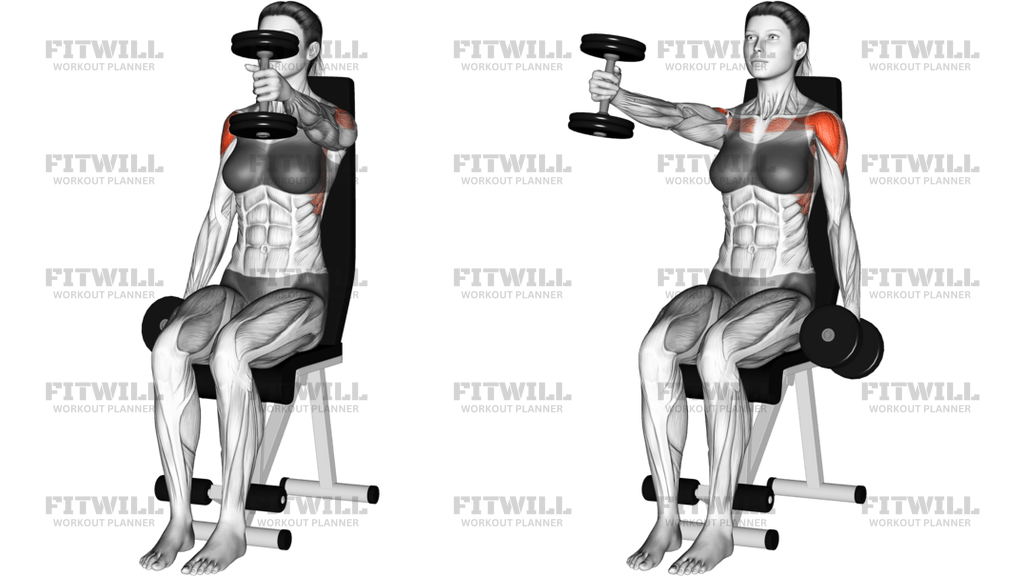
Dumbbell Seated Alternate Front Raise is a seated shoulder isolation exercise that trains one arm at a time while the torso stays supported against a bench backrest. The movement is simple on paper, but the value comes from how strict the repetition stays: the arm lifts in a clean arc, the shoulders remain level, and the body does not rock to help the weight upward. That makes it useful when you want to place more direct demand on the front of the shoulders without turning the set into a full-body cheat lift.
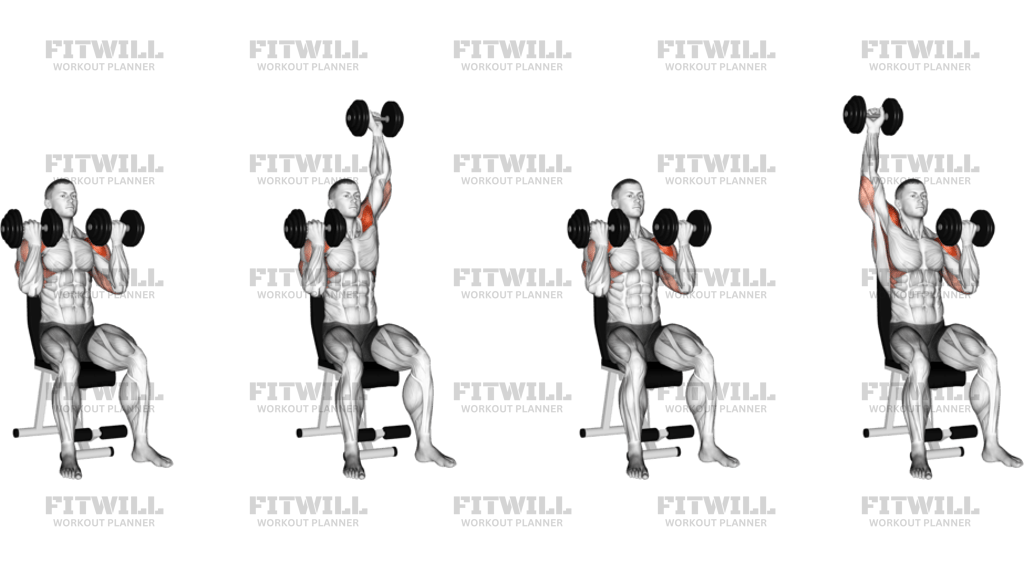
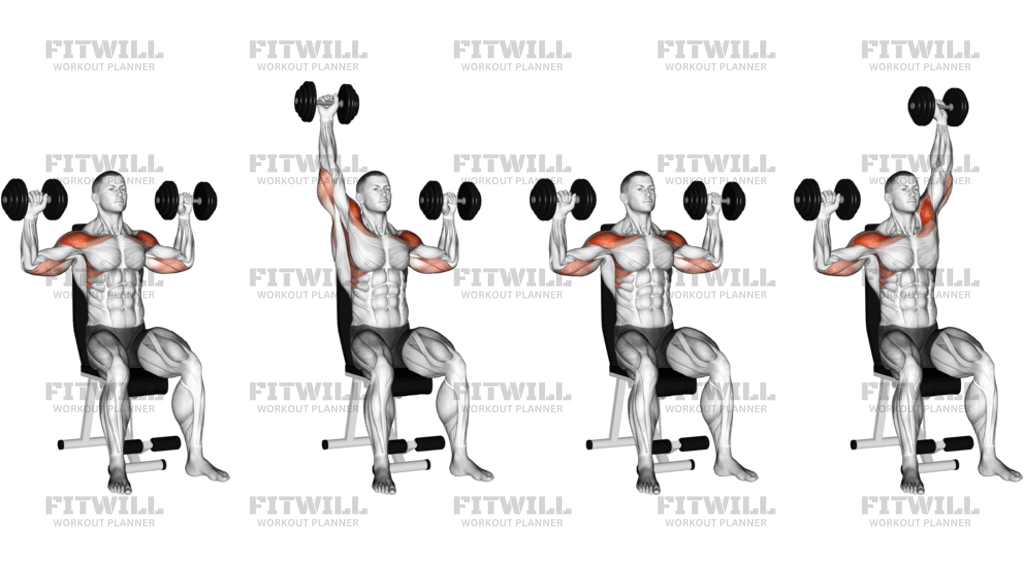
The image shows a back-supported seated position with the dumbbells starting low by the thighs and one arm raising to about shoulder height before the other side repeats. That alternating pattern matters because it reduces momentum and makes each side do its own work. It also helps you notice side-to-side differences in control, range, and endurance. When the setup is right, the working arm feels like it is moving the dumbbell forward and upward, not swinging it with the torso or shrugging it with the neck.
This exercise is mainly used to build the anterior delts, with the upper chest and upper trapezius helping to stabilize the shoulder girdle. Because the arm is held in front of the body, the front shoulder takes most of the load, especially if the elbow stays only slightly bent and the wrist stays neutral. A light to moderate load is usually enough. If the dumbbells are too heavy, the lifter starts leaning back, kicking the weight, or turning the raise into a shrug.
Good execution is about keeping the ribcage down, the spine tall against the bench, and the tempo smooth on both the lift and the return. Raise one dumbbell to shoulder level or slightly below if your shoulder mobility is limited, then lower it under control before switching sides. That makes the exercise a solid choice for accessory shoulder work, warm-up preparation, or higher-rep hypertrophy work when you want tension and precision rather than maximum load. If the movement causes pinching, shrugging, or back arching, shorten the range and reduce the weight before continuing.
[ Workout Log & Planner ]
Put your next workout in Fitwill
Keep your plan and training log ready when you are.


Instructions
- Sit upright on a bench with a backrest, plant both feet flat, and hold a dumbbell in each hand beside your thighs.
- Keep your chest tall, ribs down, and shoulder blades settled against the bench without arching your low back.
- Start with both arms straight but not locked, palms neutral or slightly turned down, and the dumbbells hanging just in front of your legs.
- Raise one dumbbell forward in a smooth arc until it reaches shoulder height or just below shoulder height.
- Keep the opposite arm still by your side while the working shoulder stays down instead of shrugging up.
- Pause briefly at the top, then lower the dumbbell slowly until it returns to the starting position by your thigh.
- After the first arm returns, repeat the same path with the other arm so the reps alternate side to side.
- Breathe out as you lift and inhale as you lower, keeping the torso quiet for the full set.
Tips & Tricks
- Keep your upper back in contact with the bench so the alternating reps do not turn into a seated swing.
- Use a lighter pair of dumbbells than you would for standing front raises; the seated position removes most of the cheating.
- Stop the raise at shoulder level unless your shoulder stays smooth above that point and you can avoid shrugging.
- Hold a slight bend in the elbow and keep it fixed so the rep comes from the shoulder, not from an elbow press.
- Let the knuckles travel forward in a controlled arc instead of flicking the weights upward with momentum.
- If your neck tightens, reset your shoulders down and shorten the range before continuing the set.
- Keep the non-working hand quiet by your side so your torso does not twist toward the lifting arm.
- Lower each dumbbell slowly enough that you can feel the front shoulder working on the way down.
Frequently Asked Questions
What muscle does Dumbbell Seated Alternate Front Raise target most?
It mainly targets the front of the shoulders, especially the anterior delts.
Why do this seated instead of standing?
The back support removes a lot of body sway, so each dumbbell has to be lifted with cleaner shoulder work instead of momentum.
How high should I raise the dumbbell?
Bring it to shoulder height or slightly below if that is the highest position you can reach without shrugging or arching.
Should my palm face down or inward?
Either neutral or slightly pronated works, but the wrist should stay stable and comfortable through the whole raise.
What should I feel working during the rep?
You should feel the front shoulder doing most of the work, with the upper chest and upper back helping to stabilize.
What usually goes wrong with this exercise?
The most common problems are leaning back, shrugging the shoulder, or using a fast swing to get the dumbbell moving.
Is this a good beginner shoulder exercise?
Yes, if the load is light and the reps stay strict, it is a simple way to learn controlled shoulder flexion.
Where does this fit in a workout?
It works well as accessory shoulder work, a warm-up drill, or a higher-rep isolation set after your main presses.