Kettlebell Angled Press
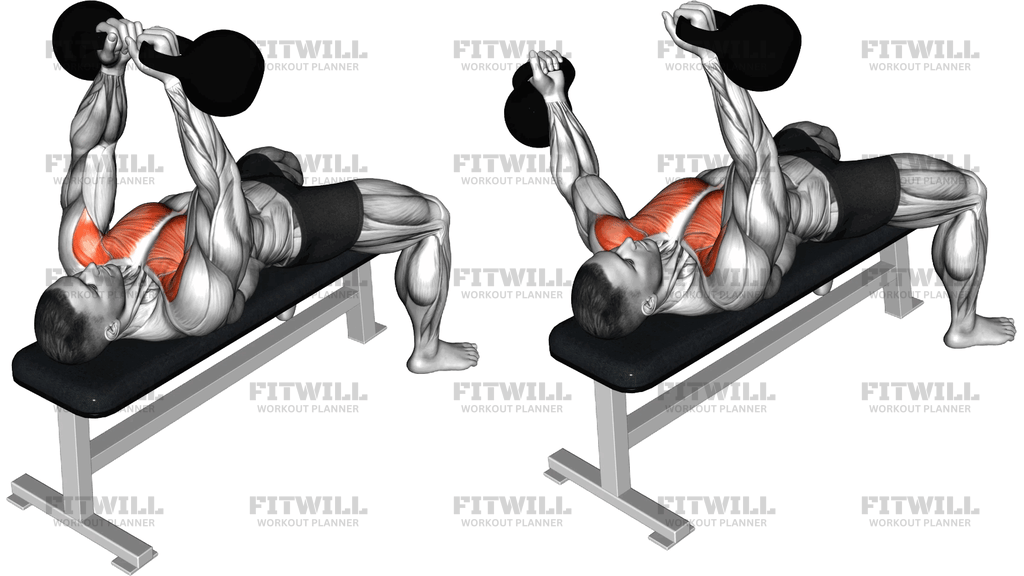
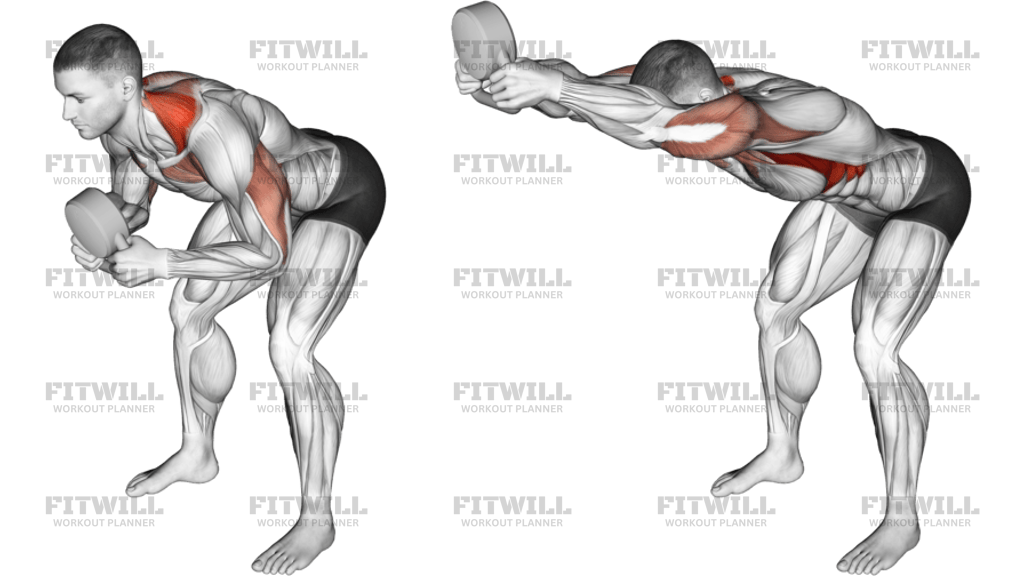
Kettlebell Angled Press is a bent-over pressing drill that keeps the torso hinged while the kettlebell travels on a forward, slightly upward line. The position turns the movement into more than a simple shoulder press: you have to hold a stable hinge, keep the ribs from flaring, and guide the bell with control instead of leaning into it. That makes it useful for developing shoulder strength, upper-back awareness, and trunk stiffness at the same time.
The setup matters because the angle of the torso changes where the tension goes. With the hips pushed back, knees softly bent, and the chest long instead of rounded, the shoulders and upper back can drive the press while the lower back stays out of the fight. The kettlebell should start close to the body with the wrists stacked and the elbows slightly bent, so the first inch of the press comes from clean joint position rather than a swing.
Kettlebell Angled Press works best when the bell moves in a smooth arc and the torso stays fixed. Press the weight away from the chest, finish with the arms long, and avoid shrugging the shoulders toward the ears at the top. On the way back down, resist the urge to collapse into the hinge or let the bell drift too far forward; the return should look just as controlled as the press. Breathing should stay organized, with a steady exhale through the press and a quiet reset before each rep.
This is a good accessory exercise when you want pressing volume without turning the set into an upright grind. It fits well in shoulder-focused sessions, upper-back work, or warm-ups that need a light to moderate load and a lot of positional control. Because the body angle increases the demand on posture and bracing, it is usually better to start lighter than you think and earn a bigger range only after the hinge, neck, and shoulder path stay consistent.
If the lower back starts taking over, the hinge is probably too deep or the load is too heavy. If the movement feels like a front raise, the bell is drifting too far from the body; if it feels like a shrug, the shoulders are hiking instead of pressing. Done well, Kettlebell Angled Press gives you a clean way to train pressing strength while reinforcing a strong athletic hinge and better control through the upper body.
[ Workout Log & Planner ]
Put your next workout in Fitwill
Keep your plan and training log ready when you are.


Instructions
- Stand with your feet about hip-width apart and hinge at the hips until your torso is angled forward, keeping a soft bend in the knees and a long neutral neck.
- Hold one kettlebell with both hands close to your chest or upper abdomen, with your wrists stacked and your elbows slightly bent.
- Set your shoulders down and back enough to keep the upper back organized, but do not turn the setup into a hard row or a rounded spine.
- Brace your midsection before each rep so your rib cage stays from flaring as the bell moves forward.
- Press the kettlebell away from your body on a smooth angled path until your arms are straight and the bell is in line with the intended press angle.
- Keep the hips, ribs, and torso fixed while the arms move, and avoid twisting or standing up to help the press.
- Pause briefly at the top without shrugging, then lower the kettlebell along the same path under control.
- Reset the bell close to the starting position, re-brace, and repeat for the planned reps before standing tall and racking the kettlebell safely.
Tips & Tricks
- Keep the hinge shallow enough that your low back stays quiet; if the torso starts dropping, the press usually turns into a balance drill.
- Let the bell travel on a slight arc, not straight up over the face, so the shoulders can press without the neck taking over.
- If your elbows lock out by snapping the ribs forward, reduce the load and finish the rep with a tall chest instead of a bigger range.
- A lighter kettlebell often works better here because the angled position magnifies any wobble or shoulder shrug.
- Keep the wrists stacked over the handle; bent wrists make the top position feel sloppy and can irritate the forearm.
- The rep should feel like a controlled press, not a front raise or a swing, so stop the set if momentum starts helping.
- Use a slower lowering phase if you want more time under tension for the shoulders and upper back.
- If one side of your body rotates more than the other, square your hips and shorten the press path until both shoulders move evenly.
Frequently Asked Questions
What muscles does Kettlebell Angled Press work?
It mainly trains the shoulders, upper back, and triceps while the core and hip hinge muscles keep your torso stable.
Is Kettlebell Angled Press beginner friendly?
Yes, if you keep the kettlebell light and the hinge small. Beginners should focus on staying braced and moving the bell without twisting.
Should my torso stay fixed during Kettlebell Angled Press?
Yes. Your hips and ribs should stay set while the arms press on the angled path, otherwise the lower back and momentum start doing the work.
Why does Kettlebell Angled Press feel different from a standing press?
Because the hip hinge changes the line of force. The angled body position asks more from your upper back and trunk while keeping the press controlled.
What should I do if the movement turns into a front raise?
Bring the kettlebell closer to your chest and press on a shorter arc. If the bell drifts too far forward, the shoulders lose their pressing line.
Can I use one hand instead of two on the kettlebell?
You can, but the two-hand setup shown here usually makes the hinge and pressing path easier to control. A single hand version will feel less stable and more rotational.
Where should I feel the top of Kettlebell Angled Press?
You should feel the shoulders and upper back doing most of the work, with the triceps finishing the press and the core resisting movement.
How heavy should the kettlebell be?
Use a load that lets you hold the hinge and keep the bell path smooth. If you have to stand taller or swing the weight, it is too heavy.