Bodybuilding Pose
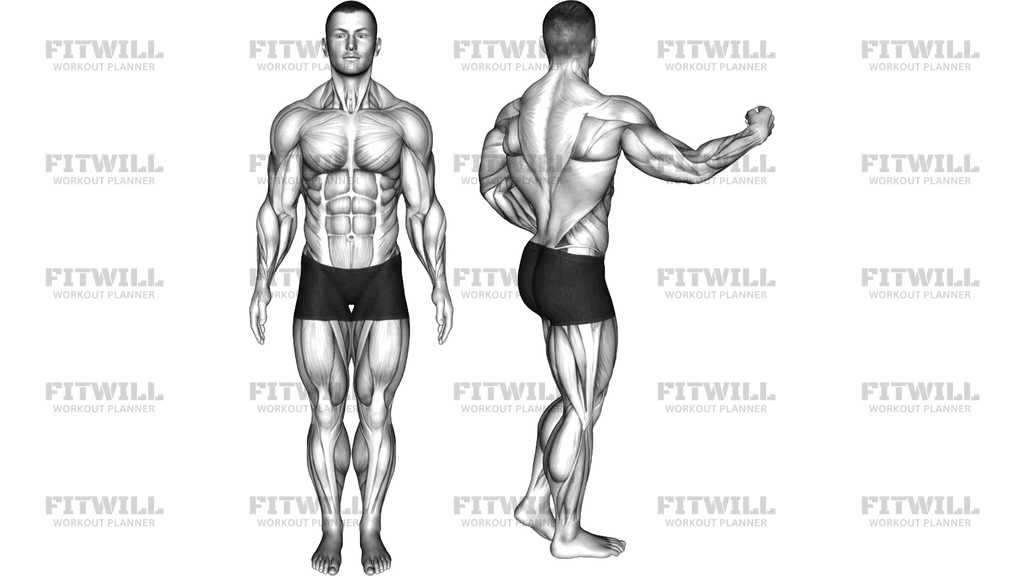
Bodybuilding Pose refers to the practice of holding the classic presentation positions used on stage — front relaxed, front double biceps, lat spread, side chest, and back poses. It is not a lift in the traditional sense, but it is a genuine physical skill: each pose is a full-body isometric contraction that demands coordinated tension from your core, shoulders, lats, glutes, and legs at the same time.
Competitive bodybuilders rehearse posing daily because it is judged as strictly as muscle size, but the practice is useful for anyone. Holding a hard pose teaches you to contract muscles deliberately, improve your mind-muscle connection, and control your posture under fatigue. Posing practice also functions as a low-impact isometric session: your core braces continuously, your shoulders and lats hold the arm positions, and your legs stay locked and tight for the duration of the pose.
Setup matters more than most people expect. Every pose starts from a stable stance, usually feet roughly shoulder-width with weight spread evenly, a braced core, and a lifted chest. From there, the arm and shoulder positions define the pose — elbows wide in a double biceps, hands pressed into the waist and lats flared in a lat spread, or one arm extended in a side pose. Small changes in elbow height, shoulder rotation, or hip position dramatically change how the pose looks and how hard the muscles have to work.
To execute well, practice in front of a mirror or record yourself. Hit the pose deliberately rather than drifting into it: set the stance, brace, then layer on the arm and shoulder positions one at a time. Hold each pose for 20 to 60 seconds while breathing shallow but steady — many first-timers shake and turn red because they hold their breath and over-tense everything at once. The goal is maximum visible tension with minimum visible strain.
Common use cases include contest preparation, physique checks, photo shoots, and simply building better postural control and body awareness. Treat posing like a skill session: short, frequent, and quality-focused. Ten focused minutes several times per week will do far more for your presentation than one exhausting session.
[ Workout Log & Planner ]
Put your next workout in Fitwill
Keep your plan and training log ready when you are.


Instructions
- Stand with your feet about shoulder-width apart, toes turned out slightly, and your weight spread evenly across both feet.
- Brace your abdominal wall and lift your chest before moving your arms, so your torso is stable from the start.
- For a front double biceps, raise both arms so the upper arms are level with your shoulders and curl your fists toward your head, elbows staying high.
- For a front lat spread, place your hands against the sides of your waist, then drive your elbows out and back to flare the lats while keeping the chest tall.
- Keep your legs locked, glutes squeezed, and calves tight — soft legs make the whole pose look loose from the hips down.
- Hold the finished pose for 20 to 60 seconds, keeping the visible tension on while breathing in a slow, shallow rhythm instead of holding your breath.
- Release the pose in a controlled way, lowering your arms and shaking out your shoulders between repetitions rather than dropping instantly into the next pose.
- Reset your stance and brace before each new pose so every hold starts from the same solid base.
- Practice in front of a mirror or on camera, and check that your head stays neutral — looking down or craning forward breaks the line of the pose.
Tips & Tricks
- The most common mistake is tensing only the arms. Drive tension from the legs and core outward; the arms are the finish of the pose, not the start.
- If you turn red and shake early, you are holding your breath and clenching your face. Practice shallow breathing during the hold instead of exhaling everything at once.
- In the lat spread, most people shrug their shoulders toward their ears. Push the shoulders down as the elbows go out to keep the lats doing the work.
- For the double biceps, a common fault is letting the elbows drop below shoulder height. Fix the elbow line first, then adjust the forearm angle.
- Filming yourself from the front and back is more honest than a mirror, which biases you toward angles you already look good in.
- Practice transitions between poses, not just the poses themselves. On stage, the way you move between holds is part of the presentation.
- Shorten your holds rather than losing tension. A crisp 30-second hold trains presentation better than 90 sloppy seconds.
- If your calves cramp during long holds, that is normal at first — stretch them between poses and build hold duration gradually.
Frequently Asked Questions
What muscles does the Bodybuilding Pose actually train?
Every pose is a full-body isometric hold. The core, shoulders, lats, traps, quads, and glutes all maintain continuous tension, and the specific emphasis shifts with each pose — the lat spread leans on the lats and shoulders, while the double biceps holds the delts and upper back under constant load.
Can beginners practice Bodybuilding Pose without stage ambitions?
Yes. Posing is one of the best ways to learn what a maximal contraction feels like in each muscle group, and it builds posture and body awareness that carry over into every lift in your training.
How long should I hold each pose?
Start with 20 to 30 seconds per pose and build toward 60 seconds. Competition routines require holding poses much longer under fatigue, so extend duration gradually as your tolerance improves.
Why do I shake and get out of breath during a pose?
That is usually a combination of maximal isometric tension and restricted breathing. Beginners instinctively hold their breath and clench everything at once; practicing shallow, steady breathing during the hold fixes most of it within a few sessions.
What is the most common mistake in the front lat spread?
Shrugging the shoulders and pushing the hands forward instead of driving the elbows back and down. The flare comes from the elbows and shoulder blades, not from forcing the hands outward.
Is there an equipment-free substitution if I cannot practice poses standing?
Seated versions of the poses work in a pinch, but standing is strongly preferred because leg tension, glute squeeze, and balance are part of what posing trains. If standing is a limitation, hold the upper-body positions against a wall for support.
Does Bodybuilding Pose count as cardio or strength training?
It is closest to isometric strength work with a strong skill component. It will not replace your lifting or conditioning, but it complements both by improving contraction quality and postural endurance.
Is posing practice safe for people with shoulder or back issues?
Most poses are safe because they use no external load, but positions like the deep lat spread place the shoulders in end-range positions. Work within a comfortable range and stop any pose that produces pinching or pain.
How often should I run a Bodybuilding Pose session?
Three to five short sessions per week works well. Ten minutes of focused practice with full tension and proper reset between poses beats one long weekly session where quality fades.