Standing Y-Raise
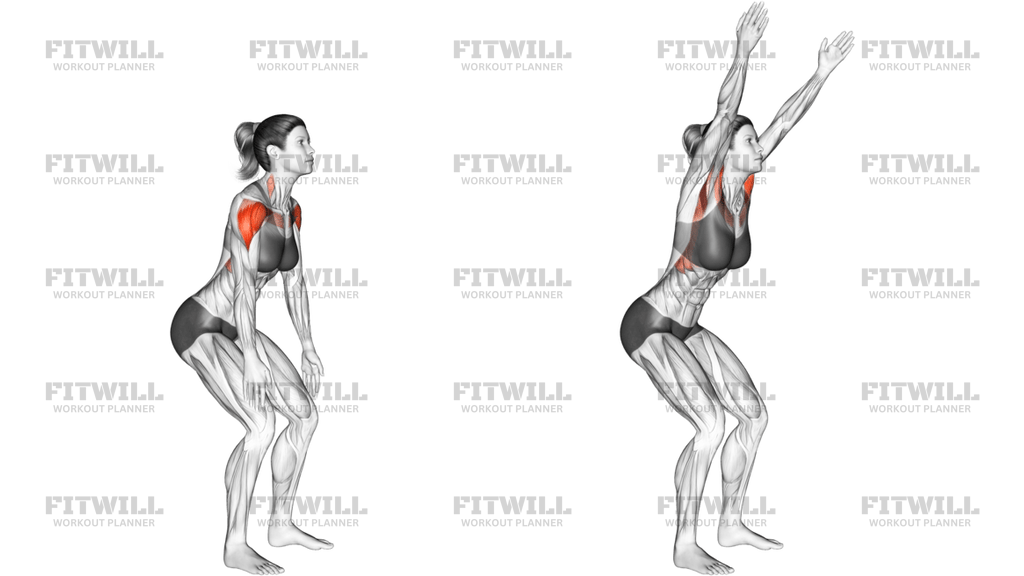
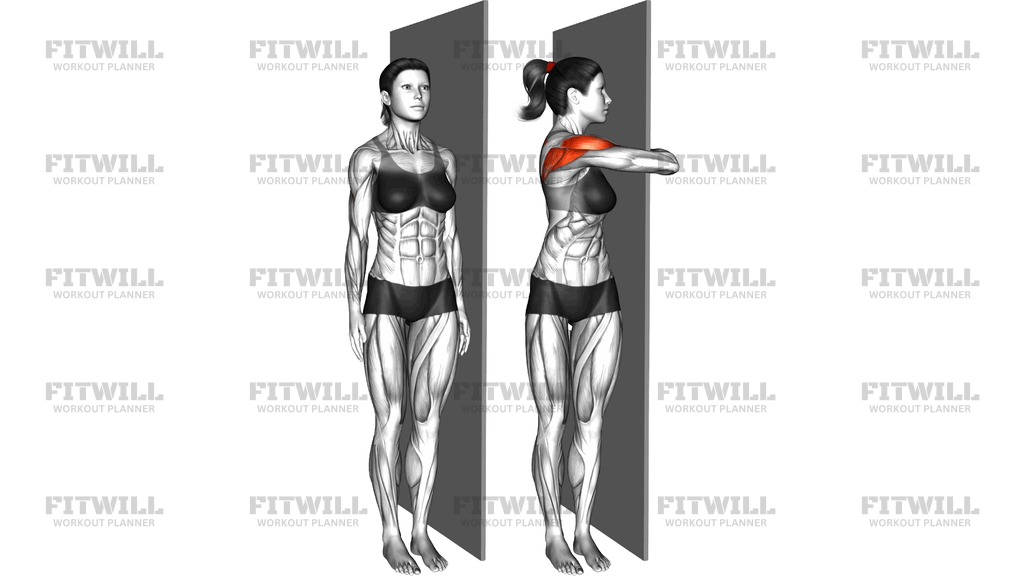
Standing Y-Raise is a bodyweight shoulder activation drill that trains you to reach overhead in a clean Y shape without letting the ribs flare or the neck take over. It is useful when you want to wake up the delts, lower traps, and upper back before pressing work, or when you want a low-load drill to reinforce better overhead posture. Because there is no external resistance, the value of the exercise comes from alignment, control, and the quality of the reach.
The movement emphasizes the deltoids while the lower traps, rhomboids, serratus anterior, and rotator cuff help guide the shoulder blades and keep the arms on a smooth path. Done well, Standing Y-Raise teaches the shoulders to move upward and outward without shrugging. That makes it a practical choice for warm-ups, shoulder-health sessions, and accessory work when you want to build control instead of chasing fatigue.
Start by standing tall with your feet about hip-width apart, knees soft, and your weight balanced through the whole foot. Let your arms hang by your sides with your thumbs turned slightly out, then set your ribs over your pelvis and keep your chin neutral. From there, the shoulders should stay away from your ears so the lift begins from a stable base rather than a forward lean or a back arch.
Raise both arms up and out at roughly 45 degrees so they travel into a Y shape, leading with your thumbs and keeping only a small bend in the elbows. Think about reaching long through the fingertips rather than throwing the arms up. Pause briefly when the biceps are near your ears, then lower with the same line of motion until your hands return beside your thighs.
Standing Y-Raise works best when the rep looks smooth from start to finish. If your neck tightens, your shoulders shrug, or your lower back arches, shorten the range and slow the tempo until the movement feels clean again. It is an easy exercise to slot into a shoulder warm-up, a posture-focused session, or the end of an upper-body workout when you want precise tension and joint-friendly control.
Fitwill
Log Workouts, Track Progress & Build Strength.
Achieve more with Fitwill: explore over 9600 exercises with images and videos, access built-in and custom workouts, perfect for both gym and home sessions, and see real results.
Start your journey. Download today!




Instructions
- Stand with your feet hip-width apart and your arms relaxed at your sides, thumbs turned slightly out.
- Soften your knees, stack your ribs over your pelvis, and keep your chin neutral so your torso stays tall.
- Set your shoulders down away from your ears before the first rep.
- Raise both arms up and out about 45 degrees, leading with your thumbs and keeping a small bend in your elbows.
- Continue until your biceps are beside your ears or your shoulders stop moving cleanly.
- Hold the top for a beat and squeeze the lower traps without shrugging or flaring your ribs.
- Lower your arms along the same path until your hands return to your thighs.
- Reset your posture, breathe in on the way down and exhale as you raise, then repeat.
Tips & Tricks
- Keep the thumbs pointed up; letting the palms roll forward usually turns the rep into a shrug.
- If the neck starts working harder than the shoulders, reduce the height of the raise.
- Use a slow lowering phase so the upper back stays engaged instead of dropping the arms.
- Stop the rep before your ribs pop up or your lower back arches.
- Think "reach long" rather than "lift high" to keep tension on the delts and lower traps.
- A tiny elbow bend is fine, but don't turn the movement into a bent-arm shrug.
- Keep your weight centered through the midfoot so you don't lean back to finish the rep.
- If you cannot keep the shoulder blades controlled, shorten the range and clean up the path first.
Frequently Asked Questions
What muscle does Standing Y-Raise target most?
It primarily targets the delts, with the lower traps, rhomboids, serratus anterior, and rotator cuff helping control the shoulder blades and overhead reach.
Is Standing Y-Raise good as a warm-up before pressing?
Yes. It is a good primer before benching, overhead pressing, or pull work because it rehearses upward reach without heavy loading.
Should my arms stay straight during Standing Y-Raise?
Keep a very small bend in the elbows, but do not let them collapse into a curl. The arms should feel long and active, not locked and stiff.
Why do I feel Standing Y-Raise in my neck?
Usually the shoulders are shrugging upward or the range is too high. Lower the arms a little and keep the neck long while the shoulder blades move down and around the ribs.
How high should I lift my arms?
Lift until your biceps are near your ears or until you can no longer keep the ribs down and the shoulders relaxed. Range matters less than staying smooth and controlled.
Can beginners do Standing Y-Raise?
Yes. It is beginner-friendly because it uses body weight and teaches shoulder position without needing a heavy load.
What is the biggest mistake with this exercise?
The most common mistake is turning it into an upper-trap shrug. Keep the motion small and deliberate so the delts and lower traps do the work.
Is there a modification if overhead range feels tight?
Yes. Stop the lift a little lower and keep the movement in a pain-free arc. As control improves, gradually raise the hands higher without losing rib position.