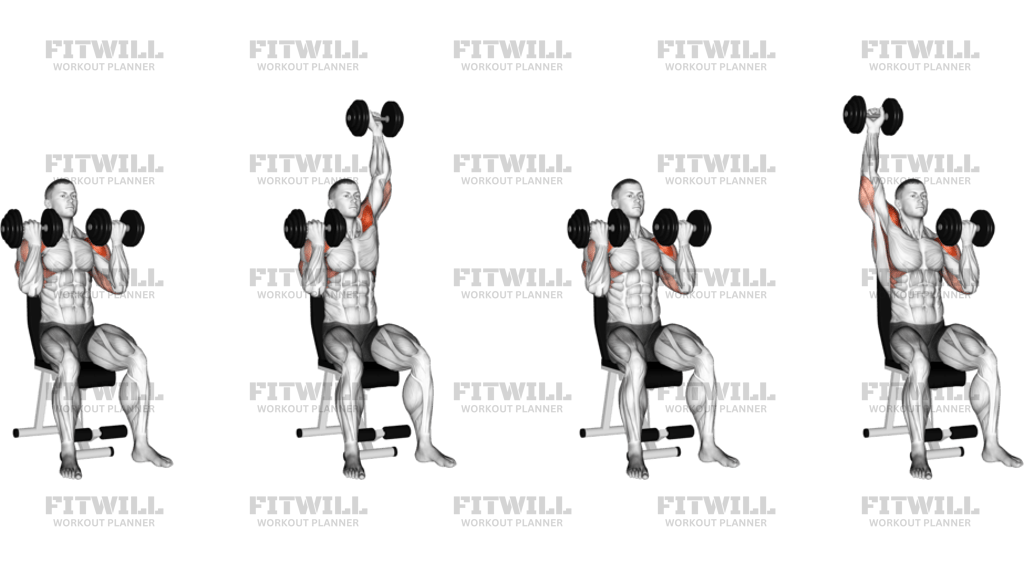
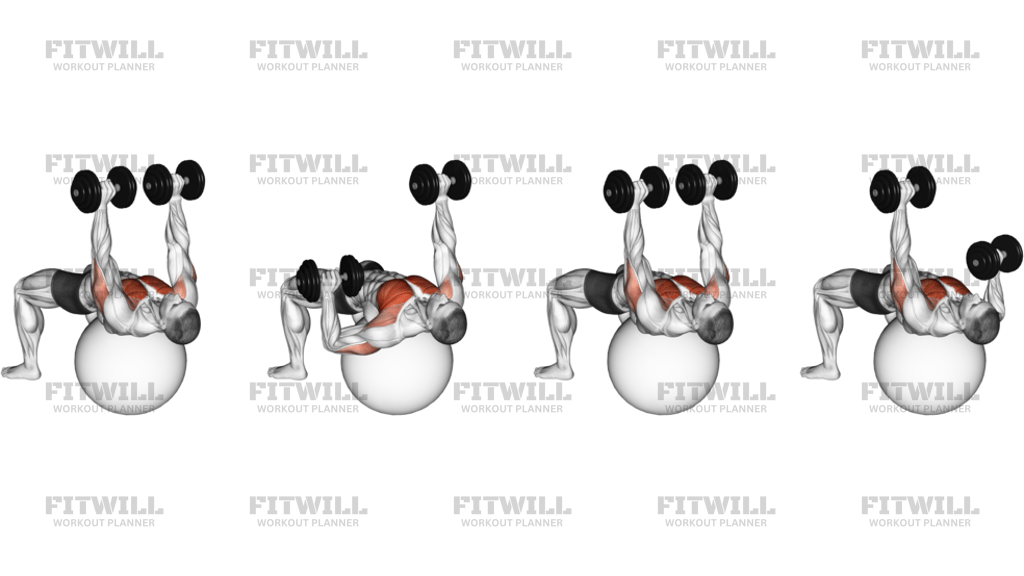
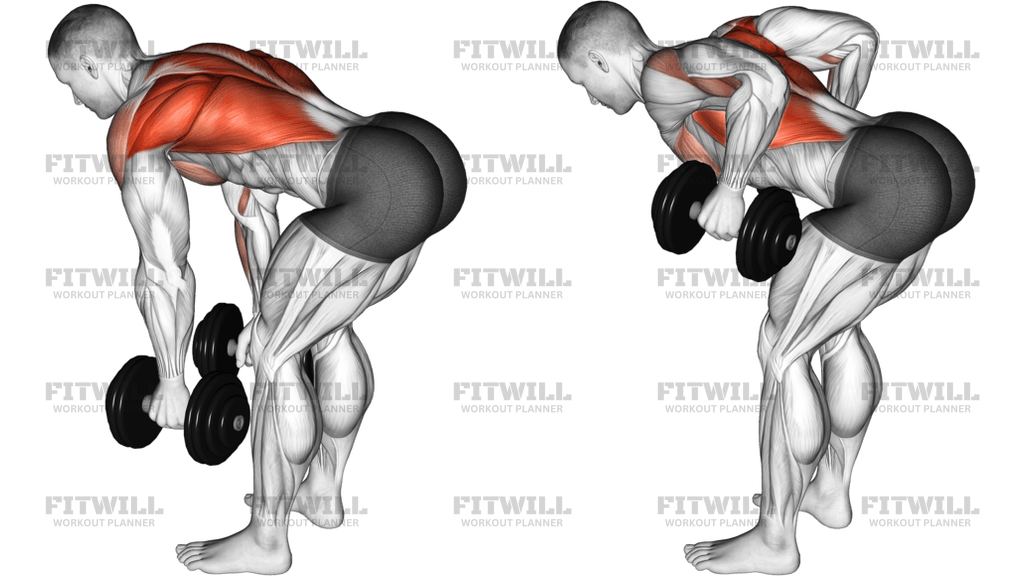
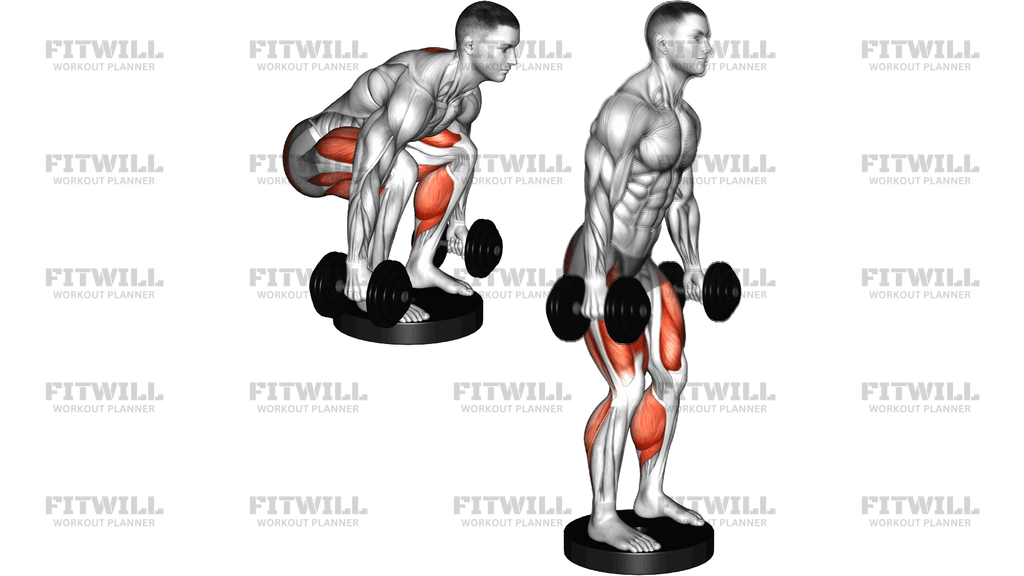
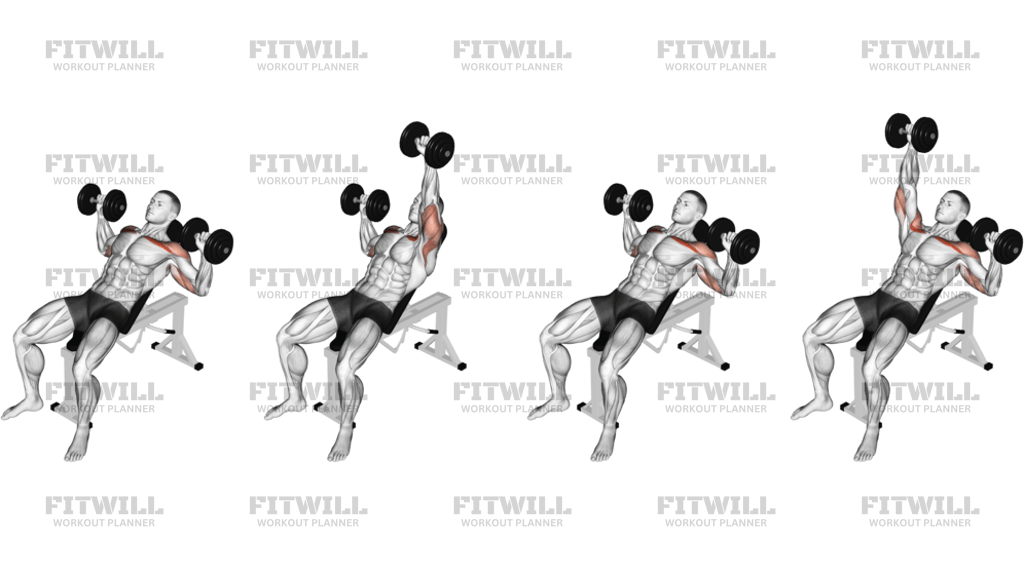
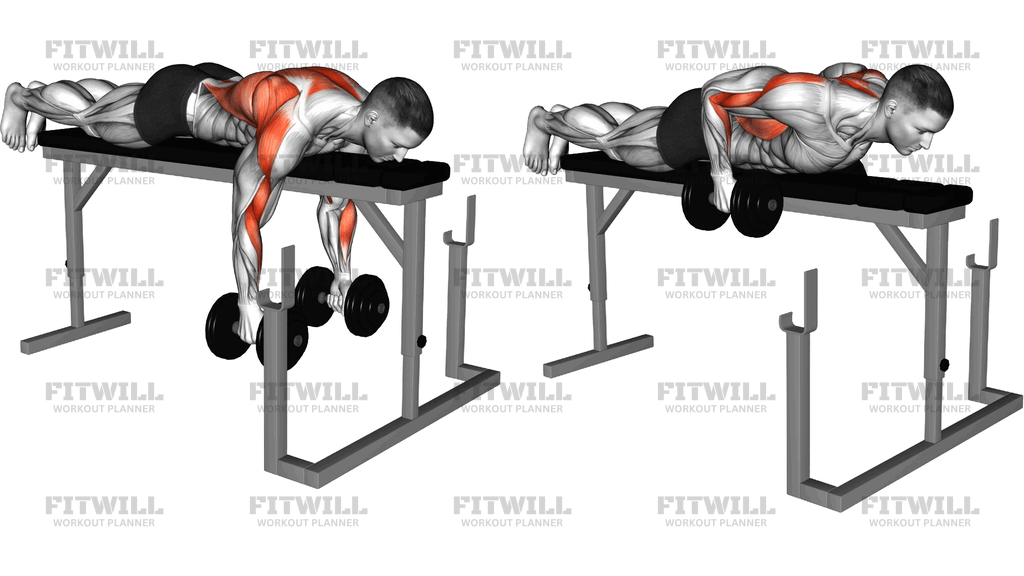
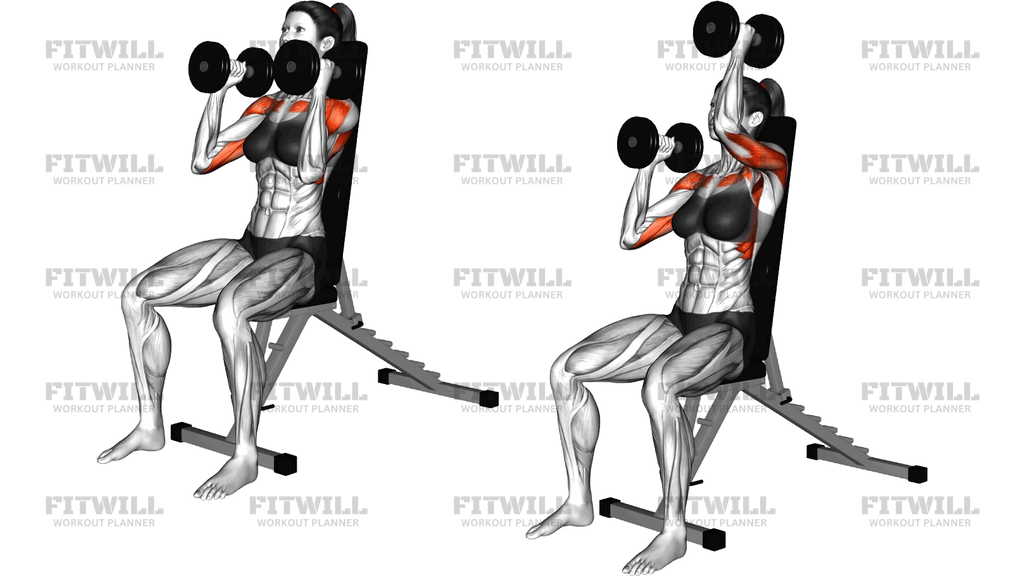
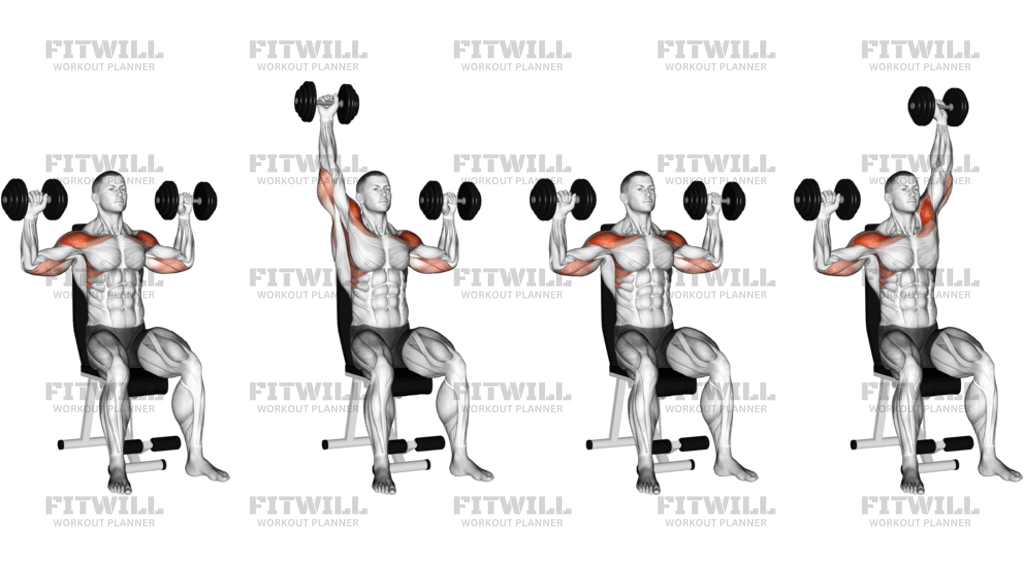
Dumbbell Front Raise Version 2
Dumbbell Front Raise Version 2 is a front-shoulder isolation exercise performed with a single dumbbell held in both hands and lifted in front of the body. The movement is simple on paper, but the details matter: where the dumbbell starts, how much bend you keep in the elbows, and whether you can raise and lower it without leaning back or shrugging. When those pieces stay organized, the front delts do the work instead of momentum, the neck, or the lower back.
This version is useful when you want a symmetrical front raise with a very clear path. Holding one dumbbell with both hands makes it easier to keep the load centered, keep the shoulders level, and feel whether one side is compensating. That makes it a good choice for controlled accessory work, warm-ups before pressing, or lighter shoulder volume when you want direct anterior deltoid tension without a lot of setup.
The starting position should be tall and deliberate. Stand with your feet about hip-width apart, the dumbbell resting in front of your thighs, wrists straight, elbows softly bent, and ribs stacked over your pelvis. From there, raise the dumbbell in a smooth arc until it reaches shoulder height. The path should stay in front of the torso, not drift into a press or a swing. At the top, the shoulders should remain down rather than creeping toward the ears.
Lower the dumbbell under control along the same line until it returns to the thighs. The return is part of the exercise, not a reset between reps, so resist the urge to drop the weight or bounce out of the bottom. A steady exhale on the lift and an easy inhale on the way down helps keep the torso braced without making the movement stiff.
Dumbbell Front Raise Version 2 is most effective when it looks boring: no body sway, no neck tension, no overreaching at the top. If the dumbbell starts to move faster than your shoulders can guide it, the front raise usually turns into a hip-driven swing. Keep the load light enough to stay strict, stop the set when you can no longer maintain the same path, and use pain-free range only. That approach keeps the exercise focused on the front of the shoulders and makes the rep quality repeatable from start to finish.
[ Workout Log & Planner ]
Put your next workout in Fitwill
Keep your plan and training log ready when you are.


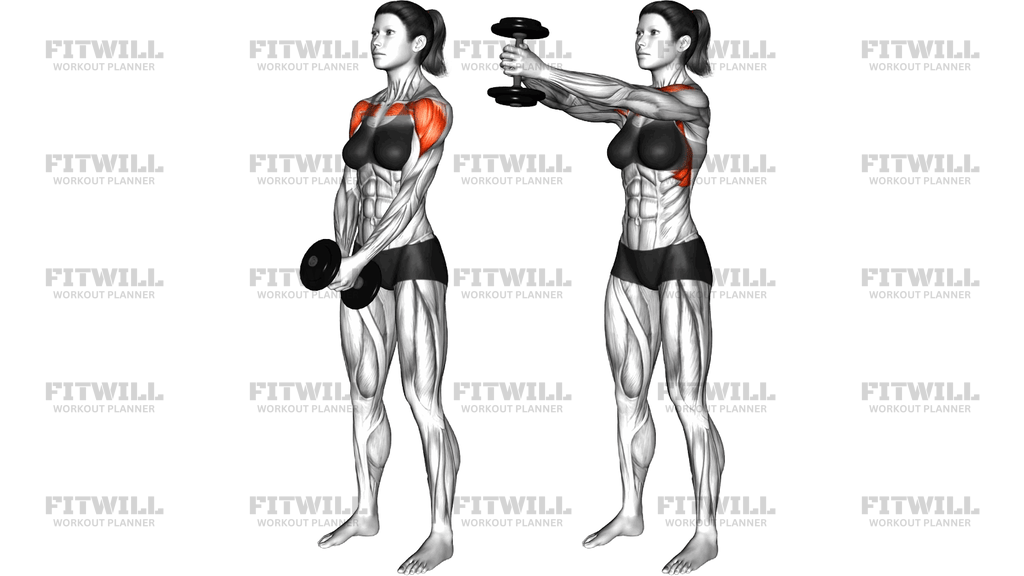
Instructions
- Stand tall with your feet about hip-width apart and hold one dumbbell with both hands in front of your thighs.
- Keep your chest tall, ribs stacked, wrists straight, and elbows softly bent before the first rep.
- Set your shoulders down away from your ears and brace your midsection without leaning back.
- Start the lift by driving the dumbbell forward and up in a smooth arc in front of your torso.
- Raise the dumbbell until it reaches about shoulder height, or slightly lower if your shoulders start to shrug.
- Pause briefly at the top without swinging, twisting, or turning the movement into a press.
- Lower the dumbbell along the same path until it returns to the front of your thighs.
- Exhale as you lift, inhale as you lower, and reset your posture before the next rep.
Tips & Tricks
- Use a lighter dumbbell than you would for rows or presses; this lift becomes sloppy very quickly when the load is too heavy.
- Keep the bend in your elbows almost fixed so the rep stays a front raise instead of becoming a front press.
- Stop at shoulder height if the dumbbell pulls your ribs forward or makes you shrug.
- Keep the dumbbell centered in front of you so both hands share the load evenly.
- If your lower back arches, lower the weight and keep your glutes and abs tighter through the lift.
- A slower lowering phase increases front-shoulder tension and exposes any cheating on the way down.
- Let the shoulders stay low at the top; the upper traps should not take over the movement.
- If you feel pinching in the front of the shoulder, shorten the range slightly and keep the path a little farther in front of the body.
Frequently Asked Questions
What does Dumbbell Front Raise Version 2 train most?
It mainly targets the front of the shoulders, especially the anterior deltoids, with the upper chest and core helping to stabilize the rep.
How should I hold the dumbbell in this version?
Hold a single dumbbell with both hands in front of your thighs and keep the load centered so the lift stays symmetrical.
How high should the dumbbell go?
Raise it to about shoulder height. Going much higher usually turns the exercise into a shrugging or pressing pattern.
Can beginners use this exercise?
Yes. It is beginner-friendly when the dumbbell is light and the torso stays quiet during the lift and lower.
What is the most common mistake with this front raise?
The biggest mistake is using momentum from the hips or lower back instead of lifting with the shoulders.
Why use one dumbbell with both hands instead of two separate dumbbells?
One centered dumbbell is easier to control and makes it simpler to keep both shoulders level through the same range.
Should my elbows stay straight?
Keep a small bend in the elbows. Locking them out can make the movement feel harsh on the joints and easier to swing.
What should I do if I feel this in my neck more than my shoulders?
Lower the weight, keep your shoulders down, and stop the set before the dumbbell gets high enough to make you shrug.