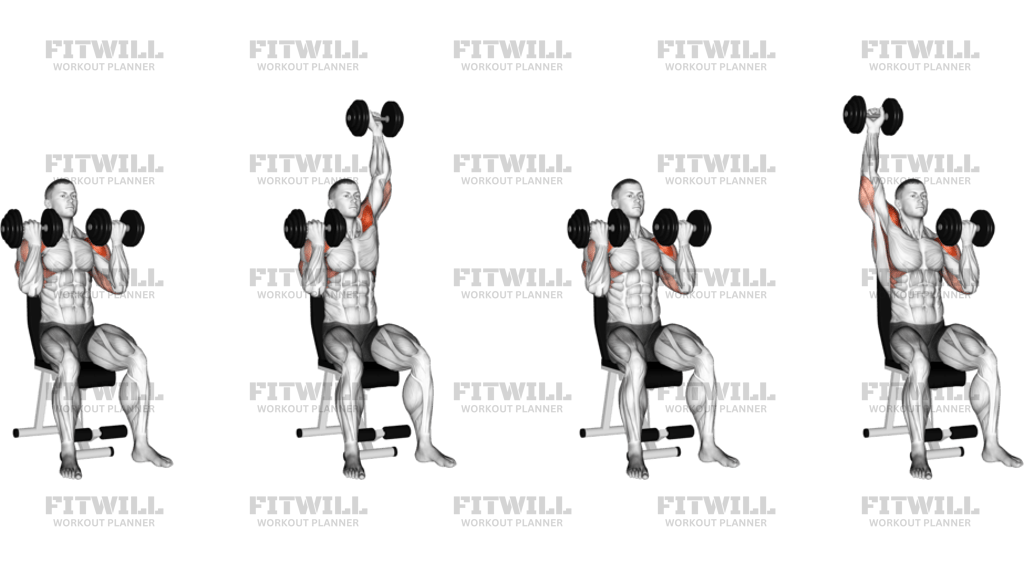
Dumbbell Scott Press
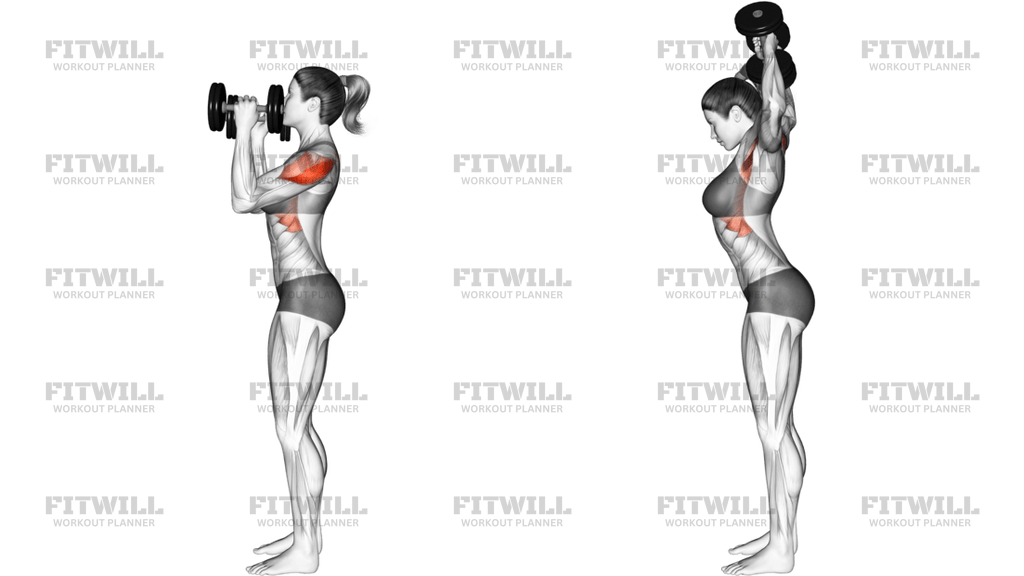
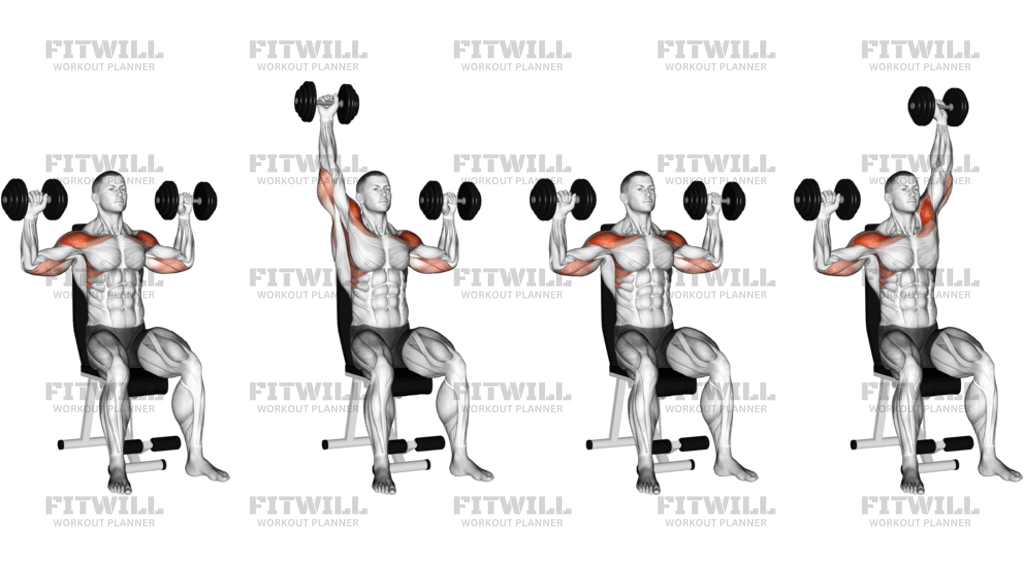
Dumbbell Scott Press is a standing dumbbell shoulder press variation performed from a compact front-rack position at shoulder height. The dumbbells start just in front of the shoulders and travel upward in a controlled vertical path until the arms lock out overhead. It is a direct way to train the deltoids with the triceps, upper traps, serratus, and core helping to keep the body organized.
The exercise rewards a strict setup. Stand with the feet about hip-width apart, knees soft, ribs stacked over the pelvis, and the glutes lightly engaged so the lower back does not turn the rep into a lean-back press. Keep the wrists over the elbows and the elbows slightly in front of the torso at the bottom. That front-loaded start position helps the shoulders produce the force instead of momentum, leg drive, or an overarched spine.
On each rep, the dumbbells should move close to the face on the way up and finish above the shoulders and mid-foot, not drifting far in front of the body. The top position should feel tall and controlled, with the biceps near the ears and the shoulders still active rather than shrugged up. Lower the weights under control back to shoulder height and reset the brace before the next rep. Smooth breathing matters: brace before the press, then exhale through the sticking point without losing the stacked torso position.
Because the movement is strict and overhead, the load usually needs to stay moderate. If the dumbbells force a big back arch, a forward head posture, or a bouncing rebound off the bottom, the set is too heavy. Clean repetitions are the goal here, not maximal momentum or speed. The exercise fits well as shoulder accessory work, in upper-body sessions, or any program that wants controlled overhead volume without a push press.
Beginners can use Dumbbell Scott Press if they keep the range honest and the load light enough to avoid compensating with the torso. More advanced lifters can use it to build strict pressing strength, lockout control, and overhead stability. The best reps look steady from start to finish: fixed foot pressure, quiet torso, vertical dumbbell path, and a controlled return to the starting rack position.
[ Workout Log & Planner ]
Put your next workout in Fitwill
Keep your plan and training log ready when you are.


Instructions
- Stand with your feet about hip-width apart and hold the dumbbells at shoulder height just in front of the shoulders.
- Stack your wrists over your elbows, keep the elbows slightly in front of the torso, and set your head in a neutral position.
- Brace your core, squeeze your glutes lightly, and keep the ribs from flaring before the first press.
- Press the dumbbells upward in a controlled line close to the face, letting the elbows extend as the weights pass forehead level.
- Finish with the dumbbells overhead above the shoulders and mid-foot without leaning back or shrugging hard.
- Pause briefly at the top with the arms extended and the torso still stacked.
- Lower the dumbbells slowly back to shoulder height, keeping tension through the shoulders on the way down.
- Reset your brace at the bottom and repeat for the planned reps.
Tips & Tricks
- Keep the dumbbells slightly in front of the face on the way up so the press stays vertical instead of drifting forward.
- If your lower back arches to finish the rep, reduce the load and shorten the set before form breaks down.
- Use a grip that lets the wrists stay stacked over the elbows at the bottom; a bent wrist usually means the weight is too heavy.
- Lower the dumbbells slower than you press them so the delts stay under tension instead of bouncing out of the bottom.
- Do not let the shoulders shrug to the ears at lockout; think tall arms with the neck staying long.
- Keep the elbows a little in front of the torso at the start so the front delts can contribute without forcing the weights out wide.
- Exhale as the dumbbells pass the sticking point, but keep the ribs from popping upward.
- Stop the set when one dumbbell starts drifting ahead of the other or the torso begins to sway.
Frequently Asked Questions
What does Dumbbell Scott Press train most?
It primarily trains the shoulders, especially the deltoids, with the triceps and upper traps helping through the press.
Why do the dumbbells start at shoulder height?
Starting in a front-rack position keeps the press strict and makes it harder to cheat with leg drive or a big torso lean.
Should my elbows stay in front of my body?
Yes, a slightly forward elbow position at the bottom helps keep the dumbbells on a clean pressing path and reduces unnecessary flare.
How do I know if I am leaning back too much?
If your ribs pop up, your hips drift forward, or the dumbbells finish far in front of your head, the load is too heavy or the brace is too loose.
Is this the same as a standard dumbbell shoulder press?
It is very close, but the Scott press is usually stricter and starts from a more controlled front-rack position.
Can beginners do this exercise?
Yes, as long as they use light dumbbells and keep the torso stacked instead of turning it into a body English press.
What should I do if one arm rises faster than the other?
Slow the tempo and match the slower side so both dumbbells finish together instead of twisting the torso.
What is a good substitution if overhead pressing bothers my shoulders?
Use a smaller range, a lighter neutral-grip press, or a machine press that lets you keep the path more stable.