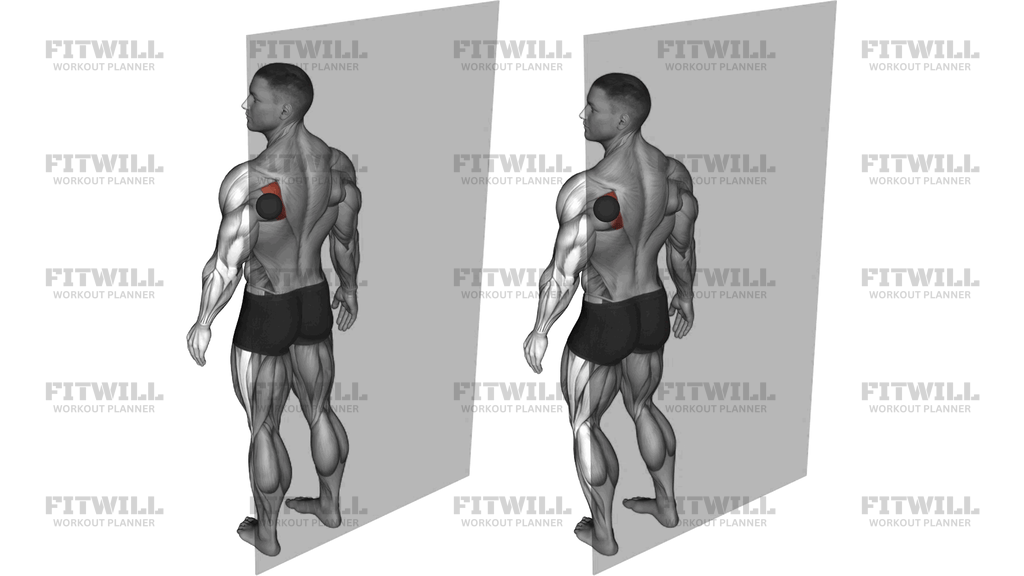
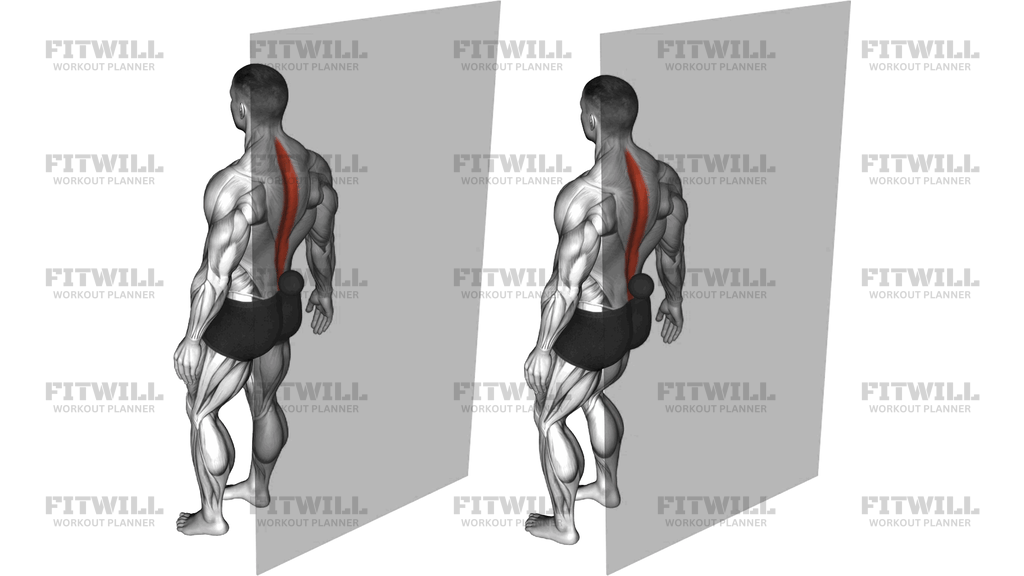
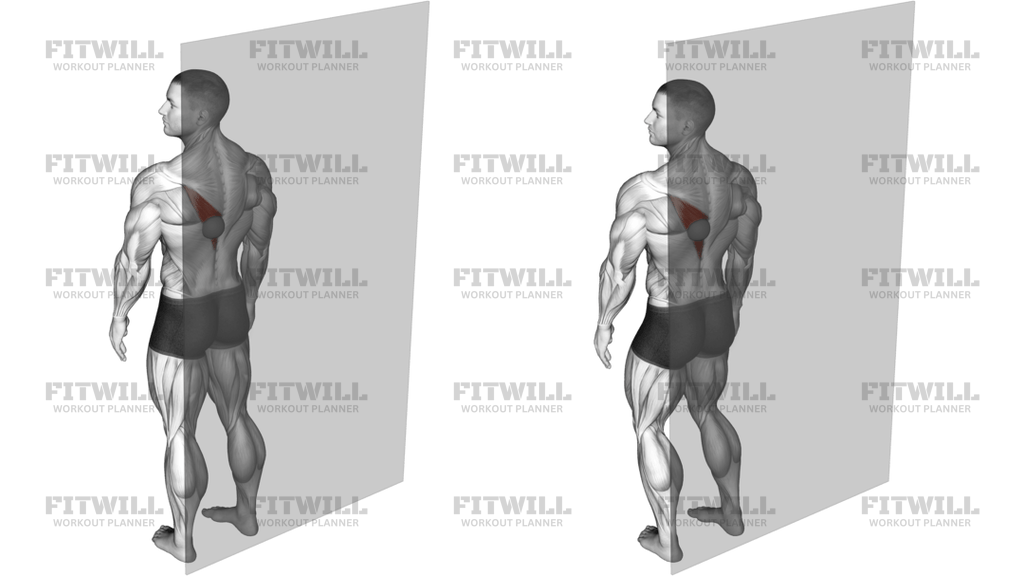
Roll Ball Upper Trapezius Release
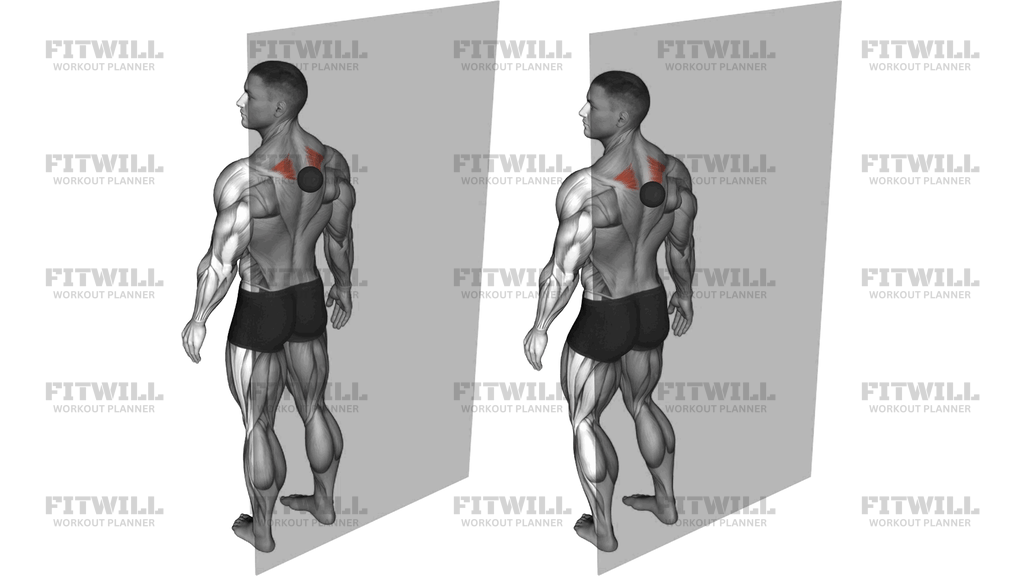
Roll Ball Upper Trapezius Release is a wall-supported self-release for the upper trapezius and nearby neck-shoulder tissue. The ball is placed high on the shoulder, just off the side of the neck, and the body leans into the wall so pressure comes from controlled bodyweight rather than forceful pushing. That setup matters because the upper trapezius responds better to steady pressure and small positional changes than to aggressive grinding.
This drill is most useful when the top of the shoulder feels tight, the neck feels stiff, or the area around the base of the skull and collarbone needs a light tissue reset. It can help you reduce tone before lifting, improve comfort during overhead work, or unwind after a long day of desk posture. The goal is not to crush the muscle, but to find a tender spot, breathe, and let the tissue soften.
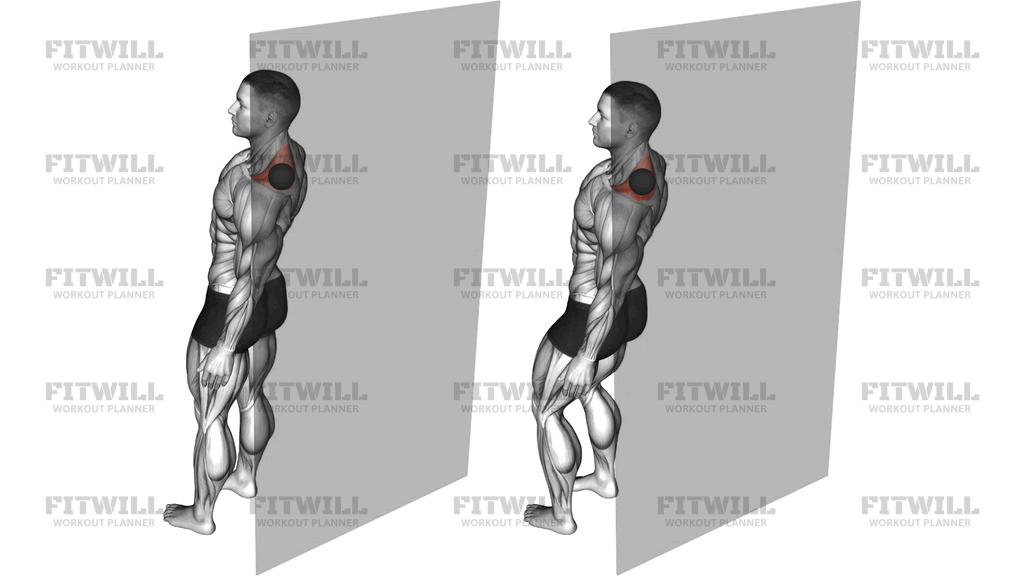
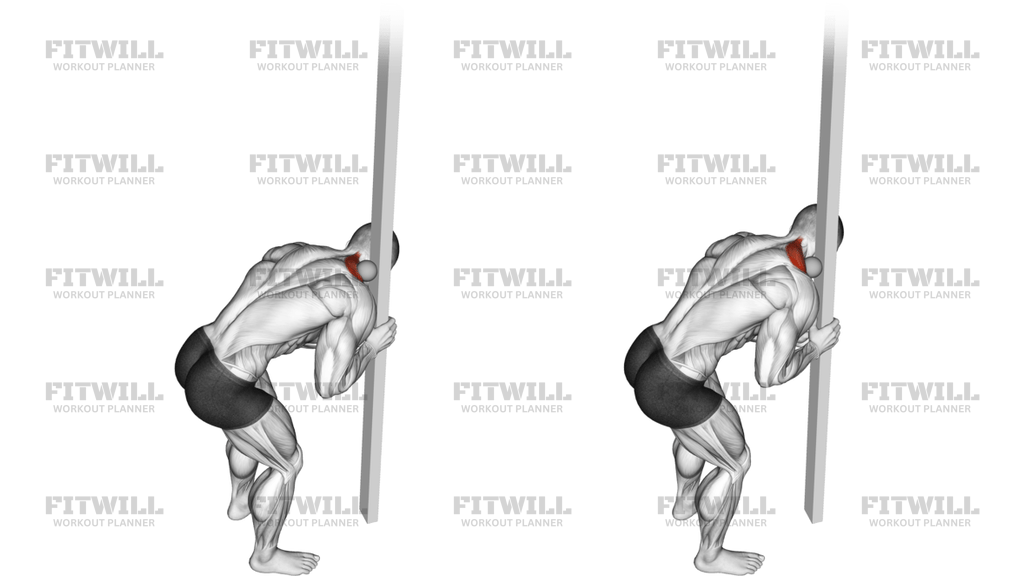
The image shows a side-on stance with the forearm and hand braced on the wall for balance while the torso stays slightly hinged forward. From there, the upper body makes tiny shifts so the ball can roll across the upper trap fibers. Keep the neck long, the jaw loose, and the shoulder from shrugging up into the ear. If the pressure feels sharp, move the ball a little farther onto the fleshy top of the shoulder and away from the front or side of the neck.
A good set feels like slow pressure with controlled exploration, not like a big range-of-motion exercise. Spend a short amount of time on each side, breathe out into the pressure, and use only enough movement to map out tight spots. If the ball slides onto bone, the throat, or the spine, reset immediately. This release is meant to be precise and calm so you can leave the area less guarded, not irritated.
Use it as part of a warm-up, recovery block, or mobility sequence before pressing, pulling, or overhead training. It is best done with patience, moderate pressure, and a stable stance. If you have numbness, tingling, dizziness, or pain that refers down the arm, stop and get assessed instead of trying to force the release.
[ Workout Log & Planner ]
Put your next workout in Fitwill
Keep your plan and training log ready when you are.


Instructions
- Stand side-on to a wall or upright post and place the roll ball high on the upper trapezius, just off the side of the neck.
- Bring the same-side forearm and hand to the wall for balance, and step the feet so you can lean your bodyweight into the ball.
- Keep the chest slightly angled toward the floor, the knees soft, and the neck long instead of shrugging the shoulder toward your ear.
- Apply gentle pressure and let the ball settle into the fleshy top of the shoulder rather than the spine or front of the neck.
- Make small shifts up, down, forward, and back until you find a tender spot in the upper trap fibers.
- Pause on that spot for a few slow breaths, relaxing the jaw and letting the shoulder soften as you exhale.
- If the pressure stays tolerable, slightly change your torso angle or elbow height to work a different part of the muscle.
- Move to the other side once the first side feels less guarded, then repeat with the same controlled pressure.
- Stop the release if the sensation becomes sharp, zinging, or numb, and reset the ball to a safer spot.
Tips & Tricks
- Use just enough bodyweight to create a deep but calm pressure; forcing the shoulder into the wall usually makes the neck brace harder.
- Keep the ball on the upper trapezius muscle belly, not on the cervical spine, the throat, or the top of the clavicle.
- A slight chin tuck helps keep the back of the neck long and prevents the head from jutting forward while you lean.
- Slow exhales usually help the area soften faster than holding your breath against the wall.
- Tiny adjustments work better than big rolling motions; the goal is to search for tender fibers, not to scrub the whole shoulder.
- If you feel the trap gripping harder, lower the pressure by stepping your feet farther from the wall.
- Keep the supporting hand relaxed on the wall so the arm helps with balance without loading the neck.
- Spend less time on a spot that feels irritated and more time on spots that feel tight but tolerable.
- Avoid chasing pain down the arm or into the head; that usually means the pressure is wrong for this release.
- Use this before overhead work or after long desk sessions when the upper shoulders feel elevated and guarded.
Frequently Asked Questions
What does Roll Ball Upper Trapezius Release target?
It targets the upper trapezius at the top of the shoulder, with nearby neck and shoulder tissues also getting light pressure.
Where should the ball sit on the shoulder?
Place it on the fleshy upper trap just off the side of the neck, not on the spine, throat, or collarbone.
Do I move a lot during this release?
No. Small shifts and short holds work better than large rolling motions because the area is narrow and easy to overdo.
Should I press as hard as possible?
No. The pressure should be firm enough to feel the tight spot, but soft enough that you can keep breathing and stay relaxed.
Can I use this before lifting?
Yes. It fits well before overhead pressing, pulling, or any session where the upper shoulders feel tense.
What if I feel tingling or a sharp zap?
Stop immediately and reposition the ball. Tingling, zinging, or numbness is not the right sensation for this release.
Is this exercise good for desk-related neck tension?
Yes. It is often used when long sitting or screen time leaves the upper traps feeling elevated and stiff.
How long should I stay on one side?
Usually only long enough to find a tender spot, breathe into it, and move on once the shoulder feels less guarded.