Quickly Swing Arms In Place
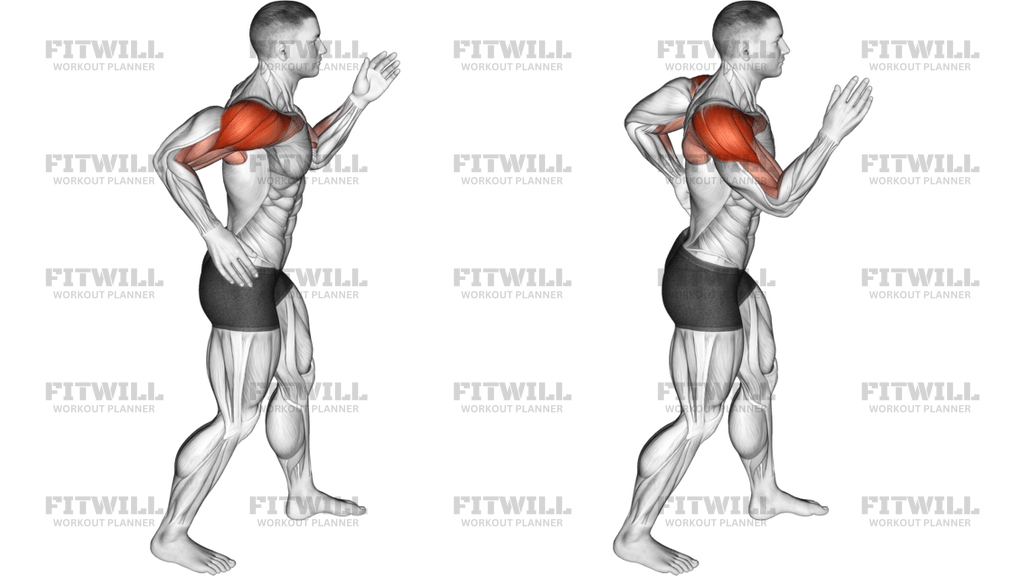
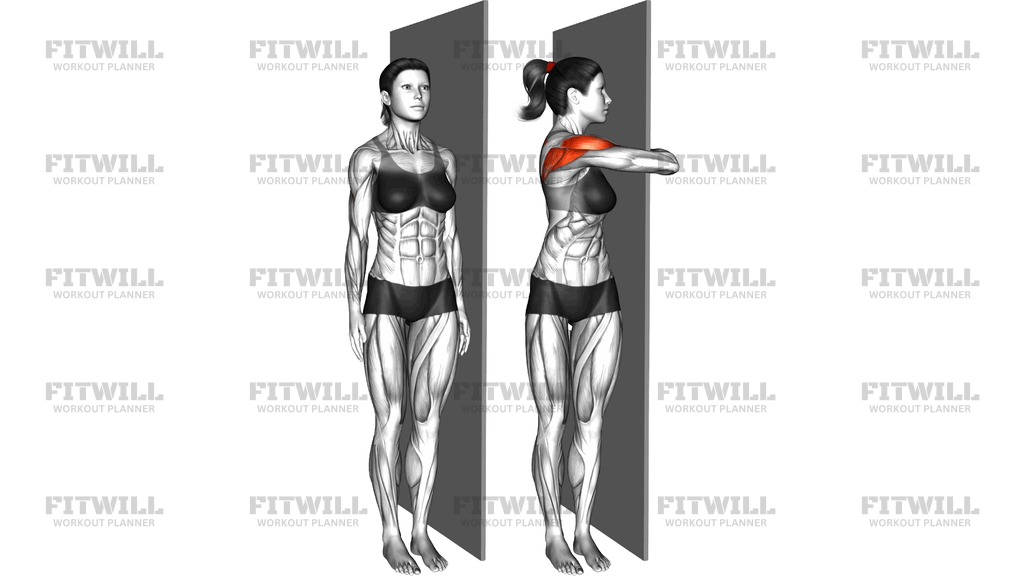
Quickly Swing Arms In Place is a standing arm-pump drill that mimics the upper-body action of running or sprinting without traveling across the floor. It is usually used as a warm-up, coordination drill, or shoulder-conditioning movement, and it puts the most emphasis on the delts while the traps, upper back, and triceps help hold the arm path clean and repeatable.
The setup matters because this drill works best when the torso stays quiet and the arms move from the shoulder rather than from a twist through the ribs or a shrug through the neck. Stand in an athletic stance with a slight forward lean, soft knees, and a long spine. Keep the elbows bent and the hands relaxed so the shoulders can swing forward and back in a smooth rhythm instead of turning the motion into a stiff reach.
Each repetition should feel like a fast but controlled sprint-arm action. One arm drives forward while the opposite arm drives back, the elbows staying close to about a right angle and the hands moving from roughly cheek height to hip height. The goal is not a huge range or a forceful swing; it is a sharp, coordinated rhythm that stays balanced from side to side and does not pull the head, ribcage, or lower back out of position.
This exercise fits well at the start of training sessions, before running or conditioning work, or anytime you want to wake up the shoulders and upper back without adding heavy joint stress. It can also help teach arm drive for athletes, but it should stay pain-free and controlled. If the shoulders pinch, the neck tightens, or the torso starts rocking, shorten the swing, slow the cadence, and reset the stance before continuing.
Fitwill
Log Workouts, Track Progress & Build Strength.
Achieve more with Fitwill: explore over 9600 exercises with images and videos, access built-in and custom workouts, perfect for both gym and home sessions, and see real results.
Start your journey. Download today!




Instructions
- Stand in an athletic stance with your feet about hip-width apart, knees soft, spine tall, and a slight forward lean from the ankles.
- Bend both elbows to about 90 degrees, relax your hands, and set one hand forward and the other back as if you are starting a sprint.
- Keep your chest stacked over your hips and your shoulders away from your ears before the first swing.
- Drive one arm forward and the opposite arm back from the shoulder joint, keeping the elbows bent and the hands traveling in a compact path.
- Switch the arms quickly, but do not let the torso twist or the head jut forward as the rhythm speeds up.
- Keep the elbows moving past the body line without crossing your hands far in front of the chest.
- Breathe steadily through the movement or exhale on the sharper arm drive if you are using it as a conditioning drill.
- Continue for the planned time or repetitions, then slow the arms down and return to a relaxed stance before repeating.
Tips & Tricks
- Keep the shoulders low; if you feel yourself shrugging, reduce the speed and think about reaching the elbows forward and back instead of lifting the traps.
- Let the hands stay loose. Tight fists usually make the forearms and neck tense up before the shoulders do.
- Use a compact swing. Overextending the hands makes the drill sloppy and shifts stress into the front of the shoulder.
- Keep the ribcage quiet. If the chest flares or the low back arches, the arm action is getting too big.
- Match the swing to your purpose: faster for sprint warm-up, slower for shoulder activation and coordination.
- Stay light on the feet with soft knees so the upper body can move without bouncing through the spine.
- If one side feels tighter, shorten that arm's reach rather than forcing both sides to look identical.
- Stop the set when the cadence breaks down or the neck starts taking over the motion.
Frequently Asked Questions
What muscles does Quickly Swing Arms In Place work?
It primarily hits the delts, with the traps, upper back, and triceps helping control the swing.
Is this more of a shoulder drill or a cardio drill?
It is mainly a shoulder and coordination drill, but the quick arm rhythm can also raise your heart rate.
How far should the arms swing in each rep?
Keep the path compact: the hands should travel roughly from face level to hip level without crossing far in front of the body.
What is the biggest mistake with this movement?
Most people shrug the shoulders or twist the torso instead of letting the arms swing cleanly from the shoulder joints.
Should my feet move while I do it?
No, keep the feet planted in an athletic stance. The drill is about arm action and upper-body rhythm, not stepping.
Can beginners use this exercise?
Yes. Beginners should start slowly and keep the swing small until they can stay relaxed through the shoulders and neck.
When is this drill most useful?
It works well before running, conditioning, or upper-body training when you want to wake up shoulder rhythm and arm drive.
What should I do if my shoulders feel pinched?
Shorten the swing, slow the pace, and keep the elbows closer to the body line. If it still hurts, stop the drill.