Rear Delt Fly With Bed Sheet
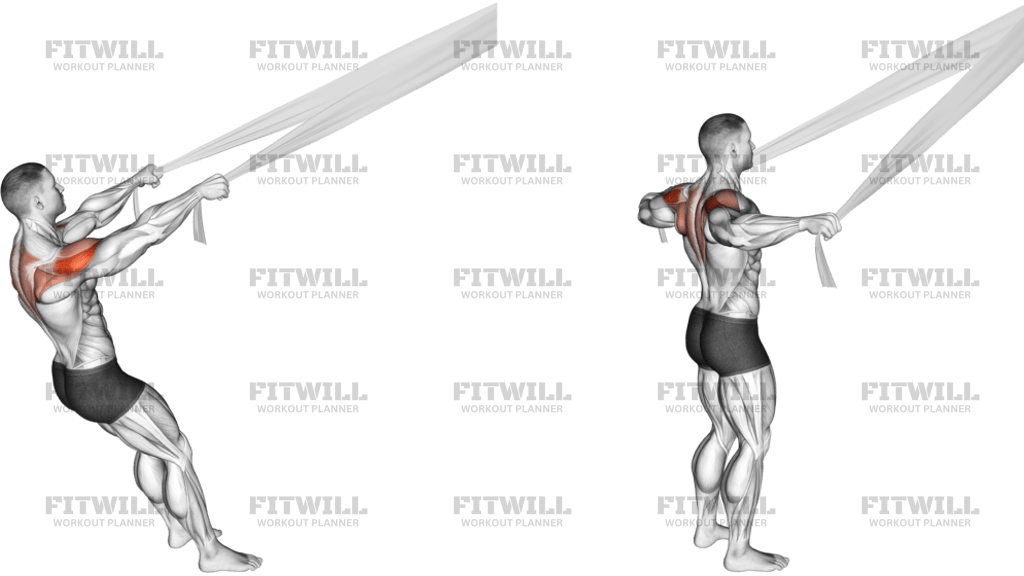
Rear Delt Fly With Bed Sheet is a standing rear-shoulder and upper-back drill built around a high anchor and a long, stable line of resistance. In the image, the sheet is looped overhead and the body leans back to create tension, which turns a simple household setup into a controlled pulling movement. The exercise emphasizes the back of the shoulders first, with the upper back and arm muscles helping to guide the motion and keep the line of pull steady.
The setup matters because the leverage changes quickly as you step farther from the anchor. A small change in body angle can make the movement feel either too easy or too aggressive, so the first job is to find a lean that gives steady tension without yanking the shoulders forward. When the anchor is secure and the stance is balanced, the rear delts can work through a cleaner arc instead of the movement being taken over by momentum, shrugging, or a low-back sway.
Perform the rep by opening the arms outward and slightly back from the start position, then finishing with the elbows wide and the upper arms in line with the shoulders. The torso should stay tall through the chest while the ribs stay stacked, and the neck should remain long. The return phase is just as important as the pull: let the arms come forward slowly, keep tension in the sheet, and avoid letting the shoulders collapse toward the ears or the lower back overextend to create more range.
This is useful as accessory work when you want a simple rear-delt emphasis without a machine or dumbbells, or when you want to add controlled pulling volume at home. It works well in higher-rep sets, short pauses, or tempo-focused work because the load is created by your body angle rather than an external weight stack. Beginners can use it if they keep the lean modest and the anchor reliable, but the movement still demands attention to shoulder comfort and control.
Treat it as a precision exercise, not a power pull. If the rep turns into a shrug, a row, or a back bend, the body is compensating for poor setup or too much tension. Keep the range pain-free, keep the sheet under control, and finish each rep with the rear shoulders doing the work instead of the hands or traps taking over.
[ Workout Log & Planner ]
Put your next workout in Fitwill
Keep your plan and training log ready when you are.


Instructions
- Loop a secure bed sheet or similar strap over a high anchor and hold one end in each hand.
- Face the anchor, step back until the sheet is taut, and set your feet hip-width with one foot slightly behind the other for balance.
- Lean back from the ankles until your body forms a straight line and your arms are long in front of you at about shoulder height.
- Set your ribs down, keep your neck long, and brace lightly before the first pull.
- Pull the ends of the sheet outward and slightly back, leading with your elbows as they open wide.
- Finish when your upper arms line up with your shoulders and you feel the back of the shoulders squeeze.
- Pause briefly at the top without shrugging or arching your lower back.
- Lower the sheet under control until your arms are long again and tension stays on the rear delts.
- Reset your lean between reps if needed, then repeat for the planned number of repetitions.
Tips & Tricks
- Use a sheet that is thick enough to grip comfortably and check that the anchor cannot slip before you start.
- Step only far enough back to keep tension on the rear shoulders; too much lean turns the movement into a tug of war.
- Keep a small bend in the elbows so the arms do not lock out and dump the work into the joints.
- Think about sweeping the elbows wide instead of pulling with the hands, which helps keep the rear delts in charge.
- Keep the shoulders away from the ears; if you start shrugging, the upper traps are taking over.
- If your lower back arches to make the rep bigger, move closer to the anchor or shorten the range.
- Use a slow return so the sheet stays loaded and the rear delts do not relax at the bottom.
- Exhale as you open the arms and inhale as you control the return.
- Stop the set if the anchor shifts, the sheet twists, or you feel pinching in the front of the shoulder.
Frequently Asked Questions
What does Rear Delt Fly With Bed Sheet train most?
It primarily trains the rear delts, with the upper back helping to stabilize and guide the pull.
How do I set up the bed sheet correctly?
Loop it over a secure high anchor, hold one end in each hand, and step back until the sheet is under steady tension.
Should my elbows stay straight or bent?
Keep a small bend in the elbows. That makes the pull smoother and keeps the stress on the rear shoulders instead of the joints.
Where should I feel the exercise?
You should feel it most in the back of the shoulders, with some work in the upper back and the muscles around the shoulder blades.
Can beginners do this movement?
Yes, if the anchor is secure and the body angle stays modest. Beginners should keep the range small and the tempo controlled.
What is the biggest form mistake?
Shrugging or arching the lower back to create extra range is the most common problem.
How can I make it harder without adding weight?
Step farther from the anchor, slow down the lowering phase, or add a short pause at the top of each rep.
Is this exercise the same as a row?
No. A row pulls the elbows closer to the torso, while this movement opens the arms wide to emphasize the rear delts.