Dumbbell Single Leg Squat Version 2
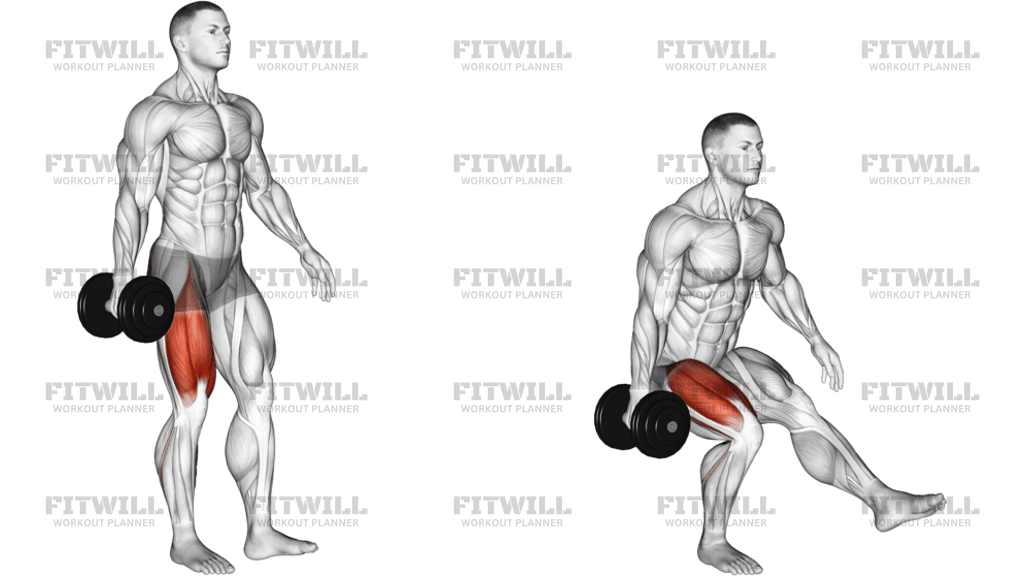
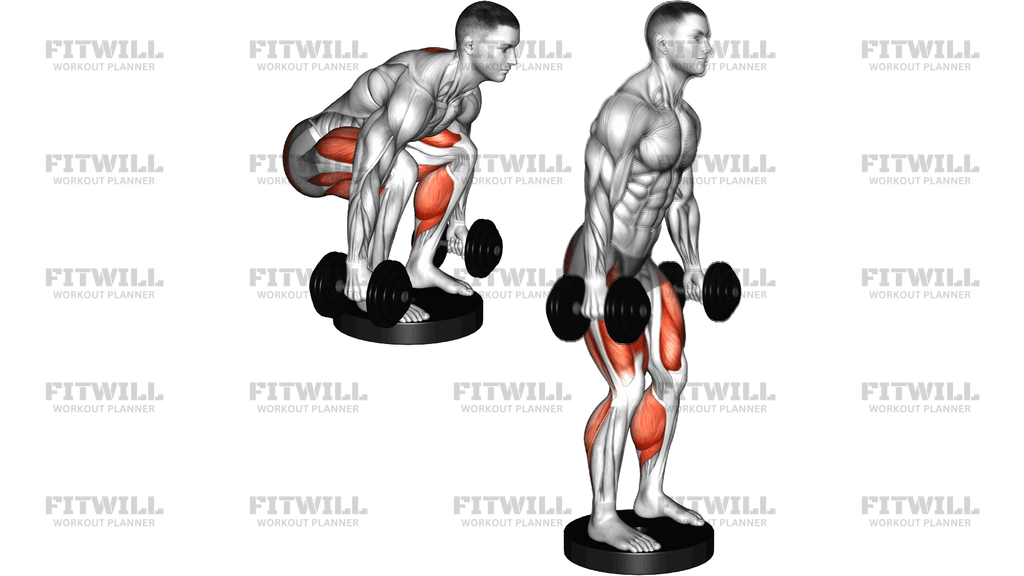
Dumbbell Single Leg Squat Version 2 is a unilateral lower-body squat performed while holding a dumbbell in each hand at your sides. The free leg stays lifted in front of you as you descend on the working leg, which makes the exercise both a strength drill and a balance test. The side-loaded dumbbells act as counterbalance, but the real challenge comes from controlling the pelvis, knee, and trunk without letting the body twist or drift.
This variation trains the working leg through a deep squat pattern while asking the hips and core to keep the body centered over one foot. It places a strong demand on the quadriceps, glutes, adductors, and calf of the standing leg, with the trunk and hip stabilizers helping maintain alignment. Because the load sits at your sides instead of in front of the chest, the movement rewards a tall torso, a stable foot, and a smooth descent more than brute force.
The setup matters a lot. Stand tall with your feet under you, brace before you move, and let the dumbbells hang quietly by your thighs. The working foot should stay planted with the heel, big toe, and little toe all pressing into the floor. The lifted leg should stay off the ground and reach forward as a counterbalance, not tap down to help you through the rep. If you lose balance quickly, the load is too heavy or the depth is too aggressive.
On each rep, sit the hips down and back while the standing knee bends and tracks in line with the toes. Keep the dumbbells still, the chest proud, and the free leg floating forward as the body lowers. At the bottom, use only the depth you can own without collapsing the arch, caving the knee, or rounding the low back. Drive back to standing by pushing through the full foot of the working leg and finishing tall with the hips extended.
Use this exercise when you want unilateral leg strength, better control over side-to-side asymmetry, or a squat pattern that is more demanding than a split squat but still easier to manage than a full pistol squat. It works well in accessory blocks, lower-body sessions, and athletic programs where stability matters as much as force production. For most lifters, light to moderate dumbbells are enough; if the balance demand breaks down the rep quality, shorten the range or use a box as a depth target.
[ Workout Log & Planner ]
Put your next workout in Fitwill
Keep your plan and training log ready when you are.


Instructions
- Stand with a dumbbell in each hand at your sides and shift all of your weight onto the working foot.
- Lift the other leg slightly in front of you so it stays off the floor and acts as a counterbalance.
- Brace your trunk, keep your chest tall, and look forward before you start the descent.
- Sit your hips down and back while the standing knee bends in line with the toes.
- Let the dumbbells hang straight down without swinging or pulling you forward.
- Lower until you reach the deepest pain-free position you can control without losing balance or arch position.
- Drive through the whole standing foot to rise, then finish tall with the hips fully extended.
- Reset the free leg and breathing before starting the next rep.
Tips & Tricks
- Start lighter than you would for a normal squat; balance usually limits this lift before leg strength does.
- Keep the dumbbells close to your thighs so they help counterbalance without dragging your shoulders forward.
- Press the heel, big toe, and little toe of the working foot into the floor to keep the arch from collapsing.
- A small forward torso lean is normal, but folding at the waist usually means the load is too heavy.
- Let the free leg stay out in front instead of dropping behind you or touching down for support.
- Track the standing knee over the second or third toe instead of letting it cave inward.
- Use a box or bench behind you if you need a consistent depth target or a cleaner bottom position.
- Lower under control for a full breath in and stand up on the exhale so the rep stays organized.
Frequently Asked Questions
What muscles does Dumbbell Single Leg Squat Version 2 work?
It mainly trains the quads and glutes of the standing leg, with the adductors, calves, and core helping keep you balanced.
Is the dumbbell position important in this version?
Yes. Holding a dumbbell in each hand at your sides changes the balance demand and encourages a more upright, controlled squat.
Should my free leg touch the floor during the rep?
No. Keep the non-working leg lifted in front of you so the standing leg does the work instead of getting a push-off.
How low should I squat on one leg?
Go only as low as you can while keeping the working foot flat, the knee tracking cleanly, and the dumbbells steady at your sides.
Can beginners use this exercise?
Yes, but it usually needs a very light load, a smaller range of motion, or a box target until balance improves.
What is the most common mistake with the dumbbells?
Swinging the weights or letting them drift away from the body usually means the descent is too fast or the load is too heavy.
How is this different from a split squat?
A split squat keeps both feet on the floor, while this version requires you to balance entirely on one leg.
What should I do if my knee caves inward?
Reduce the depth, slow the descent, and think about driving the knee in line with the second toe as you stand up.