Dumbbell Flat Around The World
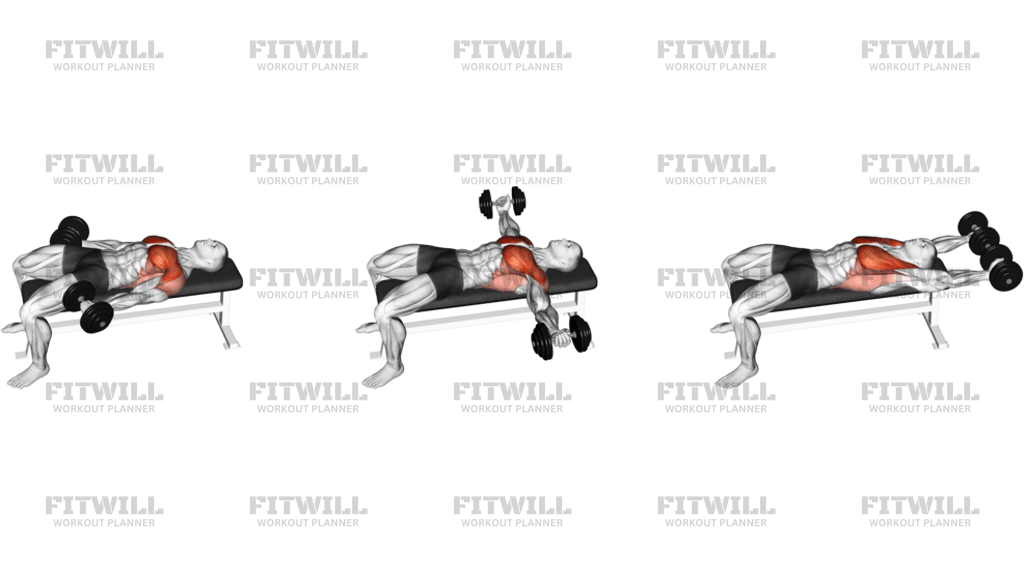
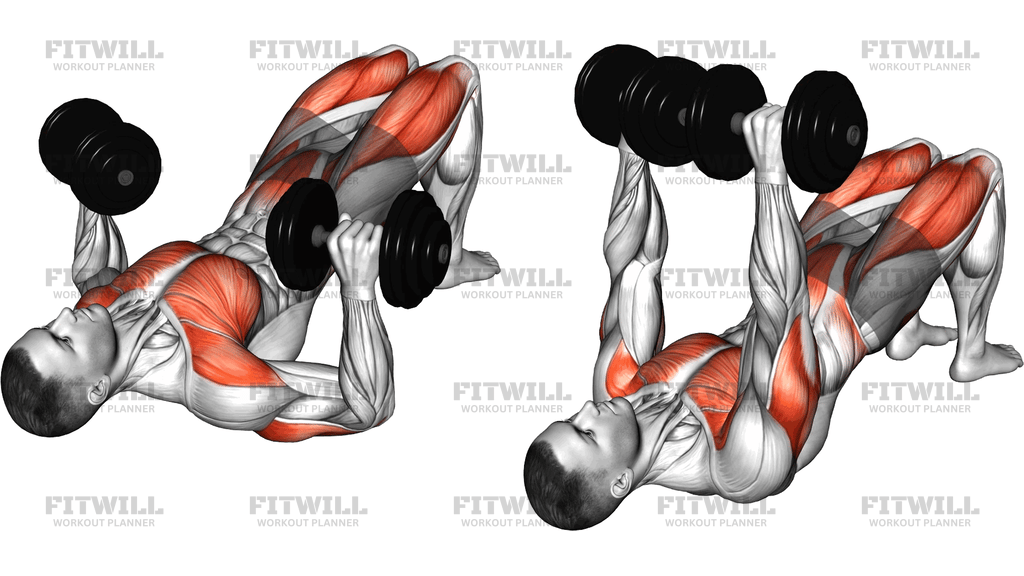
Dumbbell Flat Around the World is a flat-bench dumbbell control exercise where you trace a large arc with the weights while your torso stays pinned to the bench. The movement looks simple, but it is demanding because the shoulders have to guide the path without letting the ribs flare or the lower back take over.
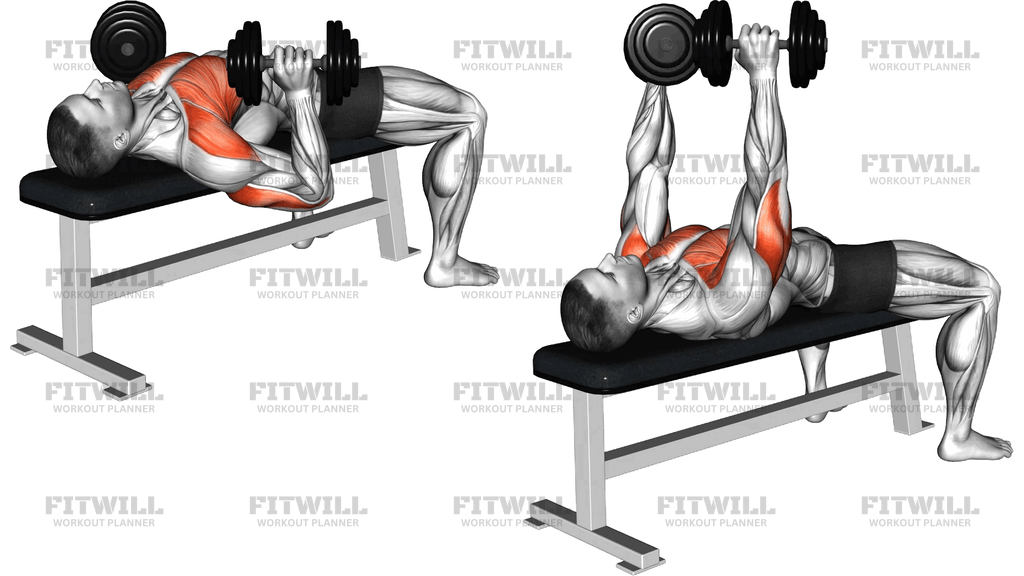
The exercise is primarily a shoulder and upper-chest stability drill. In this image, the deltoids do most of the work, while the chest, upper back, triceps, and traps help guide the arc and keep the dumbbells from drifting out of line. That makes it useful when you want controlled tension instead of heavy loading.
Set up on a flat bench with your head, upper back, and glutes supported and your feet planted firmly. Start with the dumbbells close to your hips or lower chest, then sweep them in a wide, smooth circle toward overhead and back along the same path. Keep a soft bend in the elbows so the motion comes from the shoulders rather than from bent-arm pressing.
Use a light load, especially at first, because the lever arm gets long quickly and sloppy reps can irritate the shoulders. This works well in warm-ups, accessory blocks, or higher-rep technique work when you want to train shoulder control, scapular stability, and clean breathing under tension. Stop the set if the arc turns into a shrug, bounce, or painful pinch at the front of the shoulder.
[ Workout Log & Planner ]
Put your next workout in Fitwill
Keep your plan and training log ready when you are.


Instructions
- Lie face up on a flat bench with your head, upper back, and glutes supported, and plant your feet flat on the floor.
- Hold a dumbbell in each hand with a neutral grip and let your arms start just in front of your hips or lower ribs with a soft bend in the elbows.
- Set your ribs down and keep your lower back gently in contact with the bench so your torso stays quiet.
- Take a breath, brace, and start the dumbbells close together or slightly apart in front of your body.
- Sweep both weights out in a wide arc around the sides of the torso and up toward overhead, keeping the elbow angle fixed.
- Keep the circle smooth and even so the dumbbells travel at the same speed and do not drift behind the bench or bang together.
- Reverse the same path under control, lowering the dumbbells back through the arc until they return to the start position.
- Exhale as the weights pass the hardest part of the arc, reset the shoulders, and repeat for the planned reps.
Tips & Tricks
- Use very light dumbbells; a load that works for pressing is usually too heavy for this long shoulder arc.
- Keep a small elbow bend from start to finish so the exercise stays in the shoulders instead of turning into a press.
- Let the hands travel in a broad, even circle; if the dumbbells drift toward your face, shorten the range.
- Keep the shoulder blades settled on the bench instead of shrugging up when the arms reach overhead.
- If the front of the shoulder pinches, stop short of the painful zone and reduce the arc before adding load.
- Slow the lowering phase because the return path is where control and shoulder stability matter most.
- Plant your feet and keep your ribs down so the bench stays your only support.
- Use quiet reps; clanking dumbbells or bouncing at either end usually means the load is too heavy.
Frequently Asked Questions
What does Dumbbell Flat Around the World train most?
It mainly trains shoulder control and upper-chest stability, with the chest, upper back, triceps, and traps helping guide the arc.
Is this more of a chest exercise or a shoulder exercise?
It is mostly shoulder-dominant because the arms trace a long arc, but the chest and upper back still help control the movement.
How much elbow bend should I keep on the flat bench?
Keep only a small, fixed bend. If the elbows flex and extend during the rep, the movement turns into a different press.
Where should the dumbbells travel during the rep?
They should move in a smooth wide circle around the torso, from the starting position near the hips or lower chest to overhead and back.
Can beginners use Dumbbell Flat Around the World?
Yes, but only with very light dumbbells and a shorter range until the shoulder path feels stable.
Why do I feel this in my neck sometimes?
That usually means you are shrugging the shoulders or using too much weight. Lower the load and keep the shoulders settled on the bench.
Should the bench angle stay flat for this exercise?
Yes. The flat bench is part of the setup and changes the line of pull and shoulder feel compared with an incline.
What is the most common mistake on this movement?
Using too much weight and losing the circle, which turns the rep into a shaky press and puts extra stress on the shoulders.