Dumbbell Seated Gittleson Shrug
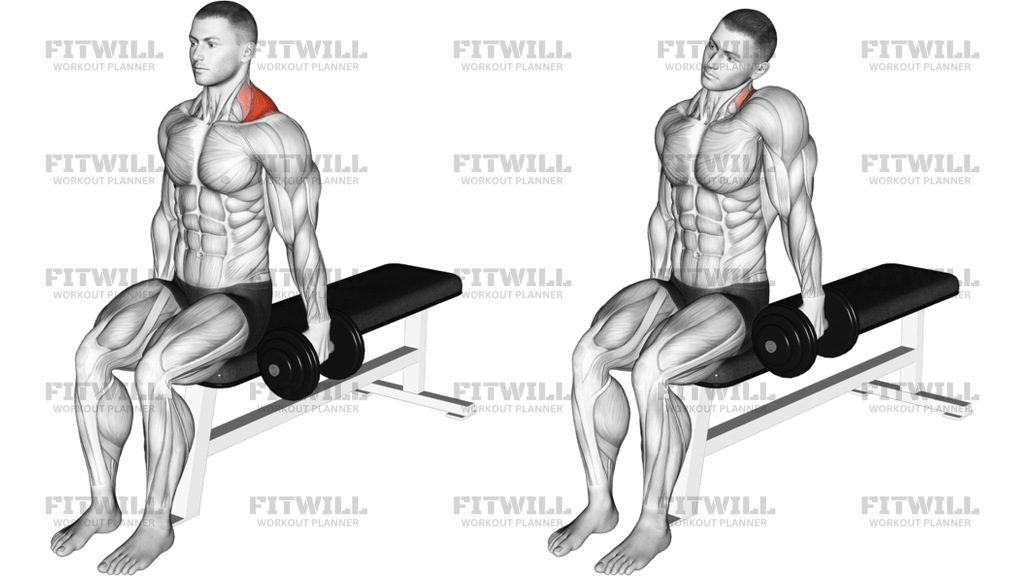
Dumbbell Seated Gittleson Shrug is a seated upper-back isolation exercise that trains the shoulder girdle by lifting the shoulders against a dumbbell load. Sitting on a bench removes most lower-body cheating, so the repetition is judged by how cleanly you can elevate and lower the shoulders while keeping the torso tall and the neck neutral.
The exercise is useful when you want direct trap work without turning the set into a body English competition. With the arms hanging long at your sides and the dumbbells staying close to the thighs, the movement should come from scapular elevation: shoulders travel straight up, pause briefly near the top, then return under control to the relaxed start position.
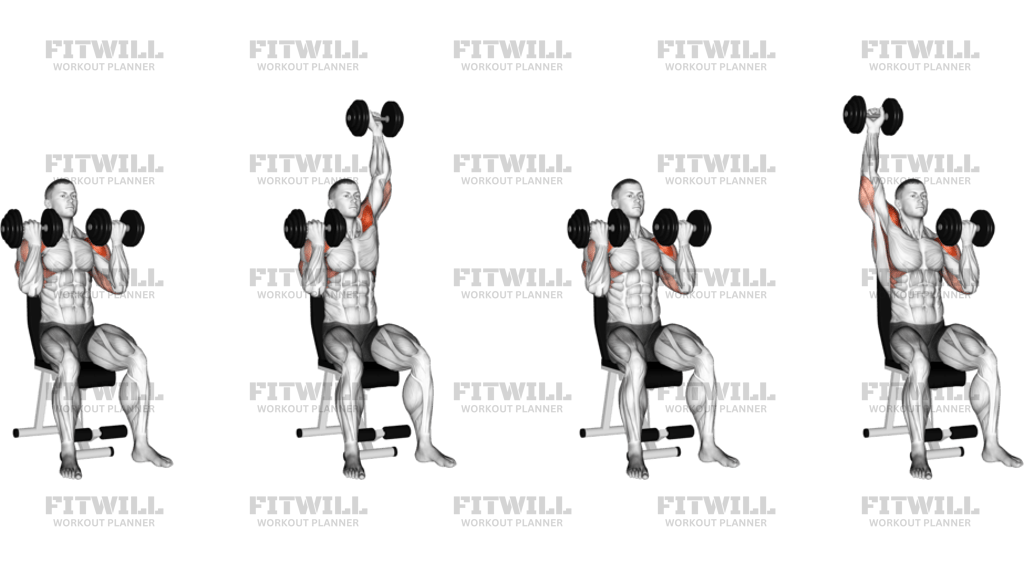
Setup matters because the bench position determines how honest the shrug will be. Sit near the front edge of a flat bench with both feet planted, hold the dumbbells with a neutral grip, and let the arms hang straight. Keep the chest open without leaning back, and avoid drifting the head forward as the weights get heavier. The goal is a stable torso that lets the traps work, not a setup that hides momentum.
During the rep, think about lifting the shoulders toward the ears rather than rolling them in circles. The ascent should be smooth, the top position should be brief and deliberate, and the descent should be slow enough that the dumbbells do not drop or bounce. This variation fits well on back days, shoulder sessions, or accessory work for athletes who need stronger upper traps and better shoulder-girdle control. Light to moderate loads are usually the best choice because they keep the neck relaxed and make each rep repeatable.
[ Workout Log & Planner ]
Put your next workout in Fitwill
Keep your plan and training log ready when you are.


Instructions
- Sit near the front edge of a flat bench with both feet flat on the floor and a dumbbell in each hand at your sides.
- Let the arms hang long with a neutral grip, keep the chest lifted, and set your head so the neck stays long and relaxed.
- Brace lightly through your midsection before the first rep so your torso stays tall instead of rocking.
- Shrug both shoulders straight up toward your ears while keeping the elbows extended and the dumbbells close to your thighs.
- Do not roll the shoulders in circles; the path should be a direct elevation and return.
- Squeeze at the top for a short pause when the upper traps are fully shortened.
- Lower the shoulders slowly until they settle back into the bottom position without bouncing.
- Breathe out as you shrug up, breathe in as you lower, and repeat for the planned number of reps.
Tips & Tricks
- Choose a load that lets your shoulders rise evenly; if the elbows bend or the torso leans, the dumbbells are too heavy.
- Think "up" rather than "back" so the movement stays in the upper traps instead of turning into a rear-delt swing.
- Keep the neck neutral and long; jutting the chin forward usually makes the shrug look bigger than it really is.
- A brief pause at the top makes the set harder without needing heavier weight.
- Lower the dumbbells under control for 2 to 3 seconds to keep tension on the traps instead of letting gravity do the work.
- Plant both feet firmly so the bench position stays quiet and the hips do not rock with each rep.
- If one shoulder rises faster than the other, slow the cadence and match both sides before adding weight.
- Stop the set when the shoulders no longer reach the same height or when the upper traps start to cramp.
Frequently Asked Questions
What does the Dumbbell Seated Gittleson Shrug train most?
It mainly trains the upper trapezius, with help from the levator scapulae and other shoulder-girdle stabilizers.
Why perform the shrug seated on a bench?
Sitting removes most lower-body drive and makes it easier to keep the torso upright while the shoulders do the work.
How should my dumbbells move during each rep?
The dumbbells should rise only because the shoulders elevate; keep them close to the thighs and avoid swinging them upward.
Should I roll my shoulders when I shrug?
No. Roll-free reps are cleaner and safer here. Lift straight up, hold briefly, and lower straight down.
Where should I feel this exercise most?
You should feel the top of the shoulders and upper back, not the lower back or elbows.
Is this exercise good for beginners?
Yes, as long as the dumbbells are light enough to keep the neck relaxed and the shrug path controlled.
How heavy should I go on seated dumbbell shrugs?
Use a weight that lets you pause at the top and lower slowly without bending the elbows or leaning back.
Can I pair this with rows or deadlifts?
Yes. It works well as accessory trap work after rows, deadlifts, presses, or other compound upper-back training.