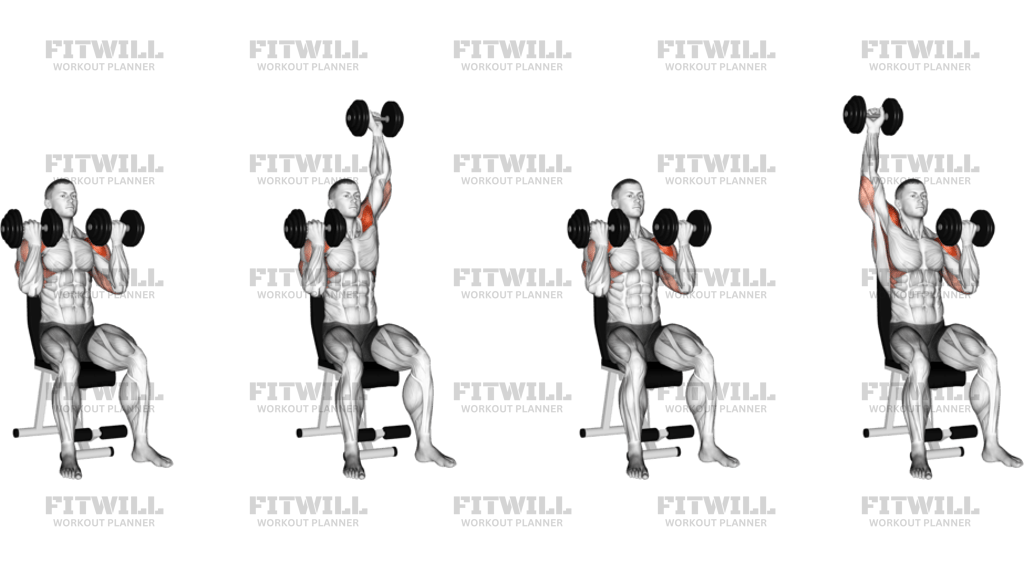
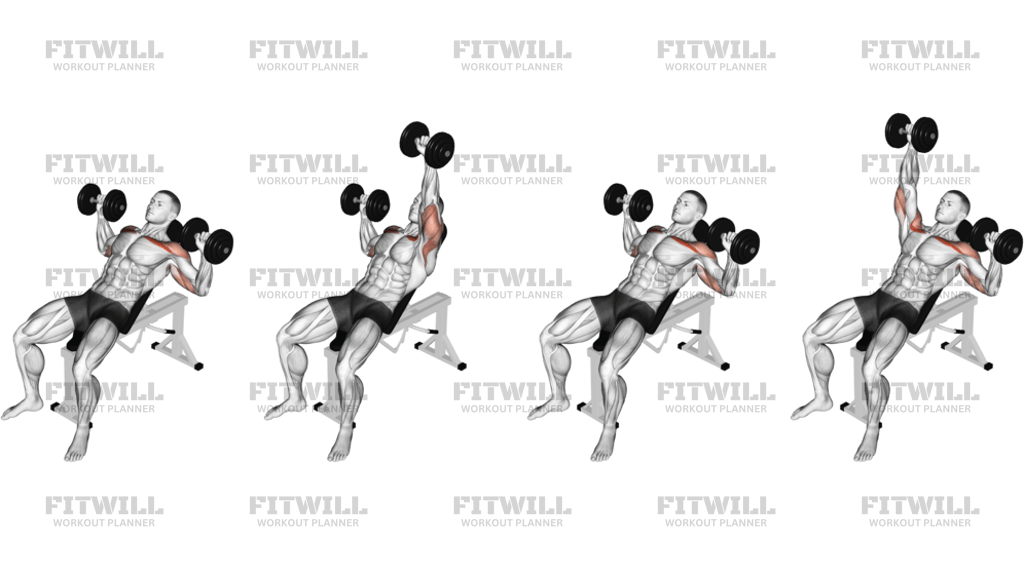
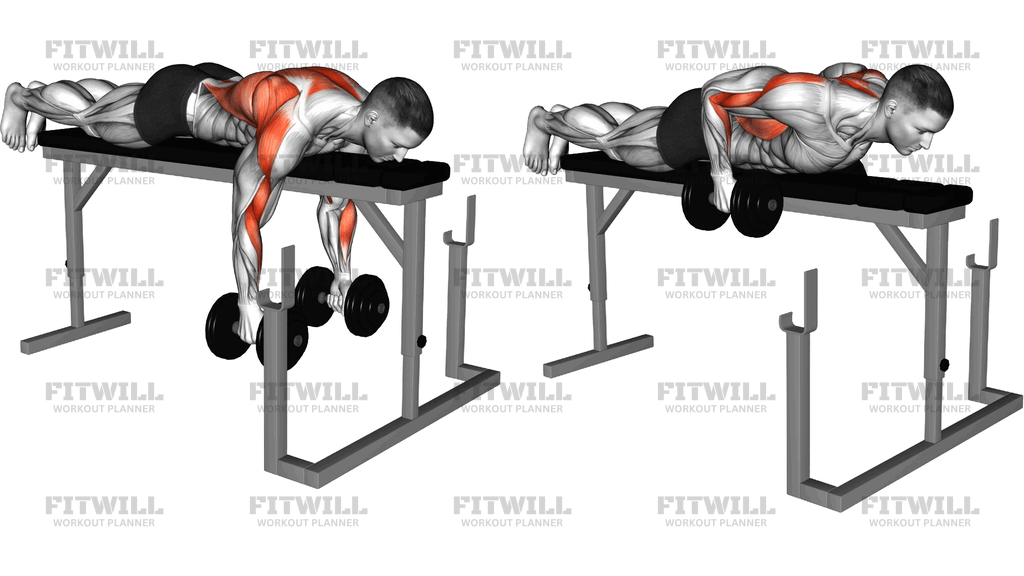
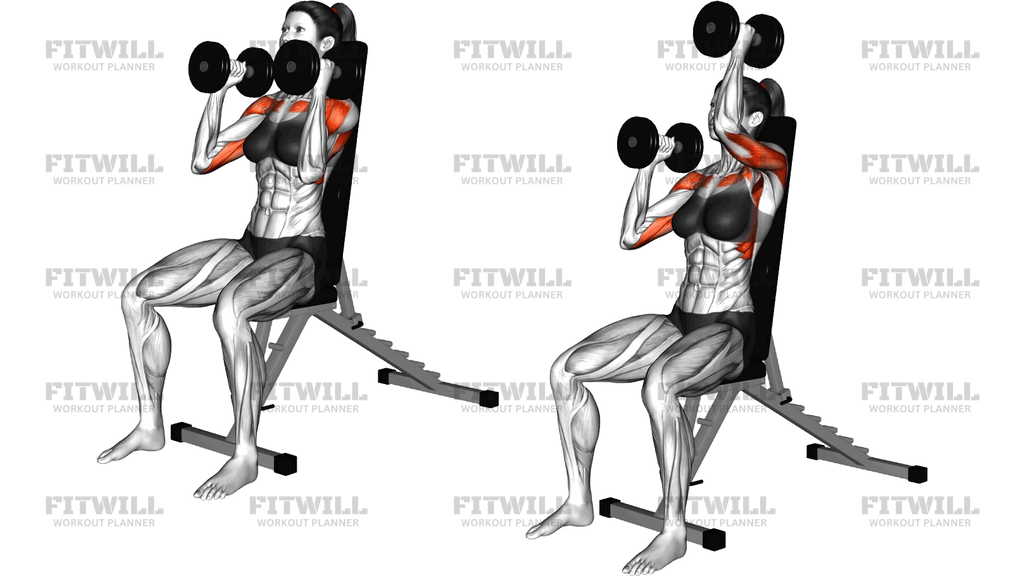
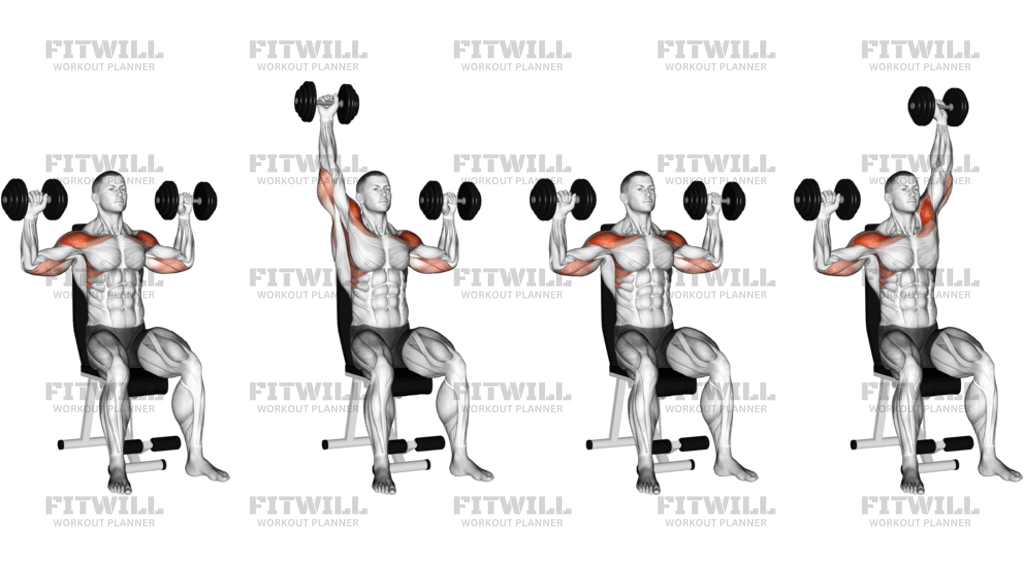
Dumbbell Incline One-Arm Front Raise With Chest Support
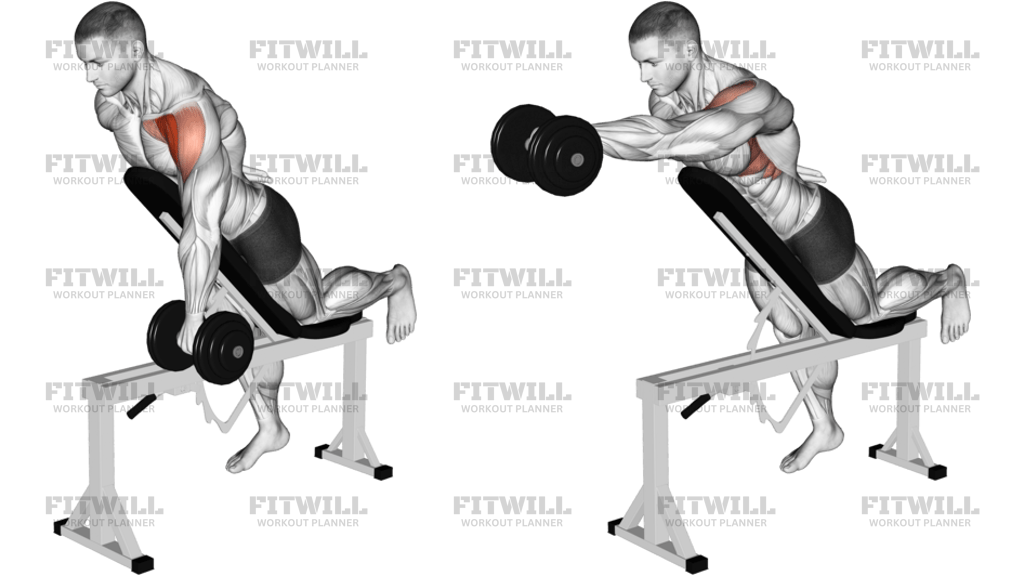
Dumbbell Incline One-Arm Front Raise With Chest Support is a strict single-arm shoulder exercise performed with the torso pinned to an incline bench. The chest support removes most of the body swing that usually turns a front raise into a full-body heave, so the shoulder has to do the work through a cleaner forward arc. It is a useful accessory movement when you want to build front-delt control, improve shoulder isolation, and keep the rep honest from the first inch to the last.
The setup matters because the bench angle, chest contact, and foot position all affect how stable the lift feels. Set the incline so your chest can stay planted while the working arm hangs freely toward the floor. Once the torso is supported, the non-working side should stay quiet so the dumbbell moves from the shoulder rather than from twisting, shrugging, or leaning away from the pad.
During the raise, the arm should travel in a smooth arc from the hanging start to about shoulder height, with only a slight bend in the elbow. The shoulder should flex forward without the ribcage flaring or the lower back arching. Pause briefly near the top, then lower the dumbbell under control until the shoulder is stretched again without losing chest contact. If the weight drifts across the body or the neck takes over, the load is too heavy or the bench angle is too aggressive.
This exercise fits well as accessory work for shoulder training, warm-ups, or upper-body sessions where you want controlled tension instead of maximal load. It can also be useful when you want to train one side at a time and clean up side-to-side differences. Keep the range pain-free, use a light to moderate dumbbell, and let the front of the shoulder do the lifting instead of momentum or upper-trap dominance.
[ Workout Log & Planner ]
Put your next workout in Fitwill
Keep your plan and training log ready when you are.


Instructions
- Set an incline bench so your chest can rest securely against the pad and your working arm can hang straight toward the floor.
- Lie chest-down on the bench, plant your feet for balance, and let the non-working side stay quiet and supported.
- Hold a dumbbell in the working hand with a soft elbow and a stacked wrist, then set your shoulder away from your ear.
- Brace your torso so your ribs stay down and your body does not twist as the arm starts to move.
- Lift the dumbbell forward in a smooth arc, leading with the elbow until the arm reaches about shoulder height.
- Pause briefly at the top without shrugging or leaning harder into the bench.
- Lower the dumbbell slowly back to the start until the arm hangs under control and the shoulder stays packed.
- Reset the shoulder position before the next rep or switch sides once the set is complete.
Tips & Tricks
- Choose a low enough bench angle that you can keep your chest on the pad without craning your neck.
- A slight elbow bend is fine, but do not turn the rep into a row by bending the arm more as you lift.
- Stop at shoulder height unless your shoulder stays completely quiet above that point.
- Keep the dumbbell path forward and slightly upward; swinging it across your body usually means the load is too heavy.
- Exhale as the arm rises and inhale on the controlled descent so the torso stays braced.
- If the front of the shoulder feels pinched, try a lighter load and a more thumbs-up arm angle.
- Let the chest support do the stabilizing work instead of arching the low back to create range.
- Use slow lowers because the eccentric phase is where the shoulder position usually starts to drift.
Frequently Asked Questions
What muscles does the dumbbell incline one-arm front raise with chest support work?
It primarily targets the front of the shoulder, especially the anterior deltoid, with the upper chest and upper traps helping stabilize the movement.
Why use chest support on this front raise?
The incline bench removes most of the torso swing, so the shoulder has to lift the dumbbell with cleaner mechanics and less cheating.
How high should I raise the dumbbell?
For most lifters, shoulder height is the best stopping point. Going higher often turns the rep into a shrug and shifts tension away from the front delt.
Should my elbow stay straight during the rep?
Keep a small bend in the elbow and hold that angle steady. If the elbow keeps changing, the arm is doing extra work and the shoulder tension gets less consistent.
What is the most common mistake with this exercise?
Shrugging, twisting the torso, and using momentum are the big ones. The chest support should make those errors easier to spot and correct.
Can beginners do the incline one-arm front raise safely?
Yes, if they keep the load light, the motion short and smooth, and the shoulder free of pinching or pain.
Should I use a neutral grip or an overhand grip?
Use the grip that lets you keep the wrist stacked and the shoulder comfortable. A slightly thumbs-up angle can feel smoother for many lifters.
What should I do if my neck takes over?
Lower the dumbbell, reduce the load, and keep the chest pressed into the bench while you raise only to a pain-free height.