Dumbbell Seated Front And Back Tate Press
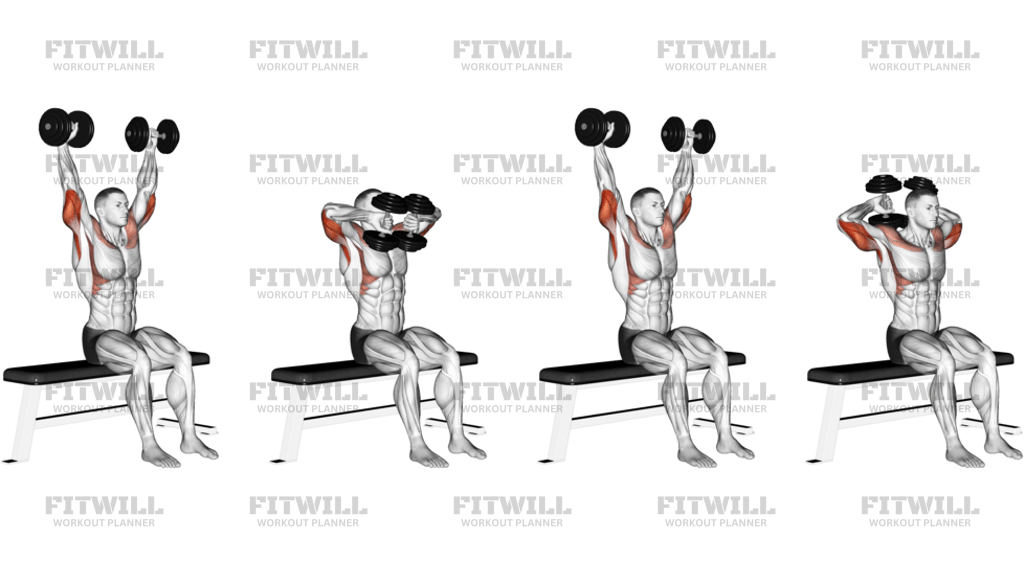
Dumbbell Seated Front and Back Tate Press is a seated triceps exercise built around a tight dumbbell arc around the head. Sitting on a flat bench removes leg drive and makes the shoulders, elbows, and core work together to keep the bells moving in a controlled line instead of drifting into a press. The movement is most useful when you want direct triceps work with a strict setup and a noticeable lockout challenge.
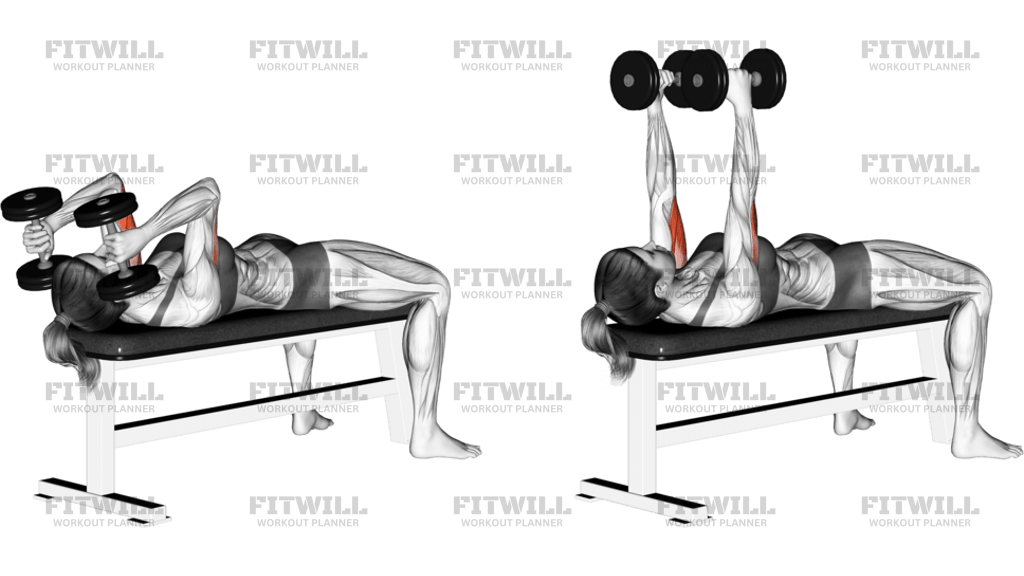
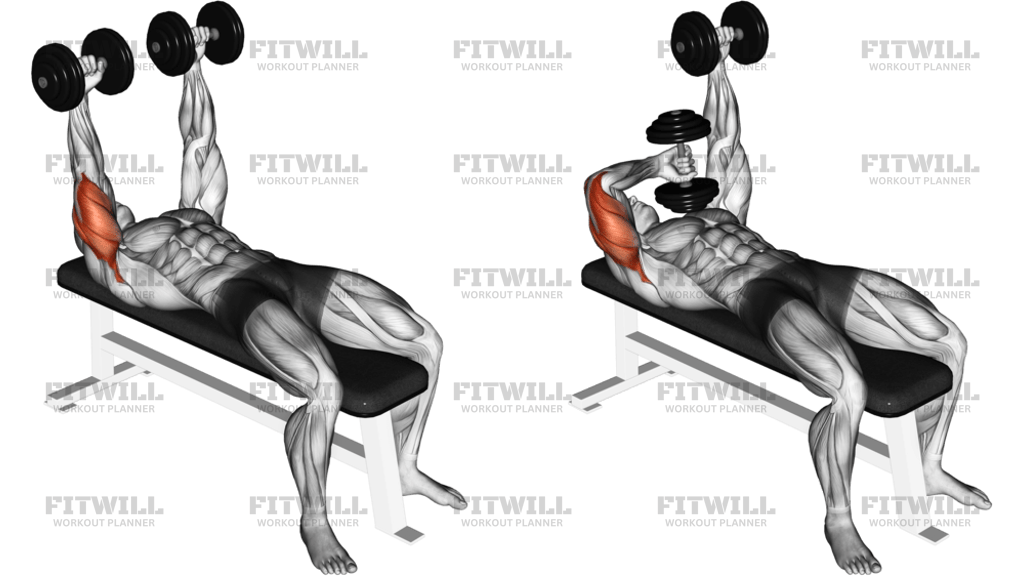
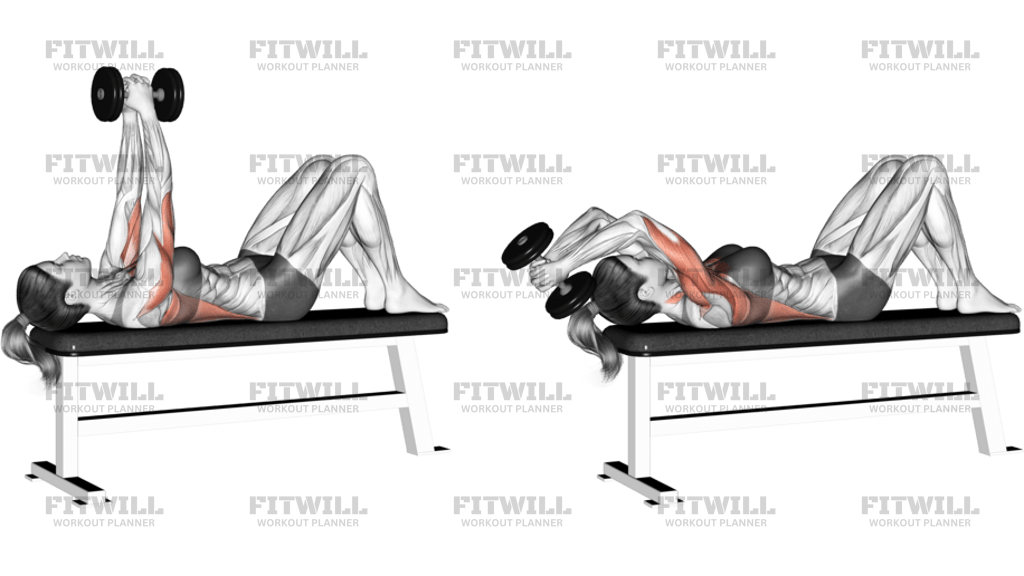
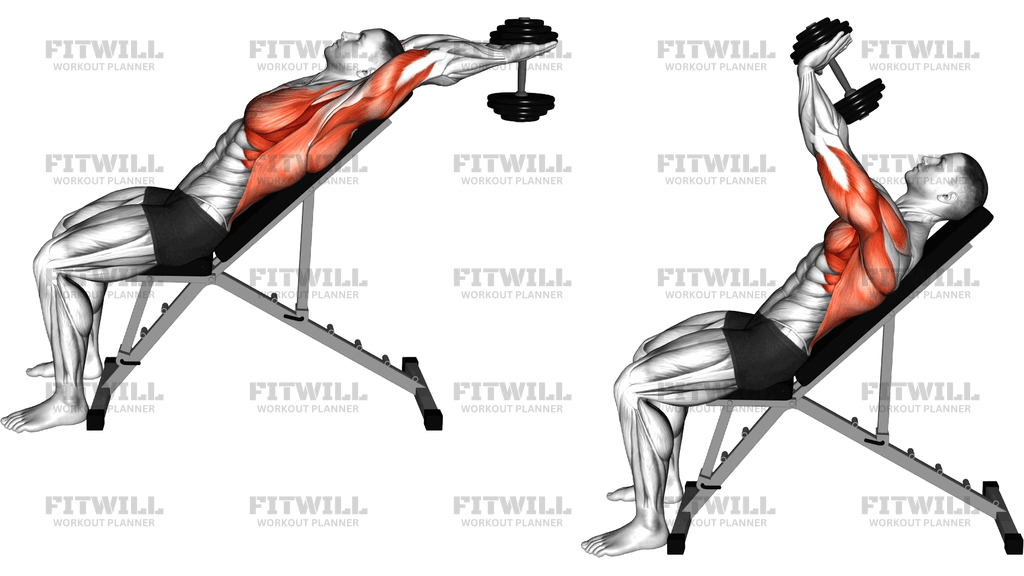
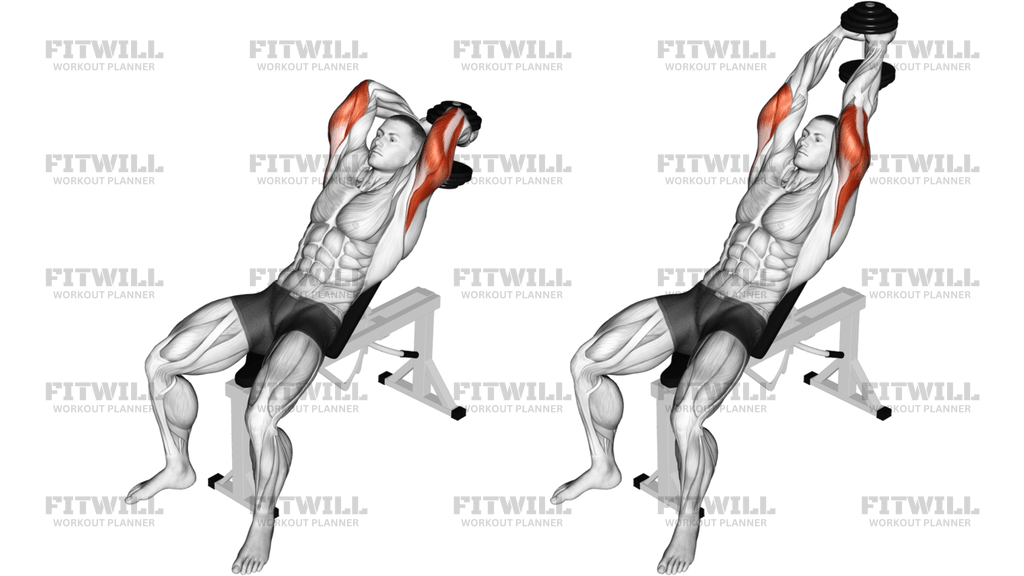
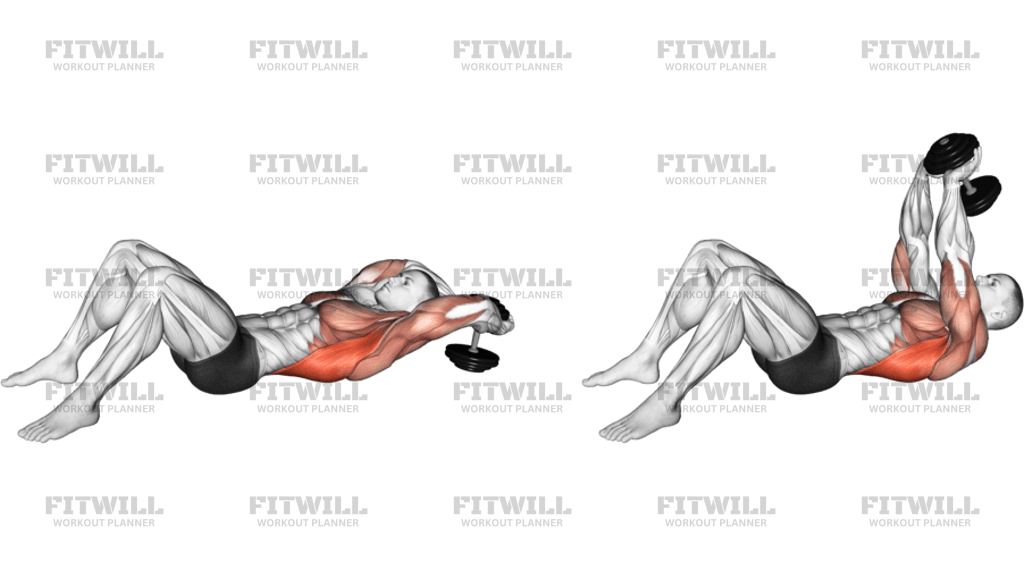
The main training target is the triceps, especially the long head, with help from the forearms, front delts, and trunk muscles that keep the torso from tipping backward. In the image, the lifter sits tall with the dumbbells stacked overhead, then lowers them in a compact front-and-back path around the head. That small path matters: if the elbows flare too much or the ribcage opens, the exercise turns into a sloppy overhead press and the triceps lose tension.
A good rep starts by planting both feet, setting the bench position, and fixing the upper arms before the elbows bend. The dumbbells should stay close enough to your head that you feel the triceps controlling the movement, but not so close that the bells crash into your face or shoulders. Keep the wrists neutral, the neck relaxed, and the torso still so the rep comes from elbow extension instead of body English.
This variation is useful as accessory work after heavier pressing, as a triceps-focused finisher, or anywhere you want high-quality tension without needing a machine. It is also a useful option when you want to train the elbows through a short, controlled range rather than loading a full stretch aggressively. Because the path is compact and the setup is strict, lighter dumbbells usually work better than ego loading.
If your shoulders feel pinchy, shorten the range and keep the dumbbells a little more in front of the face rather than forcing them far behind the head. If the elbows start to wander or the lower back arches to help the lift, the set is too heavy or the tempo is too fast. Keep the motion smooth, repeatable, and pain-free, and let the triceps do the work from the first rep to the last.
Fitwill
Log Workouts, Track Progress & Build Strength.
Achieve more with Fitwill: explore over 9600 exercises with images and videos, access built-in and custom workouts, perfect for both gym and home sessions, and see real results.
Start your journey. Download today!




Instructions
- Sit on a flat bench with both feet planted and hold the dumbbells together above your upper chest or face.
- Keep your torso tall, ribs stacked over your hips, and wrists straight before you start the first rep.
- Set the upper arms mostly vertical and let the elbows point forward just enough to clear the dumbbells.
- Lower the dumbbells in a short arc toward the front of your head until they pass the forehead line.
- Continue the path slightly back around the head so the triceps stay loaded instead of the shoulders taking over.
- Reverse the motion by straightening the elbows and pressing the dumbbells back to the overhead start position.
- Keep both dumbbells moving together unless your program specifically calls for alternating the front and back path.
- Breathe in as you lower, exhale as you press, and keep the neck and trunk steady through every rep.
Tips & Tricks
- Choose lighter dumbbells than you would use for a standard seated press; this variation gets hard quickly because the lever is long and the path is strict.
- Keep the elbows from drifting wide. If they flare hard to the sides, the shoulders take over and the triceps lose tension.
- Think about hinging only at the elbows while the upper arms stay almost fixed in space.
- Do not let the ribcage pop up to finish the rep. A small lean-back is fine; a big arch usually means the load is too heavy.
- Let the dumbbells travel close to the head, but stop before the bells touch your face or the shoulders shrug upward.
- Use a smooth lowering phase rather than dropping into the bottom position. The triceps should stay loaded the whole way down.
- Keep the wrists stacked over the forearms so the dumbbells do not fold the hands back toward the thumbs.
- If one side wants to move faster than the other, pause at the top and re-center before the next rep.
Frequently Asked Questions
What muscle does Dumbbell Seated Front And Back Tate Press target most?
The triceps do most of the work, with the long head usually feeling the most tension because the arms stay overhead.
Why sit on a bench for this Tate press variation?
Sitting removes leg drive and makes it easier to keep the torso still while the dumbbells move in a tight arc around the head.
How far should the dumbbells travel around the head?
Lower them only as far as you can keep the elbows controlled and the shoulders comfortable. The goal is a short, strict triceps path, not a deep stretch.
Should my elbows stay tucked or flare out?
Keep them mostly tucked with just enough forward angle to clear the dumbbells. Wide elbows usually turn the movement into a shoulder exercise.
Is this the same as a regular Tate press?
It is a seated Tate press variation with a front-and-back overhead path. The seated position makes the movement stricter and easier to control.
Can beginners use this exercise?
Yes, but only with light dumbbells and a short, controlled range. If the overhead position feels awkward, start with a simpler triceps extension first.
What should I do if my shoulders feel irritated?
Reduce the range, keep the bells slightly more in front of the face, and stop before the shoulders roll forward or shrug up.
What is the best way to progress it?
Add reps or a small amount of load only after you can keep the torso still, the elbows steady, and the dumbbells on the same path every rep.