Kettlebell Double Windmill
Kettlebell Double Windmill is an advanced kettlebell pattern built around a locked overhead arm, a long side bend, and a controlled hip hinge. It trains the waist, core, hips, and shoulder stabilizers at the same time, but the real value comes from teaching the torso to stay organized while the body moves under load. The overhead kettlebell should feel stacked and quiet while the lower kettlebell hangs by the opposite side.
Because the exercise asks for mobility and stability together, the setup matters more than the range. Feet need enough width to let the hips shift and hinge without collapsing the knees inward, and the overhead arm needs a solid lockout before the first rep starts. When the bell is placed well and the ribcage stays down, the movement becomes a controlled arc instead of a twisty reach.
A good Kettlebell Double Windmill looks smooth from start to finish. The hips travel toward the hanging bell, the chest stays open, and the eyes stay on the overhead kettlebell so the shoulder can remain stacked above the torso. The lower bell should not swing or drag the body forward; it should stay under control while the torso lowers and rises around a stable shoulder position.
This exercise is useful as accessory work for lifters who want better overhead control, trunk strength, and hip awareness. It can also fit into warmups or mobility-strength hybrids when the load is light and the reps are deliberate. The most common mistake is chasing depth before the shoulder and hips are ready, which turns the movement into a lumbar side bend. Keep the range honest, use a light kettlebell, and stop the set if the overhead arm starts drifting or the lower back takes over.
Kettlebell Double Windmill is not a speed exercise and it is not a high-volume grinder. It works best when every rep looks similar, the breath stays calm, and the torso returns to upright without wobbling. If one side feels much tighter than the other, that is useful information rather than a reason to force extra depth. Train the side that moves cleanly, then switch sides and keep the same standard.
Fitwill
Log Workouts, Track Progress & Build Strength.
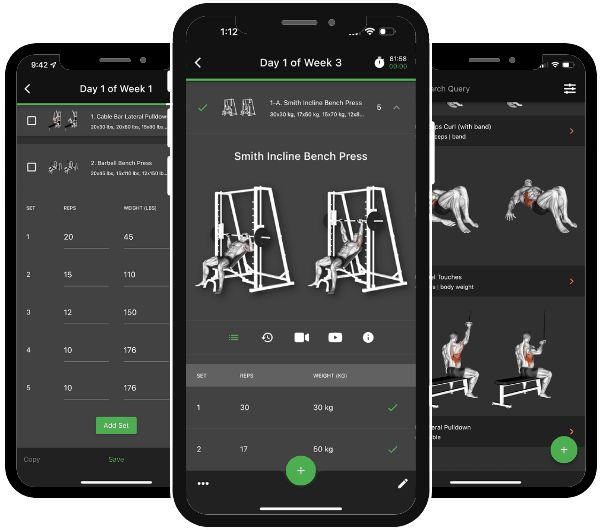
Achieve more with Fitwill: explore over 5000 exercises with images and videos, access built-in and custom workouts, perfect for both gym and home sessions, and see real results.
Start your journey. Download today!


Instructions
- Stand with your feet a little wider than shoulder-width and hold one kettlebell locked out overhead while the other hangs straight down by the opposite thigh.
- Turn both toes slightly out, stack the overhead wrist over the shoulder, and keep both arms straight before you start the first rep.
- Set your ribs down, brace your midsection, and keep both kettlebells still so the rep begins from a stable base.
- Shift your hips toward the side of the hanging bell while keeping your chest open and your eyes on the overhead kettlebell.
- Hinge at the hips and let your torso tip sideways, lowering only as far as you can keep the overhead shoulder packed and the back long.
- Keep the hanging bell close to the leg and avoid twisting forward as you reach the bottom of the rep.
- Pause briefly in the deepest controlled position, then drive through the loaded-side heel and squeeze the glute to stand back up.
- Return to a tall stance with the overhead arm still vertical, reset your breath, and repeat or switch sides for the next set.
Tips & Tricks
- Keep the overhead bell slightly behind your ear line so the shoulder stays stacked instead of drifting forward.
- Do not let the lower kettlebell swing away from the thigh; if it drifts, reduce the load or shorten the range.
- The hips should move first and the spine should stay long; if your torso rounds, you are bending too much through the waist.
- A small knee bend is fine, but the working-side foot should stay rooted so the hip can hinge instead of collapsing inward.
- Use a lighter kettlebell than you would for a strict press, because the overhead hold and side bend add a lot of demand.
- Keep your gaze on the top bell during the descent to help the shoulder stay packed and the chest stay open.
- Breathe into the side ribs before each descent, then exhale as you drive back to standing.
- Stop the set if the overhead arm softens, the lower back takes over, or the rep turns into a twist instead of a hinge.
Frequently Asked Questions
What does Kettlebell Double Windmill train most?
It emphasizes the obliques, deep trunk stabilizers, glutes, and shoulder stabilizers while the body holds a loaded overhead position.
Is Kettlebell Double Windmill good for beginners?
Usually not as a first windmill variation. Most people should learn a single-kettlebell windmill first or use a very light load before adding the second bell.
How should the overhead kettlebell look at the top?
The top kettlebell should sit directly over the shoulder with a straight elbow and a packed shoulder, not drifting in front of the face or out to the side.
How low should I go in Kettlebell Double Windmill?
Lower only until you can keep the chest open, the hips hinged, and the overhead arm stacked. Depth is secondary to a clean shoulder line and a long spine.
Why does my lower kettlebell feel like it is pulling me forward?
That usually means the bell is too heavy or the hinge is too shallow. Keep the lower bell close to the leg and reduce the load if it starts swinging away from you.
What should I do if I feel this in my lower back?
Shorten the range, lighten the load, and hinge more at the hips instead of folding through the waist. The torso should stay long and controlled throughout the rep.
Can I replace Kettlebell Double Windmill with a simpler exercise?
Yes. A single-kettlebell windmill or an overhead hold with a hip hinge is a good step down if the double version feels too demanding.
What is the main mistake to avoid with this exercise?
Do not chase depth by twisting the torso or softening the overhead arm. The rep should come from a controlled hip shift, not a rushed side bend.