Kettlebell Bent-Over Row
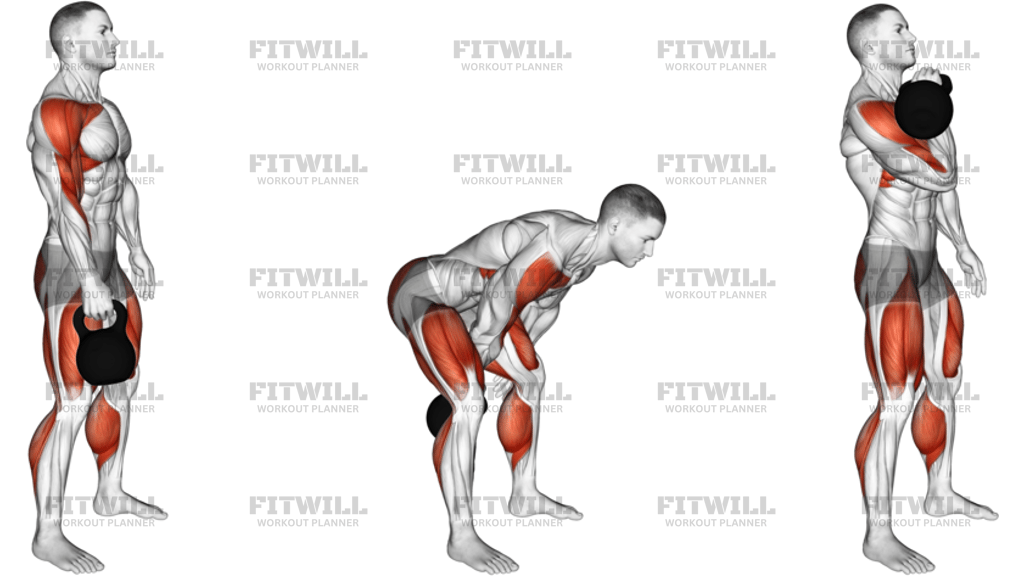
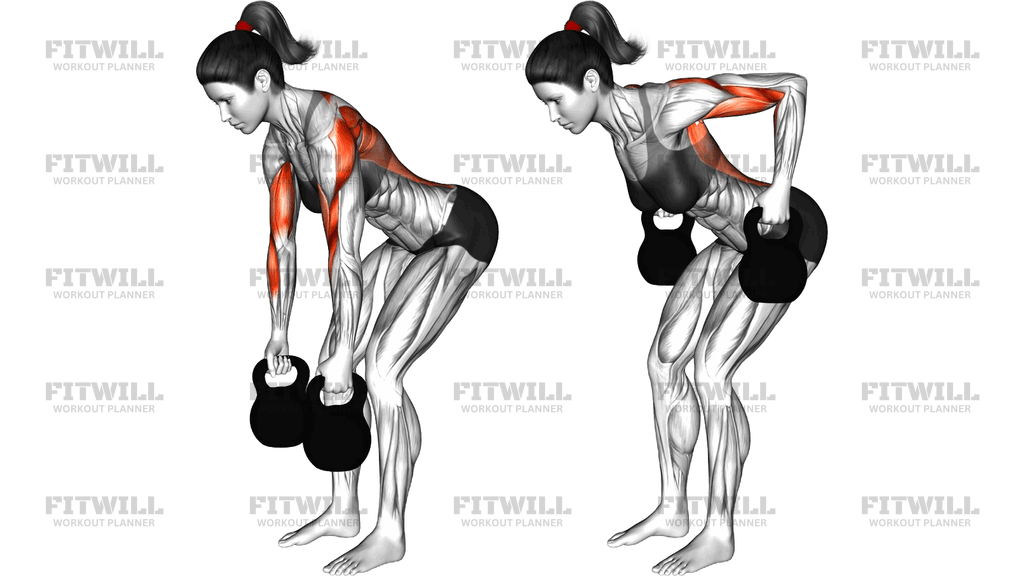
The Kettlebell Bent-Over Row is a unilateral hinge-based pulling exercise that builds the muscles of the upper back while also challenging the lats, rear shoulder, biceps, and trunk to stay organized. In the pictured setup, one hand rows a kettlebell from a bent-over position while the other hand supports the body on the thigh or knee. That support point matters because it reduces unnecessary sway and lets you load the pulling side without turning the movement into a twist.
This exercise is especially useful when you want rowing strength without needing a bench or machine. The bent-over position trains you to keep a long spine, a firm hip hinge, and quiet ribs while the arm drives back. Because the torso stays angled forward, the back has to work against both the load and the tendency to round or rotate. That makes the movement valuable for back development, posture work, and unilateral strength training.
Good reps start before the kettlebell moves. Set the hinge first, then lock in the support hand, brace the midsection, and let the free arm hang straight down from the shoulder. The row should travel close to the body and finish near the lower ribs or hip line, with the elbow passing back rather than flaring outward. Lower the weight under control until the arm is fully extended again, then reset the shoulder before the next rep.
Use a load that lets you keep the torso still and the neck relaxed. If the kettlebell starts swinging, the shoulders start shrugging, or the body keeps rotating open at the top, the weight is too heavy or the hinge is too shallow. This is a strong accessory exercise for back-focused training days, full-body sessions, and unilateral pulling work, and it pairs well with other hinge or row variations when you want strict tension instead of momentum.
[ Workout Log & Planner ]
Put your next workout in Fitwill
Keep your plan and training log ready when you are.


Instructions
- Stand with your feet about hip-width apart and place the kettlebell on the floor beside one foot.
- Hinge at the hips until your torso is roughly 30 to 45 degrees above parallel, then rest your free hand on the same-side thigh or knee for support.
- Keep your spine long, your chest slightly open, and your working arm hanging straight under the shoulder.
- Brace your midsection before the kettlebell leaves the floor.
- Pull the kettlebell up toward your lower ribs or hip, keeping the elbow close to your side.
- Pause briefly at the top while keeping the shoulder down and the torso square to the floor.
- Lower the kettlebell in a controlled path until the arm is straight again without letting the shoulder roll forward.
- Reset your brace and repeat for the planned reps before switching sides.
Tips & Tricks
- Keep the support hand on the thigh or knee so the torso does not drift and the pull stays strict.
- Think about driving the elbow back toward the back pocket, not yanking the handle upward.
- Let the kettlebell hang directly under the shoulder at the bottom so the start position stays stable.
- Avoid twisting the chest open at the top; the ribs and hips should stay mostly square.
- Keep the neck in line with the spine instead of looking up to chase range.
- Use a short pause near the top to remove momentum and make the upper back do the work.
- Lower the kettlebell slowly so the shoulder does not dump forward between reps.
- Choose a load that lets you keep the hinge and support position unchanged through every rep.
Frequently Asked Questions
What does the Kettlebell Bent-Over Row work most?
It mainly trains the upper back and lats, with help from the rear shoulders, biceps, and trunk stabilizers.
Should I use one kettlebell or two?
This version is usually done with one kettlebell at a time so you can keep the torso braced and row each side separately.
Where should my free hand go during the row?
Place it on the same-side thigh or knee to help support the hinge and reduce body sway.
How high should I pull the kettlebell?
Pull it toward the lower ribs or hip line, not up toward the shoulder, so the elbow can travel back cleanly.
Can I round my back a little to get more range?
No. Keep a long spine and a steady hinge; extra range is not worth losing position or loading the low back.
Why does the kettlebell feel like it wants to swing?
That usually means the load is too heavy or you are not resetting the bottom position before each pull.
Is this a good beginner back exercise?
Yes, as long as the weight is light enough to keep the hinge, support hand position, and row path controlled.
What is the biggest form mistake to avoid?
Letting the torso rotate open and shrugging the shoulder at the top are the two most common mistakes.