Dumbbell One-Arm Thruster
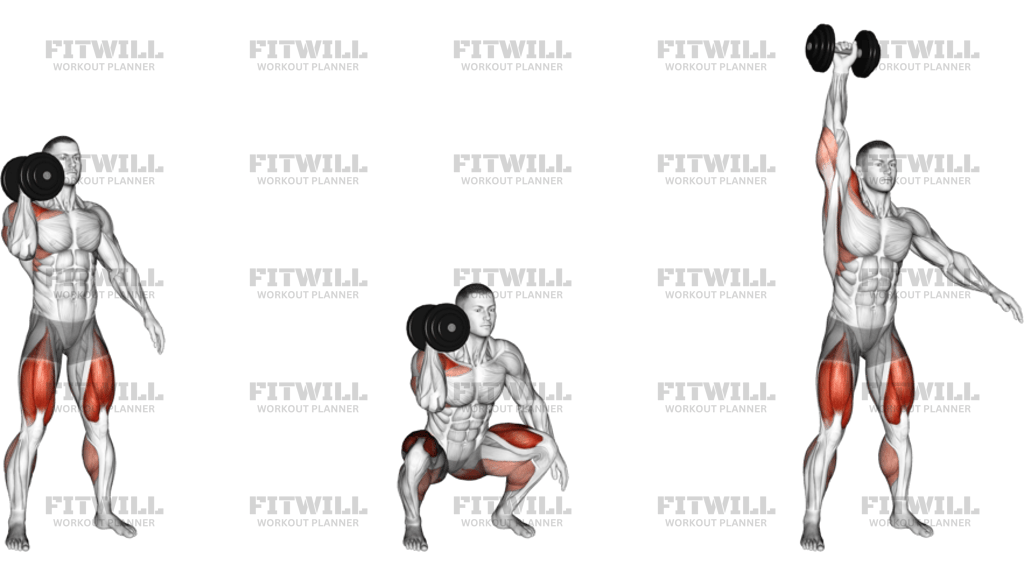
Dumbbell One-Arm Thruster combines a front-rack squat with a single-arm overhead press. The dumbbell sits on one shoulder for the squat, then you drive up through the legs and finish the rep by pressing the same weight overhead. That makes it a true full-body strength exercise, with the legs producing the power and the shoulder, triceps, and trunk finishing the work.
The image shows a unilateral thruster with one dumbbell held in the rack position at shoulder height. That offset load makes the exercise more demanding than a two-dumbbell version because your torso has to resist leaning, twisting, and rib flare while you squat and press. It is useful for building leg drive, shoulder endurance, and anti-rotation control in one movement.
The setup matters more than it looks. Keep the feet planted, the working elbow slightly forward, the wrist stacked under the handle, and the non-working arm free for balance. In the squat, sit between your hips with the chest tall enough to keep the dumbbell stable on the shoulder. On the way up, transfer force from the floor through the legs into the press instead of trying to curl or heave the weight overhead.
A clean Dumbbell One-Arm Thruster uses one smooth rhythm: descend under control, reverse out of the bottom, then press as the knees and hips extend. The dumbbell should travel in a mostly vertical line close to the head, ending with the biceps near the ear and the ribs still down. If the torso leans hard to one side or the lower back arches to finish the press, the load is too heavy or the rack position is off.
This exercise fits well in strength circuits, conditioning blocks, or accessory work when you want a lower-body and upper-body pattern in the same rep. It is usually best done with light to moderate load, because the single-arm position taxes stability before pure pressing strength becomes the limit. Keep the reps crisp, reset the shoulder rack after each lockout if needed, and stop the set when the squat depth, trunk position, or overhead path starts to drift.
[ Workout Log & Planner ]
Put your next workout in Fitwill
Keep your plan and training log ready when you are.


Instructions
- Stand with your feet about shoulder-width apart and hold one dumbbell in the rack position at one shoulder, with your elbow slightly in front of your ribs and your wrist stacked under the handle.
- Set your free arm out to the side or slightly forward for balance, keep your chest tall, and brace your midsection before you descend.
- Sit into a controlled squat by sending your hips back and down while keeping the dumbbell tight to the shoulder and your heel contact solid.
- Reach the bottom with your thigh angle as deep as your mobility allows without collapsing the chest or letting the dumbbell drift away from the shoulder.
- Drive up through your midfoot and heel, and begin pressing the dumbbell as soon as your legs start extending.
- Finish the rep by locking the elbow overhead with the biceps close to your ear and the ribs still stacked over the pelvis.
- Lower the dumbbell back to the shoulder under control as you prepare for the next squat.
- Repeat for the planned reps, then bring the weight down safely and reset your stance before setting the dumbbell aside.
Tips & Tricks
- Keep the dumbbell resting on the shoulder during the squat; if it floats forward, the press will feel unstable from the first rep.
- Think of the press as a continuation of the leg drive, not a separate arm-only action.
- A small forward elbow angle helps the dumbbell stay racked; letting the elbow drop makes the wrist fold back and the shoulder work harder.
- Do not let your torso lean away from the loaded side at the bottom of the squat, especially when fatigue builds.
- Use a slightly lighter load than your regular overhead press weight, because the squat-to-press transition is the limiting factor here.
- Keep the overhead finish vertical instead of arcing the dumbbell forward; the weight should end stacked over the shoulder, hip, and foot.
- If your lower back arches hard overhead, lower the load and finish with your ribs down instead of chasing a higher press.
- Reset the rack position between reps if needed rather than starting the next squat with the dumbbell out of place.
Frequently Asked Questions
What muscles does the Dumbbell One-Arm Thruster work?
It trains the quads, glutes, shoulders, and triceps most, with the core working hard to stop the single dumbbell from pulling you off balance.
Is the Dumbbell One-Arm Thruster beginner-friendly?
Yes, if you start light and can control the front-rack squat before you add the press. Beginners should use a load they can keep stacked over the shoulder without twisting.
Where should the dumbbell sit in the Dumbbell One-Arm Thruster?
It should rest in the front-rack position on top of the shoulder, with the elbow slightly forward and the wrist under the handle. If the weight is carried too low or too far out in front, the squat and press both get messier.
How do I know if I am pressing too early?
If the dumbbell starts moving before your legs drive out of the bottom, or if your hips shoot up faster than the weight, the press is being muscled instead of transferred from the squat.
What is the biggest mistake in the one-arm version?
Letting the torso lean or rotate toward the free side is the most common problem. Keep the ribs stacked and the free arm available for balance, not for swinging.
Can I use one dumbbell to challenge my core more than two dumbbells?
Yes. The offset load creates more anti-rotation and side-to-side stability demand than a two-dumbbell thruster, even when the absolute weight is lower.
Should the Dumbbell One-Arm Thruster feel like a squat or a shoulder press?
It should feel like both, but the best reps are usually driven by the legs first and finished by the shoulder and triceps. If it feels like an arm-only press, the load is probably too heavy.
What should I do if the dumbbell pulls my shoulder forward at the top?
Lower the weight and finish with the biceps beside the ear, not in front of the head. A cleaner lockout keeps the shoulder stacked and usually feels better on the joint.