PVC Pass Through
PVC Pass Through is a standing shoulder mobility drill that uses a PVC pipe, dowel, or very light bar to move the shoulders through a large, controlled arc. It is less about building load and more about teaching the shoulders, upper back, and arms to coordinate clean overhead motion without shrugging, twisting, or losing posture.
The exercise is useful when your overhead position feels stiff, when the front of the shoulders feel tight, or when you want a simple warm-up before pressing, snatching, handstands, or other overhead work. The main emphasis stays on the shoulders, while the upper back, traps, and triceps help control the path as the arms rotate from front to overhead and behind the body.
A good rep starts with a wide enough grip that the bar clears your hips, torso, and head without forcing the shoulders into a painful position. Stand tall with your feet about hip-width apart, ribs stacked over your pelvis, and elbows locked so the movement comes from the shoulder joints rather than bent elbows or a swinging torso. The bar should travel in a smooth arc, not a rushed toss.
At the top, the pipe should pass overhead with the chest still down and the neck long, then continue behind you until it reaches a comfortable end range. If your shoulders are tight, keep the grip wider and only go as far behind you as you can maintain control. The return path should mirror the lift: bring the pipe back overhead, then back to the starting position in front of the thighs without arching hard through the low back.
This is a useful drill for warm-ups, recovery sessions, and technique work because it exposes asymmetries quickly. If one side feels tighter, you will usually notice it in the arc, the grip width you need, or the point where the bar stops moving freely. Use that feedback to adjust your stance, widen the grip, or reduce range instead of forcing the pass-through to look the same as someone with more shoulder mobility.
PVC Pass Through should feel controlled, smooth, and repeatable. If you feel pinching in the front of the shoulder, shorten the range and widen the grip. If your ribs flare or your lower back arches to get the bar behind you, the range is too aggressive for that rep. The goal is clean shoulder motion with steady breathing and no compensations that turn a mobility drill into a sloppy backbend.
Fitwill
Log Workouts, Track Progress & Build Strength.
Achieve more with Fitwill: explore over 9600 exercises with images and videos, access built-in and custom workouts, perfect for both gym and home sessions, and see real results.
Start your journey. Download today!




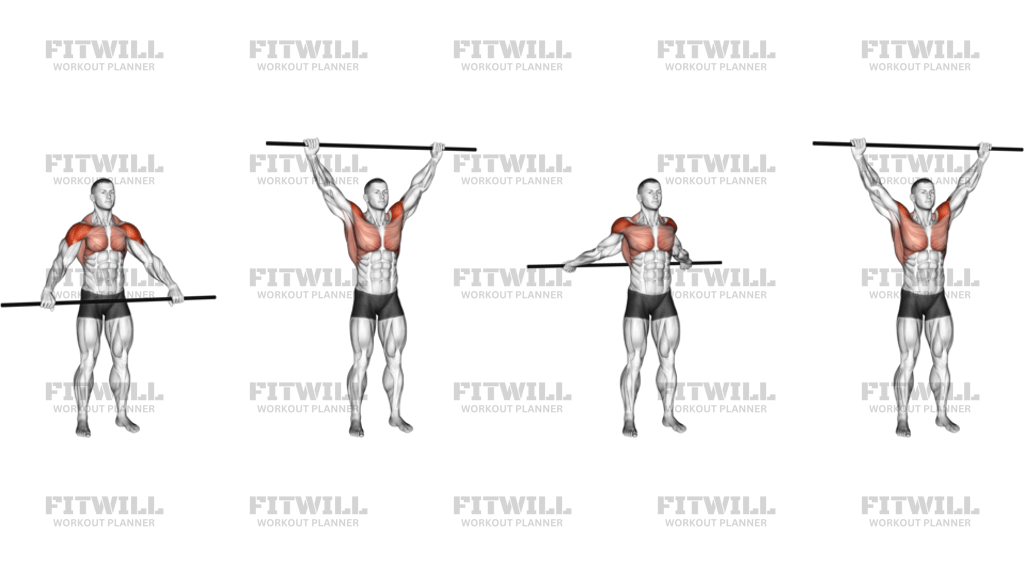
Instructions
- Stand tall with your feet about hip-width apart and hold a PVC pipe or dowel in front of your thighs with a wide overhand grip.
- Lock your elbows straight, let your shoulders settle down away from your ears, and keep your ribs stacked over your pelvis before you start.
- Begin with the pipe touching or hovering just in front of your thighs and your hands wide enough that the bar can travel over your head.
- Lift the pipe in a smooth arc to overhead, keeping the arms straight and the torso quiet as the shoulders do the work.
- Continue the same arc behind your head until the pipe reaches the comfortable end range behind your body.
- Pause briefly in the back position without bouncing, shrugging, or leaning forward.
- Reverse the path under control, bringing the pipe back overhead and then back to the starting position in front of your thighs.
- Breathe out as you move through the hardest part of the arc and reset your posture before the next repetition.
- Repeat for the planned number of reps, stopping early if the bar path gets shaky or your low back starts to arch.
Tips & Tricks
- Use a PVC pipe, broomstick, or very light bar; extra load turns this into a compensation drill instead of a mobility drill.
- A wider grip makes the pass-through easier, especially if the pipe catches on the way behind your head.
- Keep your elbows locked so the shoulders move through the range instead of letting the arms bend to fake extra mobility.
- If your ribs flare at the top, lower the bar path and finish the rep with your pelvis still stacked under your torso.
- Do not chase the same behind-the-body range every rep; stop where the shoulders stay smooth and the bar path stays clean.
- A small shrug at the top is normal, but the upper traps should not take over the whole movement.
- Move slowly enough that you can feel where one shoulder is tighter than the other.
- If the pipe hits your thighs or head, reset the grip width rather than forcing a crooked path around the obstacle.
Frequently Asked Questions
What muscles does PVC Pass Through work most?
It mainly trains the shoulders, with the upper back, traps, and triceps helping guide the pipe through the arc.
Can beginners perform this exercise?
Yes. Beginners usually do best with a wide grip, a PVC pipe or dowel, and a smaller range until the overhead path feels smooth.
How wide should my grip be on PVC Pass Through?
Start wide enough that the pipe clears your hips and head without forcing your shoulders into a painful end range, then narrow it gradually if the path stays smooth.
Why do my ribs flare during the pass-through?
That usually means the grip is too narrow or the range is too aggressive. Widen your hands and keep your ribcage stacked over your pelvis as the pipe goes overhead.
Should my elbows bend during PVC Pass Through?
No. Keep the elbows straight so the shoulders, not the arms, create the movement arc.
What if the pipe catches behind my head or back?
Usually the grip is too narrow or the shoulders are too tight for that range. Widen the hands and shorten the arc until the pipe moves cleanly.
Is PVC Pass Through a warm-up or a strength exercise?
It is best treated as a warm-up or mobility drill. The value comes from clean shoulder motion, not from adding resistance.
Can I use a towel or band instead of a PVC pipe?
Yes, if the goal is mobility. A towel can work for a gentler version, while a light band adds some tension but should still let the shoulders move freely.