Overhead Clap
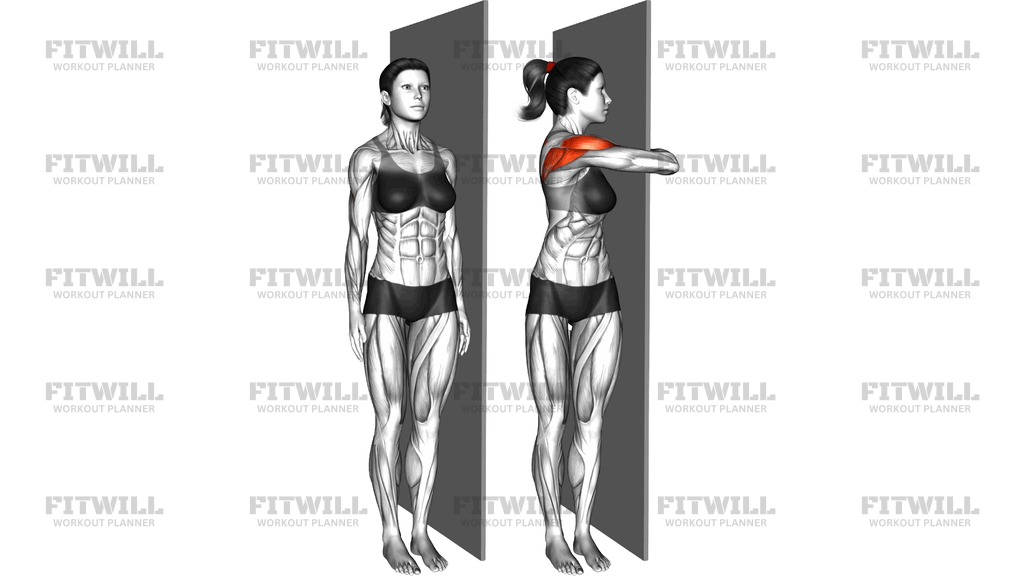
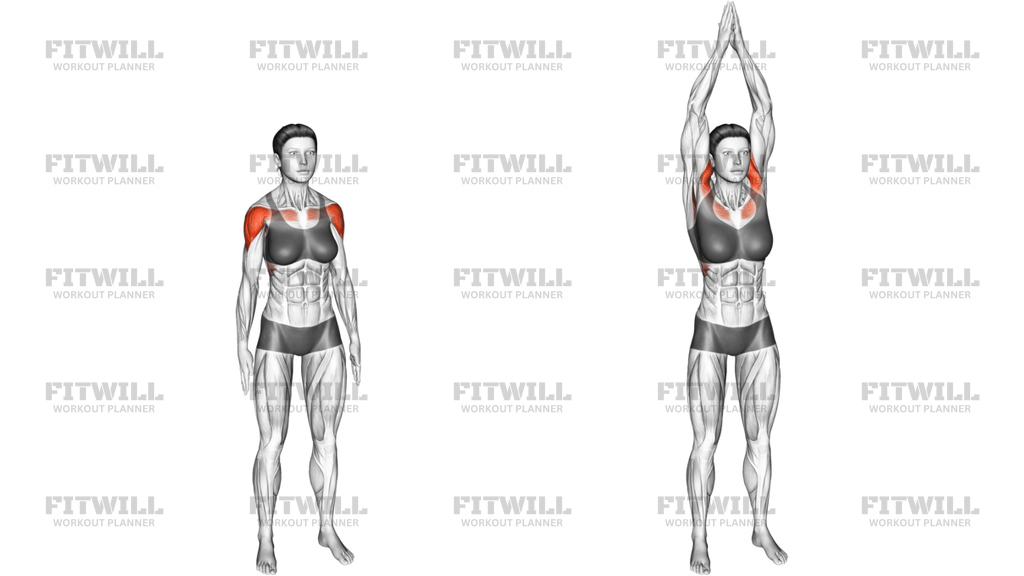
Overhead Clap is a standing bodyweight shoulder drill built around a full overhead reach and a controlled touch or clap above the head. It is useful as a warm-up, activation drill, or low-load accessory when you want the shoulders, upper back, and trunk to work together without external resistance. The goal is not speed; it is to keep the ribs stacked, the neck quiet, and both arms moving cleanly through the same path every rep.
Because the arms travel into full elevation, the setup matters. Stand tall with your feet about hip-width apart, glutes lightly on, and your pelvis set so the lower back does not take over. The hands should travel straight up from the sides rather than swinging behind you, and the head should stay neutral so the arms can finish overhead without you chasing the clap by leaning back.
As you raise the arms, reach long through the fingertips and let the shoulders rotate upward instead of pinching inward. Bring the palms together overhead only as high as you can manage without rib flare or neck tension. If the hands do not meet comfortably, narrow the range slightly and keep the movement crisp rather than forcing extra height. The descent should be just as controlled as the lift, with the arms returning to your sides under control before the next repetition.
Overhead Clap is often used before pressing, swimming, throwing, gymnastics, or any workout that asks the shoulder to open overhead. It also works well as a posture check when long hours at a desk leave the upper back stiff and the shoulders sluggish. When it is done well, the drill teaches the delts, scapular stabilizers, and upper back to share the job of reaching overhead instead of dumping stress into the lower back.
Treat each rep like a quality checkpoint. If the hands are touching but the ribs are flaring, the rep is too big; if the neck is tense or the elbows bend to cheat the top position, the rep is too sloppy. Use a smooth rhythm, controlled breathing, and a range that lets you finish every rep with the same stacked posture you started with.
[ Workout Log & Planner ]
Put your next workout in Fitwill
Keep your plan and training log ready when you are.


Instructions
- Stand tall with your feet hip-width apart, arms relaxed at your sides, and your ribs stacked over your pelvis.
- Brace lightly, squeeze your glutes, and keep your chin level before the arms move.
- Raise both arms out and up in a smooth arc, keeping the movement symmetrical.
- Continue reaching overhead until your upper arms line up beside your ears.
- Bring the palms together above the crown of your head, or clap lightly if the position allows.
- Keep the elbows straight but not locked and avoid leaning back to force the touch.
- Lower the arms back to your sides under control while keeping the torso still.
- Reset your posture and repeat for the planned number of reps.
Tips & Tricks
- Keep the clap directly over the shoulders, not in front of your face or behind your head.
- If your lower back arches, shorten the reach until your ribs stay down.
- Think "reach up" instead of "shrug hard" so the neck stays long.
- Let the arms finish beside the ears; wide elbows usually mean the shoulders are not fully elevating.
- A light pause at the top makes the drill better for shoulder control than a fast slapping rhythm.
- If the palms do not meet, touch fingertips or bring the hands slightly lower rather than compensating with a back arch.
- Exhale as the arms rise to help keep the trunk stacked and the reach smooth.
- Stop the set when one side starts drifting higher than the other.
Frequently Asked Questions
What does Overhead Clap work most?
It mainly trains the shoulders, with help from the upper back, scapular stabilizers, and trunk muscles that keep you stacked while the arms reach overhead.
Is Overhead Clap a mobility drill or a strength exercise?
It can be used as either one. With a smooth tempo and a small pause overhead, it works well as a mobility and control drill; with more deliberate reps, it becomes a light shoulder activation movement.
Do my hands have to clap hard at the top?
No. A light touch is enough, and for some people the best version is just bringing the palms close without forcing contact.
Why do my ribs flare when I reach overhead?
That usually means the shoulders or thoracic spine are not giving you enough clean overhead range, so the lower back is helping. Shorten the reach and keep your pelvis stacked.
Can beginners do Overhead Clap?
Yes, as long as the range stays pain-free and the arms can move overhead without a back arch or neck tension.
What should I do if my shoulders feel pinchy at the top?
Bring the hands slightly forward of the ears, reduce the height, and stop before the pinch starts. If the pain continues, choose a different overhead warm-up.
Should my elbows bend on the way up?
Keep them mostly straight. Bending the elbows turns the drill into a cheat pattern and usually hides limited shoulder range.
How can I make Overhead Clap harder?
Slow the lowering phase, add a brief hold with the palms together overhead, or use cleaner, stricter reps over a longer set instead of speeding through them.