Dumbbell Single Leg Hip Thrust
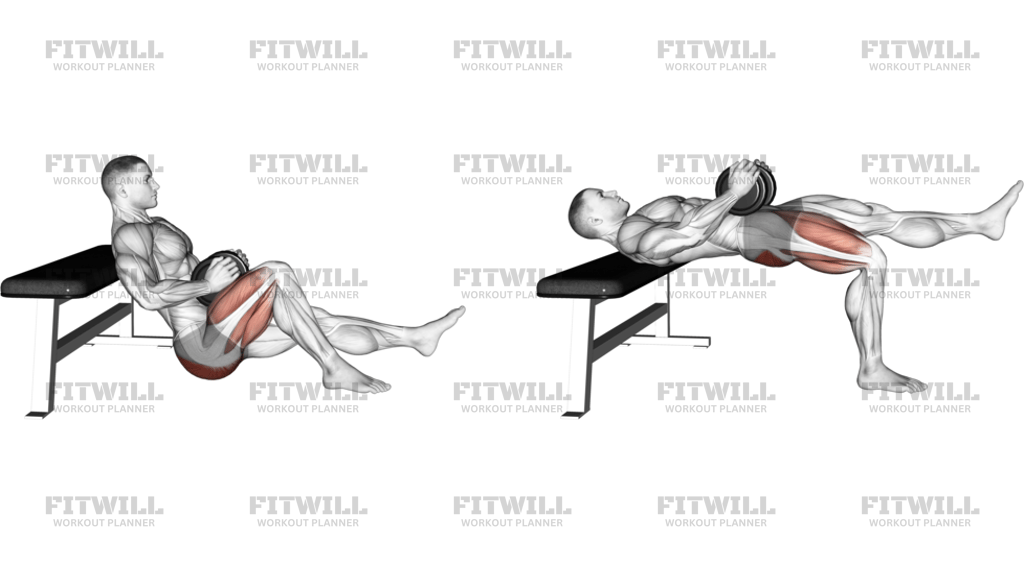
The Dumbbell Single Leg Hip Thrust is a unilateral glute bridge variation that uses a bench for upper-back support and a dumbbell across the working-side hip. It is built to train glute strength, pelvic control, and hip extension while forcing the trunk and pelvis to stay level. Because one leg is doing the lifting, the exercise exposes side-to-side differences quickly and makes it useful for building both strength and body awareness.
The bench does most of the setup work for you: your shoulders stay anchored on the edge, your planted foot drives into the floor, and the free leg stays long or slightly bent so the pelvis does not rotate. That arrangement lets you focus on the working hip instead of turning the movement into a squat or a low-back extension. The dumbbell adds load directly over the hip crease, so even a moderate weight can produce a strong glute stimulus when the rep is clean.
This movement should feel like a powerful hip drive, not a backbend. At the top, the torso and working thigh should roughly line up while the ribs stay down and the pelvis stays square. If you overarch the lumbar spine, the glutes lose tension and the low back starts doing too much of the work. The controlled lower is just as important as the lift, because the descending phase keeps tension on the glute and helps the working side stay stable.
Dumbbell Single Leg Hip Thrust is a good choice for glute-focused strength work, accessory blocks, and unilateral lower-body training when you want less spinal loading than a barbell hip thrust and more challenge than a standard bridge. It also works well when you need a simple home or gym variation that does not require a machine. Keep the range pain-free, keep the dumbbell steady, and let each rep finish with the hips fully controlled rather than forced higher.
For best results, use a setup that matches your leg length and bench height, then stay consistent rep to rep. Small changes in foot placement, pelvic position, and dumbbell placement can completely change the feel of the exercise. When those details are dialed in, this becomes a high-return glute exercise that is easy to progress without turning sloppy.
Fitwill
Log Workouts, Track Progress & Build Strength.
Achieve more with Fitwill: explore over 9600 exercises with images and videos, access built-in and custom workouts, perfect for both gym and home sessions, and see real results.
Start your journey. Download today!




Instructions
- Sit on the floor with your upper back against the edge of a bench and place the dumbbell across the hip of the working leg, holding it steady with both hands.
- Plant the working foot flat on the floor, bend that knee so the shin stays close to vertical, and extend the other leg out in front or slightly upward.
- Lean back so your shoulder blades rest on the bench edge, then tuck your chin slightly and brace your ribs down before lifting.
- Drive through the heel and midfoot of the planted leg to raise your hips until your torso and working thigh form a straight line.
- Keep the free leg quiet and the pelvis level as you finish the rep, squeezing the glute of the working side without arching your lower back.
- Pause briefly at the top with the dumbbell stable over the hip crease and the knee still tracking over the foot.
- Lower your hips under control until the glute is just above the floor, maintaining tension instead of dropping fast.
- Reset your brace and repeat for the planned reps, then switch sides if the exercise is programmed unilaterally.
Tips & Tricks
- Place the bench edge just below the shoulder blades so you can hinge cleanly without sliding up onto your neck.
- Keep the dumbbell centered in the hip crease; if it drifts, the load can pull your pelvis off level and make the set feel unstable.
- Use a foot position where the top of the rep feels like hip extension, not a low-back arch or a quad-heavy push.
- Press through the heel and outer edge of the planted foot to keep the glute working, but do not let the ankle roll outward.
- If your hips twist at the top, shorten the range and reduce the load until both sides of the pelvis stay square.
- A slight pause at lockout is more useful than chasing extra height with momentum.
- Lower slowly enough that you can feel the glute stay loaded all the way to the bottom.
- Use a folded towel or pad under the dumbbell if the weight digs into the hip crease during higher-rep sets.
Frequently Asked Questions
What muscles does the Dumbbell Single Leg Hip Thrust train most?
It primarily targets the glutes on the working side, with the hamstrings and core helping keep the pelvis stable.
Where should the dumbbell sit during the rep?
It should rest across the hip crease of the working leg, held in place with both hands so it does not roll or slide.
How do I know if my foot is in the right spot?
At the top, your shin should be close to vertical and you should feel the glute doing the work instead of your lower back or front thigh.
Can beginners use this exercise?
Yes. Start with bodyweight or a very light dumbbell until you can keep the pelvis level and control the lowering phase.
Why do I feel this in my lower back?
That usually means you are overextending at the top, placing the foot too far away, or losing rib position as you lift.
Should the free leg stay straight or bent?
Either can work, but it should stay quiet and out of the way so it does not help you rotate or push off the floor.
How is this different from a regular hip thrust?
A single-leg version loads one side at a time, which increases the balance demand and makes it easier to expose side-to-side differences.
What is the best way to progress this exercise?
Add load slowly, keep the same bench and foot setup, and only increase difficulty when you can finish each rep without twisting or arching.