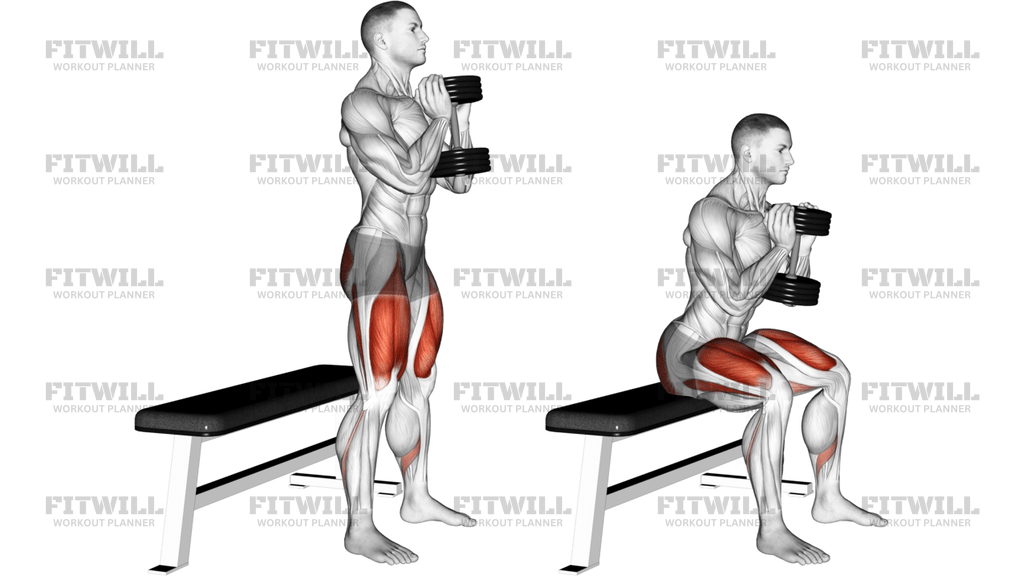
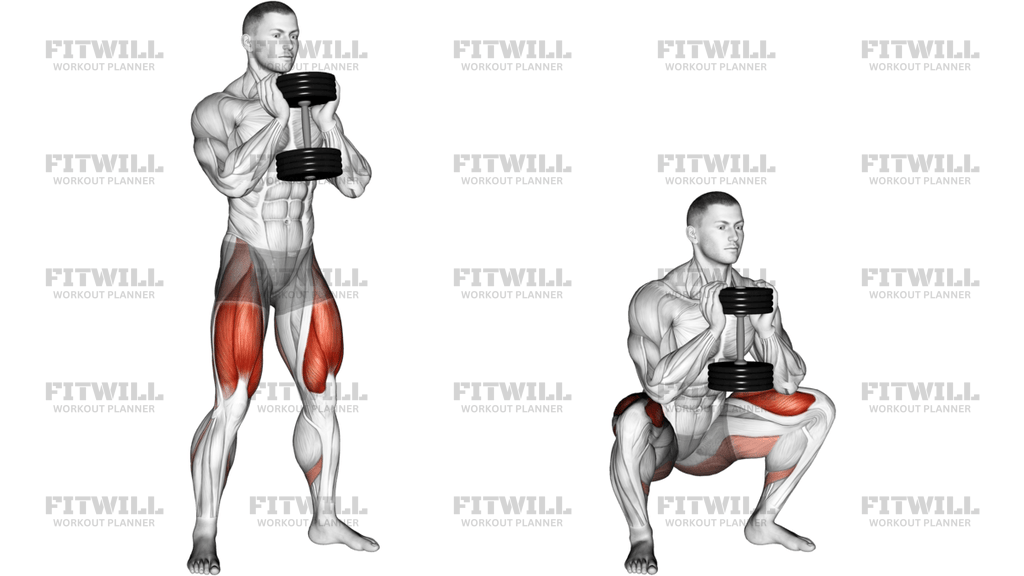
Dumbbell Goblet 2 Sec Hold Squat
Dumbbell Goblet 2 Sec Hold Squat is a front-loaded squat variation where one dumbbell is held vertically against the chest and every repetition includes a two-second pause in the bottom position. The pause removes bounce from the lift and turns each rep into a test of leg drive, trunk control, and clean squat depth.
It mainly trains the thighs and hips, with the glutes and quads doing most of the work while the core and upper back keep the torso from folding forward. In practice, the front load makes the movement more demanding on posture than a bodyweight squat, so clean bracing and steady breathing matter as much as leg strength.
The setup should be deliberate. Stand with feet about shoulder-width apart or slightly wider, turn the toes out just enough to match your hip structure, and hold the dumbbell close to the sternum with the elbows pointing down. Keeping the weight tight to the chest helps the torso stay upright and gives you a balanced counterweight as you sit down.
Lower under control until you reach your deepest pain-free squat, then stay tight through the two-second hold instead of relaxing on your joints. From the bottom, drive the floor away, keep the knees tracking over the toes, and rise without letting the hips shoot back first or the chest collapse forward.
This version is useful for beginner squat practice, accessory leg work, tempo training, and circuits that need a strict rep quality. Use a load that lets every pause stay solid and repeatable; if the hold turns into a bounce, your heels lift, or your lower back starts to round, the set is too heavy or the stance needs adjusting.
[ Workout Log & Planner ]
Put your next workout in Fitwill
Keep your plan and training log ready when you are.


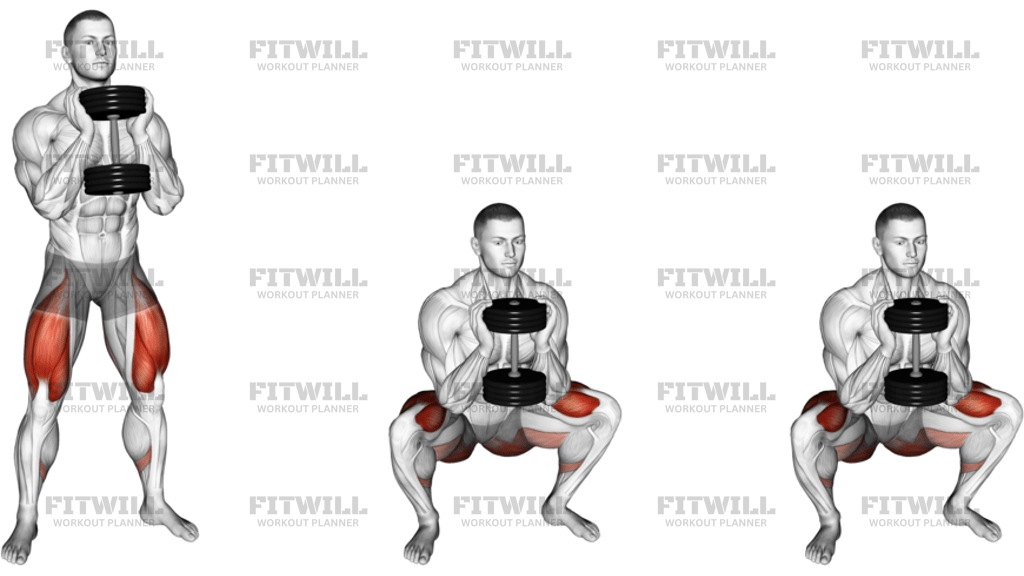
Instructions
- Stand tall with one dumbbell held vertically against the upper chest, elbows tucked down and feet about shoulder-width apart or slightly wider.
- Turn the toes out a little, plant the whole foot, and take a breath to brace your trunk before starting the descent.
- Sit the hips down between the heels while keeping the dumbbell close to the chest and the chest lifted.
- Lower until your thighs reach a deep squat position that you can control without losing heel contact or spinal position.
- Hold the bottom for 2 full seconds without bouncing, relaxing, or letting the knees cave inward.
- Drive up by pushing the floor away through the midfoot and heels while keeping the dumbbell stacked over the center of the body.
- Exhale as you pass the hardest part of the ascent and finish standing tall without leaning back.
- Reset your stance and breathing before the next rep, then repeat for the planned set.
Tips & Tricks
- Keep the dumbbell tight to the chest; if it drifts forward, the torso will fold and the hold will feel unstable.
- Treat the 2-second pause as an active position, not a rest break. Stay braced and keep tension in the legs the whole time.
- Use a stance that lets your knees track in line with your toes instead of forcing a narrow or overly wide setup.
- If your heels start to rise, reduce the depth slightly or adjust the stance before adding more load.
- Descend with control so the bottom pause is earned, not saved by bouncing out of the hole.
- Keep the elbows pointed down rather than flared; that helps the dumbbell stay vertical and the torso stay upright.
- Choose a load that allows every rep to look the same. This exercise is about position quality more than maximal weight.
- Stop the set when the two-second hold turns shaky or the lower back starts to round under fatigue.
Frequently Asked Questions
What muscles work most in a Dumbbell Goblet 2 Sec Hold Squat?
The glutes and quads do most of the work, with the core and upper back helping you stay upright during the pause.
Why add a 2-second hold at the bottom?
The pause removes rebound from the squat and makes you control the deepest position instead of bouncing through it.
Where should I hold the dumbbell?
Hold it vertically against the upper chest with the elbows pointed down so the weight stays close to your center of mass.
How deep should I squat on this movement?
Go as deep as you can while keeping your heels down, knees tracking well, and your torso from collapsing.
Can beginners use this squat variation?
Yes. The goblet position is beginner-friendly because it helps with counterbalance, but the pause makes it honest, so start light.
What is the most common mistake?
Bouncing out of the bottom or letting the dumbbell drift away from the chest are the two biggest form errors.
Should my knees go past my toes?
A little forward knee travel is normal in a squat. What matters is that the knees track in line with the toes and the heels stay planted.
How can I make this exercise harder?
Add load only after the bottom hold is stable, or keep the same weight and make the pause cleaner and the descent slower.