Dumbbell Wood Chop Squat
Dumbbell Wood Chop Squat combines a diagonal wood-chop pattern with a squat, so the trunk, hips, and shoulders have to coordinate through one controlled repetition. It is a useful core-and-lower-body drill when you want the torso to stay organized while the load travels through a strong, athletic path.
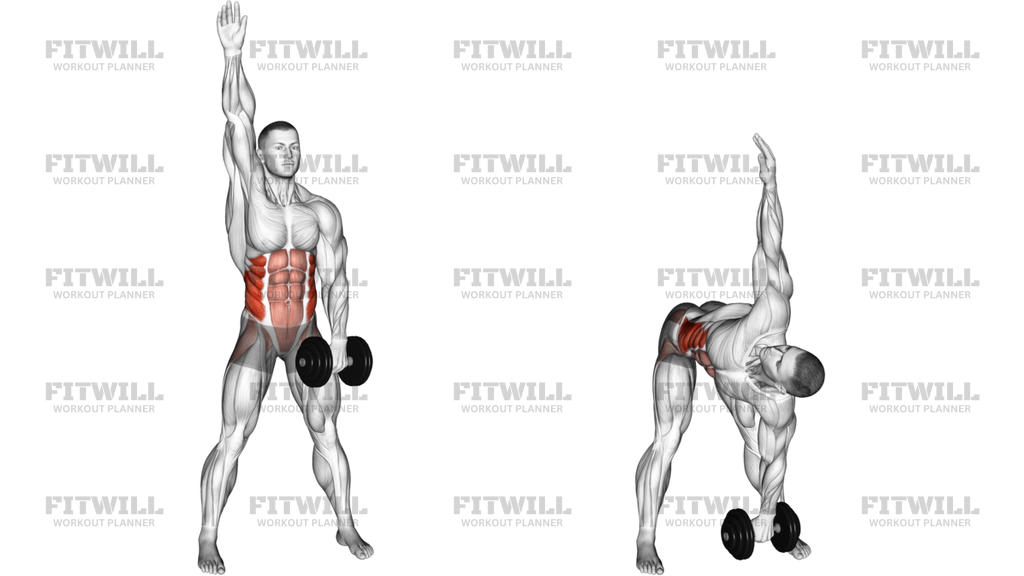
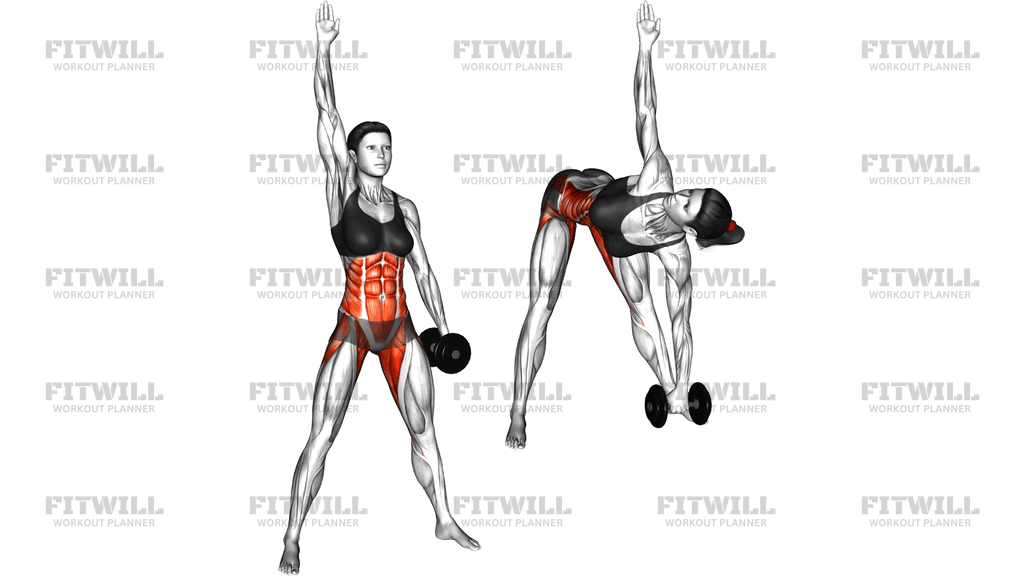
The image shows the dumbbell moving from a high position down across the body as the lifter drops into a squat. That diagonal path matters: the exercise is not about muscling the weight around with a twist, but about keeping the ribs stacked, the pelvis controlled, and the load moving smoothly from start to finish.
The primary emphasis is on the obliques, with the abdominals, glutes, quads, and upper back helping stabilize the body. In anatomy terms, the main work centers on the External obliques, with support from Rectus abdominis, Erector spinae, and Transversus abdominis. A moderate load can feel challenging because the weight is far from the center line and the squat adds a second demand.
Set your feet about shoulder width apart and keep enough space to sit between your hips without losing balance. Brace before each rep, then lower the dumbbell on a controlled diagonal as you bend the knees and hinge the hips into the squat. Keep the chest lifted, the neck neutral, and the knees tracking cleanly over the toes.
This movement works well as accessory work for rotation control, core strength, or conditioning circuits, especially when you want a full-body pattern that still rewards precision. The best results come from repeatable reps, not speed. If the dumbbell starts drifting, the torso starts over-rotating, or the squat turns into a collapse, the set is too heavy or too fatigued for clean work.
Fitwill
Log Workouts, Track Progress & Build Strength.
Achieve more with Fitwill: explore over 9600 exercises with images and videos, access built-in and custom workouts, perfect for both gym and home sessions, and see real results.
Start your journey. Download today!




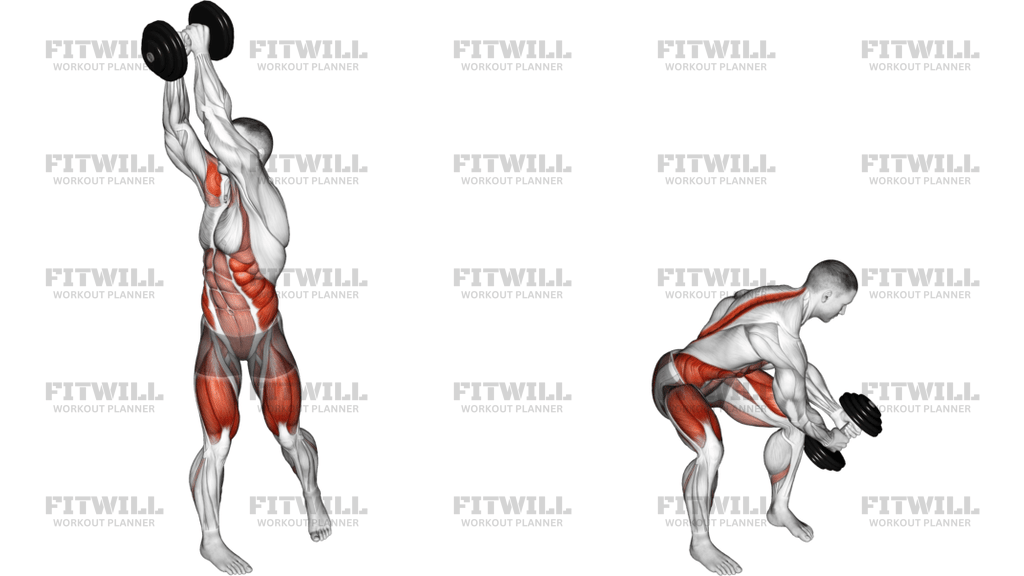
Instructions
- Stand tall with your feet about shoulder-width apart and hold one dumbbell with both hands overhead, arms long and elbows softly unlocked.
- Set your ribs down, brace your abdomen, and keep your chest open before you start the first rep.
- Begin the descent by sending your hips back and bending your knees as you lower the dumbbell diagonally across your body.
- Keep the weight moving on a smooth chop path toward the outside of the opposite knee while your torso stays controlled.
- Sit into the squat as far as you can without rounding your lower back or collapsing your chest.
- Drive through your heels and midfoot to stand back up, reversing the same diagonal path with the dumbbell.
- Finish tall with the dumbbell back overhead and your hips fully extended before starting the next rep.
- Exhale through the hardest part of the chop and inhale as you return to the top.
- Reset your stance and posture after each rep if needed, then repeat for the planned number of repetitions.
Tips & Tricks
- Keep the dumbbell slightly in front of your head on the way up so you do not arch your lower back.
- Think of the chop as a diagonal pull down, not a fast twist through the spine.
- Let the knees track in line with the toes as you sit into the squat.
- Keep both feet flat so the heels do not pop up when the weight reaches the low point.
- Use a load that lets you keep the dumbbell path smooth from the first rep to the last.
- Shorten the range if the torso starts rotating more than the hips and shoulders can control.
- Move the weight with straight arms and avoid turning the repetition into a press or curl.
- Stop the set when the squat depth or overhead position starts to change from rep to rep.
- Keep your gaze forward rather than following the dumbbell all the way down.
Frequently Asked Questions
What muscle does Dumbbell Wood Chop Squat target most?
The obliques do most of the work, with the abs, glutes, quads, and upper back helping stabilize the movement.
Can beginners perform this exercise?
Yes. Start with a light dumbbell, a shorter chop range, and a squat depth you can control without rounding your back.
Should the dumbbell stay overhead the whole time?
It should start overhead and travel on a controlled diagonal down to the low squat position, then return to overhead on the way up.
How low should I squat during the chop?
Go as low as you can while keeping your chest lifted, heels planted, and lower back neutral.
Is this supposed to be a twisting exercise?
There is some rotation, but the goal is control, not a big spinal twist. The hips and torso should stay organized as the dumbbell moves diagonally.
Why do I feel it in my shoulders?
Your shoulders are stabilizing the dumbbell overhead and through the chop path, but the core and hips should still drive the exercise.
What is the most common mistake?
Rushing the descent and letting the torso collapse or rotate too far are the biggest form breaks.
Can I alternate sides each rep?
Yes, if your program calls for it. Keep each side symmetrical and make sure the dumbbell follows the same path every time.