Roll Forearms Standing Against Wall
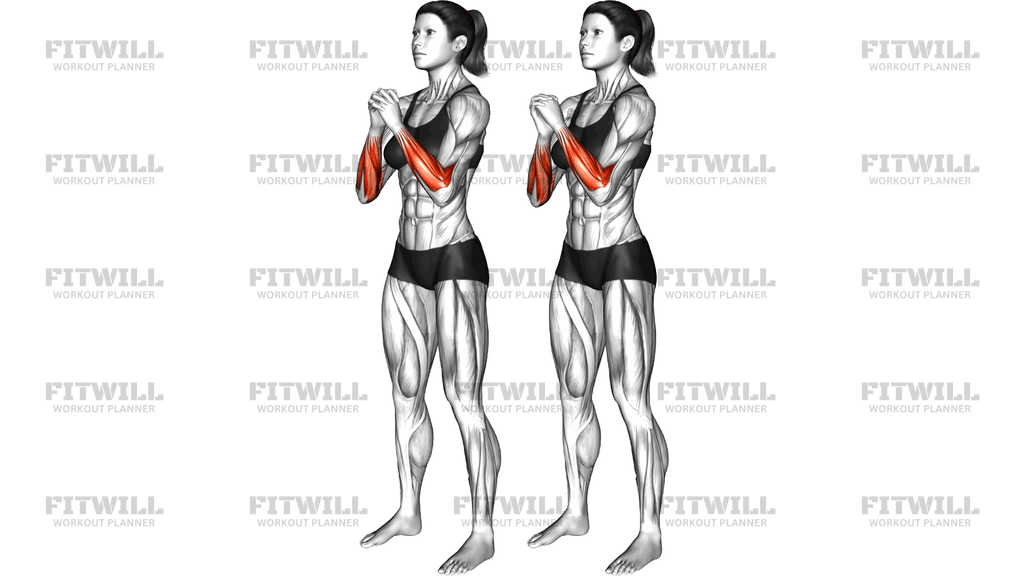
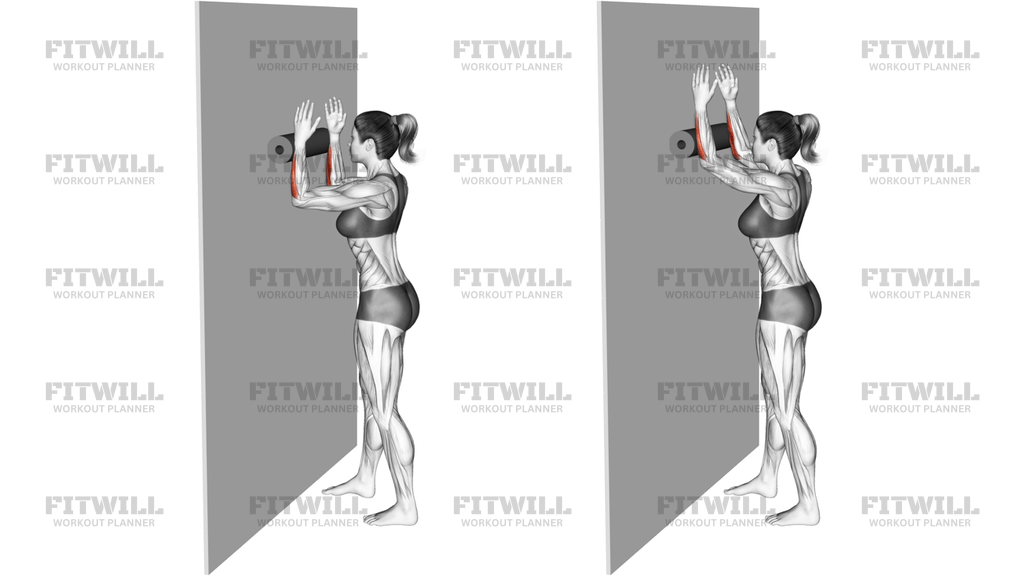
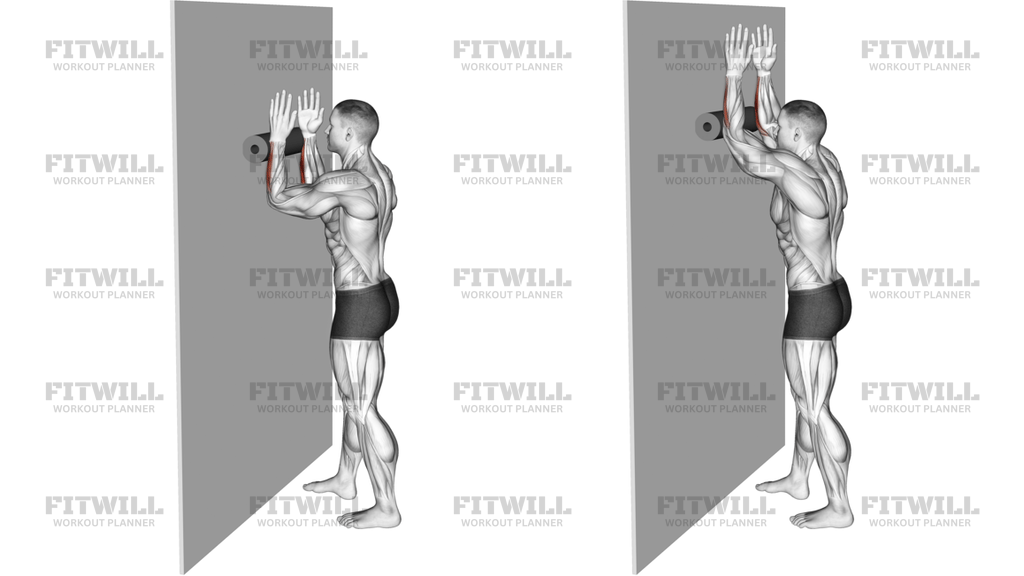
Roll Forearms Standing Against Wall is best understood as a standing wall slide for the forearms and shoulders. You face the wall, keep the forearms in contact with it, and move the arms from a bent-elbow position toward a higher reach while the trunk stays stacked. The wall gives you an instant reference for how much shoulder motion you actually own, which is why this drill is useful for warm-ups, mobility work, and positions that prepare you for pressing or overhead training.
The main training effect comes from controlled shoulder elevation and upward rotation with the ribs kept down. As the arms travel, the forearms, wrists, upper back, and core all contribute to keeping the line clean. If the chest flares or the low back arches, the movement stops being a forearm-and-shoulder drill and turns into a compensation drill. The goal is not to force a huge reach; the goal is to repeat a smooth path that you can own without losing wall contact.
Setup matters here because small changes in foot distance and trunk angle change the entire feel of the rep. Stand close enough to the wall that you can keep pressure through the forearms without shrugging or leaning back. Keep the elbows roughly under the shoulders at the start, wrists neutral, and the neck long. A light bend in the knees and a firm exhale help you keep the rib cage stacked over the pelvis as the arms travel upward.
On each rep, press the forearms into the wall, slide or roll them upward under control, and pause when you reach the highest clean position you can maintain. The best top position is the one where your shoulders are working and your low back is not. Lower the arms slowly, reset your breath, and repeat with the same path. This makes the exercise valuable for athletes who need better overhead mechanics, lifters who feel stiff in the front of the shoulders or forearms, and anyone using a wall-based mobility drill to open up the upper body without chasing pain-free range past control.
Treat the motion as a precise preparation drill, not a test of flexibility. If the elbows peel off the wall, the wrists get cranky, or the head pushes forward, shorten the range and keep the rep tidy. Clean repetitions here usually pay off in better pressing position, easier overhead reach, and a more organized torso under load.
[ Workout Log & Planner ]
Put your next workout in Fitwill
Keep your plan and training log ready when you are.


Instructions
- Stand facing the wall with your feet about a forearm length away, feet hip-width apart, and your forearms placed on the wall at about shoulder height.
- Set your elbows roughly under your shoulders, keep your wrists neutral, and gently press both forearms into the wall before you move.
- Stack your ribs over your pelvis, soften your knees, and keep your neck long instead of reaching your chin toward the wall.
- Exhale lightly as you begin sliding or rolling your forearms upward while keeping steady contact with the wall.
- Let your shoulders travel up and around naturally, but stop before your low back arches or your chest pops forward.
- Reach as high as you can while keeping pressure through the forearms and control through the trunk.
- Pause for a moment at the top, then inhale and lower the forearms back to the start under control.
- Reset your stance and repeat for the planned reps, shortening the range if contact or posture starts to break down.
Tips & Tricks
- Step a little closer to the wall if you have to arch your low back to get the arms higher.
- Keep equal pressure through both forearms so one side does not dominate the slide.
- Think about your ribs staying heavy as the arms rise; that keeps the drill focused on shoulder motion instead of spinal extension.
- Move slowly enough that you can feel when the elbows start to drift off the wall.
- If the wrists feel strained, reduce the reach and keep the hands more neutral instead of forcing the top position.
- A soft knee bend often makes it easier to keep the pelvis tucked under the ribs.
- Use a full exhale at the top of the rep if your torso wants to flare open.
- Stop the set when the neck starts jutting forward or the shoulders are shrugging instead of rotating cleanly.
Frequently Asked Questions
What does Roll Forearms Standing Against Wall train?
It mainly trains shoulder motion and upper-body control, with the forearms, wrists, upper back, and core helping keep the slide organized.
Is this more of a mobility drill or a strength exercise?
It is primarily a mobility and control drill. The wall gives feedback so you can clean up your shoulder path without chasing load.
How far from the wall should I stand?
Close enough that you can keep your forearms on the wall without arching your lower back. If the rep gets easier only because you step farther away, the setup is probably too loose.
Should my forearms stay on the wall the whole time?
Yes, that contact is the point of the drill. If the forearms peel away, shorten the range and keep the movement cleaner.
Why does my lower back arch when I raise my arms?
Usually you are standing too far from the wall or reaching past the range you can control. Step closer, exhale, and stop before the ribs flare.
Can beginners do this movement?
Yes. It is beginner-friendly when you keep the range small and focus on a steady forearm-to-wall contact instead of a big overhead reach.
When should I use this in a workout?
It works well in a warm-up before overhead pressing, pulldowns, or rowing, and it also fits as a reset drill when the upper body feels stiff.
What should I do if my wrists or shoulders feel pinchy?
Reduce the range, stand a little closer, and keep the wrists more neutral. The drill should feel organized and smooth, not forced.