Kettlebell Bent-Over Alternate Twist Row
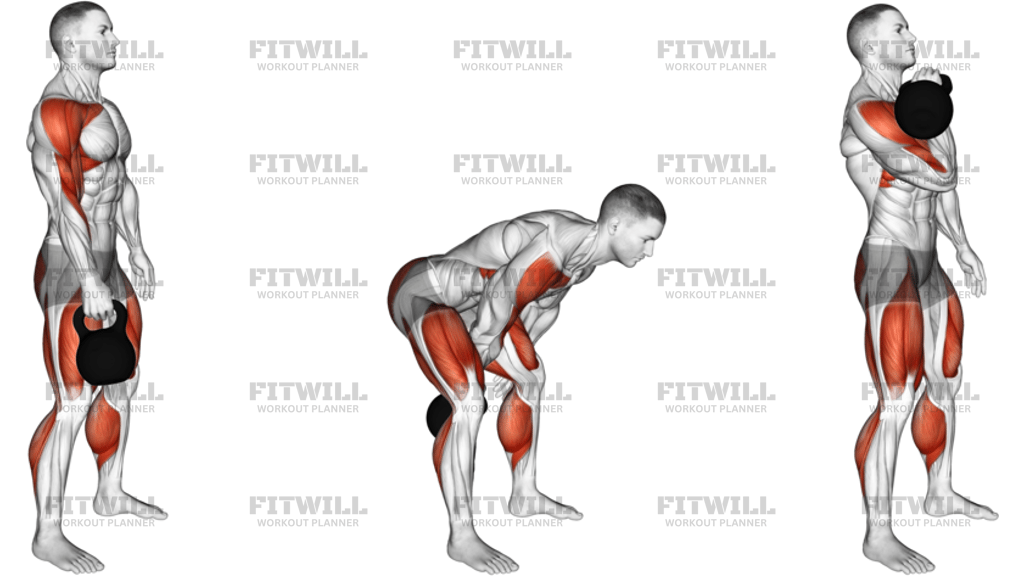
Kettlebell Bent-Over Alternate Twist Row is a bent-over pulling exercise that combines an alternating row with a small torso twist. In the image, both kettlebells start hanging under the shoulders while the hips stay hinged and the spine stays long. One arm rows at a time, which makes the movement more demanding than a standard two-arm row because the trunk has to resist unwanted sway while the upper back creates the pull.
The exercise trains the back, rear shoulders, arms, and the muscles that keep the torso from rotating too far as each side works. The alternating pattern lets you attack each side separately while still holding a fixed hinge position. That makes it useful for building upper-back strength, lat control, and the kind of bracing that carries over to rows, carries, and many athletic hinge patterns.
Setup matters because the row starts from a bent-over position, not an upright stance. Fold at the hips until the torso is close to parallel with the floor, keep a soft bend in the knees, and let the kettlebells hang just below the shoulders. From there, the ribs stay stacked, the neck stays neutral, and the lower back should not take over the job of holding you in place. A clean hinge gives the shoulders room to move without turning the set into a back extension drill.
Each rep should look like a controlled pull toward the lower ribs or hip line, followed by a slow return to the hanging position. The free side stays quiet while the working side finishes the row, then the bell switches sides. Breathing should stay steady, with a firm exhale as the kettlebell comes up and a controlled inhale as it lowers. The twist is small and purposeful, coming mostly from the upper back and ribcage rather than from a big swing through the low back.
Use this movement when you want a rowing variation that challenges posture, symmetry, and timing at the same time. It fits well in accessory work, back-focused sessions, and full-body programs where you want moderate loads and strict control instead of max weight. Beginners can use it if they keep the bells light, shorten the range slightly, and learn to hold the hinge before adding more rotation or speed.
[ Workout Log & Planner ]
Put your next workout in Fitwill
Keep your plan and training log ready when you are.


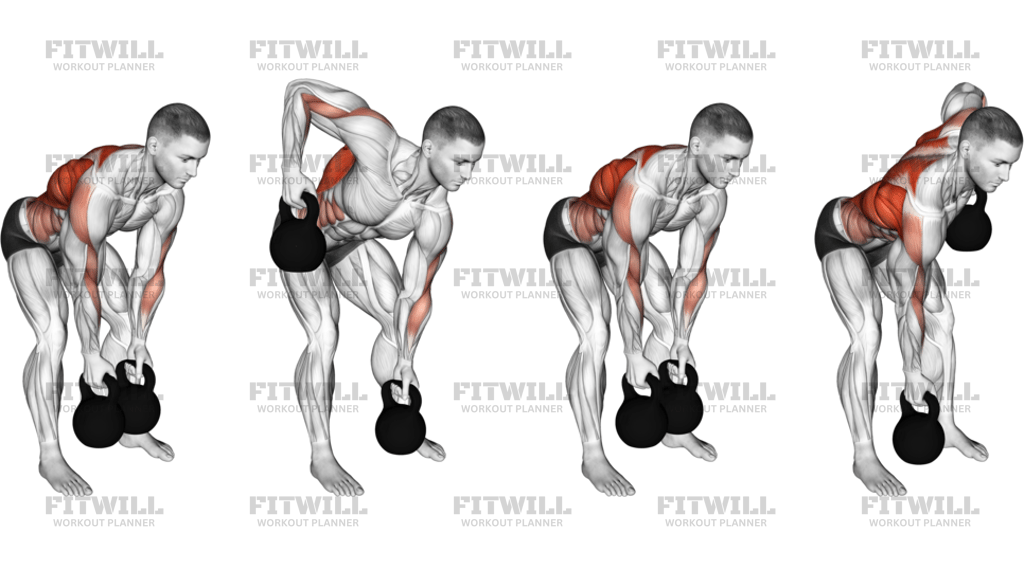
Instructions
- Stand with feet about hip-width apart and hinge at the hips until your torso is nearly parallel to the floor, holding a kettlebell in each hand with the arms hanging straight down under the shoulders.
- Keep a soft bend in the knees, push the hips back, and set the chest long so the lower back stays neutral instead of rounded.
- Brace your midsection before the first rep, then let both kettlebells hang just below knee level without shrugging the shoulders.
- Row one kettlebell toward the same-side lower rib while allowing a small twist through the upper back, keeping the hips mostly square to the floor.
- Squeeze the shoulder blade back and down at the top of the row, but do not yank the bell higher than the rib line.
- Lower that kettlebell slowly until the arm is straight again and the shoulder settles back into the hanging position.
- Alternate to the other side, rowing the second kettlebell with the same controlled path and the same small torso turn.
- Breathe out on each pull, inhale on the lowering phase, and finish the set by hinging deeper to place the kettlebells down safely.
Tips & Tricks
- Keep the twist small. If your chest is rotating far past the floor, the low back is doing too much of the work.
- Row toward the lower ribs or hip pocket to bias the lats; pulling straight out to the side shifts more stress to the rear delts.
- Keep both shoulders level. The free arm should hang quiet instead of creeping up toward the ear.
- Maintain the same hinge angle for the whole set. Standing taller between reps turns the exercise into a partial deadlift.
- Use a lighter kettlebell than you would for a strict row, because the alternating twist makes the set more demanding.
- Pause briefly at the top of each rep to remove momentum and force the upper back to finish the pull.
- Keep your gaze a few feet in front of you on the floor so the neck stays long and the upper spine stays organized.
- If you feel the low back more than the lats, shorten the range of motion and reduce the amount of torso rotation.
Frequently Asked Questions
What muscles does Kettlebell Bent-Over Alternate Twist Row work?
It primarily hits the lats, mid-back, rear shoulders, and biceps, while the obliques and spinal stabilizers help control the twist.
How much should my torso rotate during each row?
Only a small amount. The upper back can turn slightly with the working side, but the hips should stay mostly square and stable.
Where should the kettlebell travel at the top of the rep?
Bring it toward the lower ribs or hip line, not high toward the shoulder.
Can beginners do this row variation?
Yes, if they start with very light kettlebells and focus on holding the hinge before adding more speed or range.
What is the biggest form mistake with this exercise?
Letting the lower back twist and the torso rise between reps instead of keeping a fixed hip hinge.
Is this more of a back exercise or a core exercise?
It is mainly a back exercise, but the alternating twist adds a strong anti-rotation demand for the core.
What should I do if I feel this in my neck?
Reset the shoulders down away from the ears, keep the gaze slightly ahead on the floor, and lower the load if needed.
Can I use this as a replacement for a regular kettlebell row?
Yes, but expect it to be harder to control. Use less weight than your standard row and keep the tempo strict.