Dumbbell Seated External Rotation
Dumbbell Seated External Rotation is a seated shoulder-control drill that trains the muscles responsible for turning the upper arm outward at the shoulder. It is especially useful for building rotator cuff strength, cleaner pressing mechanics, and better tolerance around the front of the shoulder when you train overhead or push heavy. The movement is small on purpose: the benefit comes from precise rotation, not from loading the dumbbells aggressively.
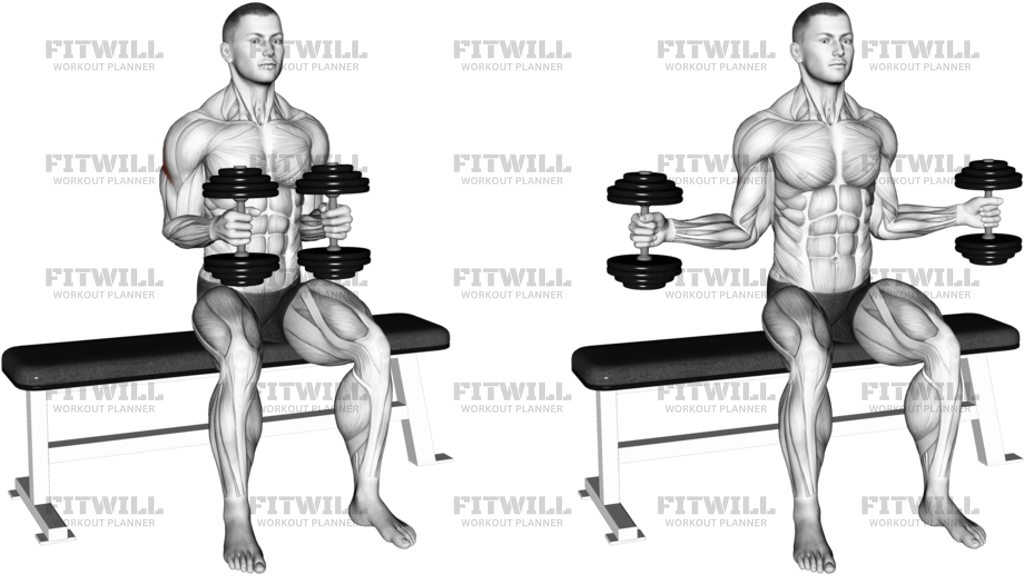
The setup matters more than the load. Sit tall on the end of a flat bench with both feet planted, bend the elbows to about 90 degrees, and keep the upper arms tucked close to the sides. From that position, the forearms start in front of the body and rotate outward while the torso stays quiet. If the elbows drift forward, the chest arches, or the shoulders shrug, the exercise stops training the external rotators cleanly and starts turning into a compensation pattern.
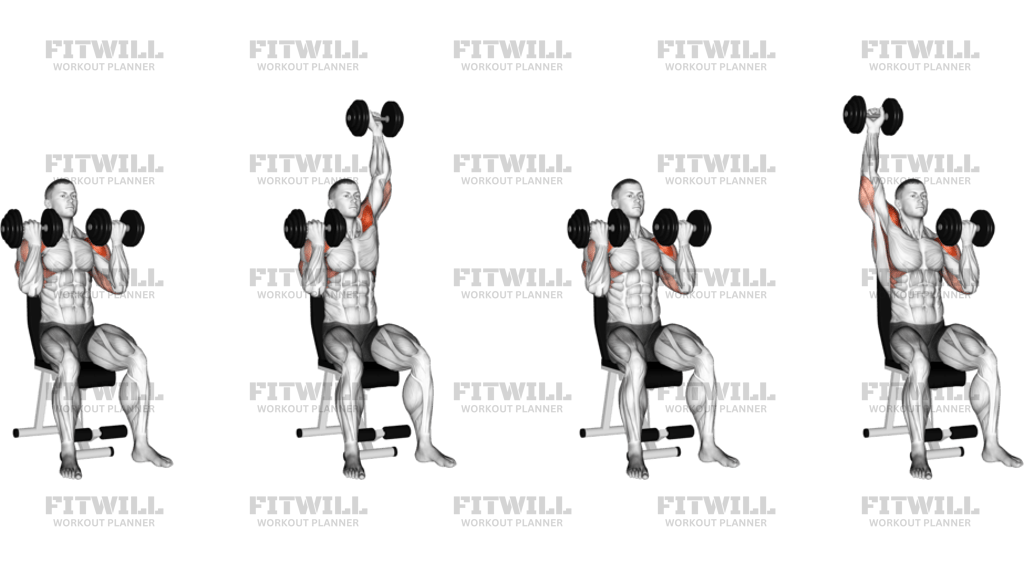
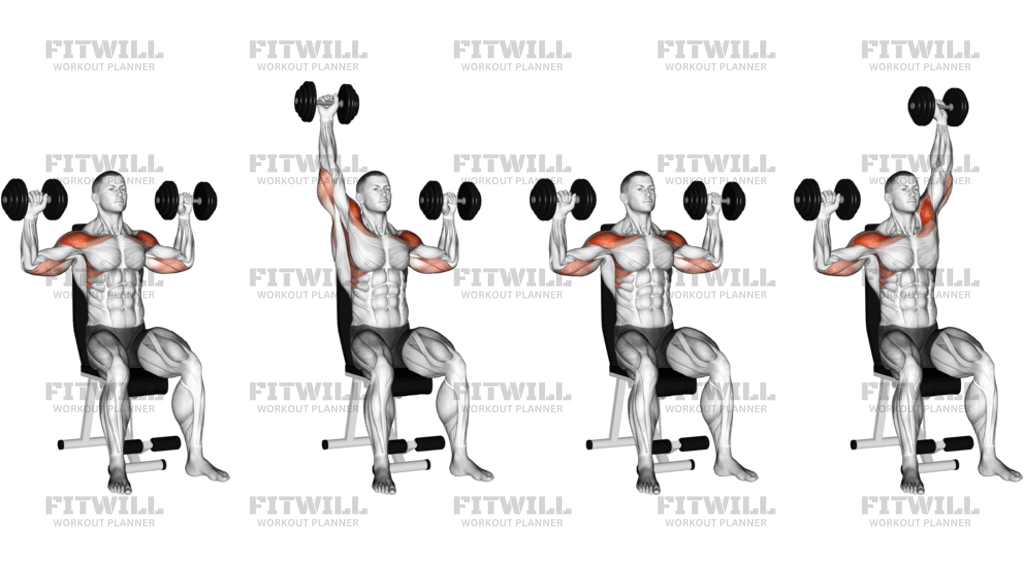
The image shows a bilateral seated version, so both arms should move together through the same controlled arc. Keep the wrists straight, the neck relaxed, and the motion smooth from start to finish. Open only as far as you can while the elbows stay pinned and the dumbbells remain under control. The end position should feel like a firm, deliberate finish rather than a forced stretch or a swing into the top.
Use this exercise as a warm-up primer, accessory movement, or light corrective strength drill before pressing, overhead work, or throwing-based training. It works best with very light resistance, moderate to higher reps, and a slow return to the start. The goal is to leave the shoulders feeling organized and warm, not tired from cheating or irritated from chasing range that your shoulders are not ready to own yet.
[ Workout Log & Planner ]
Put your next workout in Fitwill
Keep your plan and training log ready when you are.


Instructions
- Sit on the end of a flat bench with both feet flat on the floor and a dumbbell in each hand.
- Bend both elbows to about 90 degrees and keep the upper arms tucked close to your ribs.
- Hold the wrists straight so the dumbbells start in front of the torso with the forearms vertical.
- Set your chest tall, ribs down, and shoulders relaxed away from your ears.
- Rotate both forearms outward from the shoulders while keeping the elbows in the same spot.
- Open only as far as you can without leaning back, shrugging, or letting the elbows drift away from your sides.
- Pause briefly at the end of the rotation, then reverse the motion slowly.
- Lower the dumbbells back to the start under control and repeat for the planned reps.
- Repeat for the planned number of repetitions.
Tips & Tricks
- Use very light dumbbells; this movement should feel precise, not heavy.
- Keep the elbows glued to your sides so the shoulder rotates instead of the upper arms lifting.
- If your wrists bend back, the load is too heavy or your grip is too loose.
- Stop the rep when the chest wants to arch or the shoulders start to shrug.
- Match both arms to the same range even if one side feels stronger.
- Exhale as you rotate outward and inhale on the controlled return.
- A slower lowering phase makes it easier to keep the rotator cuff doing the work.
- If your thighs block the path, sit a little taller on the bench edge and reset the elbows.
Frequently Asked Questions
What muscles does Dumbbell Seated External Rotation train?
It primarily targets the shoulder external rotators and rotator cuff, with the rear shoulder and upper-arm stabilizers assisting.
Is this a good beginner shoulder exercise?
Yes, as long as the dumbbells are very light and the elbows stay pinned to the sides.
How should my elbows move during the rep?
They should stay almost fixed against your torso while the forearms rotate outward.
How far should I rotate the dumbbells?
Rotate until you reach a controlled, pain-free end range without shrugging, arching, or twisting the torso.
Why do my shoulders feel this in the front instead of the back?
The load is probably too heavy or the elbows are drifting forward, which lets the front of the shoulder take over.
Can I do this standing instead of seated?
Yes, but the seated version makes it easier to keep the torso still and keep both elbows in the same position.
What weight should I use for this exercise?
Choose the lightest dumbbells that let you control the full outward rotation and the slow return without cheating.
When should I include it in a workout?
It fits best in a warm-up or accessory block before pressing, overhead work, or throwing sessions.