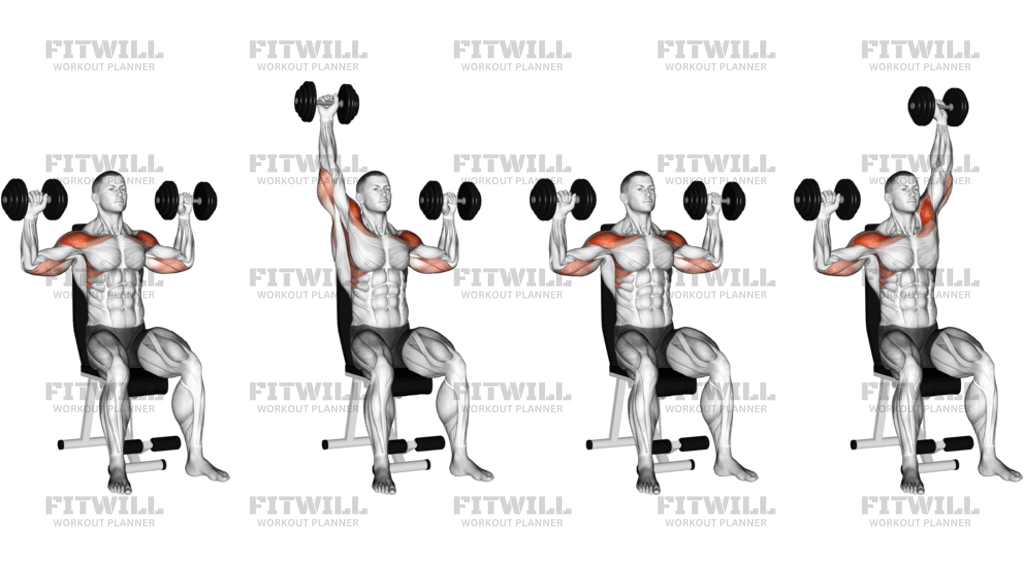
Dumbbell Seated Single-Arm Front Raise
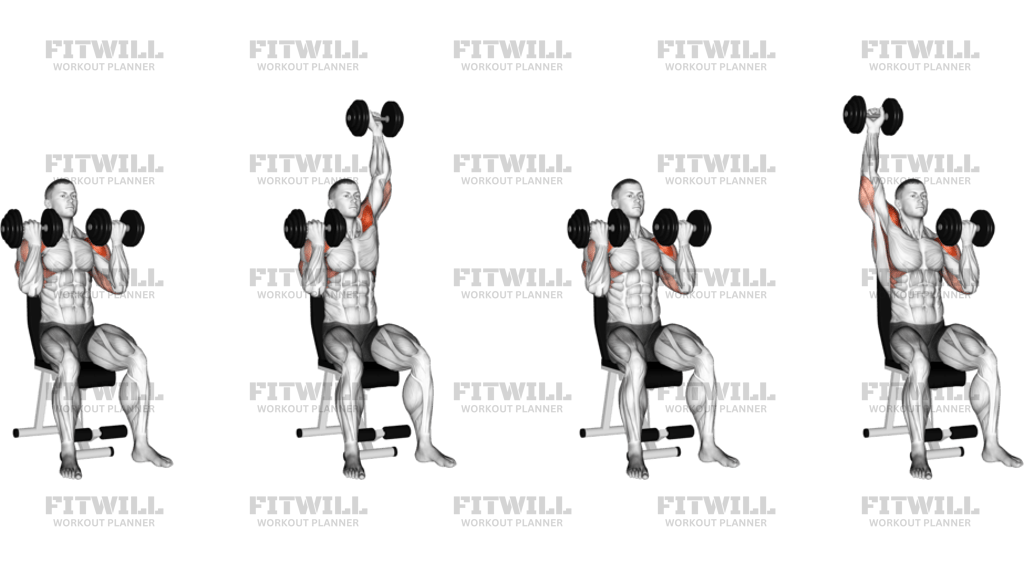
Dumbbell Seated Single-Arm Front Raise is a shoulder isolation exercise that uses one dumbbell and a seated bench position to train the front of the shoulder with strict control. The seated setup matters because it removes most leg drive and makes it easier to keep the torso quiet, so the shoulder does the work instead of momentum. It is a useful accessory movement when you want direct front-delt work without turning the set into a full-body swing.
With a single arm, Dumbbell Seated Single-Arm Front Raise lets you focus on one side at a time and notice differences in shoulder control, range, and stability. The working arm lifts in a smooth front arc to shoulder height, while the other side stays relaxed and the torso stays tall. That one-sided demand also asks the upper back and trunk to resist rotation so the rep stays organized.
The best reps start with the dumbbell hanging just in front of the thigh, the shoulder set down away from the ear, and the elbow slightly bent. From there, raise the weight in a controlled arc until the upper arm is roughly parallel to the floor, then lower it slowly without letting the torso lean back or the shoulder shrug forward. The goal is a clean shoulder raise, not a body-driven heave.
Dumbbell Seated Single-Arm Front Raise is often used as accessory work after pressing, as part of a shoulder-focused session, or in higher-rep hypertrophy training where joint position and tension matter more than load. Because the range is short and the lever is long, lighter weights usually work better than heavy ones. That makes it a good choice for lifters who want to add direct shoulder volume without needing a barbell or machine.
This exercise is most effective when the rep looks the same from start to finish: no swing, no shrug, no rib flare, and no twisting toward the lifting arm. If the front of the shoulder feels pinchy, reduce the range slightly, lighten the load, or keep the dumbbell a little in front of the thigh at the start so the shoulder does not begin in an awkward position. Done well, Dumbbell Seated Single-Arm Front Raise builds precise shoulder control and clean anterior delt tension without much setup complexity.
[ Workout Log & Planner ]
Put your next workout in Fitwill
Keep your plan and training log ready when you are.


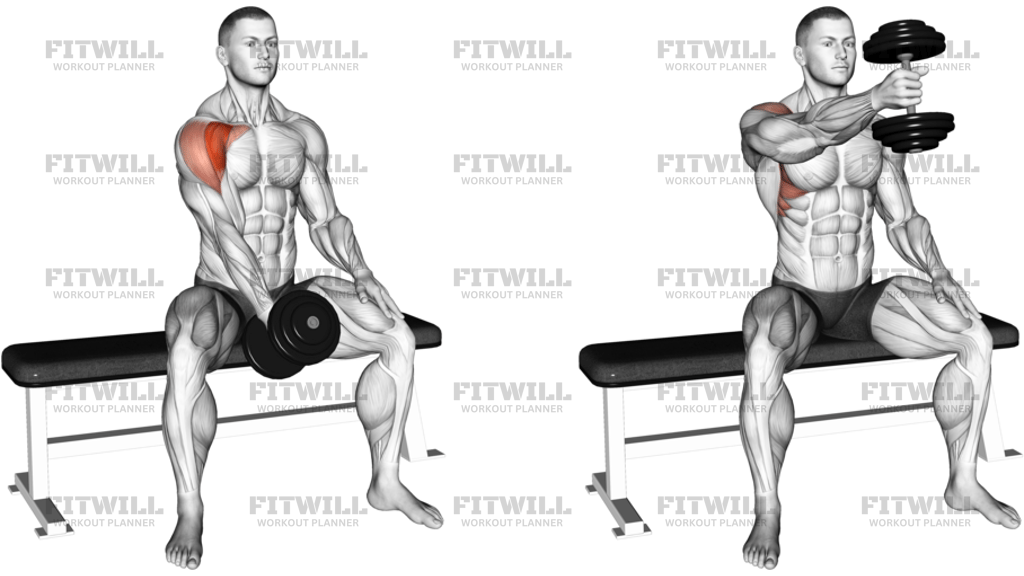
Instructions
- Sit on a flat bench with both feet planted, one dumbbell resting in the working hand just in front of the thigh.
- Keep your torso tall, the free hand lightly braced on the other thigh or bench, and your shoulders level before you start.
- Use an overhand grip, keep a slight bend in the working elbow, and set the dumbbell so it hangs close to the leg without touching the floor.
- Brace your midsection and keep your ribs stacked over your pelvis so the torso does not lean back as you lift.
- Raise the dumbbell in a smooth front arc until the upper arm reaches about shoulder height.
- Pause briefly at the top without shrugging the shoulder toward your ear or swinging the torso.
- Lower the dumbbell under control until it returns to the start in front of the thigh.
- Exhale as you lift, inhale as you lower, and reset your shoulder position before the next rep.
- Complete the planned reps on one side, then switch arms or alternate sides if your program calls for it.
Tips & Tricks
- Choose a lighter dumbbell than you would use for a press; the long lever makes this front raise feel much heavier than it looks.
- Keep the thumb pointed slightly up or the palm turned a little inward if a fully pronated grip irritates the front of the shoulder.
- Stop the lift around shoulder height; going higher usually turns the rep into trap shrugging instead of cleaner front-delt work.
- Keep the free hand anchored on the bench or thigh so your torso does not rotate toward the working arm.
- Move the weight in a steady arc instead of a straight line forward, which helps the shoulder stay centered through the rep.
- Lower the dumbbell for at least two seconds so the front delt stays under tension instead of dropping the weight.
- If your lower back arches, start with your feet a little wider and sit taller instead of trying to lift a heavier dumbbell.
- If the shoulder pinches near the top, shorten the range slightly and finish the rep just below parallel.
Frequently Asked Questions
What muscles does Dumbbell Seated Single-Arm Front Raise work most?
It mainly targets the front of the shoulder, with the upper chest and upper back helping to steady the arm and torso.
Why do this seated instead of standing?
Sitting on a bench reduces leg drive and body sway, so the shoulder has to control the raise instead of momentum doing the work.
Should the dumbbell stay in front of my body the whole time?
Yes. Start just in front of the thigh and raise it in a forward arc to shoulder height rather than sweeping it out to the side like a lateral raise.
How high should I lift the dumbbell on Dumbbell Seated Single-Arm Front Raise?
Stop at about shoulder height. Higher reps usually turn into shrugging and reduce the work on the front delt.
Is Dumbbell Seated Single-Arm Front Raise a good beginner exercise?
Yes, if the load is light and the range is controlled. Beginners usually benefit from the seated setup because it makes cheating harder.
What grip should I use?
An overhand grip works well for most lifters, though a slight thumb-up angle can feel better if a fully pronated grip bothers your shoulder.
What is the biggest mistake on this exercise?
Swinging the torso or shrugging the shoulder to get the dumbbell higher. If that happens, the load is too heavy.
Can I alternate arms instead of finishing one side first?
Yes. Alternating can help keep fatigue balanced, but one side at a time makes it easier to keep the torso still.
What should I do if the front of my shoulder feels pinchy?
Shorten the range a little, use a lighter dumbbell, and keep the arm slightly in front of the thigh at the start rather than forcing the lift from an awkward position.