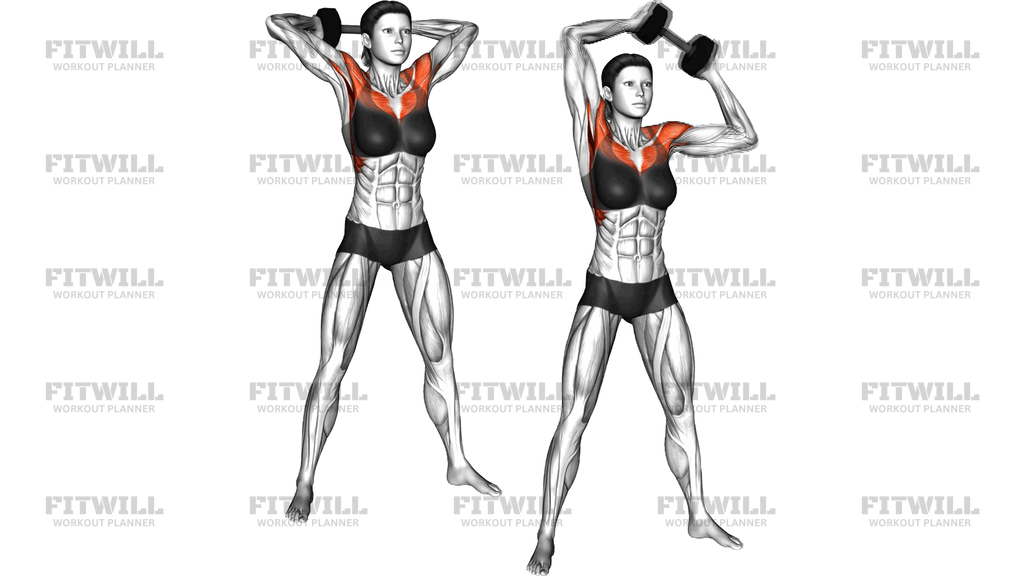
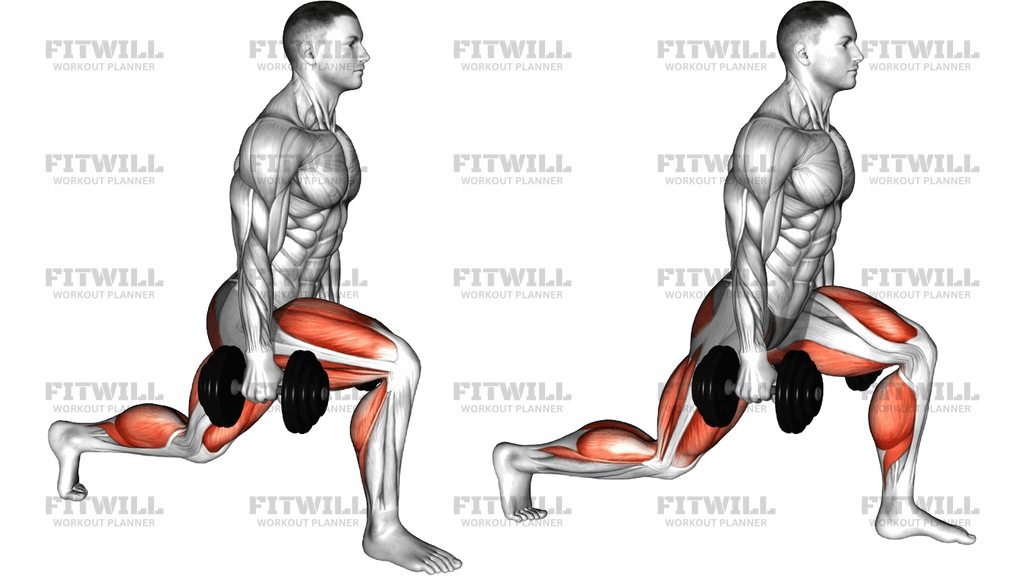
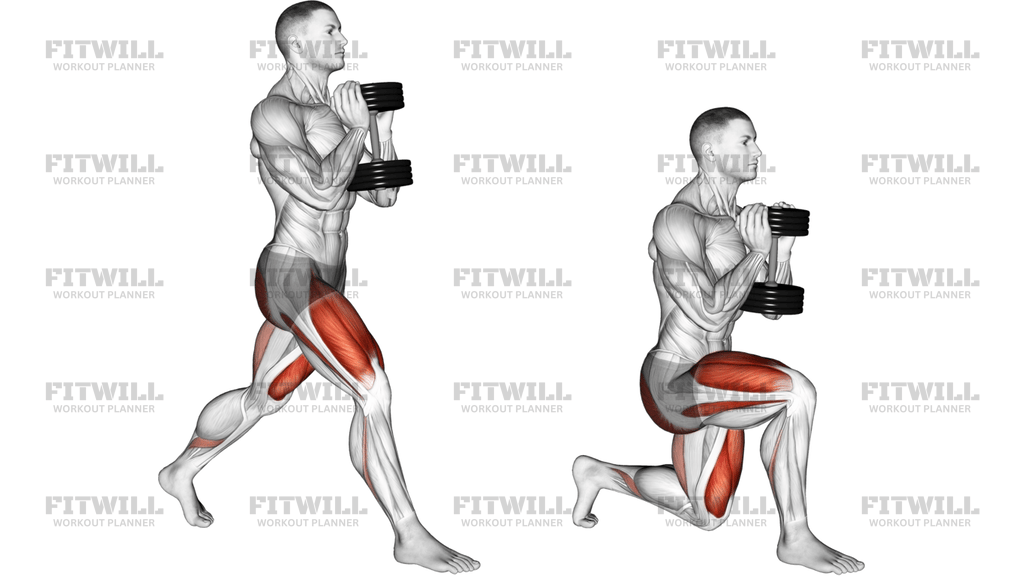
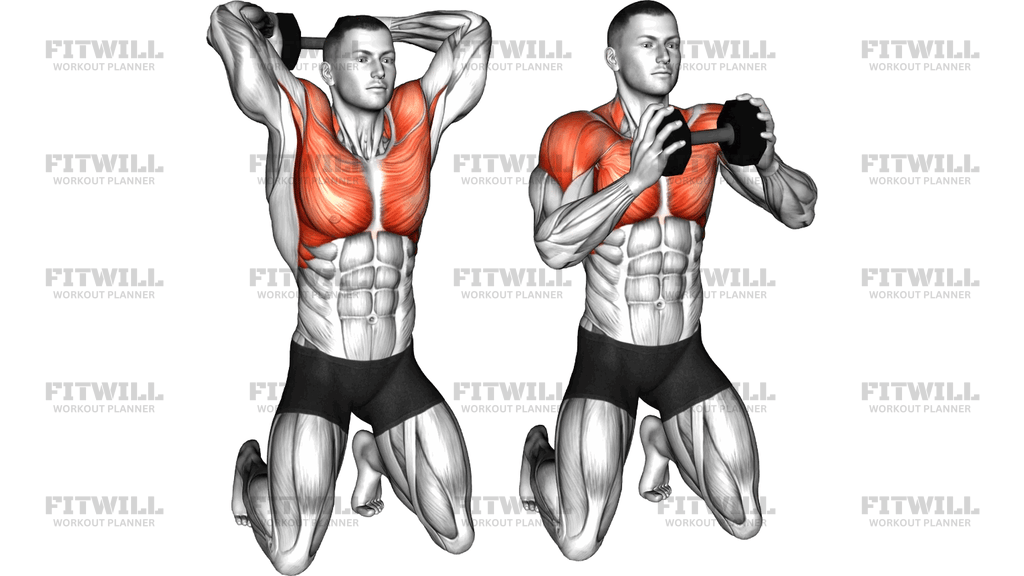
Dumbbell Pullover Version 2
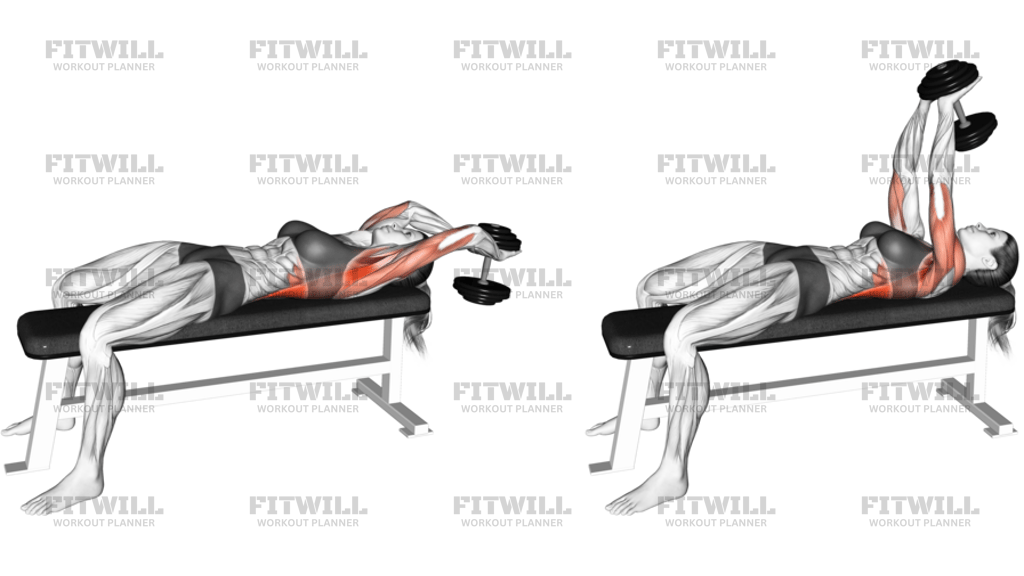
Dumbbell Pullover Version 2 is a bench-based pullover performed with a single dumbbell held in both hands. The movement trains shoulder extension and overhead control while loading the lats, upper chest, serratus, and triceps as stabilizers. It is not a press or a fly; the arms travel through a long arc while the torso stays anchored on the bench.
The setup matters because the pullover is only productive when the rib cage and shoulders stay organized. Lie securely on a flat bench, plant the feet, and keep the upper back supported so the dumbbell can move behind the head without turning the rep into a low-back arch. A controlled setup lets you feel the stretch across the lats and chest instead of dumping stress into the front of the shoulder.
Use a lighter dumbbell than you would for pressing and keep a slight elbow bend from start to finish. Lower the weight slowly until you feel a strong but manageable stretch, then sweep it back along the same path until it finishes above the chest. The top position should feel stacked and steady, not bounced or swung into place.
This exercise fits well after presses, pull work, or as accessory volume when you want a long eccentric and a clean overhead line of pull. It can also be used as a warm-up or mobility-strength bridge if the range is kept pain-free. The goal is to own the stretch and return path, not to force a dramatic range that changes the shoulder position.
If the front of the shoulder pinches or the lower back starts to lift, shorten the range immediately and keep the ribs down. A good rep feels quiet through the torso, smooth through the arms, and controlled all the way from the chest to the bottom stretch and back to the finish.
Fitwill
Log Workouts, Track Progress & Build Strength.
Achieve more with Fitwill: explore over 9600 exercises with images and videos, access built-in and custom workouts, perfect for both gym and home sessions, and see real results.
Start your journey. Download today!




Instructions
- Lie lengthwise on a flat bench with your head supported, feet flat on the floor, and your upper back and shoulders anchored to the pad.
- Hold one dumbbell with both hands against one end so the weight stays centered over your chest.
- Start with the dumbbell above the middle of your chest and keep a small bend in your elbows.
- Brace your ribs down before the first rep so your lower back does not arch off the bench.
- Lower the dumbbell in a slow arc behind your head until you feel a strong but controllable stretch through the lats and chest.
- Keep the elbows softly bent as the weight travels; do not turn the movement into a press or a triceps extension.
- Pull the dumbbell back along the same arc until it finishes over your chest with the wrists stacked and steady.
- Inhale as you lower the weight and exhale as you bring it back to the top.
- Stop the set if the shoulders shrug, the rib cage flares, or the dumbbell starts to wobble.
Tips & Tricks
- Choose a lighter dumbbell than you would for presses; the long lever makes the exercise feel much heavier overhead.
- Keep the elbow bend nearly unchanged from the top to the bottom so the load stays on the shoulder and torso, not the elbow joint.
- Think about lowering the dumbbell behind you in a smooth arc instead of dropping it straight back.
- If your ribs pop up as the weight goes overhead, reset and shorten the range.
- Stop the descent before the upper arms go so far back that the front of the shoulder pinches.
- Keep the dumbbell centered above the sternum at the top so the return path stays symmetrical.
- Plant both feet firmly and avoid sliding on the bench when the weight reaches the bottom stretch.
- Use a 2 to 3 second lowering phase to make the stretch productive without bouncing.
- Support the inner end of the dumbbell with both hands if the grip feels unstable.
Frequently Asked Questions
What muscles does Dumbbell Pullover Version 2 work?
It mainly trains the lats and upper chest, with the serratus, triceps, and core helping stabilize the movement.
Is the dumbbell supposed to move in a straight line?
No. It should travel in a smooth arc from over the chest to behind the head and back again.
How far should I lower the dumbbell?
Lower only until you feel a strong stretch without losing shoulder position or arching your lower back.
Should my elbows stay straight during the pullover?
No. Keep a small bend in the elbows and hold that angle steady through the whole rep.
Can beginners use this exercise?
Yes, if they start light, keep the range short at first, and use a flat bench that feels stable.
Why does my lower back want to arch during this movement?
That usually means the load is too heavy or the ribs are flaring to fake range. Keep the ribs down and shorten the descent.
Should I feel this more in my chest or back?
Both are involved. A slightly lower elbow angle and a controlled overhead range usually shift more work toward the lats, while a shallower arc feels more chest-dominant.
What is a safer substitute if my shoulders do not like the overhead stretch?
A shorter-range pullover, a cable pullover, or a floor-based variation can reduce the shoulder demand.
Does this fit better before or after heavier lifts?
It usually works best after main presses or rows as accessory volume, but it can also be used as a light warm-up drill.