Dumbbell Z-Press
Dumbbell Z-Press is a seated overhead press performed on the floor with the legs extended in front of you. Because you cannot lean back into a bench or drive through the legs, the exercise exposes shoulder strength, trunk control, and upper-back positioning very clearly. It is a good option when you want a strict pressing variation that makes body control part of the lift instead of something you can hide.
The seated floor position changes the demand immediately. Your pelvis, ribs, and spine have to stay stacked while the dumbbells travel from shoulder height to full lockout, so the press becomes much more honest than a standard seated or standing press. That makes Dumbbell Z-Press useful for building overhead strength with less opportunity to turn the rep into a back arch or leg drive.
Set up by sitting tall on the floor with your legs straight in front of you and the dumbbells racked at shoulder height. Keep the elbows slightly in front of the torso, the forearms vertical, and the wrists stacked over the handles. From there, press the bells up and slightly back so they finish over the shoulders, not drifting forward in front of your face. The top position should look tall and stacked, not crunched or leaned back.
The lowering phase matters just as much as the press. Bring the dumbbells back to shoulder level under control, keep the neck long, and avoid letting the ribs flare as fatigue builds. If the torso starts to tilt backward or the low back takes over, the set is too heavy or the reps are getting sloppy. Shorter, cleaner sets are usually better here than grinding with momentum.
Dumbbell Z-Press fits well in shoulder-focused strength work, accessory pressing blocks, or core-emphasis sessions where you want overhead work without lower-body assistance. It is also useful for lifters who want to clean up their pressing mechanics, because the floor position makes weak bracing, poor shoulder stacking, and uneven arm path easier to notice. The exercise should feel strict, deliberate, and controlled from the first rep to the last.
[ Workout Log & Planner ]
Put your next workout in Fitwill
Keep your plan and training log ready when you are.


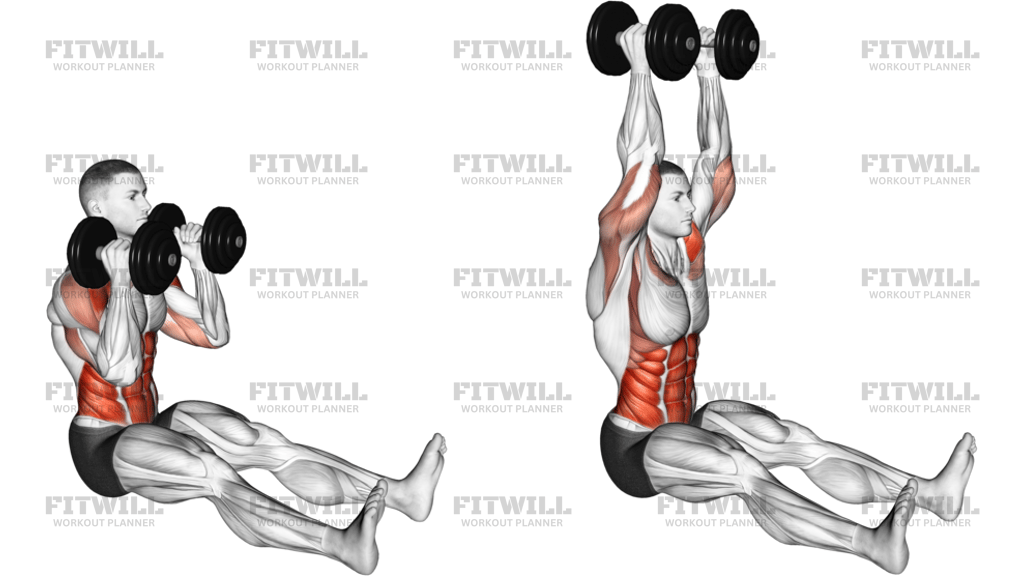
Instructions
- Sit on the floor with your legs straight out in front of you and hold a dumbbell in each hand at shoulder height.
- Keep your feet relaxed or lightly flexed, your torso tall, and your ribs stacked over your pelvis before you start the press.
- Set the dumbbells just outside your shoulders with your forearms vertical and your wrists directly over the handles.
- Take a breath, brace your midsection, and press both dumbbells upward without leaning back or kicking the legs.
- Guide the weights slightly back as they rise so they finish over your shoulders and ears, not drifting in front of you.
- Lock out overhead with straight arms, a neutral neck, and shoulders controlled rather than shrugged forward.
- Lower the dumbbells back to shoulder height in a slow, even path while keeping the elbows slightly in front of the torso.
- Reset the stack at shoulder level, breathe, and repeat for the planned number of reps before bringing the dumbbells back to your thighs.
Tips & Tricks
- Use lighter dumbbells than you would for a seated press with back support, because the floor position removes leg drive and back support.
- If your torso starts leaning behind your hips, the set is too heavy for a true Z-Press and the lower back is taking over.
- Keep the forearms vertical at the bottom; if the wrists drift back, the press usually turns into a shoulder and wrist fight.
- Press in a slightly arcing path so the dumbbells finish over the shoulder joint instead of straight out in front of you.
- Keep the ribs down as the bells rise; flaring the chest to finish the rep usually shortens the shoulder work and stresses the low back.
- A neutral grip can feel easier on the shoulders if a palms-forward position makes the top range uncomfortable.
- Lower under control for at least a couple of seconds so the descent does not become a drop onto the shoulders.
- If the hamstrings or hips limit how upright you can sit, reduce the load before you change the exercise into a half-reclined press.
Frequently Asked Questions
What muscles does Dumbbell Z-Press work?
It primarily trains the shoulders, with the triceps, upper back, and core helping stabilize the press from the floor.
Why do I have to sit on the floor for Dumbbell Z-Press?
The floor removes back support and leg drive, so the press depends more on shoulder strength and trunk control than a normal seated press.
Should my legs stay straight during Dumbbell Z-Press?
Yes, the standard version uses straight legs extended in front of you. That is part of what makes the movement strict and challenging.
How far should the dumbbells travel overhead?
They should finish stacked over your shoulders and roughly in line with your ears, not drifting far in front of your face.
Can beginners do Dumbbell Z-Press?
Yes, but only with light dumbbells and a very strict torso position. If sitting upright is hard to maintain, start with a simpler seated press first.
What is the most common mistake in Dumbbell Z-Press?
Leaning back to finish the rep is the biggest one. That turns the lift into a lower-back-assisted press instead of a strict overhead press.
Is a neutral grip okay for Dumbbell Z-Press?
Yes. A neutral or semi-neutral grip often feels better on the shoulders and still lets you press the dumbbells overhead cleanly.
What should I do if my lower back feels this exercise more than my shoulders?
Reduce the load and sit taller with your ribs stacked over your pelvis. If you still need to lean back, the dumbbells are too heavy for this variation.