Dumbbell Standing T-Spine Press
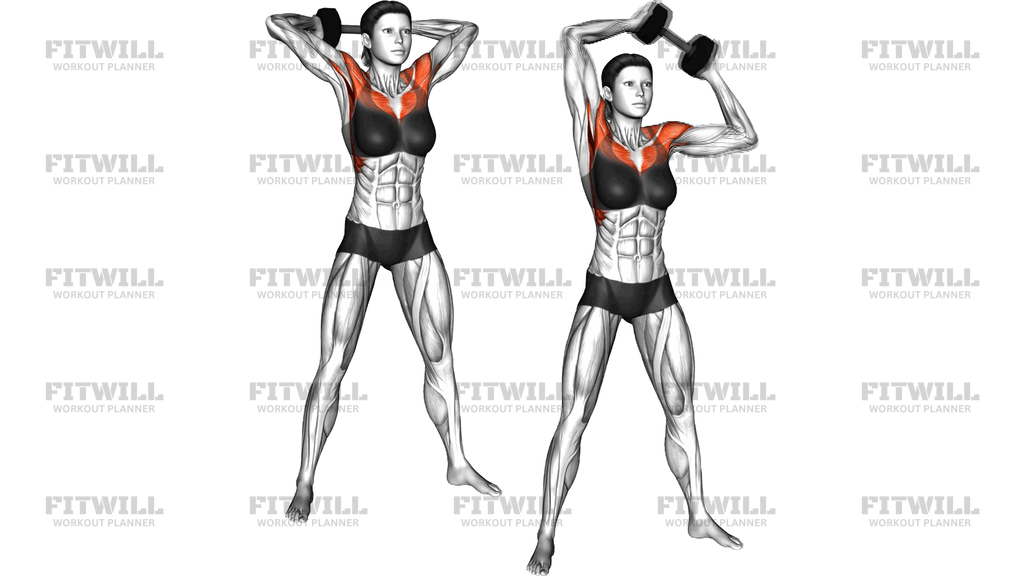
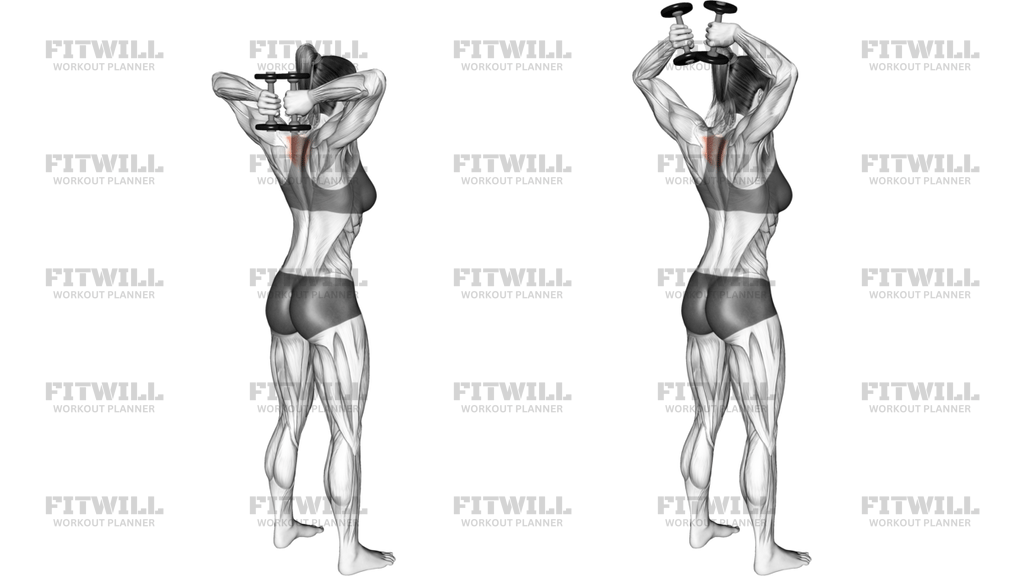
Dumbbell Standing T-Spine Press is a standing overhead dumbbell movement that asks you to keep your torso stacked while the weight travels from behind the head to overhead. It is useful when you want to train shoulder control, upper-back positioning, triceps support, and core stiffness at the same time. The standing setup makes the exercise honest: if the ribcage drifts forward or the low back arches, the rep stops feeling like a controlled press and starts turning into a compensation drill.
The best reps come from a steady setup and a clean elbow path. Stand tall, keep your feet planted, and organize your ribs over your pelvis before the dumbbell moves. From there, the shoulders and arms should guide the lift while the trunk resists twisting, leaning, or overextending. That makes the exercise especially useful as an accessory movement before or after heavier overhead work, or as a lighter drill when you want to practice cleaner thoracic-spine and shoulder mechanics.
On each repetition, the dumbbell should travel in a smooth arc rather than bouncing out of the bottom or shooting straight back behind you. The elbows stay under control, the wrists stay neutral, and the top position finishes with the weight stacked over the shoulders instead of drifting in front of the body. If your elbows flare hard, your neck tightens, or your ribs pop up, the load is too heavy or the range is too ambitious for your current shoulder position.
Dumbbell Standing T-Spine Press is not a lift to rush. Use it when you want repeatable reps that reinforce posture, overhead control, and steady breathing under load. It works well for beginners with light resistance and even better for experienced lifters who want a stricter standing variation that exposes weak links in the upper back, shoulders, and trunk. Keep the motion smooth and deliberate so the exercise builds useful control instead of turning into momentum.
[ Workout Log & Planner ]
Put your next workout in Fitwill
Keep your plan and training log ready when you are.


Instructions
- Stand with your feet about hip-width apart and hold a dumbbell with both hands just behind your head, elbows bent and pointing slightly forward.
- Stack your ribs over your pelvis, soften your knees, and keep your chin tucked so the back of your neck stays long.
- Brace your midsection before the first rep and keep the dumbbell centered over the middle of your stance.
- Press the dumbbell upward and slightly forward until your arms are nearly straight overhead and the weight is stacked over your shoulders.
- Exhale as you press, and keep your lower back from arching or your ribs from flaring up.
- Pause briefly at the top with the elbows controlled and the dumbbell still centered over your body.
- Lower the dumbbell back behind your head in a slow arc until your elbows bend again and your upper arms stay close to your head.
- Repeat for the planned number of reps, then bring the dumbbell to a safe resting position and reset your stance.
Tips & Tricks
- Use a light load first; if your ribs flare on rep one, the dumbbell is too heavy for this standing position.
- Keep the elbows pointed slightly forward instead of flaring wide, or the dumbbell will drift behind your head and stress the shoulders.
- Think about reaching the weight up and forward, not leaning back to find extra range.
- Squeeze your glutes lightly so the press stays stacked instead of turning into a low-back arch.
- Lower the dumbbell slowly for two to three seconds; bouncing out of the bottom turns the movement sloppy fast.
- If your neck starts working harder than your arms, shorten the range and keep the chin tucked.
- Pause overhead long enough to check that the dumbbell is over your midfoot and not drifting in front of you.
- Stop the set when the elbows start wandering or the torso starts swaying side to side.
Frequently Asked Questions
What does Dumbbell Standing T-Spine Press work most?
It mainly challenges the shoulders, triceps, upper back, and the core muscles that keep your torso stacked while the dumbbell moves overhead.
Is Dumbbell Standing T-Spine Press the same as a standing overhead triceps extension?
It uses a very similar overhead path, but this version is best treated as a controlled standing press with strict trunk position and a smooth arc behind the head.
Should I use one dumbbell or two for Dumbbell Standing T-Spine Press?
This variation is commonly done with one dumbbell held with both hands, which makes it easier to keep the elbows and ribcage organized.
Why do my ribs flare when I press overhead?
That usually means the load is too heavy or the dumbbell is moving too far behind you. Reduce the weight and keep your pelvis stacked under your ribs.
How low should the dumbbell go behind my head?
Lower only until your elbows bend comfortably and your shoulders stay pain-free. There is no reason to force extra depth if the position pinches.
Can beginners do Dumbbell Standing T-Spine Press?
Yes, as long as they start very light and keep the torso still. It is a good way to learn overhead control without rushing the reps.
What is the most common mistake in Dumbbell Standing T-Spine Press?
Leaning back and turning the press into a standing backbend is the biggest fault. Keep your glutes and abs active so the motion stays vertical and controlled.
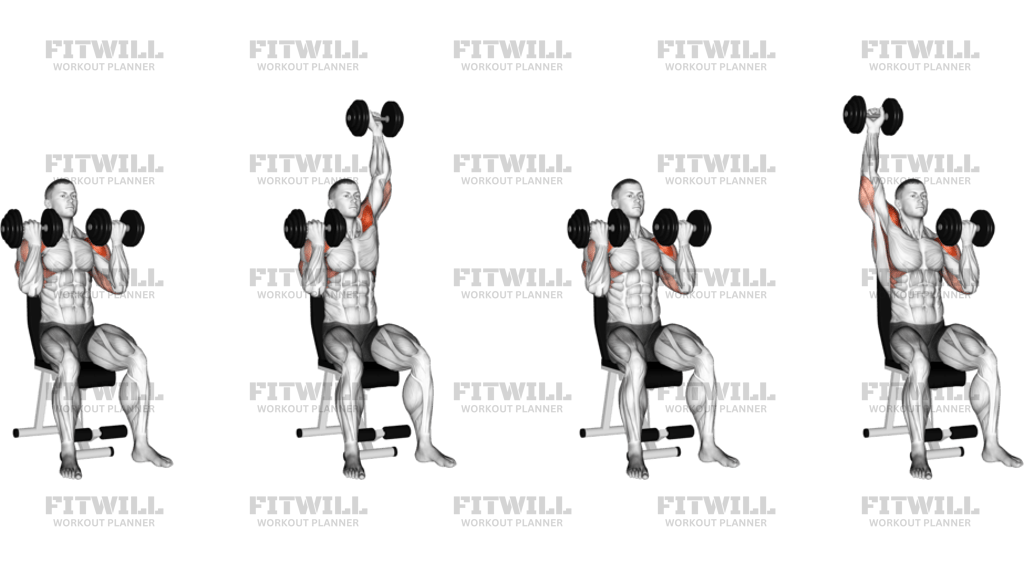
Can I swap Dumbbell Standing T-Spine Press for a seated version?
Yes. A seated version removes some balance demand and lets you focus more on the arm path and overhead stacking.