Dumbbell Incline One Arm Press
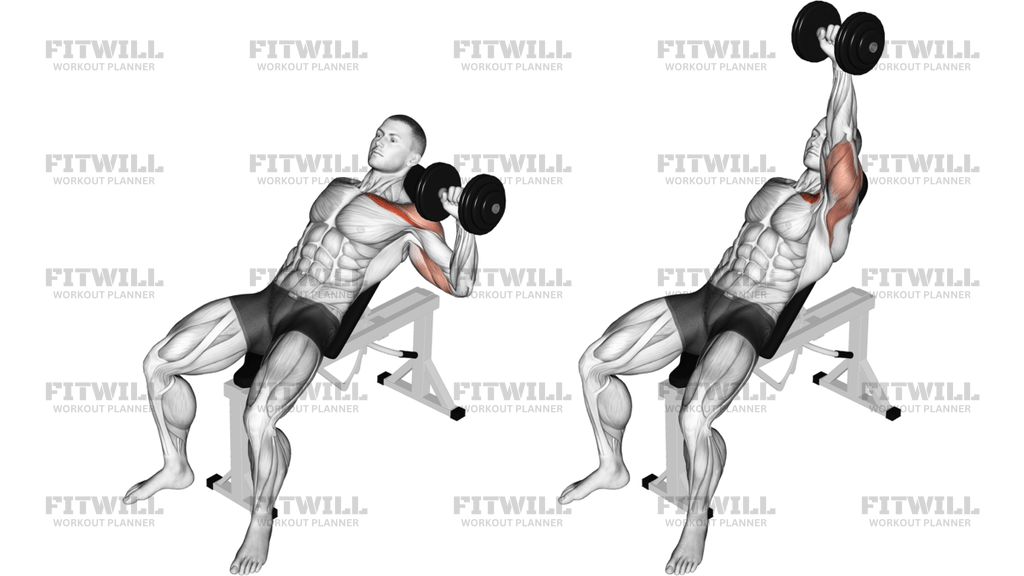
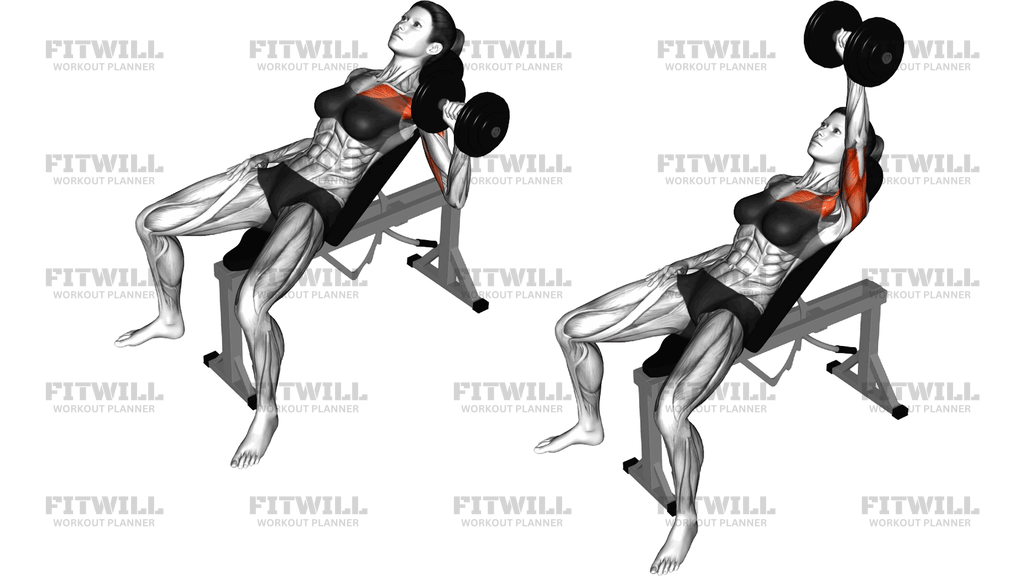
The Dumbbell Incline One Arm Press is a unilateral chest press performed while reclined on an incline bench, typically set between 30 and 45 degrees. Instead of holding a dumbbell in each hand, you press with one arm at a time while the free hand rests on your thigh or hangs at your side. This single-arm setup shifts the emphasis toward the clavicular head of the pectoralis major, the upper portion of the chest that the incline angle specifically targets, while the front shoulders and triceps assist through the pressing range.
The real value of this exercise comes from what the empty side forces you to do. Because the load sits on only one side of your body, your trunk has to resist rotation on every rep. The obliques and deep core work quietly the whole time, and your upper back has to stay pinned to the bench rather than twisting toward the working arm. For lifters who have noticed one side pressing more than the other during barbell or two-dumbbell work, this movement exposes and corrects that gap.
Setup matters more here than in a standard two-arm press. Your hips, upper back, and head need full contact with the bench, and your feet should be planted firmly on the floor. The incline angle is what separates this from a flat press: too steep and it drifts toward a shoulder press, too shallow and you lose the upper-chest emphasis. A moderate angle with a neutral or slightly rotated grip keeps the shoulder in a comfortable arc.
Execution is straightforward but demands control. Start with the dumbbell at shoulder height, press it up and slightly back so it lines up over your upper chest, then lower it until your elbow drops just below bench level for a full stretch. The single arm means the weight path is naturally a little less stable than a two-arm press, so the dumbbell should travel smoothly rather than wobble side to side.
This variation suits intermediate lifters building balanced chest strength, anyone returning from an injury who needs to rebuild one side without loading both, and lifters who want extra core demand from a familiar press. Because the free hand can rest on the thigh for a light bracing aid, the exercise is also approachable for those newer to single-arm work. Keep the loads modest at first, since the anti-rotation demand makes a weight that feels easy in a two-arm press surprisingly challenging here.
[ Workout Log & Planner ]
Put your next workout in Fitwill
Keep your plan and training log ready when you are.


Instructions
- Set an incline bench to roughly 30-45 degrees and sit on it with a dumbbell in one hand, resting the dumbbell on your lower thigh near your knee.
- Kick the dumbbell back toward your shoulder as you recline fully onto the bench, keeping your head, upper back, and hips in contact with the pad and your feet flat on the floor.
- Position the dumbbell just outside your shoulder with your palm facing forward or angled slightly inward, and place your free hand on your opposite thigh for light support.
- Draw your shoulder blade down and back so it rests firmly against the bench, and brace your core as if you expect to be pushed sideways.
- Press the dumbbell up and slightly back until your arm is extended and the weight sits directly above your upper chest, not out to the side.
- Lower the dumbbell under control until your elbow drops to just below the level of the bench, feeling a stretch across the upper chest.
- Breathe in on the way down and exhale forcefully as you press the dumbbell back to the top.
- Complete all repetitions on one side, then switch the dumbbell to the other hand and repeat for the same number of reps.
- To finish the set, guide the dumbbell back to your thigh as you sit up, rather than dropping it while still reclined on the bench.
Tips & Tricks
- If the dumbbell drifts outward and your elbow flares past comfortable range, it usually means the weight is too heavy for the anti-rotation demand of the single-arm setup, so drop the load before adding reps.
- Watch for your torso rotating toward the working arm as you press. Keep the empty shoulder blade pressed into the bench for the entire set to hold the upper chest in the strongest pressing position.
- Press the dumbbell so it finishes over your upper chest rather than directly over your shoulder; the incline angle changes the finishing line compared to a seated one-arm shoulder press.
- Keep your wrist stacked directly over your elbow at the bottom position. A bent-back wrist at the stretch point is the most common way lifters irritate the front of the shoulder on this movement.
- The hand on your thigh is there to steady you, not to push. If you find yourself pressing hard into your leg to help the dumbbell up, the weight has outgrown your pressing strength.
- Keep your ribcage down and your lower back in light contact with the bench. Arching hard to cheat the press pulls your chest out of the incline position and reduces the upper-chest emphasis.
- Start with your weaker side first and match the rep count with your stronger side to gradually even out any imbalance between arms.
- On the last few reps, lower the dumbbell fully before sitting up. Sit-ups with a dumbbell still held overhead strain the shoulder more than most people expect.
Frequently Asked Questions
What muscles does the Dumbbell Incline One Arm Press work?
The primary muscle is the upper chest, specifically the clavicular head of the pectoralis major. The front shoulders and triceps assist the press, while the obliques and deep core work to keep your torso from rotating under the single-sided load.
What angle should the bench be set at for the Dumbbell Incline One Arm Press?
Around 30-45 degrees works best. Lower than that and the movement starts to resemble a flat press; steeper than that and the front shoulders take over from the upper chest.
Is the Dumbbell Incline One Arm Press suitable for beginners?
Yes, provided beginners start with a light dumbbell, since the anti-rotation demand makes the same weight feel harder than in a two-arm press. The free hand resting on the thigh also gives new lifters a simple point of stability.
Why does my body twist toward the dumbbell during this press?
The torso rotation usually happens because the weight is too heavy or the core is not braced. Reduce the load, keep your empty shoulder blade pressed into the bench, and think about pushing your lower back down into the pad on every rep.
Where should the dumbbell finish at the top of the Dumbbell Incline One Arm Press?
It should line up over your upper chest with your arm extended, not over the middle of your shoulder. Pressing up and slightly back, rather than straight up, keeps the path in line with the incline angle.
How do I get the dumbbell into the starting position safely?
Sit on the bench with the dumbbell resting on your thigh, kick it back toward your shoulder as you recline onto the pad, and set it at shoulder height before you start pressing. When finished, lower it back to your thigh before sitting up.
Can I substitute the Dumbbell Incline One Arm Press if I only have a flat bench?
You can perform it on a flat bench, but the emphasis shifts from the upper chest toward the middle chest. If a flat bench is your only option, an alternating two-dumbbell incline press on a slight pad wedge is a closer match.
How does the one-arm version differ from a regular two-arm dumbbell incline press?
The one-arm version challenges each side independently and adds an anti-rotation demand for the trunk, since nothing on the other side balances the load. It is especially useful for finding and fixing strength differences between your left and right arms.
Should both feet stay on the floor during this exercise?
Yes, keep both feet flat on the floor for the whole set. They anchor your hips to the bench, which helps prevent the pelvis and torso from rotating as the dumbbell travels.