Bodybuilding Pose
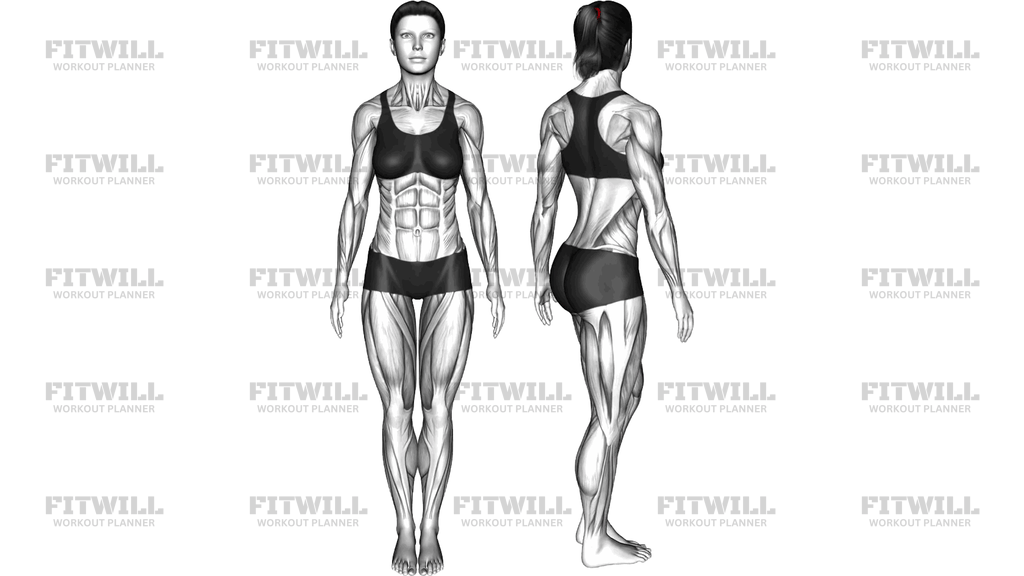
The Bodybuilding Pose is the classic standing presentation stance used to display muscular development, symmetry, and conditioning. Rather than lifting a weight, you are holding your own body in a deliberate, fully controlled position: feet placed close together or slightly staggered, legs straight, torso tall, shoulders drawn back and down, and arms relaxed but shaped at the sides. The pose itself becomes the training stimulus, demanding sustained tension from head to toe.
Although it looks passive, holding a proper bodybuilding pose is genuinely demanding. Keeping the chest lifted, shoulder blades retracted, abdominal wall drawn in, and legs and glutes firm requires continuous isometric contraction from the core, shoulders, upper back, and lower body. Over a thirty to sixty second hold, this becomes a test of muscular endurance, posture, and body control that many people underestimate the first time they try it.
This pose is useful for a wide range of people. Competitive physique and bodybuilding athletes use it to practice stage presentation and to learn how to display their conditioning. Powerlifters and general trainees can use it as a posture drill to reinforce a proud chest, packed shoulders, and braced midsection. It is also a practical self-assessment tool: standing in front of a mirror in a strict pose reveals imbalances in shoulder position, hip alignment, and stance that are easy to hide during normal training.
Setup matters more than it appears. Because there is no external load, the quality of the pose depends entirely on intentional positioning. A collapsed chest, rounded upper back, or soft midsection immediately shortens the hold and defeats the purpose. Start with the feet, work up through the legs and hips, set the spine and shoulders, and only then fine-tune the arms and head position.
To execute well, breathe steadily while keeping the trunk firm, and hold the position for a set period rather than simply standing. Practice in front of a mirror or record yourself so you can correct subtle drift, such as one shoulder creeping higher or the hips shifting over one leg. Because the demand is isometric and low impact, the pose is safe for most healthy trainees, but anyone who feels lightheaded while standing still should come out of the position and reset.
Expect the upper back, shoulders, and abdominal area to work hardest, with the thighs and glutes contributing continuous tension to keep the legs locked and posture tall. Treat the Bodybuilding Pose as a skill: short, focused, frequent practice sessions improve it far more than occasional long holds.
[ Workout Log & Planner ]
Put your next workout in Fitwill
Keep your plan and training log ready when you are.


Instructions
- Stand on a flat, non-slip surface with your feet close together or in a slight stagger, toes pointing forward, and your weight spread evenly across both feet.
- Straighten your legs and firm up your thighs and glutes so your knees are fully extended without being hyperlocked.
- Draw your abdominal wall in, lift your chest, and pull your shoulder blades back and down so your shoulders sit wide and low.
- Let your arms hang at your sides with a slight, deliberate bend at the elbows and light tension in the forearms so they look shaped rather than limp.
- Position your head so your eyes are level and your neck is long, with your chin neither tucked down nor jutting forward.
- Brace your trunk about seventy percent and begin steady nasal breathing; never hold your breath while standing in the pose.
- Hold the position for twenty to sixty seconds, scanning from your feet upward and correcting any drift in your hips, shoulders, or head.
- Exhale, relax your muscles gradually from the top down, shake out your shoulders and legs, and reset your stance before the next hold.
- Repeat for two to four holds, resting forty-five to sixty seconds between rounds.
Tips & Tricks
- The most common mistake is treating the pose as standing still; if your thighs, glutes, and upper back are not actively tense, you are just waiting, not posing.
- Watch for one shoulder riding higher than the other, a sign of uneven upper back tension; reset both shoulder blades back and down before continuing the hold.
- If your lower back arches when you lift your chest, tighten your abdominal wall first, then raise the ribcage so the extension comes from the upper back, not the lumbar spine.
- Locking the knees hard for long holds can cause lightheadedness; keep the legs firm but leave a small amount of softness in the knee joint.
- Practice in front of a mirror or film from the front and side, because the small drifts that ruin a pose, like hips shifting onto one leg, are hard to feel from the inside.
- Build hold time gradually; starting with quality twenty-second holds and adding five seconds per week develops more control than grinding out one exhausted minute.
- Keep your fingers long and relaxed rather than balling your fists; clenched hands create neck and shoulder tension that distorts the whole upper body line.
- If you plan to use the pose for presentation, practice transitions into and out of it as well as the hold itself, since competitors are judged on the entrance and exit too.
- Doing the pose right after a heavy lower body session makes holding firm legs much harder, so schedule it fresh if posture quality is the priority.
Frequently Asked Questions
Which muscles does the Bodybuilding Pose actually train?
It primarily challenges the abs and deep core for trunk control, along with the shoulders and upper back, which hold the chest lifted and shoulder blades retracted. The glutes, quads, and calves maintain continuous tension to keep the legs firm and posture tall.
Is the Bodybuilding Pose only for competitive bodybuilders?
No. While physique athletes use it to prepare for stage presentation, it also works as a posture drill and body-control exercise for anyone, since the requirements of a tall spine, retracted shoulders, and braced midsection carry over to lifting and daily posture.
How long should I hold the Bodybuilding Pose?
Start with twenty to thirty second holds for two to four rounds and build toward sixty seconds as your control improves. Long, sloppy holds teach poor positions, so end the set before your posture breaks down.
Why do my shoulders and upper back shake when I pose?
Sustained isometric contraction in the rear shoulders and upper back is unfamiliar for most people, and shaking is a normal endurance response. Shorten the hold, keep your breathing steady, and the control will improve within a few sessions.
Should my knees be completely locked during the pose?
Keep the legs straight and firm but avoid slamming the knees into full hyperextension. Fully locked knees with long standing holds can reduce blood return and make some people feel faint.
Can I practice the Bodybuilding Pose without a mirror?
Yes, but filming yourself from the front and side is strongly recommended, because the most common faults, such as a forward head or one hip shifted over a leg, are difficult to detect by feel alone.
What is the biggest mistake beginners make with the Bodybuilding Pose?
Standing passively with a soft midsection and rounded shoulders instead of actively contracting. If nothing is tense, the pose provides no training effect, so firm the thighs, glutes, and trunk before refining arm and head position.
Is the Bodybuilding Pose a safe exercise for beginners?
It is low impact and uses no load, so it is appropriate for most healthy people. The main precautions are avoiding breath holding and coming out of the pose if you feel dizzy from prolonged standing with locked knees.
Can the Bodybuilding Pose replace actual strength training?
No. Isometric posing builds muscular endurance, posture, and presentation skill, but it does not provide progressive overload for strength or muscle growth. Treat it as a supplement to your training, not a substitute for it.