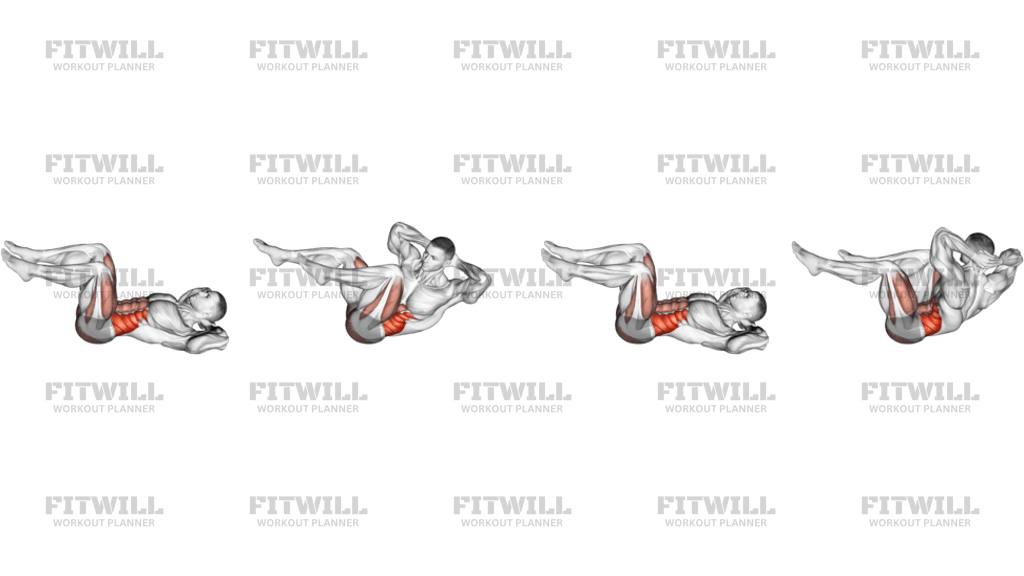
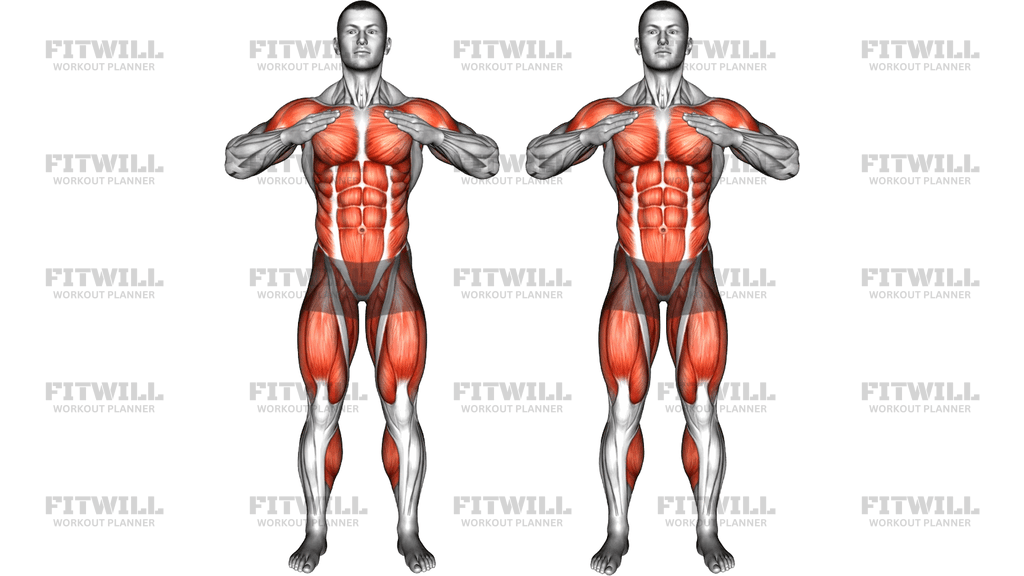
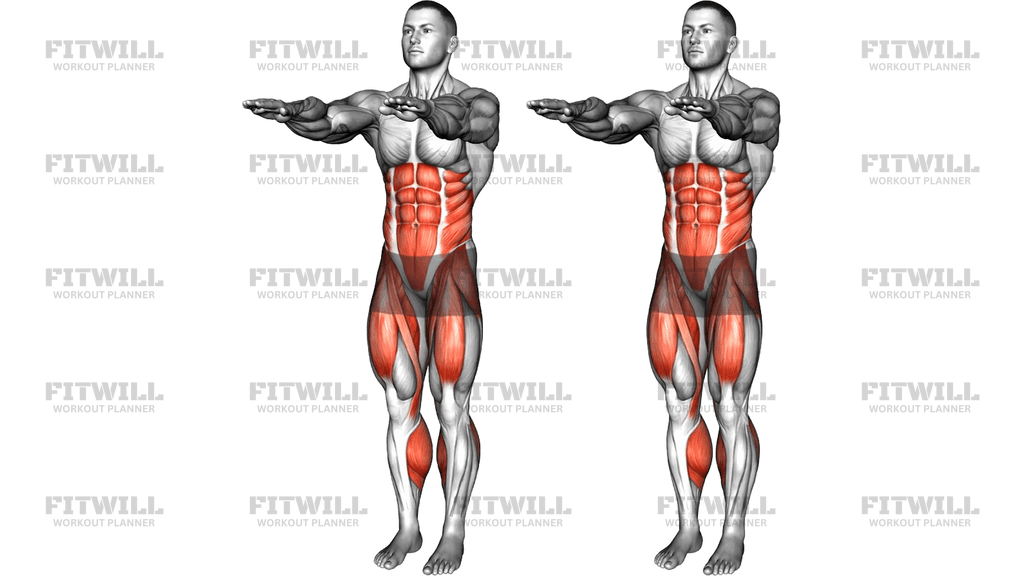
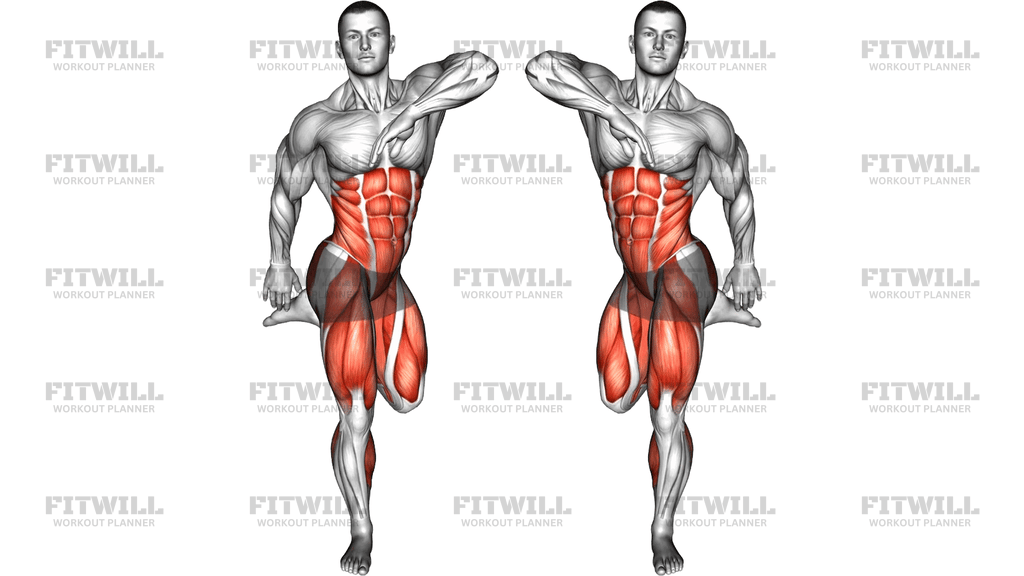
Static Lunge Rotational Chop
The Static Lunge Rotational Chop combines two demands that rarely get trained together: holding a split stance under load-free tension and rotating the trunk with control. You settle into a static lunge with the back knee hovering just above the floor, clasp your hands in front of your chest, and sweep them diagonally across your body from high on one side down toward the opposite hip, as if chopping wood. Because the legs never move, every degree of rotation has to come from the thoracic spine and hips working together, which is exactly what makes this drill valuable.
This movement earns its place in warm-ups, core circuits, and rehab-adjacent training because it teaches the body to transfer force through a stable lower half. The obliques and deep core drive the rotation, while the quads, glutes, and hip stabilizers of the front leg isometrically hold the lunge position the entire time. The rear leg adds a hip flexor stretch and challenges balance, so you get mobility and stability work in the same rep. Athletes who swing, throw, or change direction will recognize the pattern immediately: separation between a quiet lower body and a rotating upper body.
The setup matters more than the chop itself. Your front shin should stay close to vertical, your torso tall, and your weight distributed through the whole front foot rather than dumped into the toes. If the lunge position collapses, the rotation gets stolen from the hips and lower back, and the obliques stop doing their job. A slightly narrower than hip-width split stance usually makes balancing easier than a long stride.
Execute the chop by leading with the ribcage, not the hands. The arms stay long and relatively relaxed; they are the end of the whip, not the engine. Rotate as far as you can while keeping the front knee tracking over the mid-foot and the pelvis squared forward, pause briefly at the end of the sweep, then return the hands to center before repeating. Moving slowly through the first few sessions will reveal far more about your control than rushing through a high count.
Use this exercise as a low-load core primer before lower body training, as a standalone oblique exercise in home workouts, or as a teaching tool for anyone who struggles to rotate without their knees and pelvis spinning with them. No equipment is needed, and because both sides of the body are worked with mirrored stances, it also exposes left-right differences in hip and trunk mobility that are worth addressing before they show up in heavier lifts.
[ Workout Log & Planner ]
Put your next workout in Fitwill
Keep your plan and training log ready when you are.


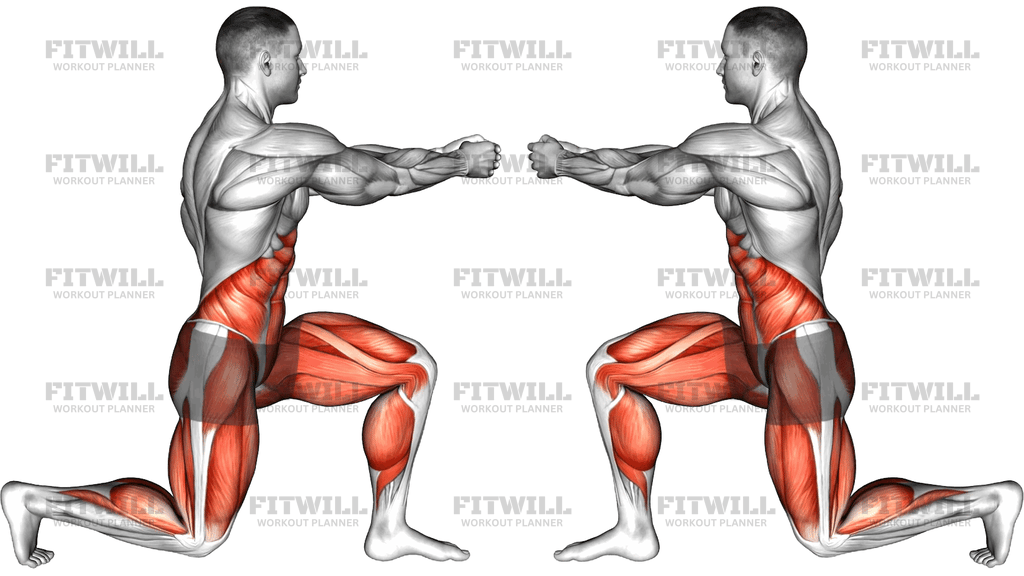
Instructions
- Stand tall, then step one foot forward into a split stance, lowering until your back knee hovers an inch or two above the floor and your front shin is roughly vertical.
- Clasp your hands together in front of your chest with your arms extended straight ahead, and square your hips so both sides of your pelvis face forward.
- Brace your core as if bracing for a light push, and keep your shoulders down away from your ears.
- Keeping the lower body completely still, sweep your clasped hands diagonally across your body, rotating your torso toward the side of your front leg and reaching down toward the outside of that hip.
- Pause for a beat at the end of the chop, feeling the rotation come from your ribcage and waist rather than your arms alone.
- Reverse the path smoothly, bringing your hands back to the starting position in front of your chest while maintaining the lunge.
- Complete all reps on one side while holding the lunge, breathing steadily out on the chop and in on the return.
- Switch your stance so the opposite leg is forward, and perform the same number of reps rotating to the other side.
- Between sides, stand up fully, shake out your legs, and reset your split stance rather than rushing into the next set from a tired position.
Tips & Tricks
- If you wobble side to side, shorten your stance slightly or hold the back knee an inch higher off the floor until your balance improves.
- Watch your front knee during the chop: if it caves inward or drifts toward the toes as you rotate, think about pressing the outside edge of the front foot into the floor.
- The most common fault is turning this into an arm swing. If your hands are moving but your ribcage is not, slow the rep down and imagine your chest leading the hands.
- Keep your hips facing forward throughout the chop. Letting the pelvis rotate with the shoulders turns it into a torso twist and removes the anti-rotation demand on the front hip.
- Do not let the back knee touch down and rest between reps; hovering it keeps the hip flexors and quads of that leg working.
- Stay tall through the spine. Rounding forward over the front leg as you chop down shortens the range of your obliques and strains the lower back.
- Your arms should stay long and soft, with only a slight bend at the elbows. Locked, tense arms make the chop jerky at the top.
- If your back knee or kneecap is uncomfortable in a bare lunge, place a folded mat or towel under it rather than shortening the range.
- Match your reps left and right and start with the tighter side so both halves of your body get the same quality of work.
Frequently Asked Questions
What muscles does the Static Lunge Rotational Chop work?
The obliques and deep core drive the rotational chop, while the quads and glutes of the front leg work isometrically to hold the lunge. The hip stabilizers, hip flexors of the rear leg, and shoulders assist throughout.
Do I need any equipment for the Static Lunge Rotational Chop?
No. It is a body-weight movement performed with clasped hands, which makes it easy to use at home, in a hotel room, or as a warm-up in the gym. You may want a mat under your back knee for comfort.
Why is the lunge held static instead of stepping through each rep?
Holding the lunge keeps the lower body fixed so the rotation has to come from the trunk and hips. It also builds isometric strength in the legs and exposes balance issues that a stepping lunge would let you rush past.
Should my hips rotate when I chop across my body?
Your pelvis should stay squared forward with the stance. The rotation should come from your ribcage and waist; if your hips spin with your shoulders, the front leg loses its stabilizing role and the core demand drops.
How deep should the lunge be?
Lower until your back knee hovers just above the floor and your front shin is close to vertical. If you cannot hold that depth with steady balance, rise an inch or two and build depth over time.
Is the Static Lunge Rotational Chop suitable for beginners?
Yes, as long as the range is kept modest. Beginners often do better with a shorter stance, slower hand speed, and fewer reps per side before extending the chop to its full diagonal range.
Why do my arms and shoulders fatigue before my core?
That usually means you are leading the movement with your hands instead of your ribcage. Relax the arms, keep them long, and start each chop from the chest so the obliques do the rotating.
Can I add weight to this exercise?
You can hold a light medicine ball or plate once your form is consistent, but master the body-weight version first. Adding load before you can keep the pelvis quiet tends to shift stress into the lower back.
How does this differ from a standing rotational chop with a cable or band?
The cable or band version adds external resistance to the rotation, while this body-weight version emphasizes control, hip stability, and thoracic mobility through the held lunge position. They complement each other rather than replace one another.
How many reps and sets should I do?
Two to three sets of eight to twelve slow chops per side works well, either as a core block on its own or as the last drill of a warm-up. Stop the set when your lunge position starts to sag, not just when your arms tire.