Dumbbell Romanian Deadlift To Bent Over Row
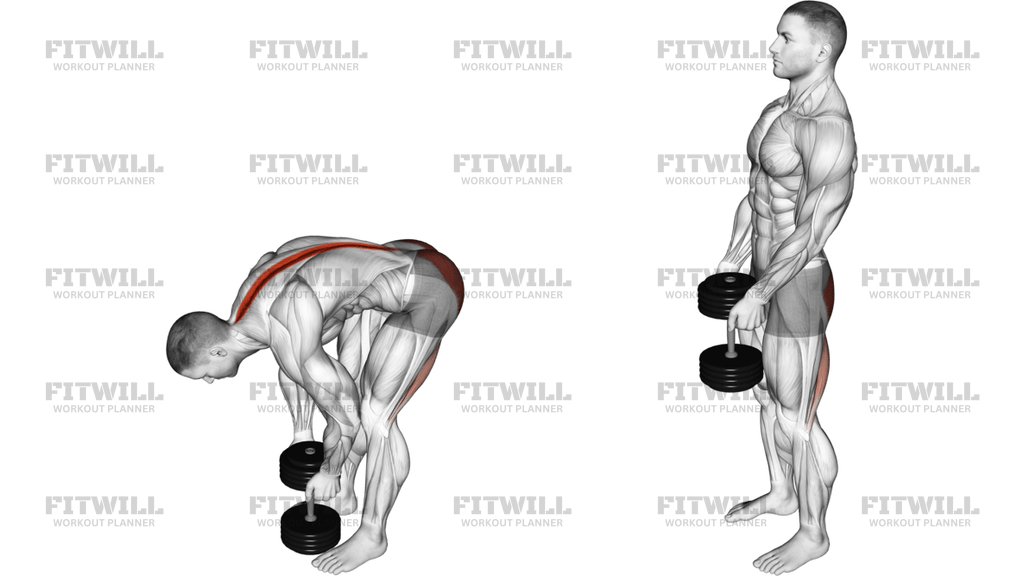
The Dumbbell Romanian Deadlift To Bent Over Row is a two-part compound movement that chains a hip hinge with a row in the same rep. You start standing with a dumbbell in each hand, push your hips back into a Romanian deadlift until your torso is angled well forward, then perform a bent-over row with the dumbbells hanging below your shoulders before standing back up to finish the rep. Because the hinge and the row share the same bent-over position, one setup serves both halves of the exercise.
This combination earns its place in a program because it trains the entire posterior chain and the pulling muscles of the upper back in one economical pattern. The Romanian deadlift portion loads the hamstrings and glutes through a deep stretch while your lower back works hard to hold a flat, strong torso angle. The row portion then hits the lats, rhomboids, and mid-traps as you pull the dumbbells toward your lower ribs. Your grip and forearms are under continuous tension from start to finish, which makes this a quietly effective strengthener for the hands as well.
The setup matters more here than in most dumbbell lifts because a faulty hinge turns the row into a messy, body-English swing. Before you descend, set your feet roughly hip-width apart, soften the knees slightly, and brace your core so your ribcage stacks over your pelvis. During the hinge, the dumbbells should track close to your thighs and shins, and your back should stay flat rather than rounding as your chest lowers. If you reach the bottom and cannot hold a stable torso, you have hinged too far or the weight is too heavy.
Execution is a rhythm problem as much as a strength problem. A good rep looks like this: hinge down with control, pause briefly in the bent-over position, row both dumbbells to your sides without jerking your torso upright, lower them fully, then drive your hips forward to stand. Common mistakes include standing up out of the hinge as you row, turning the row into a shrug, and bouncing the dumbbells off the stretch at the bottom. Treat the bent-over position as home base for both halves of the rep and the movement cleans itself up quickly.
This exercise suits lifters who want more back work without adding a separate hinge day, and it fits well as a secondary movement on lower-body or pull-focused days. Because it demands a solid hip hinge and a stable torso, most people do best starting with moderate dumbbells for sets of eight to twelve reps. Anyone with a cranky lower back should begin lighter than feels necessary, prioritizing a flat back and smooth tempo over load, and stop the set as soon as the torso position begins to break down.
[ Workout Log & Planner ]
Put your next workout in Fitwill
Keep your plan and training log ready when you are.


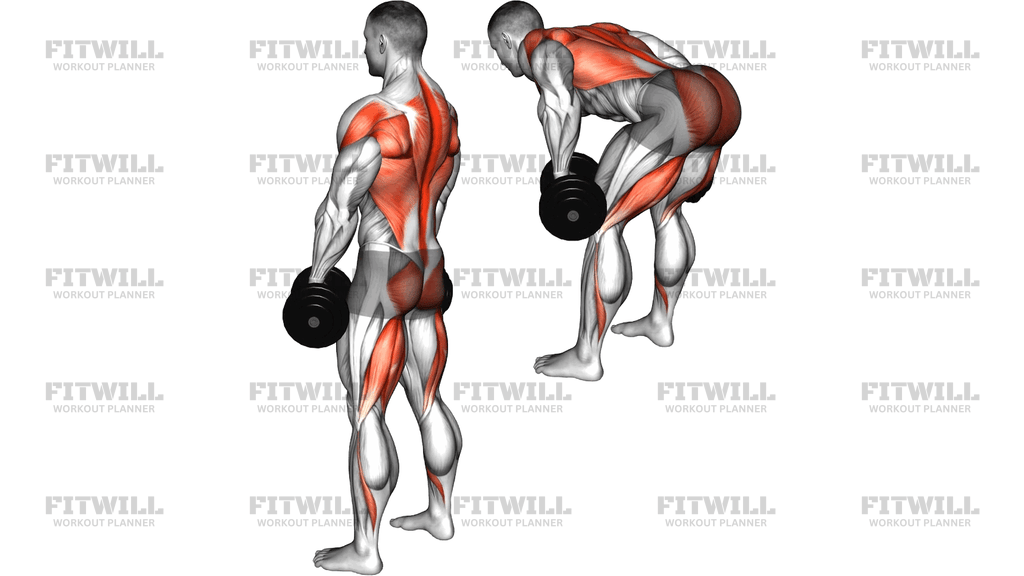
Instructions
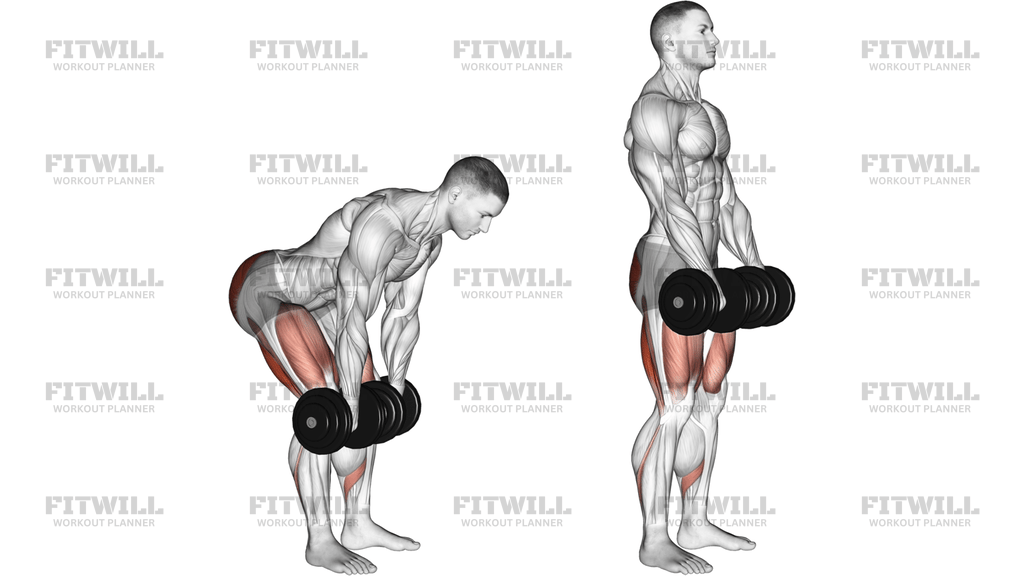
- Stand with your feet about hip-width apart, holding a dumbbell in each hand at arm's length in front of your thighs with a neutral grip, palms facing your body.
- Set a slight bend in your knees, pull your shoulders back and down, and brace your core as if preparing for a light punch to the stomach.
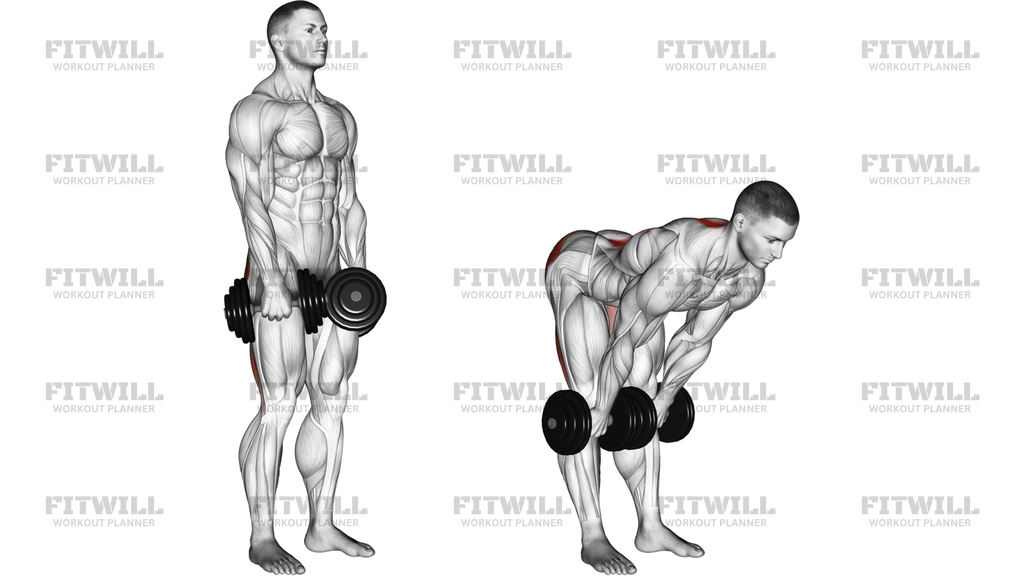
- Push your hips straight back and hinge forward, letting the dumbbells slide down close to your thighs and shins until your torso is angled between 30 and 45 degrees above horizontal, or as far as your hamstrings allow with a flat back.
- Hold this bent-over position steady: knees softly bent, back flat, chest facing the floor, and the dumbbells hanging straight down under your shoulders.
- Row both dumbbells up toward your lower ribs by driving your elbows back and up, keeping them close to your body, and squeeze your shoulder blades together at the top.
- Lower the dumbbells under control until your arms are fully extended again, resisting the pull of the weight rather than letting them drop.
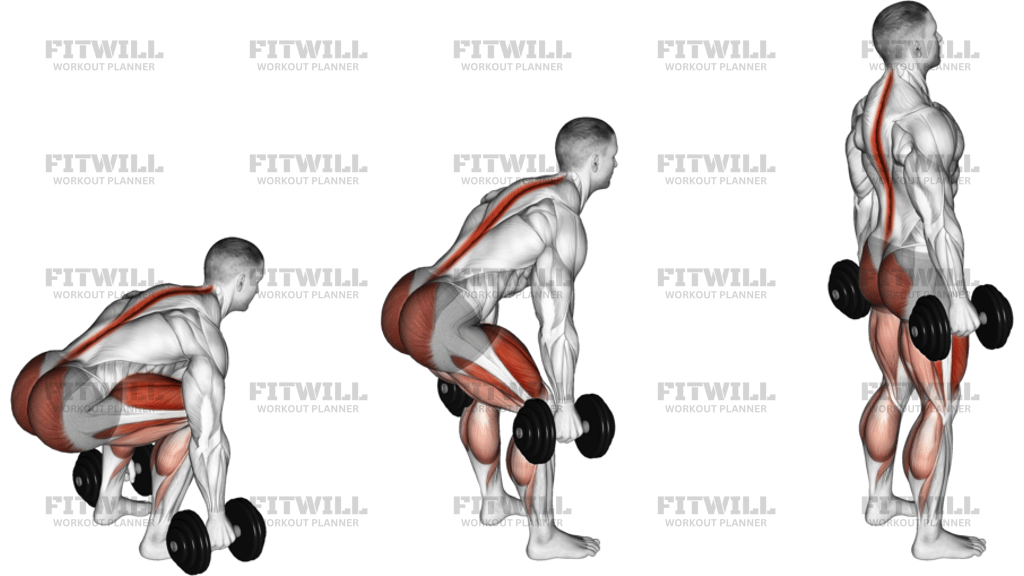
- After completing the row, drive your hips forward and stand tall, squeezing your glutes at the top without leaning back.
- Exhale as you row and as you stand up; inhale at the top before starting the next rep.
- Reset your brace at the top of each rep, then repeat the hinge-row-stand sequence for the target number of reps.
- When finished, set the dumbbells down on the floor by hinging, not by rounding over from a standing position.
Tips & Tricks
- The most common fault is losing torso angle during the row — the chest rises with each pull and the set turns into a standing row. Pick a torso angle at the bottom and hold it for every rep of the set.
- If your lower back rounds as you hinge, stop the descent higher and work on pushing the hips back rather than reaching the dumbbells toward the floor with your spine.
- Keep the dumbbells in contact with or very close to your legs on the way down; letting them drift forward moves the load onto your lower back instead of the hamstrings.
- Pull the dumbbells to your lower ribs, not your chest — a high pull turns the row into a shrug and shifts work away from the lats and mid-back.
- Use a full dead stop at the bottom of the row. Letting the dumbbells bounce off the stretch cheats the back muscles and encourages jerky reps.
- Choose a weight you can row for strict reps, not one sized for your deadlift. The row is almost always the limiting half of this movement.
- Straps can help if grip failure cuts sets short, but use them selectively — the grip demand is part of what makes this exercise valuable.
- Breathe deliberately: a big brace at the top, hold it through the hinge and row, then exhale as you stand. Holding your breath randomly mid-rep usually means the weight is too heavy.
- If your hamstrings shake or cramp at the bottom of the hinge, reduce the depth slightly and build range gradually over several weeks.
Frequently Asked Questions
What muscles does the Dumbbell Romanian Deadlift To Bent Over Row work?
The hinge primarily loads the hamstrings and glutes, with the lower back holding your torso angle. The row portion targets the lats, rhomboids, mid-traps, and biceps, and your grip works throughout the entire rep.
Should I row first or stand up first?
Row while you are still bent over, then stand. Standing up before rowing would remove the hip-hinge position entirely and turn the exercise into a separate deadlift plus standing row.
How far down should I hinge during the Dumbbell Romanian Deadlift To Bent Over Row?
Descend until your torso is angled somewhere between 30 and 45 degrees above horizontal and you feel a strong hamstring stretch with a flat back. Stop deeper only if you can keep your spine neutral; the row works fine from a partially hinged position.
Can beginners do this exercise?
Yes, but it helps to learn the two parts separately first. Practice the Romanian deadlift hinge and the bent-over row on their own for a few weeks, then combine them with light dumbbells.
Why does my lower back fatigue faster than my hamstrings or back?
Your lower back isometrically holds your torso angle for the whole set, so it is always working. If it gives out before you feel the target muscles, the weight is too heavy, you are hinging too deep, or you are rounding slightly without noticing.
My chest rises every time I row — how do I fix it?
That is the classic fault with this lift. Lighten the load, pick a torso angle and lock it in mentally before each row, and cue yourself to pull the dumbbells to the ribs rather than pulling your chest up. Filming yourself from the side makes the drift obvious.
What can I use instead of dumbbells for this movement?
A barbell or a pair of kettlebells work well, and a barbell allows the hinge to be loaded heavier while the row can be done from the same position. Resistance bands are a lighter option but remove the constant stretch feedback at the bottom of the hinge.
How many reps and sets should I do?
Sets of 8 to 12 reps with 2 to 4 sets work well for most lifters. Because the movement combines two demanding patterns, going much heavier than that usually costs you torso position on the row.
Is it safe for my lower back?
When performed with a neutral spine, a braced core, and loads you can control, it is a standard posterior-chain exercise. Start lighter than you think you need, avoid rounding as you hinge, and stop the set as soon as your torso angle or back position deteriorates.