Dumbbell Plank Row
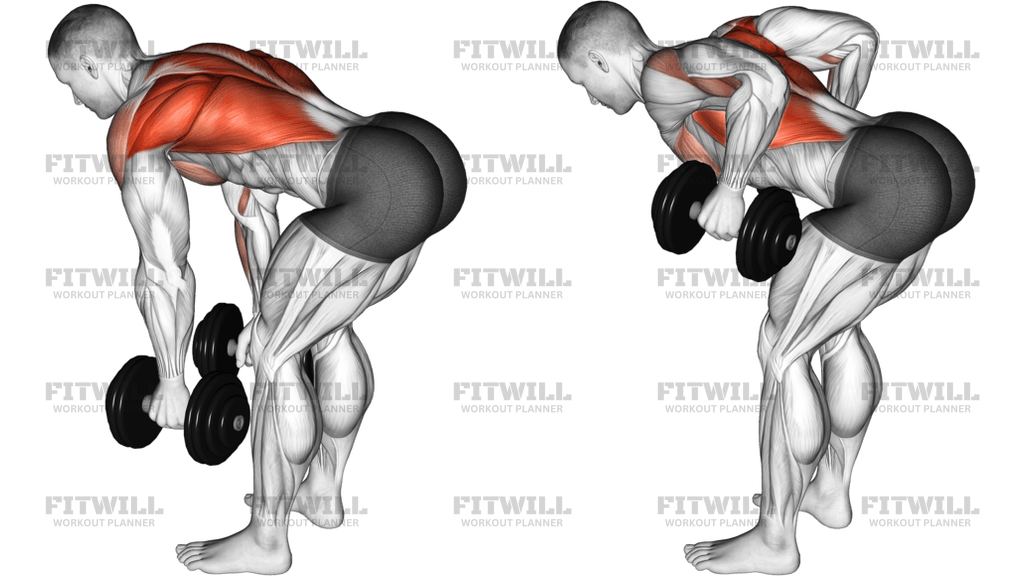
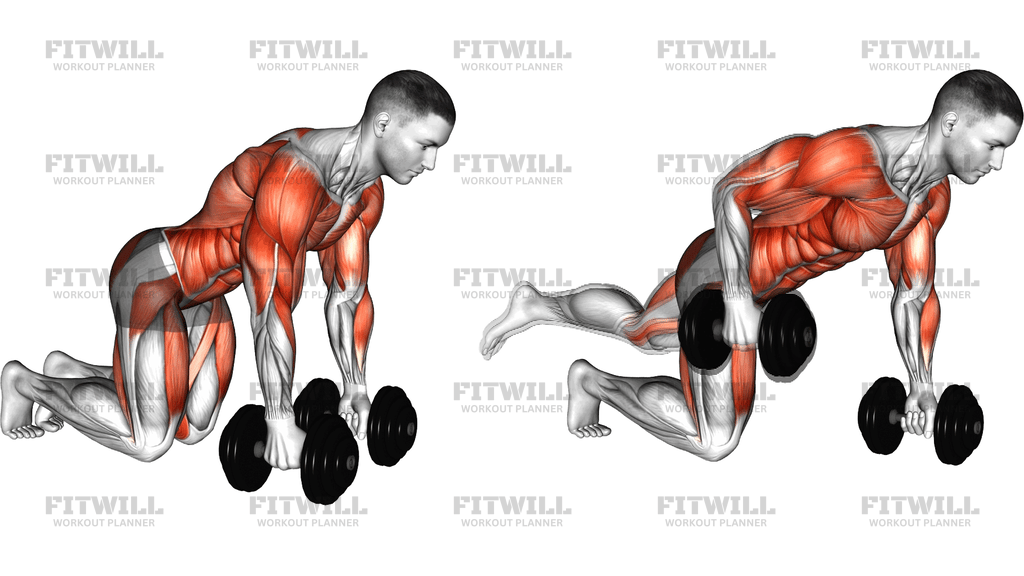
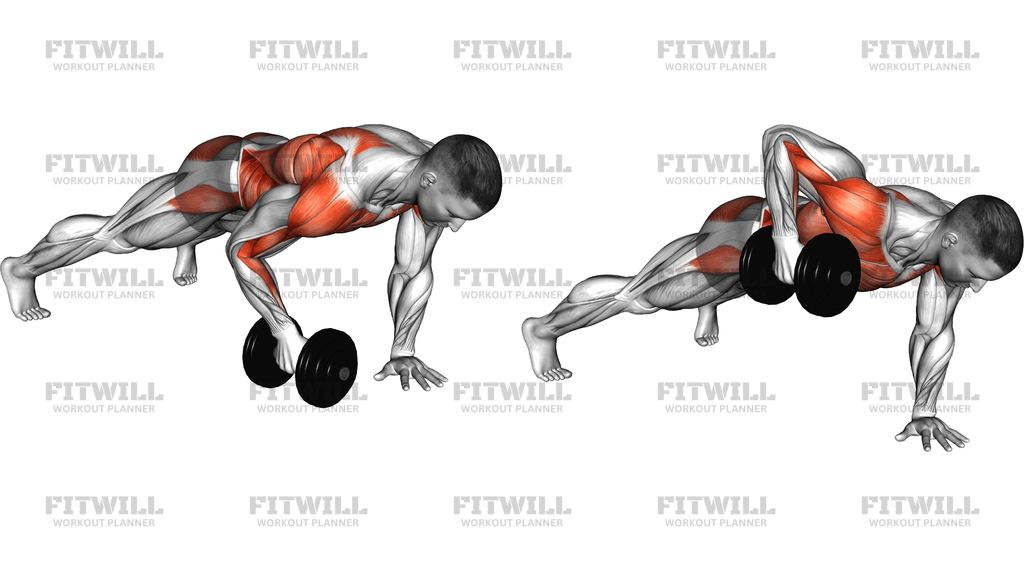
The Dumbbell Plank Row combines two demanding positions into one movement: you hold a solid high plank while pulling a dumbbell off the floor and up toward your ribs, one arm at a time. Because only three points of contact support your body during each rep, your trunk has to fight rotation the entire time, which makes this as much an anti-rotation core exercise as a rowing exercise.
The pulling side works through the lats, rhomboids, mid-traps, rear shoulders, and biceps, while the support side, along with the abs and obliques, works isometrically to keep your hips square to the floor. This dual demand is what separates the Dumbbell Plank Row from a bench-supported row: you cannot hide from the stability requirement, and even a moderate weight becomes challenging once the plank position is involved.
Setup matters more here than in most rows. A single dumbbell sits on the floor under your shoulder, your support hand is planted directly beneath the other shoulder, and your feet are set wider than hip width to give you a more stable base. If your feet are too narrow, your hips will twist every time you pull; if the dumbbell is not aligned under the working shoulder, you will reach or lean to grab it and start the rep from a compromised position.
To execute well, think of the plank as fixed and the arm as the only moving part. Brace your abs, squeeze your glutes, and pull the dumbbell straight up beside your ribs, driving the elbow back and close to the body rather than flaring it wide. Lower the weight under control back to the floor, pause long enough to stop any sway, and only then start the next rep. Controlled reps with honest pauses beat fast, sloppy rows every time.
This exercise suits intermediate lifters who already own a solid plank and want to train their back and core together, as well as athletes who need anti-rotation strength for sports like climbing, combat sports, and throwing. It also works well as a finisher on back days or as a slot in circuit training. Beginners can start with a very light dumbbell or simply hold the plank position with one hand resting on the weight to learn the stability side first.
From a safety standpoint, keep your wrists stacked under your shoulders, avoid letting the support shoulder sag toward the floor, and stop if your lower back starts to arch or your hips drop. Hexagonal dumbbells with flat sides are the practical choice, since round dumbbells can roll while you row.
[ Workout Log & Planner ]
Put your next workout in Fitwill
Keep your plan and training log ready when you are.


Instructions
- Place a hex dumbbell on the floor and set up in a high plank position with your support hand directly under one shoulder and your gripping hand aligned under the other.
- Set your feet wider than hip width, toes tucked, with your body forming one straight line from head to heels.
- Brace your abs, squeeze your glutes, and press the floor away with the support arm so your upper back is not sagging.
- Keeping your hips square to the floor, pull the dumbbell straight up toward the side of your ribs.
- Drive your elbow back and close to your body until the dumbbell touches near your lower rib cage, squeezing your shoulder blade back at the top.
- Lower the dumbbell under control back to the floor rather than dropping it, keeping tension in the support arm the whole time.
- Pause when the weight is on the floor until your hips stop moving, then reset your brace before the next rep.
- Exhale as you pull the dumbbell up, inhale as you lower it, and keep breathing steadily instead of holding your breath through the set.
- Complete all reps on one side, then switch hands and repeat on the other side while keeping your stance the same.
Tips & Tricks
- Set your feet as wide as feels stable. A narrow stance is the most common reason the hips rotate during this row, and widening it fixes most twisting problems immediately.
- Choose a hexagonal dumbbell, not a round one. A round head can spin under your hand mid-rep and dump you off balance.
- If your support shoulder creeps up toward your ear, actively push the floor away before each pull to keep that side strong and tall.
- Do not rush the bottom. Dropping the dumbbell back to the floor turns each rep into a bouncing mess; touch down, let your hips settle, then pull again.
- Keep the pull path vertical and close to the body. Pulling toward your armpit or flaring the elbow wide shifts work away from the lats and strains the shoulder.
- If your hips sag as the set goes on, that is fatigue in your core, not your back. End the set or drop to a lighter dumbbell rather than letting your lower back arch.
- Grip the dumbbell handle firmly and keep the wrist neutral. A bent-back wrist under load is an avoidable stress point in this position.
- Warm up with a bodyweight plank and a few slow bodyweight arm reaches to wake up the anti-rotation demand before adding the dumbbell.
- On a slippery floor, place the dumbbell on a mat or towel so it does not slide away from you during the pull.
Frequently Asked Questions
What muscles does the Dumbbell Plank Row work?
The pulling arm targets the lats, rhomboids, mid-traps, rear shoulders, and biceps. At the same time, the abs, obliques, and lower back work hard to stop your hips from rotating while you hold the plank.
Is the Dumbbell Plank Row suitable for beginners?
It can be, but only with a light dumbbell and a wide, stable stance. If a full plank row feels shaky, start by holding a high plank with one hand resting on the dumbbell to build the stability side before adding real pulls.
Why do my hips rotate when I row the dumbbell?
Rotation usually comes from a stance that is too narrow, a weight that is too heavy, or rushing the rep. Widen your feet, slow the pulling pace, and pause each time the dumbbell touches the floor before starting the next rep.
How does the Dumbbell Plank Row differ from a renegade row?
The two are closely related, but the renegade row is typically paired with a push-up between rows, while the plank row is performed as pure rows from the plank position. The core and back demands in the row itself are essentially the same.
What kind of dumbbell should I use for the Dumbbell Plank Row?
A hexagonal dumbbell is strongly preferred because the flat sides keep it from rolling while you pull. Round dumbbells can spin under your hand and break your balance mid-rep.
How heavy should I go on this exercise?
Pick a weight you can pull smoothly for all prescribed reps without your hips twisting or sagging. Because the plank position limits how much stability you have, most people use noticeably less weight here than in a bent-over or bench-supported row.
What can I substitute if I do not have a dumbbell?
A kettlebell with a stable flat base works well, or you can use a light barbell plate-free setup on a mat. For a bodyweight option, practice plank shoulder taps, which train the same anti-rotation control without any equipment.
Should my wrist stay bent at the top of the row?
No. Keep the wrist straight and neutral throughout the pull so the dumbbell hangs in line with your forearm. Bending the wrist back at the top adds unnecessary strain without improving the row.
How do I breathe during the Dumbbell Plank Row?
Exhale as you pull the dumbbell toward your ribs and inhale as you lower it. Avoid holding your breath for the whole set, since steady breathing helps you maintain the brace without spiking tension in your neck.
Is it safe for my lower back?
When performed with a braced trunk, straight bodyline, and controlled weight, it is a well-tolerated exercise for most healthy lifters. If you feel your lower back arching or your hips dropping as you fatigue, end the set and rest rather than pushing through sloppy reps.