Swing Torso Twist
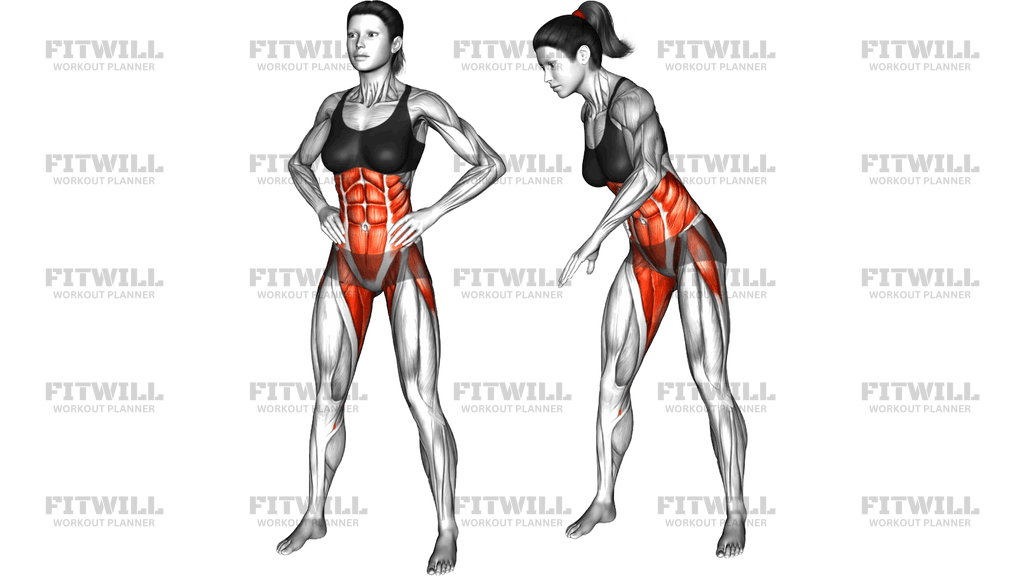
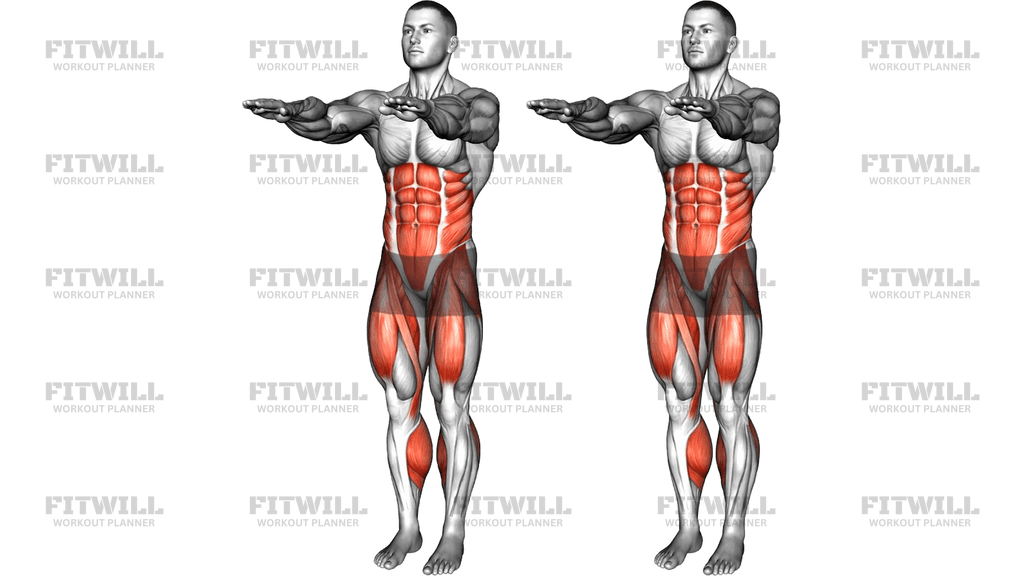
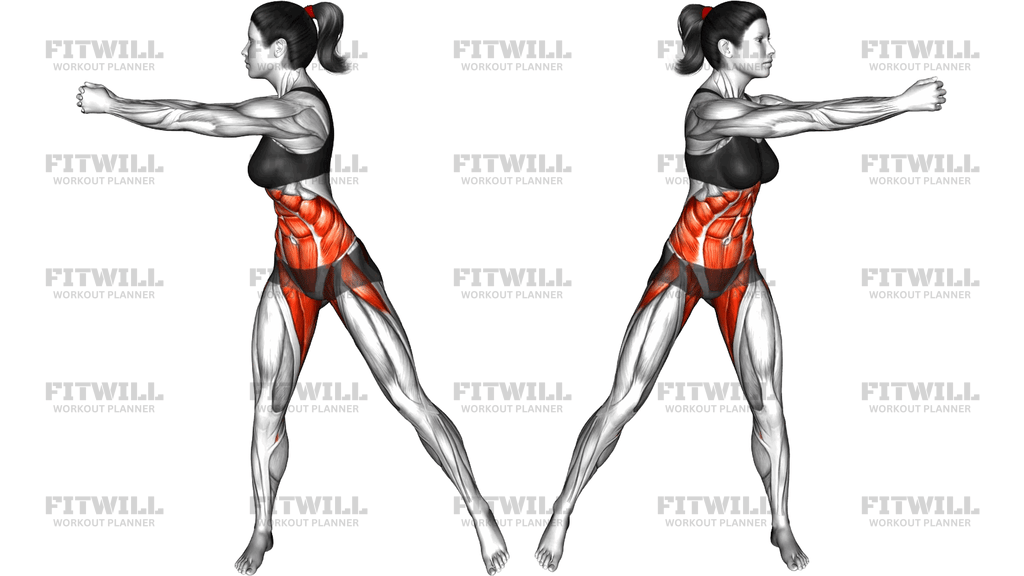
The Swing Torso Twist is a standing, body-weight rotation drill where you keep both arms extended straight out in front of your chest and swing your upper body from side to side over a fixed lower body. Your feet stay planted in a wide stance while your ribcage, arms, and shoulders rotate together like a single unit, traveling from one side to the other in a smooth, continuous rhythm. The extended arms act as a long lever, which lengthens the rotation arc and makes the obliques and deep core work harder to control the swing.
This movement fits well as a dynamic warm-up before lower-body or core training, as an active recovery drill between sets, or as a low-impact conditioning move in a circuit. Because it requires no equipment and very little space, it is a practical choice for home workouts, group warm-ups, and travel routines. It also teaches a valuable skill: rotating from the waist and ribcage while the hips and legs stay quiet, which carries over to throwing, swinging, and change-of-direction sports.
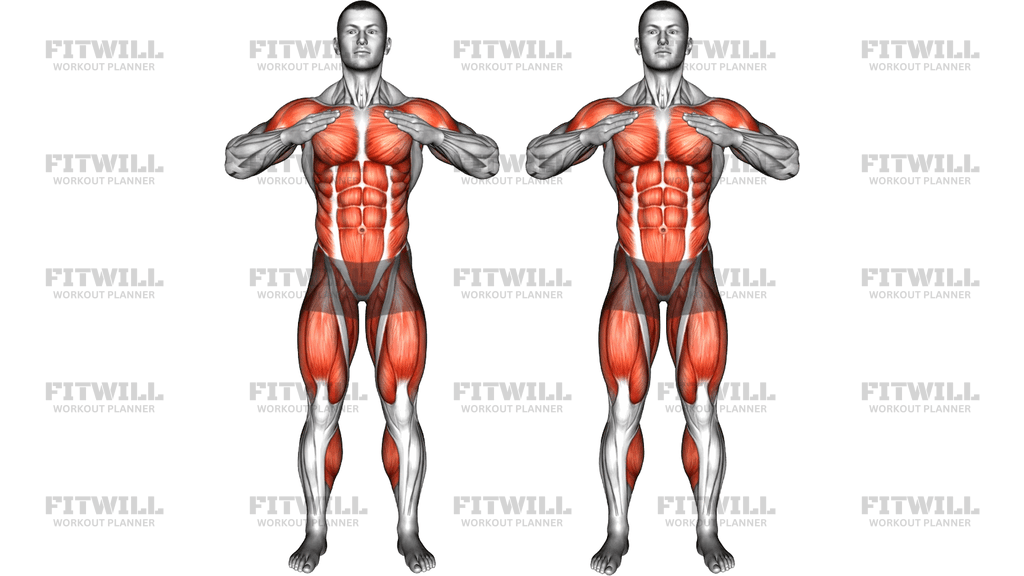
The main work comes from the obliques on both sides of your waist, one side loading as you twist away from it and contracting as you swing back through center. The rectus abdominis and deep core stabilize the spine through each pass, while the hip muscles, especially the inner thigh and outer hip groups highlighted in the wide stance, hold your lower body steady as everything above them turns. Your shoulders and upper back assist by keeping the arms lifted and moving as one piece with the torso.
Setup matters more than it looks. A stance about one and a half shoulder-widths wide gives you a stable base so the twist comes from your trunk rather than your feet sliding or your knees collapsing. Arms held at shoulder height, straight and parallel to the floor, keep the lever consistent; if the arms droop, the shoulders take over and the waist does less of the work. Knees should stay soft but quiet, acting as shock absorbers rather than pivoting with the twist.
To execute it well, brace your core lightly, then swing your arms and torso to one side until you feel a comfortable wrap through your waist, and immediately swing through center to the other side. Let the movement flow rather than stopping at each end, but keep it controlled enough that you could stop at any moment without wobbling. Breathe steadily throughout, exhaling as you pass through center if that rhythm feels natural.
The most common errors are spinning the hips and knees along with the shoulders, which strips the tension off the obliques, and letting momentum do all the work with a slouched spine. Keep the hips square and mostly still, the chest tall, and the swing speed moderate. If you feel any pinching in your lower back or knees, narrow the arc slightly and slow the tempo rather than forcing range.
In practice, expect to use the Swing Torso Twist for 20 to 60 second bouts, either as the first movement of a warm-up or as a core finisher. It is gentle on the joints, easy to scale by adjusting speed and arc length, and pairs naturally with movements like standing knee raises, arm circles, or body-weight squats in a full-body flow.
[ Workout Log & Planner ]
Put your next workout in Fitwill
Keep your plan and training log ready when you are.


Instructions
- Stand with your feet roughly one and a half shoulder-widths apart, toes pointing slightly outward, and your weight spread evenly across both feet.
- Raise both arms straight out in front of your chest at shoulder height, hands in loose fists, arms parallel to the floor and shoulder-width apart.
- Soften your knees, keep your hips square to the front, and lightly brace your stomach as if preparing for a gentle push.
- Swing your arms and upper body together to the right, rotating through your waist until your chest faces as far right as feels comfortable while your feet stay planted.
- Without pausing, swing through the starting position and continue to the left side, keeping the arms extended and level throughout the arc.
- Continue alternating side to side in a smooth, pendulum-like rhythm, letting the obliques drive the turn rather than flinging the arms independently.
- Keep your lower body still: knees track over your toes, hips stay facing forward, and your heels stay glued to the floor.
- Breathe continuously during the set, and avoid holding your breath as the tempo builds.
- After your final rep, slow the swing gradually, bring your torso back to center, and lower your arms before stepping out of the stance.
Tips & Tricks
- Imagine your arms are welded to your ribcage. If the hands whip ahead of your chest, momentum is doing the rotation and your obliques are coasting.
- If your knees start pivoting with each twist, press your toes gently into the floor and think of your legs as pillars the trunk rotates around.
- A common mistake is swinging so far that the lower back arches and the ribs flare at the end range. Shorten the arc about ten percent and keep the front of your ribs drawn down.
- Start slower than feels necessary for the first few reps. The wide stance with straight arms creates a long lever, and speeding up before you are braced tends to pull you off balance.
- Keep the arms at shoulder height the whole time. If they drop toward your waist, the shoulders take over and the waist rotation becomes shallower.
- To increase the challenge, extend the swing slightly further each side or add a light pair of hands-weighted objects, but only once you can keep your hips perfectly square.
- Warm the spine up first with a few smaller, slower twists before committing to the full arc, especially in cold rooms or early-morning sessions.
- If you feel the twist migrating into your knees, check that your toes are angled slightly out; fully forward-facing feet in a wide stance can jam the knee as the trunk turns.
- Use your exhale through center as a tempo cue: one breath cycle per full left-right swing keeps the rhythm even and the core engaged.
Frequently Asked Questions
What muscles does the Swing Torso Twist work?
The obliques on both sides of the waist do the primary work of rotating and controlling the swing. The abs and deep core stabilize the spine, and the hip muscles, including the inner thigh area, hold the wide stance steady.
Is the Swing Torso Twist suitable for beginners?
Yes. It requires no equipment, and you can scale it by using a smaller arc and slower tempo. Beginners should prioritize keeping the hips square and knees still before trying to twist further.
Why should my arms stay straight and at shoulder height during the Swing Torso Twist?
The extended arms form a long lever attached to your ribcage, which increases the demand on the obliques and keeps the rotation consistent. Dropping the arms shortens the lever and shifts the work into the shoulders.
Should my hips move during the twist?
Your hips should stay mostly square to the front while the rotation happens in your waist and ribcage. If your hips and knees spin with every swing, the obliques stop doing their job and the knees absorb unnecessary twisting stress.
How wide should my stance be for the Swing Torso Twist?
About one and a half shoulder-widths works well, with toes angled slightly out. This gives a stable base so the trunk can rotate freely without your feet shifting or your knees collapsing inward.
How fast should I swing?
Use a moderate, controlled rhythm where you could stop at any point without stumbling. Speed can increase slightly once your balance and bracing are consistent, but the movement should never feel like an uncontrolled fling.
Can I use the Swing Torso Twist as a warm-up?
Yes, it is one of its best uses. A 20 to 40 second set early in a warm-up raises your core temperature and rehearses trunk rotation before exercises like squats, throws, or rotational core work.
What can I substitute if twisting feels uncomfortable?
Try a smaller-arc version with a narrower stance, or a standing rotation where you step one arm across your body slowly instead of swinging. If discomfort persists, choose non-rotational core work and consult a qualified professional.
How many reps or how long should I perform the Swing Torso Twist?
Count each side-to-side pass as one rep, and aim for 15 to 30 reps, or work in 20 to 60 second bouts. Stop when your rhythm gets sloppy, not when your waist is completely fatigued.
Can I hold a weight while doing the Swing Torso Twist?
Light hand weights can add intensity once your form is solid, but heavy objects amplify momentum and strain the lower back. Keep any added load very light and prioritize a still lower body over more speed.