Double Hip Rotation Cross Knee Drive
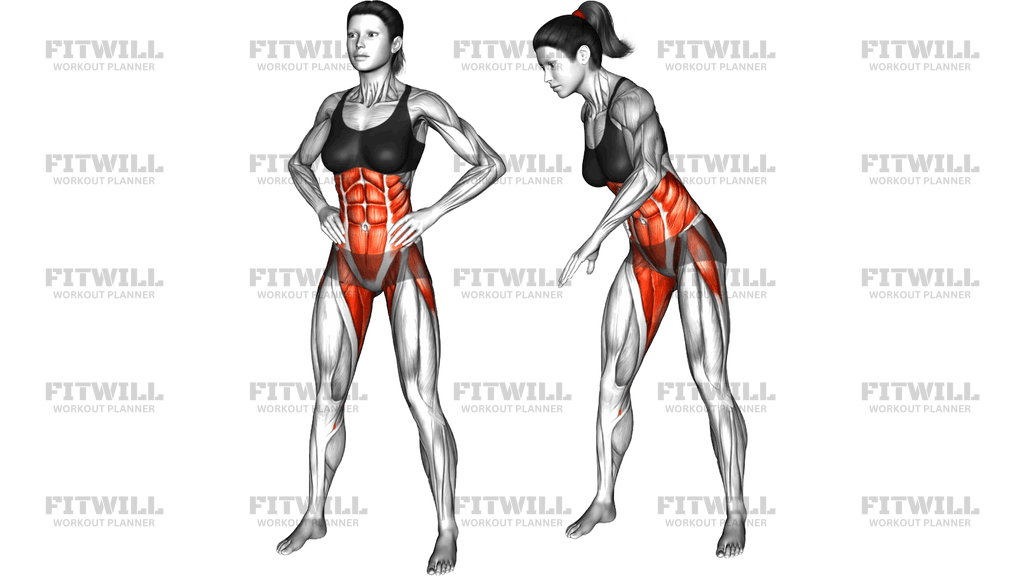
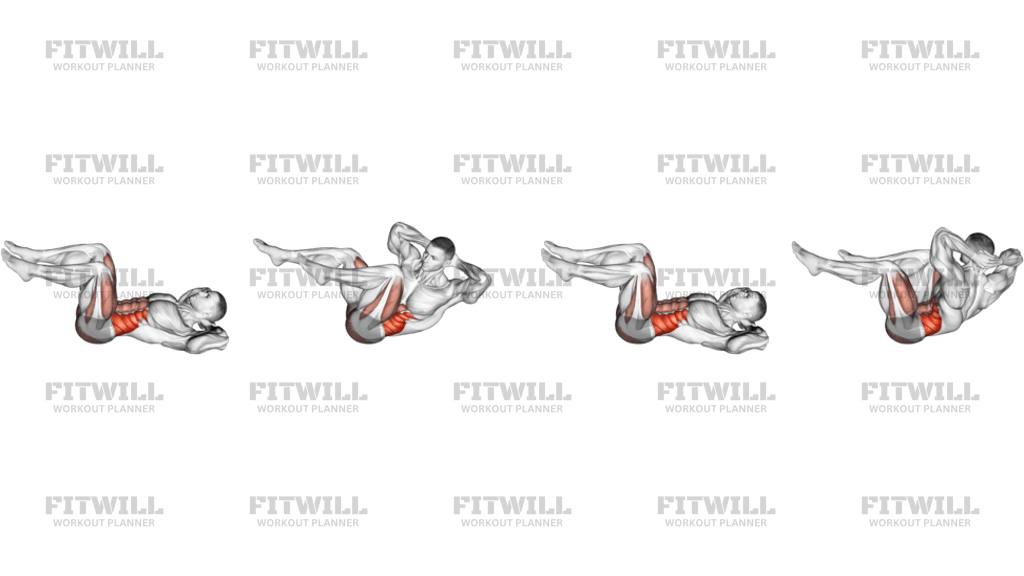
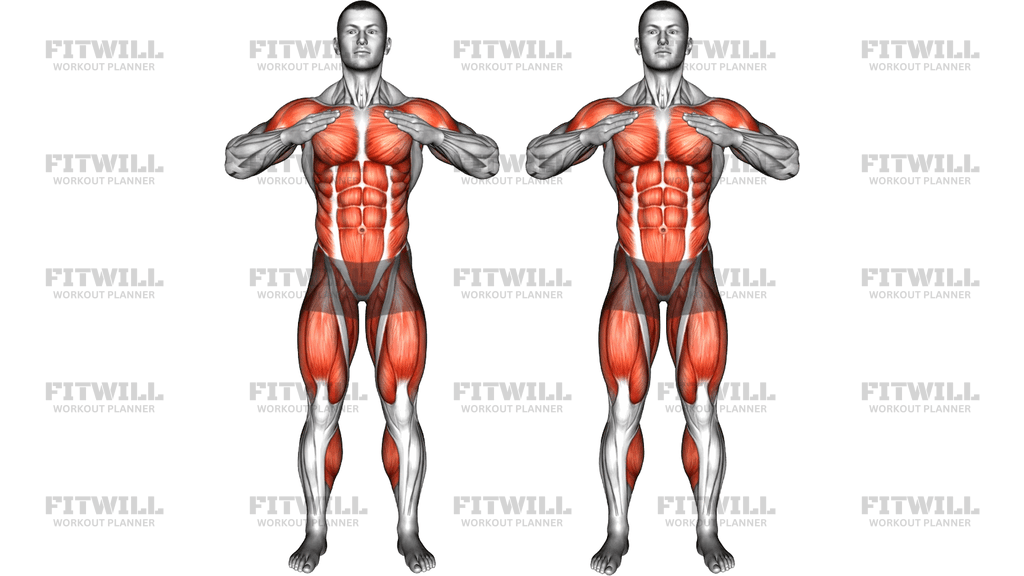
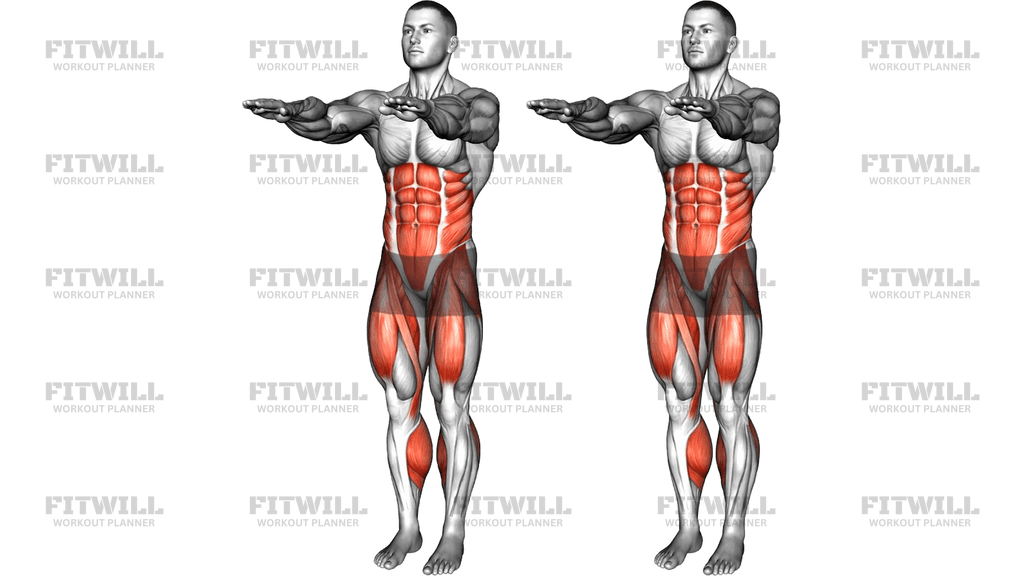
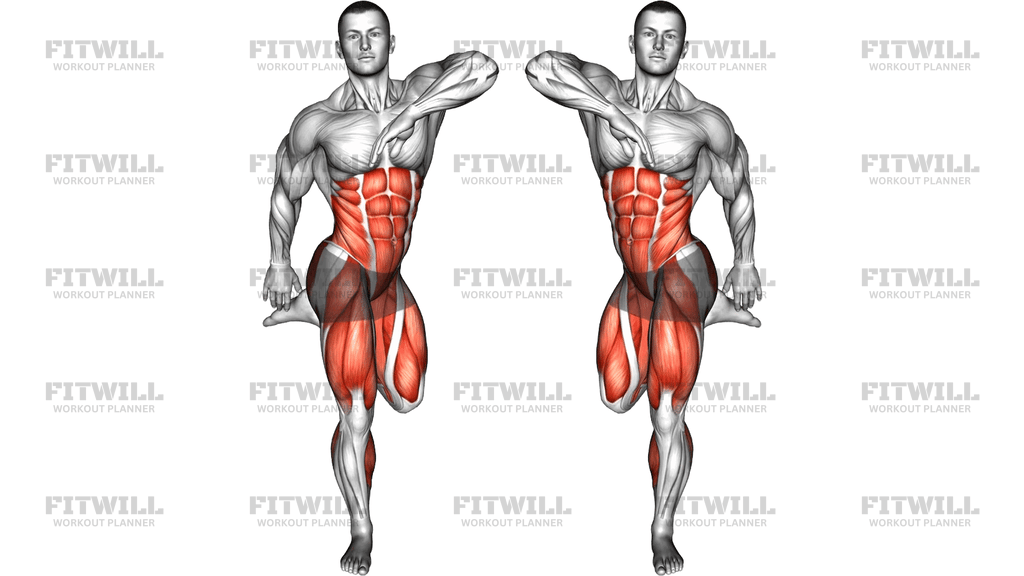
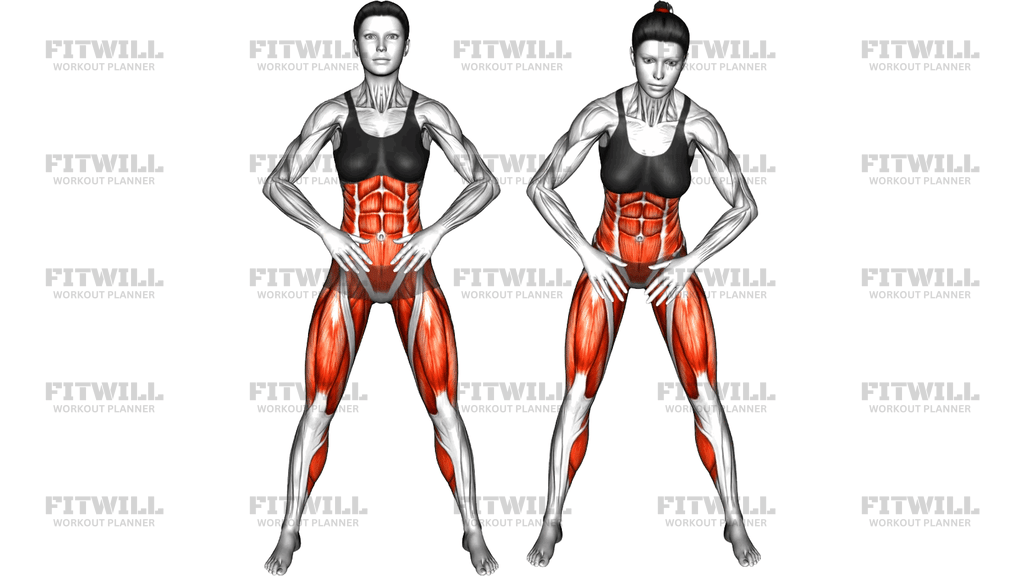
The Double Hip Rotation Cross Knee Drive is a standing body weight movement that blends hip rotation with an inward knee drive, forcing the trunk and pelvis to work together as one coordinated unit. You start in a wide stance with your hands resting on the front of your hips or upper thighs, then rotate both hips and drive your knees across the midline of your body in a controlled, sweeping motion. The core musculature highlighted in this exercise is exactly what does the work: the obliques rotate and control the pelvis while the deep hip muscles steer the thighs across the body.
This movement is especially useful for anyone who needs better rotational control around the hips and lower trunk. It appears in warm-ups for lifting, martial arts, tennis, soccer, and golf-style rotational sports, where the ability to move the pelvis across the midline without collapsing the spine matters. It also works well as a low-impact activation drill for people whose hips feel stiff from prolonged sitting, because it takes the joints through rotation and adduction without any load on the back.
The wide stance is not decoration — it creates the space your knees need to travel inward, and it puts the adductors and outer hip muscles under a mild stretch-load that makes the cross-body drive meaningful. Your hands on the hips act as a feedback tool rather than a support: you should be able to feel the pelvis rotating under your palms, which tells you the motion is coming from the hips instead of being faked by swaying the shoulders or twisting at the ribcage.
To execute it well, keep the movement small at first. Rotate both hips in the same direction, let the knees drift across the midline a few centimeters, pause, and reverse. The tempo should feel deliberate, almost like drawing a controlled arc with your kneecaps. Faster is not better here; the value comes from the pelvis and femurs moving precisely while the upper body stays quiet and upright.
Because it requires no equipment and very little space, the Double Hip Rotation Cross Knee Drive fits easily into dynamic warm-ups, mobility circuits, and recovery days. Two or three sets of eight to twelve controlled rotations per direction is a typical dose. If you feel pinching in the groin or front of the hip, reduce the range of the cross-knee drive rather than forcing the knees further across, and let your range expand gradually over sessions.
[ Workout Log & Planner ]
Put your next workout in Fitwill
Keep your plan and training log ready when you are.


Instructions
- Stand tall with your feet roughly one and a half shoulder-widths apart, toes turned slightly outward, so your knees have room to travel inward without colliding.
- Place both palms flat on the front of your hips or upper thighs with your elbows flared slightly out, and keep your shoulders relaxed and your chest lifted.
- Brace your abdominals lightly and soften your knees a few degrees so the movement comes from the hip joints, not locked-out legs.
- Rotate both hips together to one side, letting your knees drift diagonally across the midline of your body in the same direction.
- Keep your upper body facing forward and your weight balanced across the whole foot; only the pelvis and legs should be moving.
- Pause briefly at the end of the rotation, feeling the obliques and outer hips control the position rather than letting momentum carry you.
- Reverse the rotation smoothly back through the start and continue to the opposite side, sweeping the knees across the midline the other way.
- Exhale as you rotate and drive the knees across, inhale as you return through the center.
- Complete 8-12 controlled rotations in each direction, then reset your stance and brace before the next set.
- If your balance wavers, narrow the stance slightly or slow the tempo until each rotation stays steady from start to finish.
Tips & Tricks
- A common mistake is twisting the ribcage and shoulders to fake the rotation — watch that your chest stays pointed forward while only the pelvis turns.
- If your knees barely cross the midline, your stance is probably too wide; bring the feet in a few centimeters so the hip joints can actually rotate.
- Do not let your hands press hard into your thighs for balance; keep the contact light so the palms only give you feedback about pelvic rotation.
- Avoid swinging the knees with momentum — a two-count rotation out and a two-count return keeps the obliques and hip rotators doing the work.
- Watch for the feet rolling inward as the knees drive across; press the balls of the feet and heels into the floor to keep the arches active.
- Keep a small bend in the knees the whole time. Fully straight legs turn this into a strain on the inner thigh and knee rather than a hip rotation drill.
- If you feel a pinch at the front of the hip, reduce how far the knees travel across before shortening your stance — the pinch usually comes from range, not width.
- Match the range on both sides. If one direction rotates further than the other, spend a little extra time on the stiffer side rather than chasing symmetry through speed.
- Keep your head still and eyes fixed on a point ahead of you; a wandering gaze tends to drag the whole upper body into the rotation.
Frequently Asked Questions
What muscles does the Double Hip Rotation Cross Knee Drive work?
The primary work comes from the obliques, which rotate and control the pelvis. The hip flexors, outer hip muscles, and inner thighs assist as they steer the knees across the midline and hold the wide stance.
Is the Double Hip Rotation Cross Knee Drive suitable for beginners?
Yes. It is a low-load body weight movement, so beginners can start with a smaller cross-knee range and a slightly narrower stance. The main learning task is keeping the upper body still while the hips rotate.
Why is the stance so wide in the Double Hip Rotation Cross Knee Drive?
The wide stance gives the knees room to travel across the body and places a gentle stretch-load on the adductors and outer hips. Without the width, the knees run out of space and the rotation becomes shallow.
Should my hands stay on my hips the entire time?
Yes, keep the palms resting lightly on the front of the hips or upper thighs. The contact is there so you can feel the pelvis rotating underneath — pressing hard for support defeats that purpose.
How is this different from a standing torso twist?
A torso twist rotates the ribcage while the hips stay relatively still. In the Double Hip Rotation Cross Knee Drive, the opposite happens: the pelvis and knees rotate across the midline while the upper body faces forward, so the work lands in the hips and lower trunk rather than the mid and upper back.
How many reps should I do per set?
Eight to twelve controlled rotations in each direction works well for warm-ups or activation. Because the movement is about precision, stop the set as soon as the rotation becomes sloppy rather than pushing to fatigue.
Can I use the Double Hip Rotation Cross Knee Drive as a warm-up before lifting?
Absolutely. It pairs well before squats, lunges, or any rotational sport session, since it wakes up the obliques and hip rotators without tiring them out. Keep the tempo moderate and the range comfortable.
I feel a pinch in my groin when my knees cross — should I push through it?
No. Reduce how far the knees travel across the midline and soften the knee bend slightly. A pinching sensation usually means you have gone past the hip's comfortable rotation range for today, not that you need to force deeper.
What can I substitute if standing balance is difficult for me?
Stand next to a wall or sturdy chair with one fingertip on it for light support, or perform the same hip rotation and cross-knee motion lying on your back with knees bent until your control improves.
How do I know if I am rotating from the hips and not just swaying my body?
Keep your eyes on a fixed point forward and check that your shoulders and chest stay squared to it. If your torso visibly leans or turns with each rep, the pelvis is drifting with the upper body instead of rotating independently.