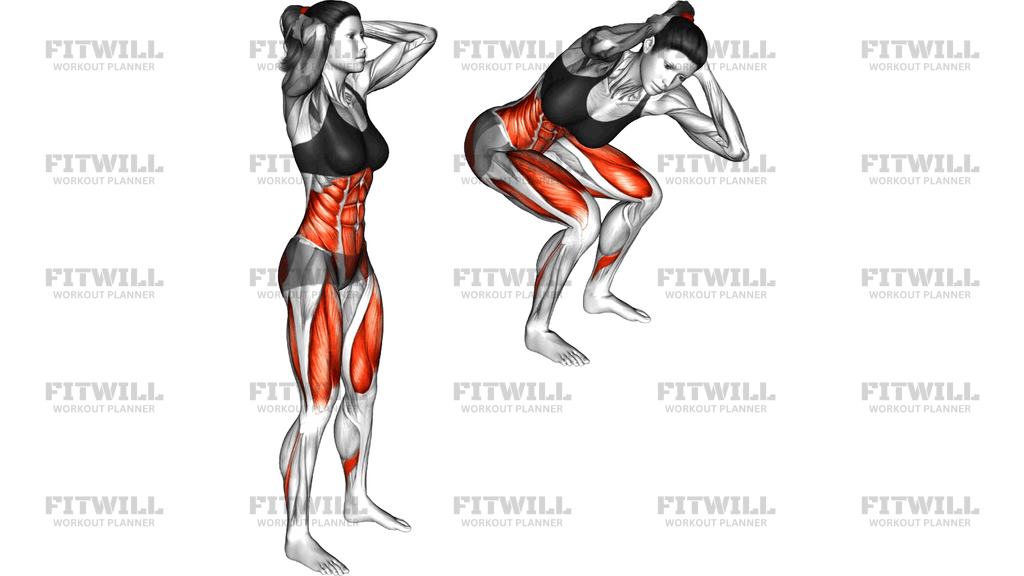
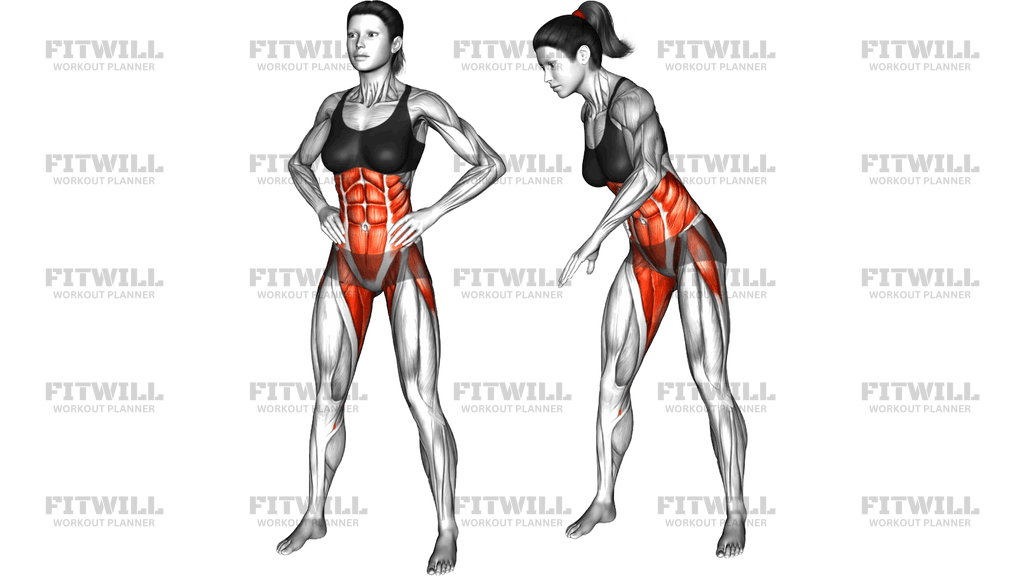
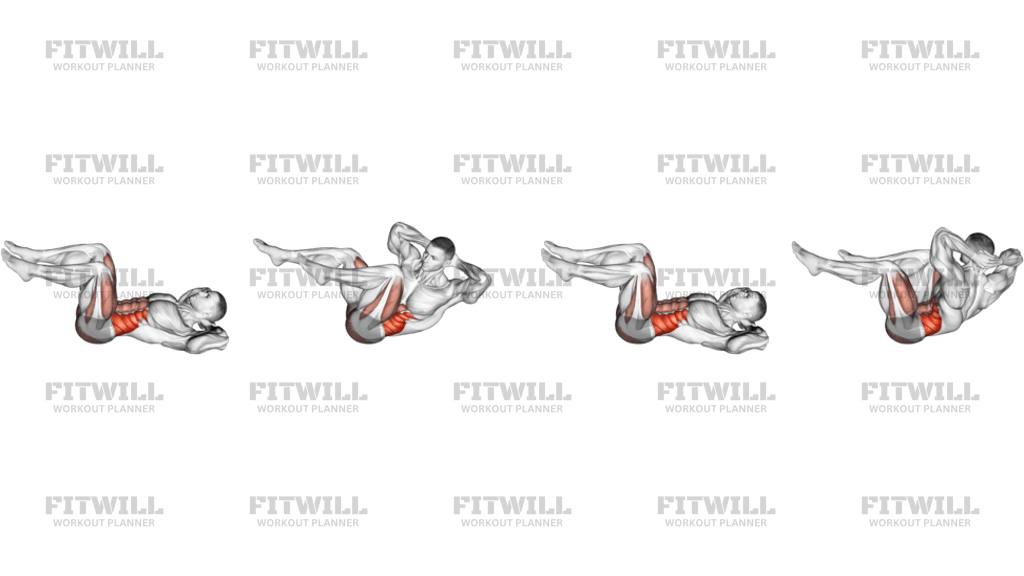
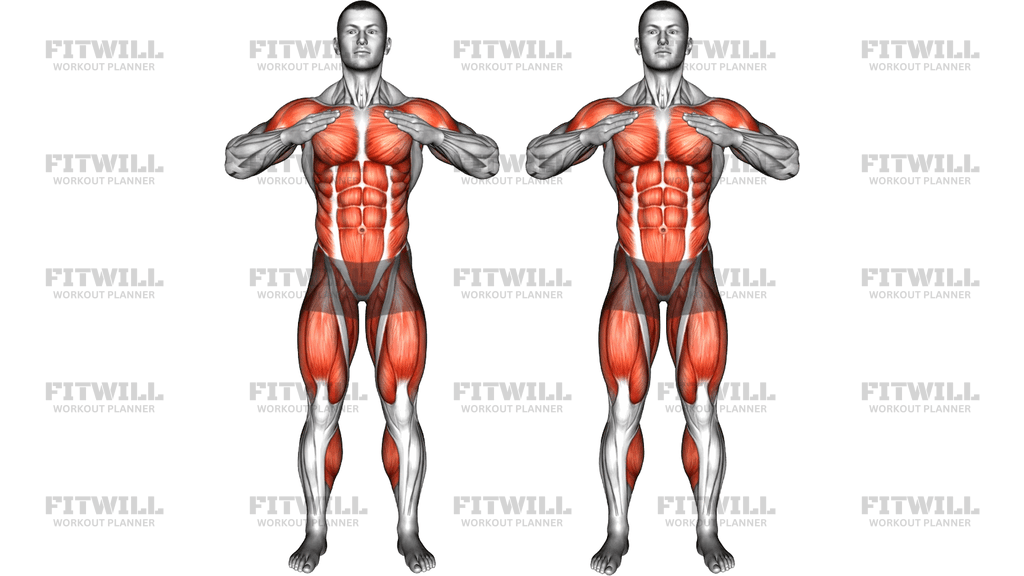
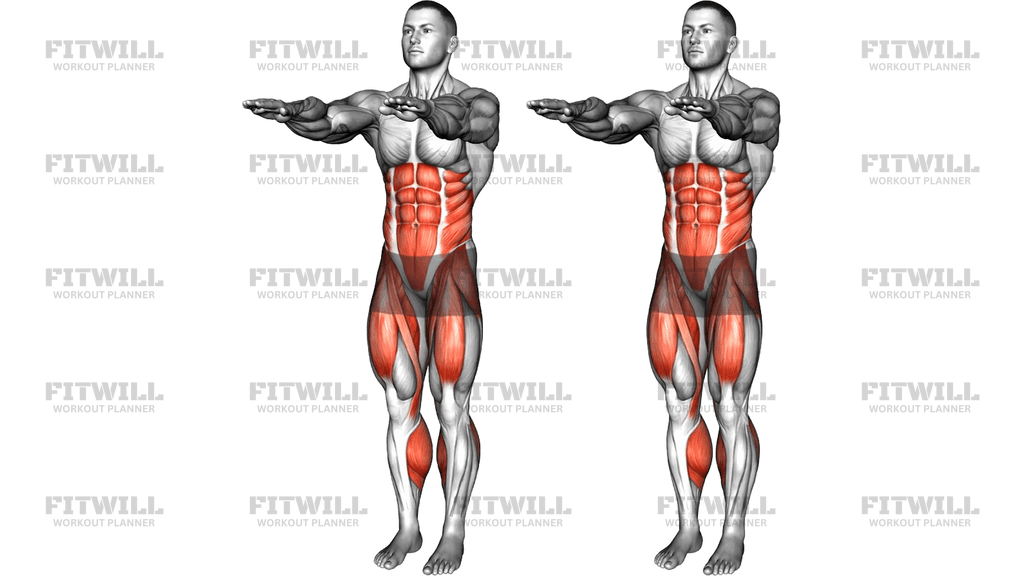
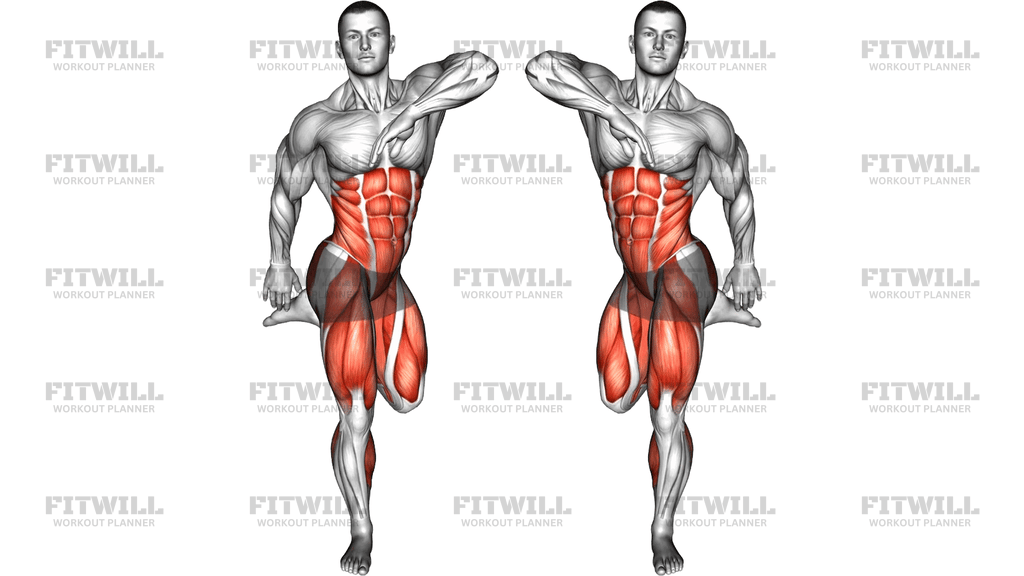
Double Woodchoppers
Double Woodchoppers are a standing rotational bodyweight exercise that recreates the diagonal chopping pattern of swinging an axe, using both arms together as one unit. From a wide stance, you sweep your clasped hands from hip level up across your body toward the opposite shoulder, then reverse the arc back down, letting your trunk rotate through a full diagonal range. Because the arms stay relatively straight and the hands move as a single unit, the turning force has to come from your hips and waist rather than from your shoulders.
The main workload lands on the obliques, the layered muscles along the sides of your waist that rotate and side-bend the trunk. The rectus abdominis assists as you flex slightly through the arc, while the glutes and inner thighs stabilize a wide-legged stance and the shoulders and arms simply hold the frame so the rotation transfers cleanly from the ground up. This makes the drill a efficient way to train rotation without any equipment, load, or setup time.
Rotation is one of the most undertrained patterns in typical gym routines, which tend to favor forward bending and pressing. Double Woodchoppers fill that gap and carry over well to real-world and sporting actions: throwing, swinging a racket or bat, shoveling, or turning to lift something off to your side. Athletes use them to build rotational speed, and general lifters use them to keep the waist strong through twisting ranges that daily life demands.
Setup matters more than it looks. A stance wider than your shoulders with toes angled slightly out gives your hips room to rotate without twisting the knees, and soft knees let the legs contribute a small, natural pump to the movement. Keep the arms long and the hands locked together throughout; if the elbows bend and the arms do the work, the obliques stop driving the motion.
Execution should feel like a whip, not a lift. The movement starts from the floor: your hips turn first, the torso follows, and the arms arrive last. Exhale as you sweep up or down through the chopping arc, control the change of direction rather than letting momentum snap your joints, and match reps on both diagonals so the waist develops evenly. Move briskly on the way through the arc but stay in charge of the ends of the range.
This exercise suits warm-ups, conditioning circuits, and dedicated core sessions alike. Because it uses only body weight, you can scale it by speed, reps, or arc size, making it appropriate from beginners learning to rotate properly to advanced trainees chasing power endurance in the trunk.
[ Workout Log & Planner ]
Put your next workout in Fitwill
Keep your plan and training log ready when you are.


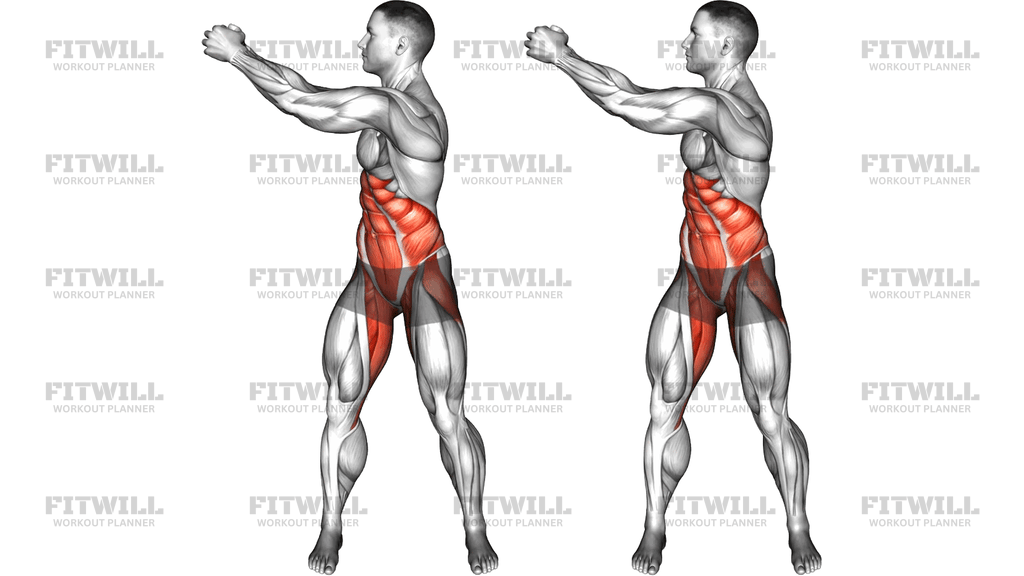
Instructions
- Stand with your feet roughly one and a half shoulder-widths apart, toes turned out slightly, and let your knees bend a few degrees.
- Clasp your hands together and extend both arms straight out in front of your chest, keeping a soft elbow rather than a locked joint.
- Brace your trunk as if bracing for a light push, and set your gaze forward so your head travels with your torso instead of leading it.
- Begin the first diagonal by rotating your hips and shoulders to one side so your clasped hands travel across your body toward that hip, as if swinging an axe down at a low target.
- Reverse the arc powerfully and sweep the hands up and across toward the opposite shoulder, letting your back heel lift naturally as the hips turn through the diagonal.
- Keep the arms long and the hands moving as one unit so the rotation originates from your waist and hips, not from pulling with the shoulders.
- Exhale during the upward sweep, inhale on the controlled return down the same diagonal, and avoid holding your breath through the set.
- Control the turnaround points; pause briefly at the top and bottom of the arc instead of letting momentum fling your joints into end range.
- Complete your target reps on one diagonal, then switch and match the count on the opposite side to keep the waist working evenly.
- Between sets, shake out the arms and reset your stance width and knee bend before starting the next round.
Tips & Tricks
- A common mistake is bending the elbows and muscling the hands across the body with the arms. Straighten the arms and think of them as ropes attached to a turning torso.
- If your knees ache, check that your whole foot rotates or your heel lifts with the turn; forcing the knees to stay forward-facing while the hips twist is the usual culprit.
- Keep the swing on a true diagonal. Many people flatten the arc into a side-to-side windshield wiper, which shifts work away from the obliques, so aim each sweep from hip crease to opposite ear line.
- Let the trailing heel rise on the upward chop. Keeping both feet glued down shortchanges hip rotation and forces the lower back to make up the range.
- Avoid rounding or over-arching the low back at the ends of the arc. Tall spine, small forward lean, and the bend happening at the hips keeps the movement in the waist.
- Start slower than feels necessary for the first set. Double Woodchoppers reward rhythm, but learning the path at speed before owning it is how people tweak their backs.
- If balance wobbles at the wide stance, narrow your feet slightly before sacrificing knee softness; a stable base matters more than an exaggerated split.
- Match diagonals for reps and effort. Doing more work on your favorite side entrenches rotational imbalances you will feel in other lifts.
- To raise the challenge without adding load, increase the speed of the upward sweep while keeping the return deliberately controlled.
Frequently Asked Questions
What muscles do Double Woodchoppers work?
The obliques along the sides of the waist are the primary movers, with the rectus abdominis assisting. The glutes and inner thighs stabilize the wide stance, and the shoulders and arms hold the frame while the hips drive the rotation.
Are Double Woodchoppers suitable for beginners?
Yes. With no load involved, a beginner can learn the diagonal rotation pattern slowly with a smaller arc and a narrower stance. Prioritize a tall spine and controlled turns before adding speed or reps.
Why does the exercise use both arms together instead of one?
Clasping both hands forces the arms to move as a single unit, so the turning force must come from the trunk and hips. Chopping one-arm at a time lets the shoulder and arm compensate and can hide rotational weakness on one side.
Should my feet stay flat during the chop?
No, the heel on the trailing side should lift naturally as your hips rotate through the diagonal. Pinning both feet flat restricts hip turn and pushes extra rotation into the lower back and knees.
How is Double Woodchoppers different from a cable woodchop?
The bodyweight version trains the same diagonal pattern using speed, coordination, and your own trunk control instead of external resistance. It works well as a warm-up or high-repetition conditioning drill, while the cable version allows progressive loading.
Can Double Woodchoppers help with rotational power for sports?
They train the exact hip-to-shoulder sequencing used in throwing, swinging, and striking actions. Moving the upward chop briskly while controlling the return builds rotational speed and endurance in the waist.
How many reps should I do per side?
Eight to fifteen controlled reps per diagonal works well for strength-endurance, or 20 to 30 at a steady rhythm for conditioning. Always match the count between sides before moving on.
Is it safe for people with lower back issues?
The movement is gentle when the rotation comes from the hips with a tall spine and soft knees, but anyone with an existing back condition should confirm it with a qualified professional first. Reduce the arc size and speed if any twisting causes discomfort.
Can I add weight to Double Woodchoppers?
Yes, holding a light medicine ball, plate, or dumbbell between the clasped hands is a natural progression once your form is consistent. Add load only when you can keep the arms long and the hips driving through every rep.