Standing Russian Twist
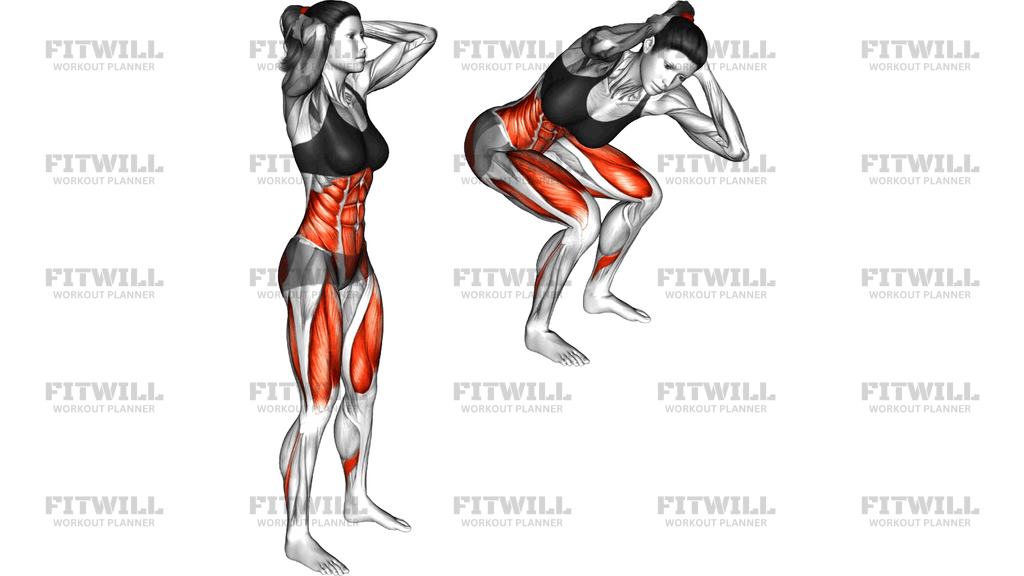
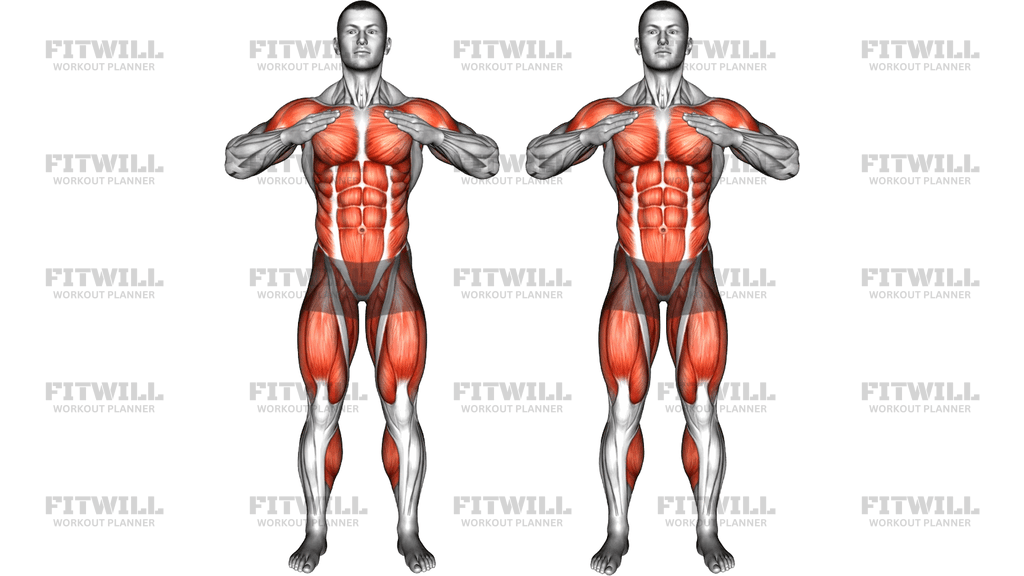
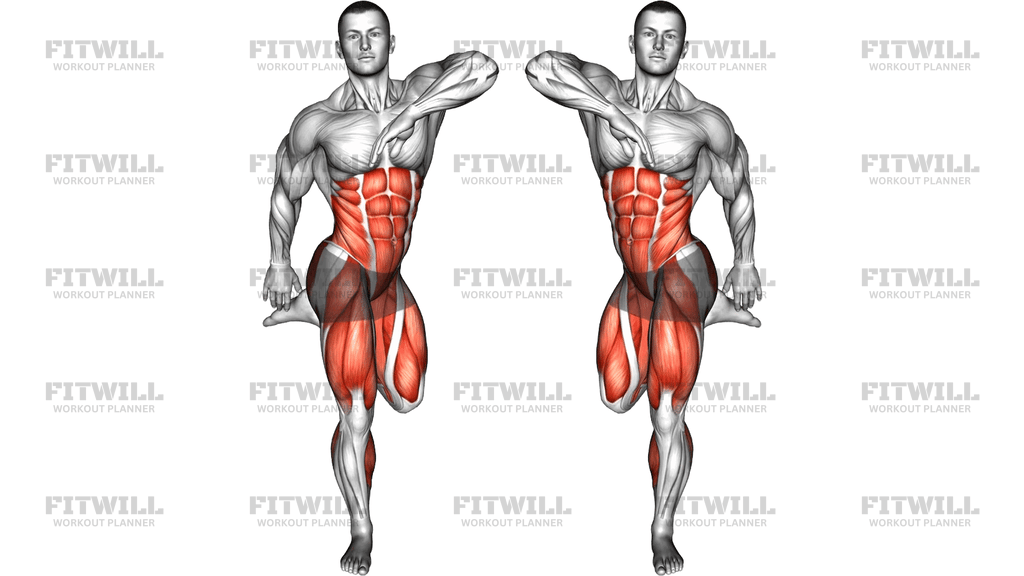
The Standing Russian Twist is a rotational core exercise performed on your feet, combining a torso twist with a matching knee drive. You start with your hands together in front of your chest, then rotate your upper body to one side while lifting and turning the opposite knee toward it, so the rotation travels through the whole trunk instead of stopping at the shoulders. Because you stay upright throughout, your core has to control the movement against gravity without a bench or floor supporting your torso.
This version suits people who find floor-based Russian twists uncomfortable on the lower back or tailbone, as well as anyone training in a small space or warming up for sport. It is especially relevant for rotational athletes — tennis, golf, baseball, martial arts — because the standing position closely mirrors how force actually transfers from the ground through the hips and trunk in those sports.
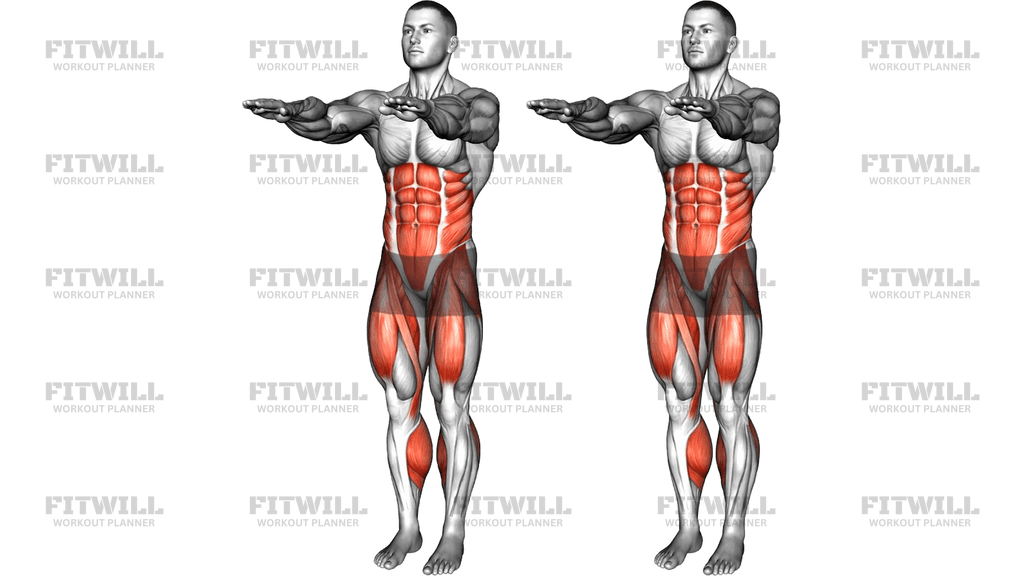
The main work comes from the obliques on both sides of your waist, which rotate the torso and then decelerate the return. The deep core stabilizes your spine, the hip flexors lift the knee, and the standing leg works quietly to keep you balanced. You will also feel your thighs and glutes contributing as you pivot on the foot of the turning leg.
Setup matters more than speed here. A shoulder-width stance with soft knees and hands pressed together at chest height gives the rotation a fixed frame; if your arms wander or your hips stay completely square, the twist loses most of its effect. The goal is to rotate from the waist and hips together, not to swing your elbows around an unmoving lower body.
Executed well, each rep looks like a controlled pivot: torso turns, opposite knee lifts and crosses toward it, then everything returns to center before you switch sides. Keep the movement smooth and deliberate rather than jerky, and let your breathing stay steady.
A practical safety note: this exercise involves combined rotation and single-leg balance, so start with a smaller range until your balance is solid. If you feel any twisting sensation in the knee of your standing leg rather than in your waist, shorten the range and slow down.
[ Workout Log & Planner ]
Put your next workout in Fitwill
Keep your plan and training log ready when you are.


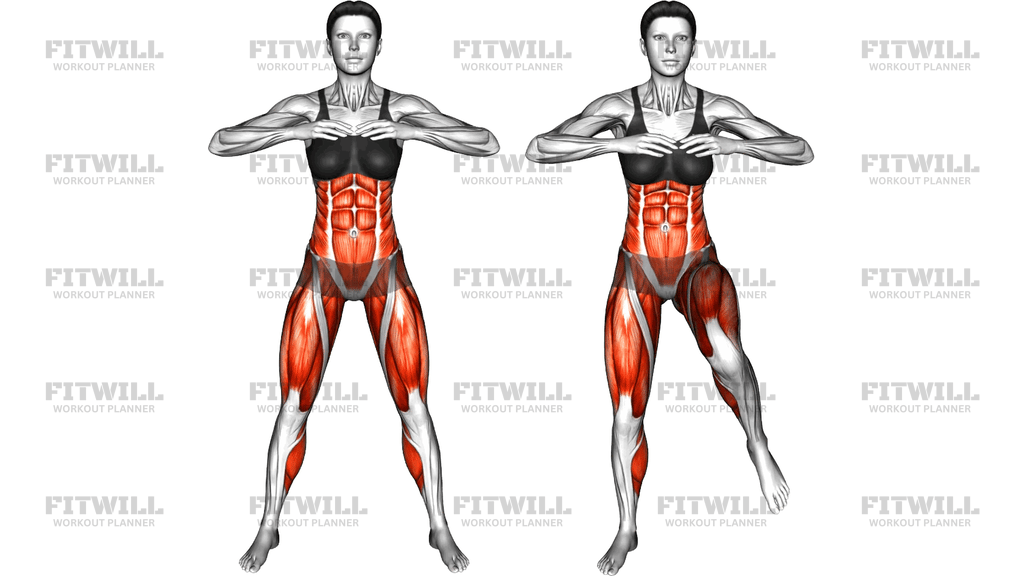
Instructions
- Stand with your feet about shoulder-width apart, knees slightly bent, and your weight spread evenly across both feet.
- Press your palms together (or clasp your hands) in front of your chest with elbows pointing out to the sides, keeping this hand position fixed for the whole set.
- Brace your abdominal wall as if preparing for a light push, and pull your shoulders down away from your ears.
- Rotate your entire torso to the right, letting your left heel lift and pivot naturally as you turn.
- As the torso rotates, drive your left knee up and across your body toward the right side, so the knee and chest move toward each other.
- Pause briefly at the end of the rotation with your waist fully turned and the knee lifted.
- Lower the leg and rotate back through center under control — do not let the trunk snap back.
- Repeat on the opposite side, twisting left and driving the right knee up and across.
- Exhale as you rotate and lift, inhale as you return to center.
- Continue alternating sides for the desired number of reps, resetting your stance and brace whenever you feel yourself losing balance.
Tips & Tricks
- The most common mistake is swinging the elbows side to side while the hips stay frozen — if your lower body is not moving at all, you are faking the twist with your arms.
- Do not chase speed. A rushed Standing Russian Twist turns into momentum-driven flopping; slow the knee drive down and the obliques will do noticeably more work.
- Watch the knee of your standing leg: it should stay pointing roughly over your toes as you pivot. If it collapses inward, reduce the range of rotation.
- Keep your hands welded together at chest height. Separating the arms or letting them drop turns the movement into a shoulder exercise.
- If balance is the limiting factor, widen your stance slightly or stand near a wall you can touch with a fingertip — do not shorten the knee drive to compensate.
- Aim the knee across your body rather than straight up; lifting it straight ahead removes the rotational demand that defines this exercise.
- Keep your chest tall through the twist. Rounding forward and collapsing toward the knee shifts work away from the waist and strains the lower back.
- Alternate sides rep by rep rather than doing all reps on one side — it keeps the workload even and helps you notice side-to-side differences.
- Lightly squeezing your palms together creates tension through the shoulders and chest, which keeps your upper body rigid and the rotation focused at the trunk.
Frequently Asked Questions
Which muscles does the Standing Russian Twist work?
The obliques are the primary movers, with the rectus abdominis and transverse abdominis stabilizing the trunk. The hip flexors lift the knee, and the lower back and standing leg muscles work to keep you balanced.
Is the Standing Russian Twist good for beginners?
Yes, it is actually one of the more approachable rotational exercises because there is no added weight. Beginners should start with a smaller twist and a lower knee lift, focusing on balance before range.
How is the Standing Russian Twist different from the floor version?
The floor version isolates the trunk while your torso leans back and your feet are anchored. The standing version adds a knee drive and balance demand, and removes the tailbone pressure that bothers some people on the ground.
Why should my knee cross toward my chest instead of lifting straight up?
Crossing the knee toward the rotating torso is what links the hips to the twist and loads the obliques through their actual function. A straight vertical knee lift turns the rep into a simple standing knee raise.
Can I add weight to the Standing Russian Twist?
You can hold a light medicine ball or plate at your chest, but only once your balance and control are solid. Adding load before that usually magnifies momentum and sloppy rotation rather than muscle work.
My standing knee feels twisted during the exercise — what am I doing wrong?
You are likely over-rotating while keeping your foot flat, forcing the twist through the knee joint instead of the hips. Let the heel of your turning leg lift and pivot so the rotation comes from the waist and hip.
How many reps should I do?
Eight to twelve controlled reps per side is a solid working range. Because the movement is bodyweight and rotational, quality of the twist matters far more than the total count.
What can I substitute if standing balance is difficult?
Do the same twist and knee drive while holding the back of a sturdy chair, or sit on a bench and perform a seated Russian twist until your balance improves. Both keep the rotational pattern intact.
Should I feel this in my lower back?
A mild working sensation in the lower back is normal because the erector spinae stabilizes during rotation, but sharp or pinching discomfort is not. Keep your chest tall, reduce the range, and stop if the sensation does not settle.