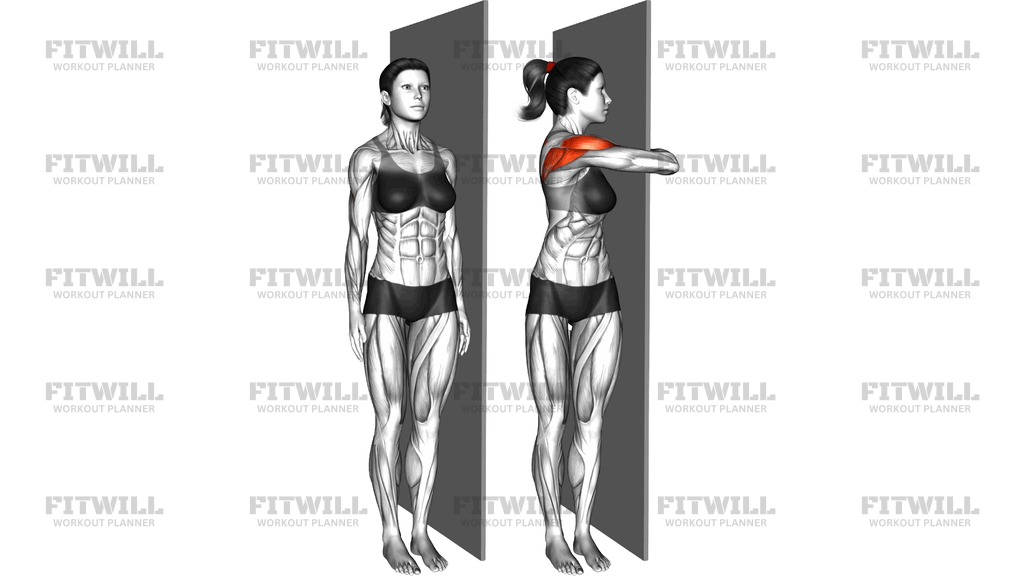
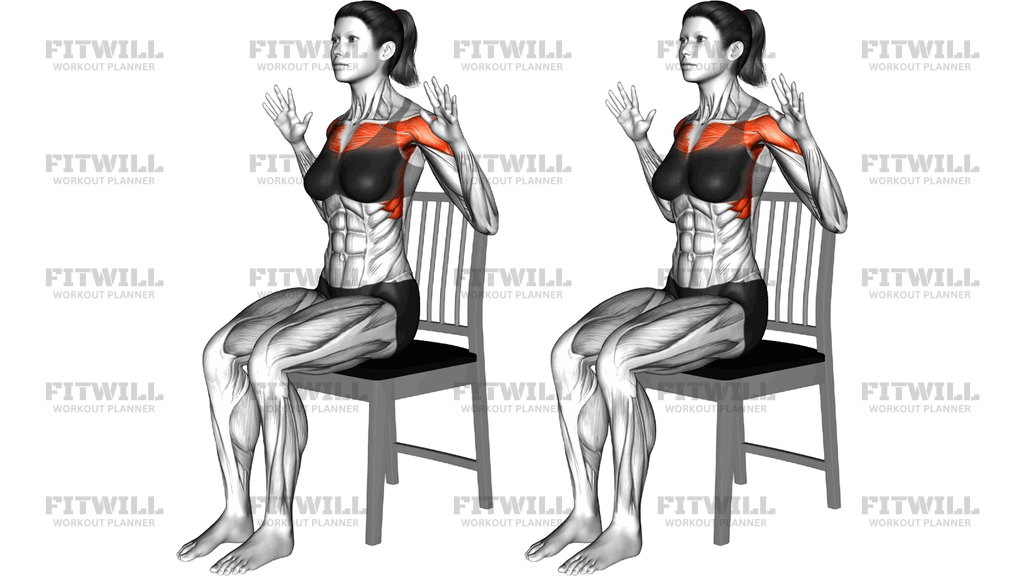
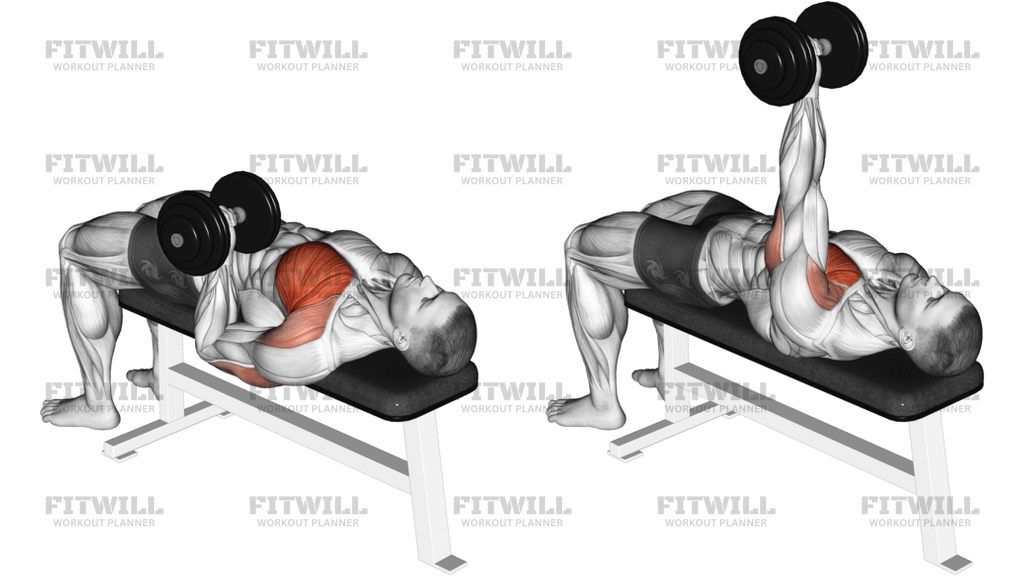
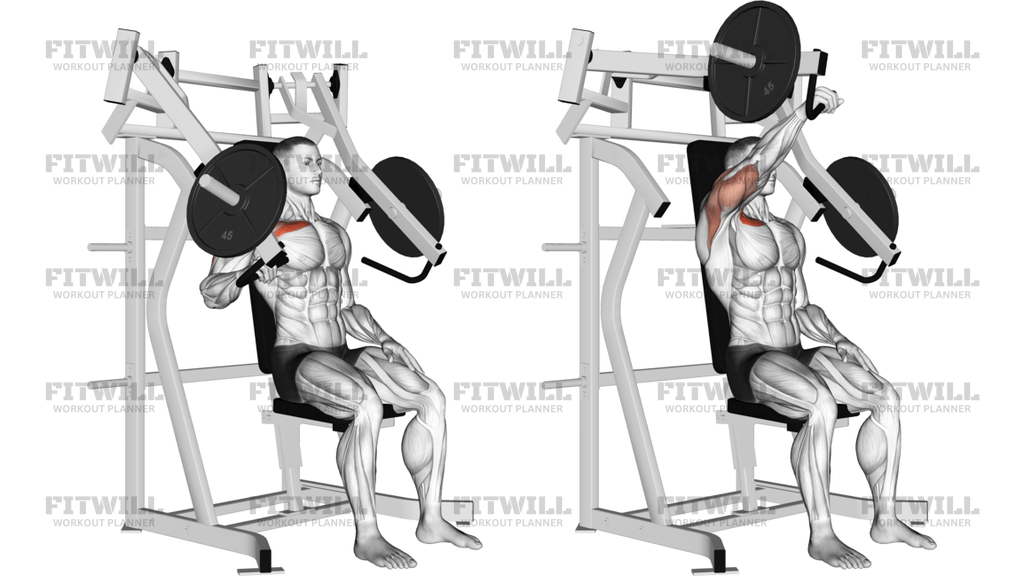
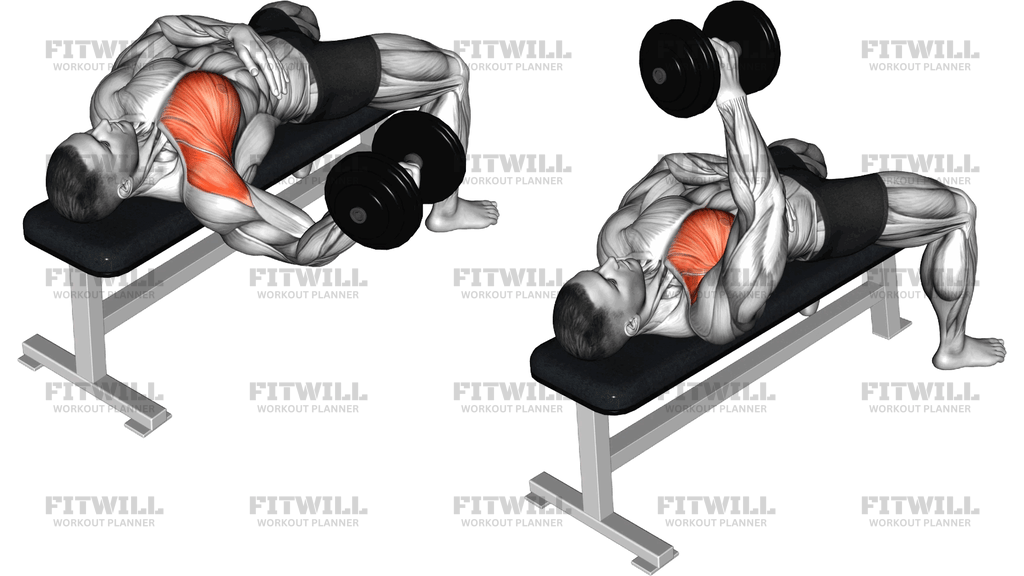
Criss Cross Upper Chest Raise
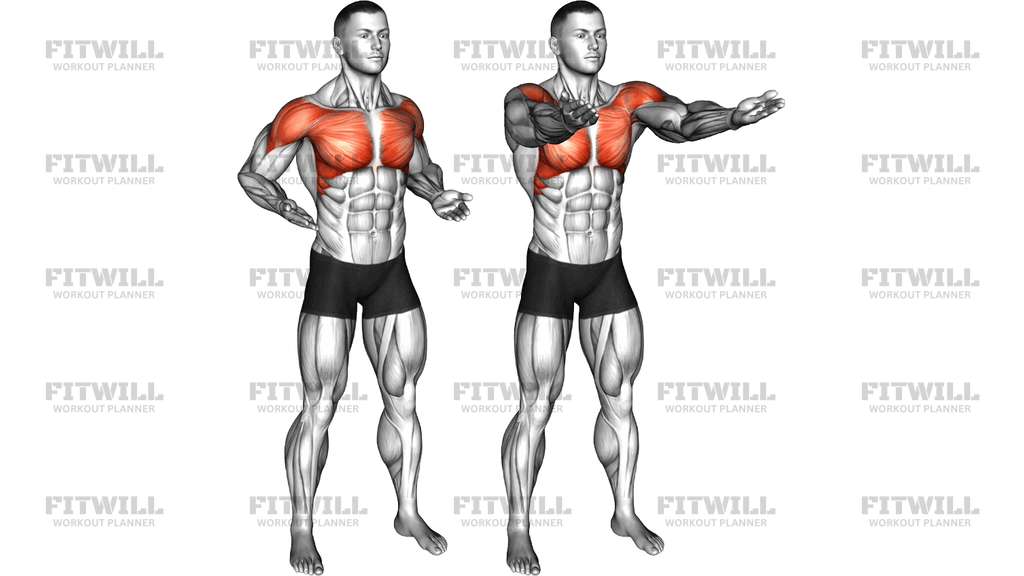
The Criss Cross Upper Chest Raise is a standing, bodyweight movement that targets the clavicular head of the pectoralis major — the upper portion of the chest that runs from your collarbone toward your upper arm. You start with your arms low at your sides, elbows slightly bent, and sweep both arms up and across your body in an X-shaped path so each hand finishes at or above shoulder height on the opposite side. Because you are moving without external load, the exercise works through intentional squeezing and controlled speed rather than heavy resistance.
This movement is useful for people who want to isolate the upper chest without equipment — at home, between sets at the gym, or as a warm-up before pressing work. The upper chest is often underdeveloped compared to the mid and lower chest because most pressing happens at or below shoulder level. Sweeping the arms upward and across places the shoulder joint in an ascending path that biases the clavicular fibers, which respond to the combined action of shoulder flexion and horizontal adduction.
Setup matters more than it looks. Stand tall with feet about hip-width apart, ribs stacked over your pelvis, and shoulder blades pulled gently down and back. If your torso leans back, shrugs upward, or twists to generate momentum, the upper chest stops doing the work and the movement becomes a sloppy arm swing. Keeping the elbows soft and the wrists relaxed lets the chest drive the sweep instead of the shoulders and forearms taking over.
To execute it well, think of your hands drawing a diagonal line from your hip pocket to the opposite side of your neck or upper chest. Squeeze at the top of each cross, hold for a beat, then open the arms back down along the same diagonal with control. Alternate which arm travels on top each rep, or work one side at a time if you want to focus on a weaker side. Two to four sets of 15 to 25 controlled reps works well as an activation drill or a burnout finisher after presses.
Because there is no weight involved, this exercise is very joint-friendly and easy to progress simply by slowing the tempo, pausing longer at the cross, or adding light resistance with bands or small weights in hand. The main safety points are avoiding shoulder impingement positions — keep the sweep below chin-to-forehead height if your shoulders pinch — and never forcing range you do not have. If anything hurts in the front of the shoulder, shorten the arc and reduce speed.
[ Workout Log & Planner ]
Put your next workout in Fitwill
Keep your plan and training log ready when you are.


Instructions
- Stand upright with your feet hip-width apart, knees soft, and your weight balanced evenly across both feet.
- Roll your shoulders back and down, brace your abs lightly, and let your arms hang at your sides with elbows slightly bent and palms facing inward or slightly up.
- Keeping your torso upright and still, begin sweeping both arms up and across your body along a diagonal path, as if tracing an X toward the opposite shoulder.
- Continue the sweep until each hand reaches roughly the opposite collarbone or upper chest height, with arms fully crossed in front of you.
- Squeeze your upper chest hard at the crossed position and hold the contraction for one to two seconds.
- Slowly open your arms back down the same diagonal path until your hands return to your sides, maintaining elbow bend and keeping your shoulders low.
- Exhale as you sweep up and across, and inhale as you lower the arms back down.
- On the next rep, let the other arm travel on top so the criss-cross alternates sides evenly.
- Complete your set with smooth, evenly timed reps, and reset your posture at your sides before starting the next set.
Tips & Tricks
- The most common mistake is turning this into a shrug — if your shoulders creep toward your ears during the sweep, drop the range slightly and re-set your shoulder blades down before continuing.
- Do not swing your arms with momentum; the value of the Criss Cross Upper Chest Raise comes from a slow, deliberate sweep with a hard squeeze at the cross, not speed.
- Keep your lower back from arching as the arms rise. If your ribs flare upward, tighten your abs and think of tucking your tailbone slightly.
- Imagine hugging a barrel while crossing — a wide, rounded arm path keeps tension on the upper chest, while a tight, straight-line cross shifts work to the front shoulders.
- If you feel a pinch at the front of your shoulder near the top, stop the sweep just below chin height; a shorter arc keeps the upper chest working without irritating the joint.
- Alternate which arm is on top every rep so both sides of your chest get identical diagonal work and no side develops a favored pattern.
- To make the exercise harder without equipment, pause three seconds at the crossed position each rep or use a four-second lowering tempo back to your sides.
- Slightly turning your palms upward as you sweep up can help you feel the clavicular fibers shorten more strongly at the top of the cross.
Frequently Asked Questions
What muscles does the Criss Cross Upper Chest Raise work?
It primarily targets the clavicular head of the pectoralis major — the upper chest. The front shoulders assist the upward sweep, and the core works lightly to keep your torso stable and upright.
Can beginners do the Criss Cross Upper Chest Raise?
Yes. It is a bodyweight movement with no external load, so beginners can learn it safely by starting with 2 sets of 15 slow reps and focusing on the squeeze at the crossed position.
Why do the arms cross instead of just raising straight up?
The diagonal criss-cross path combines shoulder flexion with horizontal adduction across the body, which is exactly the action the upper chest fibers perform. A straight raise would shift more work to the shoulders.
Should my arms be straight or bent during the Criss Cross Upper Chest Raise?
Keep a slight, fixed bend in the elbows the entire time. Fully locked elbows can stress the joint at the top, and overly bent elbows shorten the arc and reduce chest involvement.
How high should my hands go at the top of the cross?
Aim for roughly the opposite collarbone or upper chest area. Going much above chin height offers little extra upper chest benefit and can pinch the front of the shoulder in some people.
Can I do the Criss Cross Upper Chest Raise every day?
Because it is low-load, it can be done frequently, such as in daily warm-ups. Still, treat it like any training stimulus — if your chest feels fatigued or sore, give it a day of recovery.
How can I make the Criss Cross Upper Chest Raise harder?
Slow the tempo, pause three seconds at the crossed position, or hold light objects or a light resistance band in your hands while sweeping so the chest works against added tension.
My shoulders shrug when I cross my arms — how do I fix it?
Re-set your shoulder blades down and back before each rep and reduce the height of the sweep. Shrugging means the upper traps are compensating for a chest contraction you are not yet controlling.
What can I substitute if I do not feel my upper chest working?
Try low-to-high cable or band flyes, which use the same upward diagonal line but add resistance, or an incline pressing movement. Both train the upper chest along a similar path.