Dumbbell Ipsilateral Glute Bridge Single Arm Chest
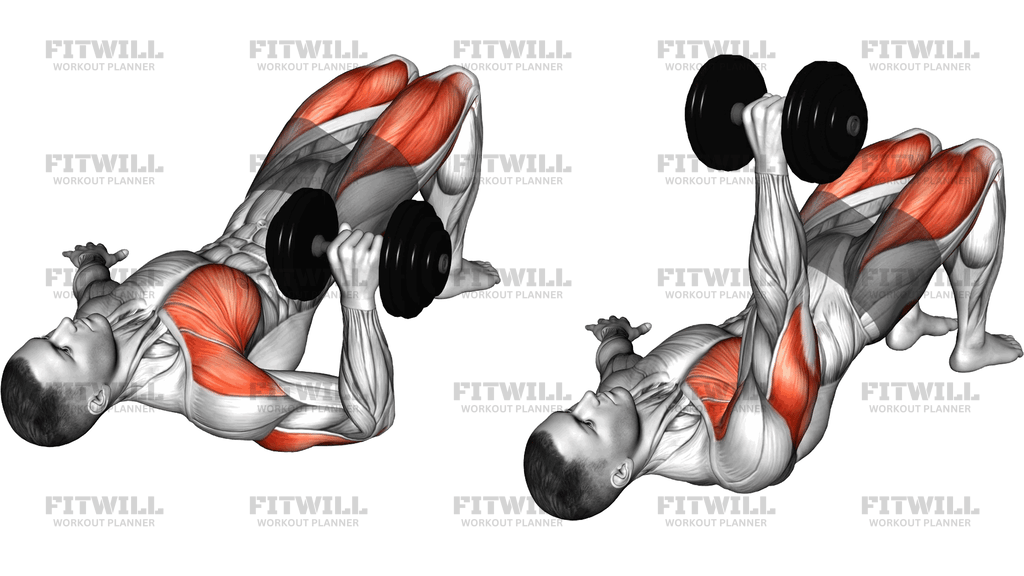
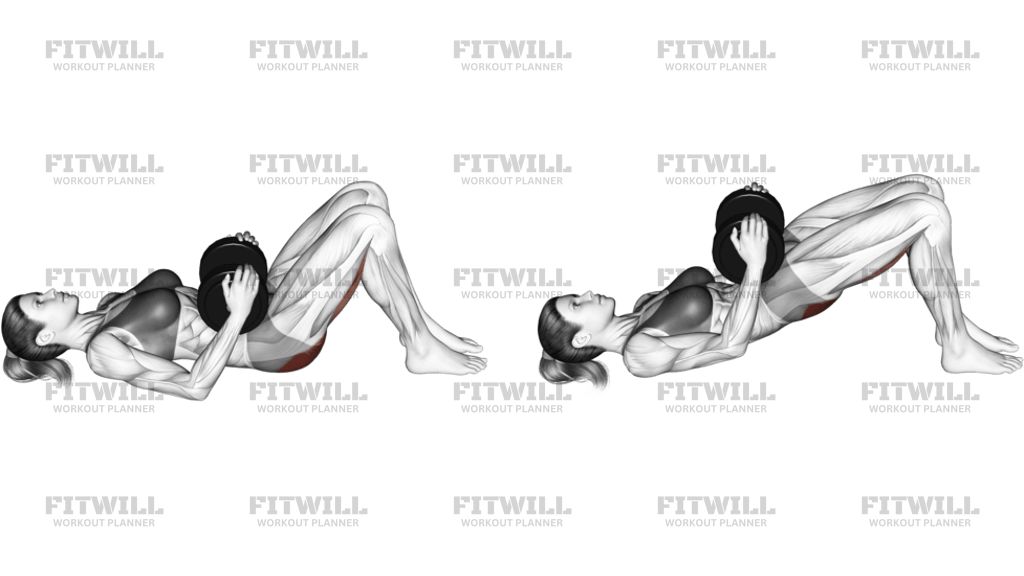
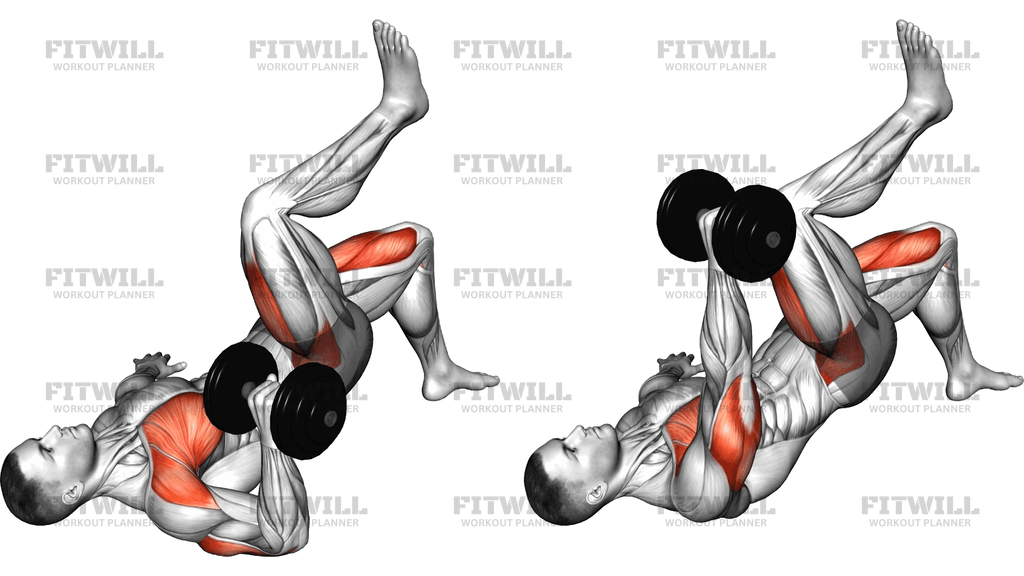
The Dumbbell Ipsilateral Glute Bridge Single Arm Chest is a floor-based hybrid exercise that combines two movements into one rep: a single-leg glute bridge and a single-arm dumbbell chest press performed on the same side of the body. You lie on your back with one foot planted close to your glutes, the opposite knee bent with the foot lifted, and a dumbbell held in the hand on the same side as the planted leg. From there, you drive your hips toward the ceiling while pressing the dumbbell up over your chest, then lower both together under control.
This pairing works because both actions compete for the same real estate: a stable torso. When the dumbbell loads one side of your upper body and your hips are held up by one leg, your core has to resist rotation and keep your ribcage stacked over your pelvis the entire time. That anti-rotation demand, layered on top of genuine glute and chest work, is what separates this from doing a bridge and a press separately.
The main movers are the glute of the planted leg and the pec of the pressing arm, with the hamstrings assisting hip extension and the triceps finishing the press. The lifted leg stays bent and still, which keeps the hip flexors from helping and forces the working glute to do the job on its own. Expect the front of your shoulder and the stabilizers around the working hip to feel busy as well.
Setup details matter more here than in a standard bridge or floor press. The planted heel should sit close enough to your glutes that you can lift your hips without the hamstrings taking over, and the dumbbell should rest on the back of your shoulder with your elbow tucked at roughly forty-five degrees before you start. Rushing into the rep with a loose brace is the fastest way to lose the bridge as soon as the arm starts moving.
This exercise suits intermediate lifters who want more from limited equipment, people rehabbing toward loaded single-leg work, and anyone programming efficient full-body sessions at home. It also works well as a finisher on lower body or push days when you want a core challenge without adding planks or extra isolation sets.
Move deliberately and keep the load modest at first. Because one side of your body is weighted while only one foot supports your hips, the balance and coordination demands arrive before the strength demands. If your hips sag or your lower back starts arching at the top, that is the signal to stop the set, reset, or reduce the weight.
[ Workout Log & Planner ]
Put your next workout in Fitwill
Keep your plan and training log ready when you are.


Instructions
- Sit on the floor with a dumbbell next to your right hip, then lie back and place your right foot flat on the floor, heel about eight to twelve inches from your glutes with the knee bent.
- Bend your left knee and lift your left foot off the floor so the left leg mirrors the right but hovers unsupported, knee bent roughly ninety degrees.
- Pick up the dumbbell with your right hand and rest it on the back of your right shoulder, elbow bent and tucked so the upper arm sits at about forty-five degrees to your torso.
- Brace your abdominals, pull your ribs down, and keep your head and upper back resting on the floor.
- Drive through your right heel and lift your hips until your right thigh lines up with your torso, squeezing the right glute at the top.
- As the hips rise, press the dumbbell straight up until your right arm is extended over your chest with the wrist stacked over the elbow.
- Pause for a beat at the top with the glute tight and the arm locked out, keeping the left leg bent and motionless.
- Lower the dumbbell back to the shoulder and drop the hips toward the floor together, stopping just before the glute touches down.
- Exhale as you bridge and press, inhale as you lower both the weight and the hips.
- Complete all reps on the right side, then switch so the left foot is planted and the left hand presses.
Tips & Tricks
- Time the bridge and press together. If the arm presses while the hips are still rising, the torso twists and the chest press loses its stable base.
- Keep the planted heel close to your glutes. Pushing through a foot that has drifted forward shifts the work to the hamstrings and makes the top of the bridge feel like a lower back stretch instead.
- Do not let the elbow flare out to a full ninety degrees. At this angle, with the shoulders unsupported on the floor, a wide elbow path irritates the front of the shoulder.
- The lifted leg should stay frozen in its bent position. Any swinging or straightening uses momentum and steals tension from the working glute.
- Stop the bridge when your thigh reaches torso level. Pushing the hips higher than that usually comes from arching the lower back rather than extending the hip.
- Choose a dumbbell lighter than your normal single-arm floor press weight. The one-legged base reduces how much force you can transfer, and a weight that is too heavy shows up as a collapsing bridge.
- Press the dumbbell slightly toward the midline of your chest rather than directly over the shoulder. This keeps the load closer to your center and reduces the pull into rotation.
- Keep the back of your head and shoulders in contact with the floor. Lifting the head to watch the arm breaks the ribcage position the exercise depends on.
- If your hips sag halfway through the set, finish with the bridge only and press without elevation, then build back up next session rather than grinding through poor reps.
Frequently Asked Questions
Which muscles does the Dumbbell Ipsilateral Glute Bridge Single Arm Chest work the hardest?
The glute of the planted leg and the pec of the pressing arm do most of the work, supported by the hamstrings during hip extension and the triceps during the lockout. The core works continuously to stop the single-arm load from rotating your torso.
Why pair the bridge with the press on the same side instead of opposite sides?
Same-side pairing loads one diagonal of the body unevenly, which raises the anti-rotation demand on the core and challenges hip stability under load. Contralateral versions are usually easier to balance, so this version is the more demanding variation.
Can beginners do the Dumbbell Ipsilateral Glute Bridge Single Arm Chest?
Beginners should first be comfortable with both a single-leg glute bridge and a single-arm dumbbell floor press on their own. Once those feel stable, start with a very light dumbbell and shorten the range at the top of the bridge.
How heavy should the dumbbell be for this exercise?
Use a weight you could press for ten to fifteen reps in a normal single-arm floor press, then go one size lighter. The single-leg base limits how much force you can transfer, and form usually breaks at the hips before the chest gives out.
Why do my hips drop every time I press the dumbbell?
This usually means the load is too heavy, the pressing elbow is flared too wide, or the glute was never fully squeezed at the top. Squeeze the working glute first, press the dumbbell slightly toward the center of your chest, and reduce the weight if the drop continues.
Can I perform this movement on a bench instead of the floor?
No, the floor is what gives the bridge its fixed foot position and gives the pressing arm a safe stopping point for the elbow. Moving to a bench removes the hip drive entirely and turns it into a standard single-arm press.
What can I use if I do not have a dumbbell?
A kettlebell held by the handle works well because it sits securely on the back of the shoulder. In a pinch, a tightly sealed water jug or a light barbell plate can substitute, but avoid anything that rolls or shifts while your hips are elevated.
Is the Dumbbell Ipsilateral Glute Bridge Single Arm Chest safe for the lower back?
It is generally well tolerated because the floor supports the spine and the range ends when the thigh reaches torso level. The risk comes from overextending the hips at the top or sagging under a weight that is too heavy, so control the range and keep the glute doing the lifting.
How should I program this exercise in my routine?
Two to four sets of six to ten reps per side works well as a full-body or glute-focused movement on home training days. Pair it with a pulling exercise such as rows so each session balances the pressing work.