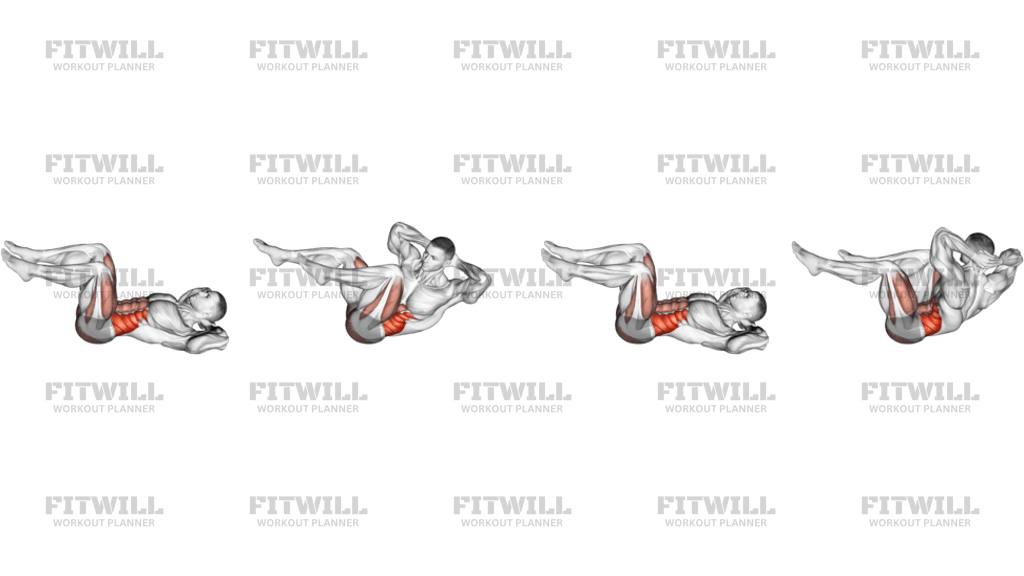
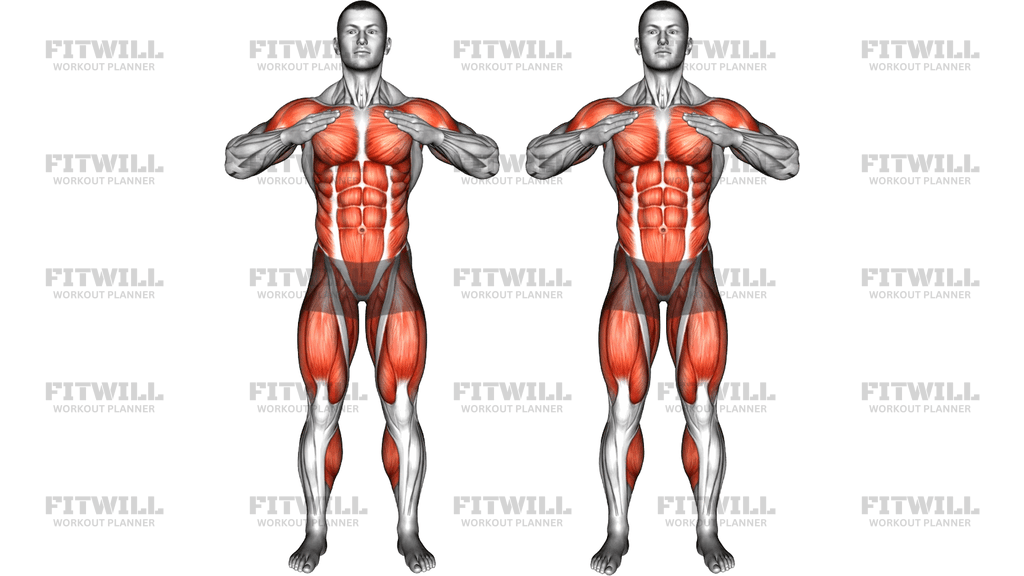
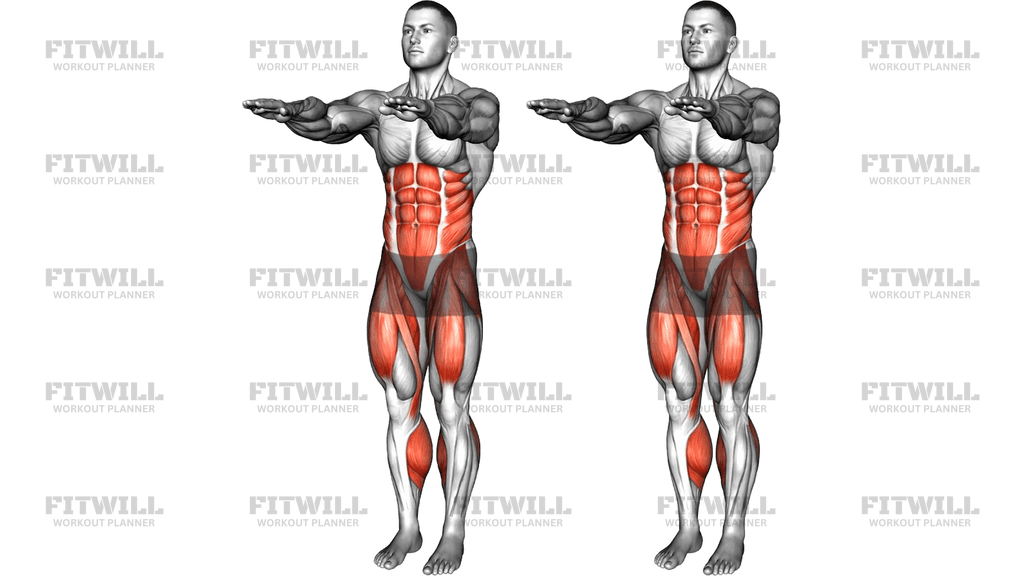
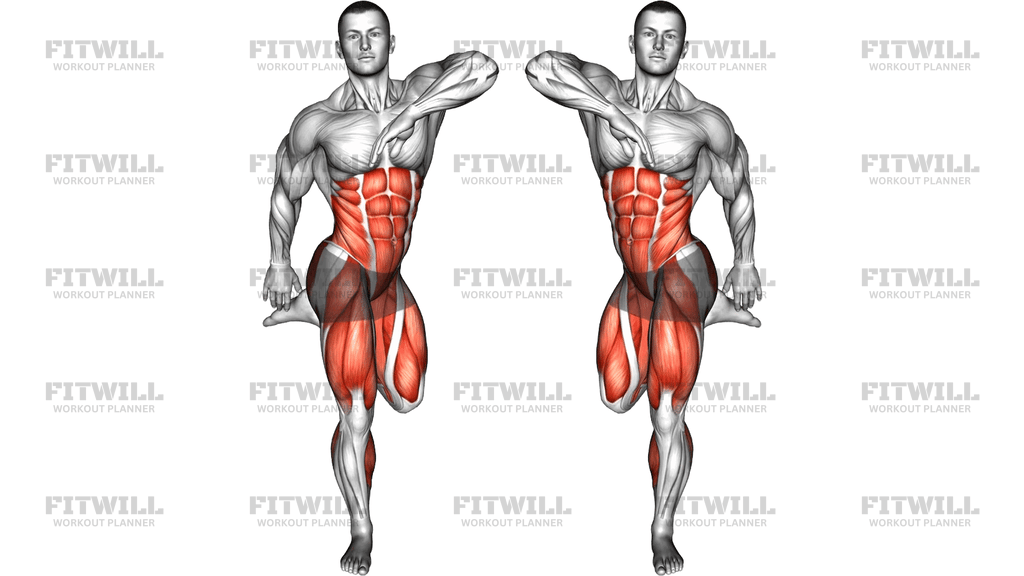
Side Duck Side
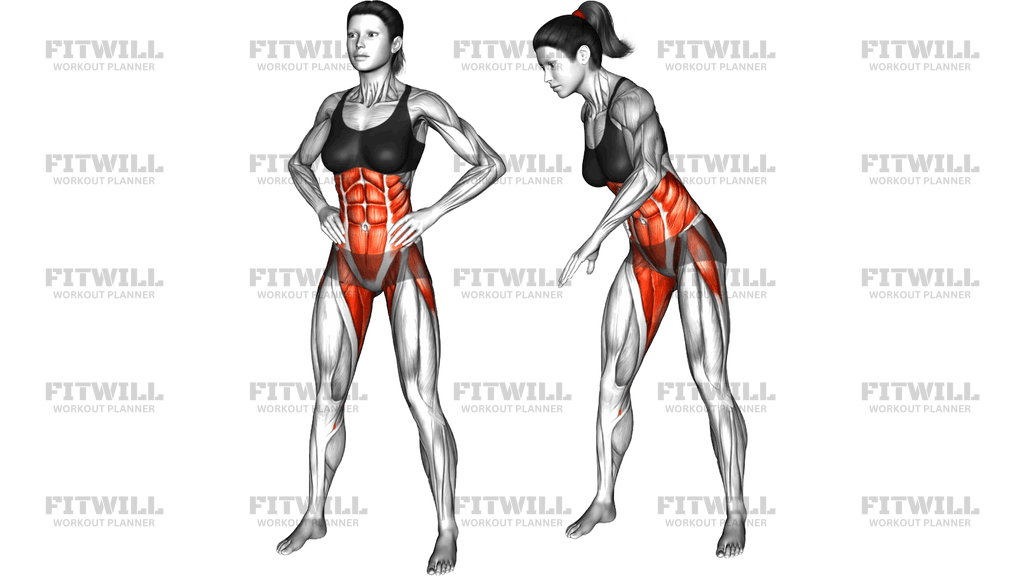
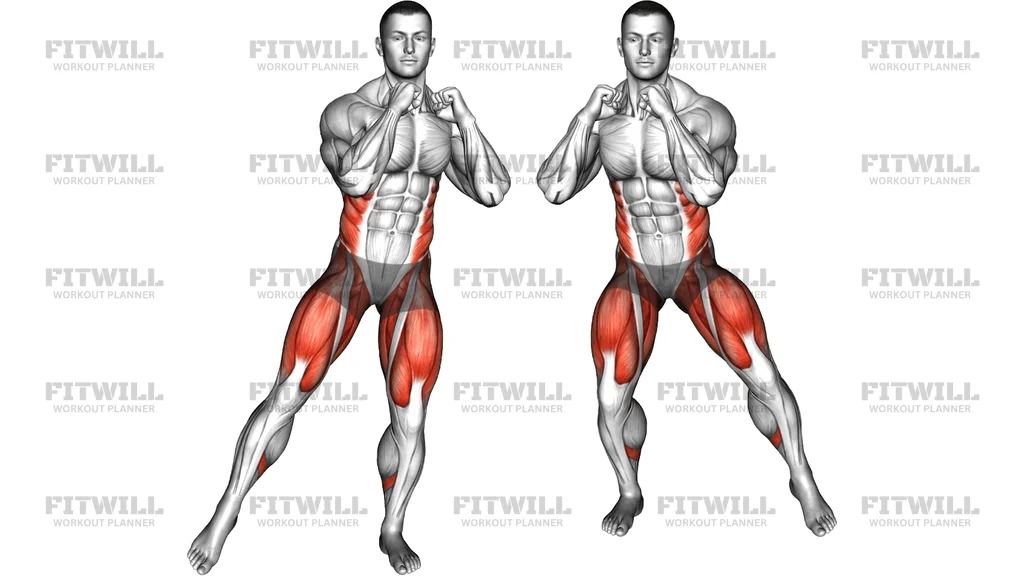
Side Duck Side is a bodyweight movement drawn from boxing footwork and defense. You stand in a guard stance with your fists raised beside your chin, then duck your torso down and across to one side, shift your weight over that leg, and weave back up through the middle before repeating on the opposite side. The figure-eight path you trace with your head and shoulders is what separates this from a simple side bend — the whole body coordinates to move the trunk off its centerline and back again.
Because there is no external load, the exercise works through repeated changes of direction rather than heavy resistance. The side-to-side ducking drives the obliques hard, while the quads and glutes absorb and produce force as your weight travels from one leg to the other. Holding your fists up for an entire set also builds shoulder and arm endurance, which is one reason this movement shows up so often in boxing and martial arts conditioning.
Setup matters more than people expect. A stance that is too narrow turns the duck into a stumble; a stance that is too wide limits how far you can travel side to side. Feet should sit roughly shoulder-width or slightly wider, knees soft, hips stacked under the shoulders. Keeping your fists high and your chest reasonably tall while the torso moves underneath is the whole point — if your hands drop or your back rounds, you lose the positioning that makes the drill useful.
Executed well, each rep feels like you are slipping under an imaginary rope or punch: knees bend, the torso tilts and travels down and to the side, the opposite heel may lift as the weight settles into the working leg, and then you push back up through the center without letting the head lead the way. The movement should stay smooth and continuous rather than jerky, with the core braced through every change of direction.
This exercise suits fighters and anyone training reactive trunk control, but it is equally practical as a warm-up or conditioning filler between heavier lifts. Start with slower reps to learn the path, then speed up once you can duck side to side without your guard falling apart. If you have knee issues, keep the depth shallow and let the range grow gradually as your legs adapt.
Fitwill
Log Workouts, Track Progress & Build Strength.
Achieve more with Fitwill: explore over 9600 exercises with images and videos, access built-in and custom workouts, perfect for both gym and home sessions, and see real results.
Start your journey. Download today!




Instructions
- Stand with your feet a little wider than shoulder width, toes turned slightly out, and soften both knees.
- Raise your fists to chin height with elbows tucked close to your ribs, as if guarding in a boxing stance.
- Brace your core lightly and keep your chest lifted and shoulders relaxed before you start moving.
- Bend your knees slightly more and duck your torso down and to the left, letting your weight shift onto the left leg as the right heel lifts a little.
- Keep your fists glued at chin height and your back relatively flat while your head travels under an imaginary barrier, not forward toward the floor.
- Push through the left leg to rise back up through the center, bringing your weight evenly over both feet.
- Immediately duck down and to the right the same way, shifting your weight onto the right leg while the left heel lifts.
- Exhale on the way down into each duck and inhale as you return through the middle.
- Continue alternating side to side in a smooth, continuous rhythm for your target number of reps or time interval.
- Reset your stance and guard between sets if either drifts wider, narrower, or lower than where you started.
Tips & Tricks
- A common mistake is bending forward instead of sideways — think of moving your trunk off to the side of your hip, not collapsing your chest toward your knees.
- If your hands drift down mid-set, imagine a punch coming at your face the entire time; the guard position is part of what trains shoulder endurance.
- Keep the duck shallow at first. Depth should come from knee bend and lateral tilt, not from rounding your lower back.
- Your head should trace a shallow U-shape from side to side. If it dips dramatically, you are dropping instead of ducking and will likely lose balance.
- Let the opposite heel rise naturally as weight shifts, but keep the whole foot of the loaded side glued to the floor for a stable push-back.
- Avoid snapping back up too fast on the return — the middle transition is where balance breaks down, so own that position before changing sides.
- If your knees cave inward as you shift, widen your stance slightly and think about spreading the floor with your feet.
- Speed comes last. Master a slow, controlled weave first, then shorten the pauses until the movement flows continuously.
- Breathe steadily rather than holding your breath during fast cycles — held breath is what usually causes fatigue to arrive before your legs actually give out.
Frequently Asked Questions
What muscles does the Side Duck Side work?
The obliques do most of the work controlling the side-to-side trunk movement, while the quads and glutes handle the weight shifts and knee bend. Holding the guard position also taxes the shoulders and arms over longer sets.
Is the Side Duck Side good for beginners?
Yes, because it uses only body weight and you control the depth and speed. Start with a shallow duck and slow transitions, then increase range and tempo as your balance and leg strength improve.
How wide should my stance be for the Side Duck Side?
Roughly shoulder-width or slightly wider. Too narrow and you will wobble on each shift; too wide and your knees and hips cannot travel far enough to duck properly.
Should my head stay level during the duck?
Your head moves down and across with your torso, but keep your eyes forward and your neck neutral rather than looking at the floor. Leading with the head usually pulls your chest down and rounds your back.
How is the Side Duck Side different from a standing side bend?
A side bend is mostly a lateral spine movement with the feet planted. The Side Duck Side adds a full weight shift onto the working leg, knee bend, and a continuous weave through the center, which is why it trains the legs and balance along with the obliques.
Can I use the Side Duck Side as cardio?
Absolutely. Performed for longer intervals at a quick tempo, it raises the heart rate considerably while still demanding trunk control, which makes it a popular conditioning drill in boxing workouts.
My knees ache when I duck — what should I change?
Reduce the depth of each duck and make sure your knees track over your toes instead of caving inward as you shift. If discomfort continues, use a smaller range and consult a professional before pushing further.
What can I use if I need an easier version of the Side Duck Side?
Hold onto a sturdy object at chest height with one hand and duck to the free side only, or slow the tempo and skip the full weight shift. Both options let you practice the path without demanding full balance.
How many reps should I do of the Side Duck Side?
For learning the pattern, 10 to 15 controlled ducks per side works well. For conditioning, work in 20 to 40 second intervals at a steady rhythm while keeping your guard intact.