Seated Single Leg Raise
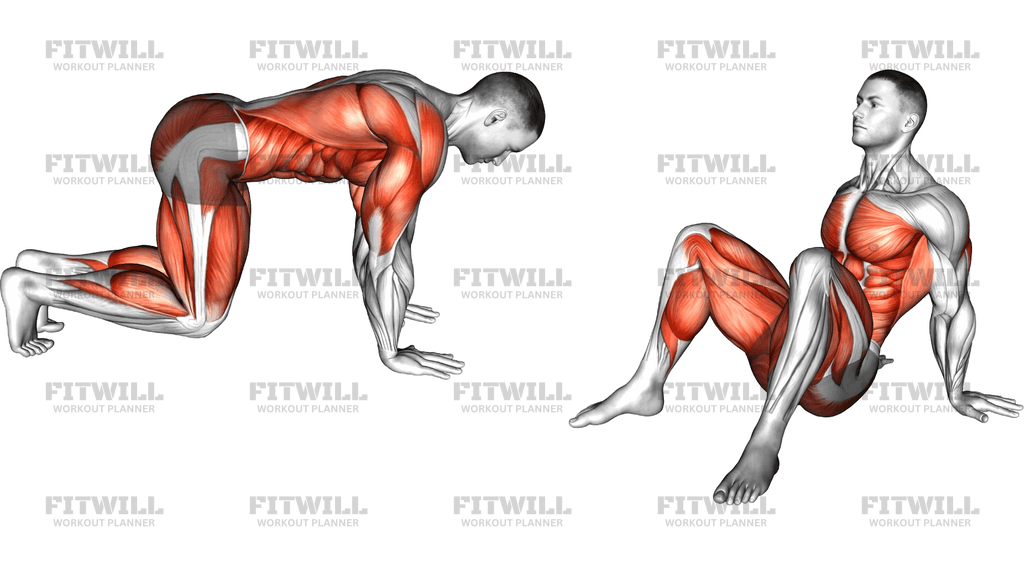
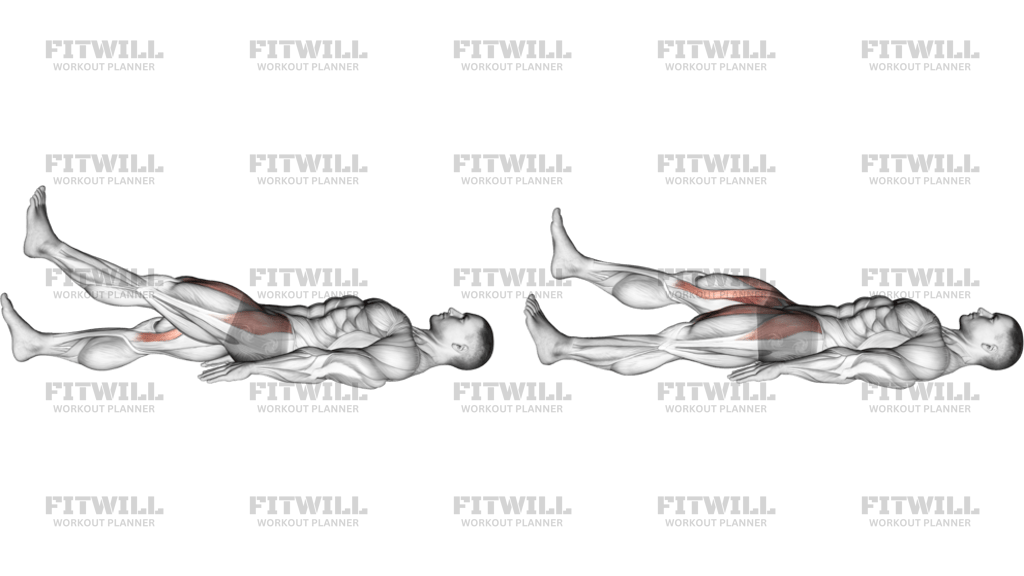
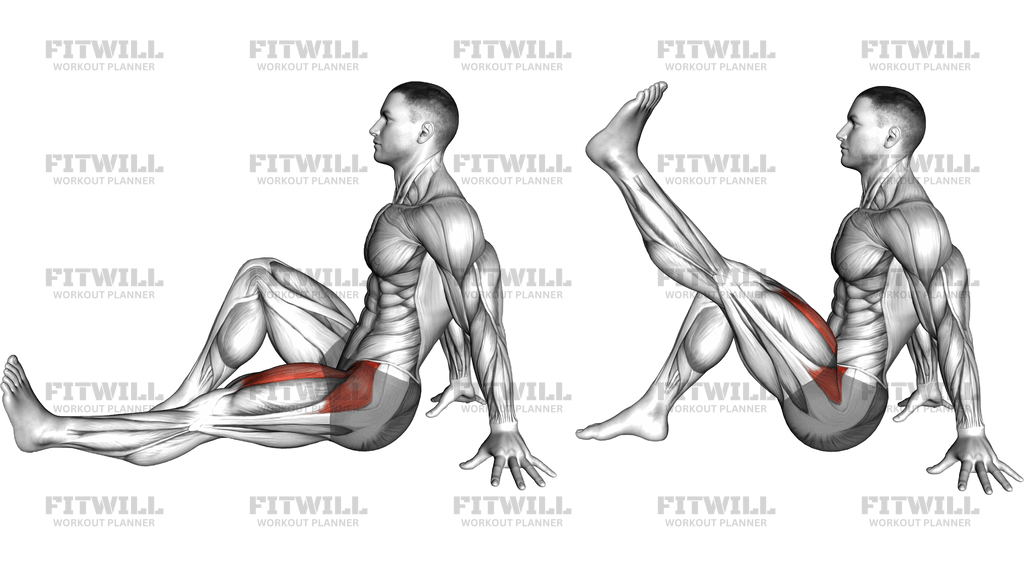
The Seated Single Leg Raise is a bodyweight hip flexor exercise performed from the floor. You sit with your hands planted behind your hips, one knee bent with the foot flat on the floor for support, and the other leg extended straight in front of you. From there, you lift the extended leg upward toward the ceiling by flexing at the hip, then lower it back down under control. The highlight in the movement illustration falls right at the front of the hip, which is exactly where the work happens.
This movement primarily trains the hip flexors, especially the iliopsoas, with the rectus femoris of the quadriceps assisting because the knee stays straight as the leg rises. Because you are seated and supporting yourself on your hands, your trunk also has to stay organized, so the lower abs and deep core work isometrically to stop your torso from slumping or rocking as the leg moves.
The seated setup is what makes this exercise accessible. Unlike hanging leg raises or lying leg lifts, the floor and the supporting arm take load off the spine and reduce the leverage demand, so you can isolate one hip at a time with very little compensation. Working one leg also lets you notice and address side-to-side differences, which is common in the hip flexors, particularly in runners, cyclists, and people who sit for long hours.
To execute it well, keep the lifted knee locked straight and think about driving the thigh up toward your chest rather than just swinging the foot. The taller you sit through your chest, the less your hip flexors have to cheat by tilting your pelvis. A slow lift, a brief pause at the top, and a slow lower will do far more for you than quick repetitions.
The Seated Single Leg Raise fits well into warm-ups, hip health routines, and rehab-style training where you want direct hip flexor work without equipment. It is also a useful stepping stone toward harder movements like hanging knee raises and L-sits, since it builds the same hip flexion strength with a fraction of the stability requirement.
Keep the effort honest: if you find yourself shrugging, collapsing through the chest, or bending the lifting knee to finish the rep, reduce the range or slow the tempo. The point of the exercise is clean hip flexion from a stable seat, not how high the foot gets.
[ Workout Log & Planner ]
Put your next workout in Fitwill
Keep your plan and training log ready when you are.


Instructions
- Sit on the floor or an exercise mat and place both hands on the floor just behind your hips, fingers pointing forward or slightly out for support.
- Bend one knee and set that foot flat on the floor about a foot in front of you; extend your other leg straight out with the knee fully locked and toes pulled up.
- Sit as tall as you can through your chest and gently press your shoulders down away from your ears so you are not hanging on your traps.
- Brace your midsection lightly and press your palms into the floor to keep your torso from leaning back as you move.
- Exhale and lift the straight leg up toward the ceiling by driving the thigh toward your chest, keeping the knee locked the entire way.
- Pause for a beat at the top of the lift, holding the leg as high as you can without bending the knee or slumping your torso.
- Inhale and lower the leg slowly back toward the floor, resisting gravity instead of dropping it.
- Lightly touch the heel to the floor, reset your posture, and complete all repetitions on that side before switching legs.
- Keep the supporting foot flat and grounded the whole time so the bent leg acts as a stable brace for your hips.
Tips & Tricks
- The most common mistake is bending the lifting knee as the leg tires, which shortens the lever and hides the hip flexor work. If the knee drifts, lower the leg less far or end the set.
- Watch for pelvic rocking: if your hips roll backward as the leg rises, you are using momentum. Slow the tempo and think about keeping both sit bones planted evenly.
- Do not let your chest sink. A collapsed torso turns this into a shoulder and triceps exercise, so cue yourself to grow taller as the leg goes up.
- Keep the foot of the lifting leg flexed with toes pulled back. This helps reinforce the straight-knee position and slightly increases the demand on the rectus femoris.
- If your hamstrings limit the top position, that is fine, just lift to your available range. Forcing height only pulls your pelvis out of position.
- Grip the floor actively with your supporting fingers. This steadies the shoulders and makes the trunk brace more effective.
- Avoid slamming the heel down between reps. A light touch and immediate reset keeps tension on the hip flexors throughout the set.
- If you feel pinching at the front of the hip, reduce the range slightly and make sure you are not tilting the pelvis forward at the top.
Frequently Asked Questions
What muscles does the Seated Single Leg Raise work?
The primary movers are the hip flexors at the front of the hip, mainly the iliopsoas, with the rectus femoris of the quadriceps assisting as the leg rises. The lower abs and deep core also work to keep your torso upright while your hands support you.
Why sit with one knee bent during the Seated Single Leg Raise?
The bent leg with the foot flat on the floor gives you a stable brace so your hips do not roll or slide as the other leg lifts. It also takes strain off your lower back, which is why this setup suits people who find lying leg raises uncomfortable.
Is the Seated Single Leg Raise good for beginners?
Yes. Because you are seated and supported on your hands, the leverage demand is much lower than in hanging or lying leg raises. Beginners should start with a modest range and focus on keeping the knee straight and the chest tall.
How many reps and sets should I do of the Seated Single Leg Raise?
Start with 2-3 sets of 8-12 controlled lifts per leg. Since this is a small, endurance-oriented muscle group, slow tempo and clean knee position matter more than adding lots of volume.
Why does my thigh cramp when lifting the leg in the Seated Single Leg Raise?
Hip flexor and quad cramping is common when these muscles are unaccustomed to working with a straight knee. Lower the range, shorten the sets, and stay consistent, as the cramping usually fades as strength improves.
Can I do the Seated Single Leg Raise if I have tight hamstrings?
Yes, just lift within your available range. Tight hamstrings limit how high a straight leg can rise, so stop before your pelvis starts tucking backward and gradually work on range over time.
What can I use instead of the Seated Single Leg Raise?
Lying single leg raises, seated knee tucks on a bench, or standing controlled leg lifts train similar hip flexion. The seated version is the easiest to keep strict because your hands and bent leg provide support.
Is the Seated Single Leg Raise safe for the lower back?
For most people, yes, since the floor and supporting arms reduce spinal load. Keep your palms pressed down and your chest tall, and if you feel any lumbar discomfort, reduce the range or shorten the lever by bending the lifting knee slightly.
How is the Seated Single Leg Raise different from a lying leg raise?
In the seated version, one bent leg and your hands behind you stabilize the pelvis, so each hip works in isolation with less core leverage demand. A lying leg raise moves both legs against gravity and challenges the abs more directly.