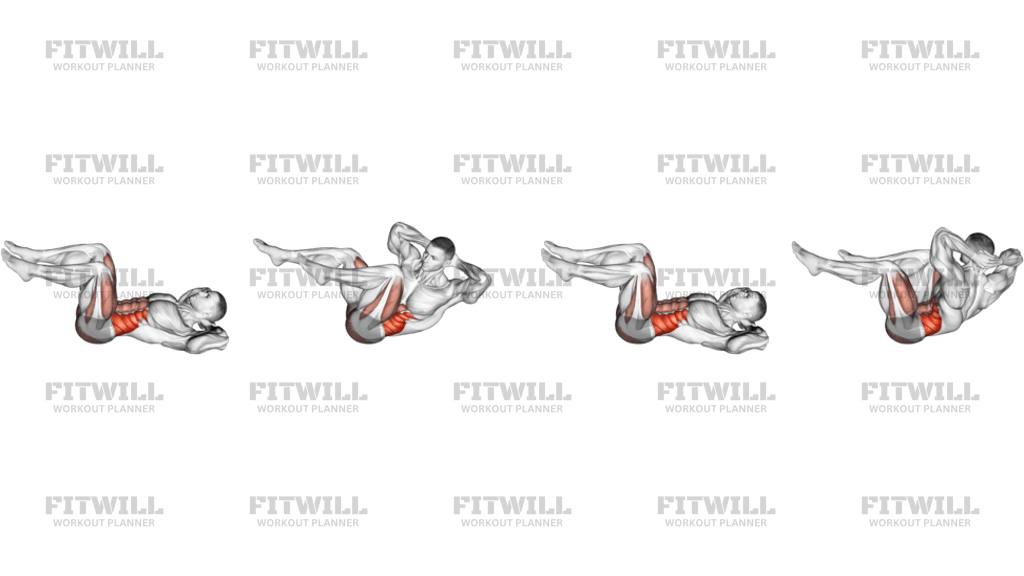
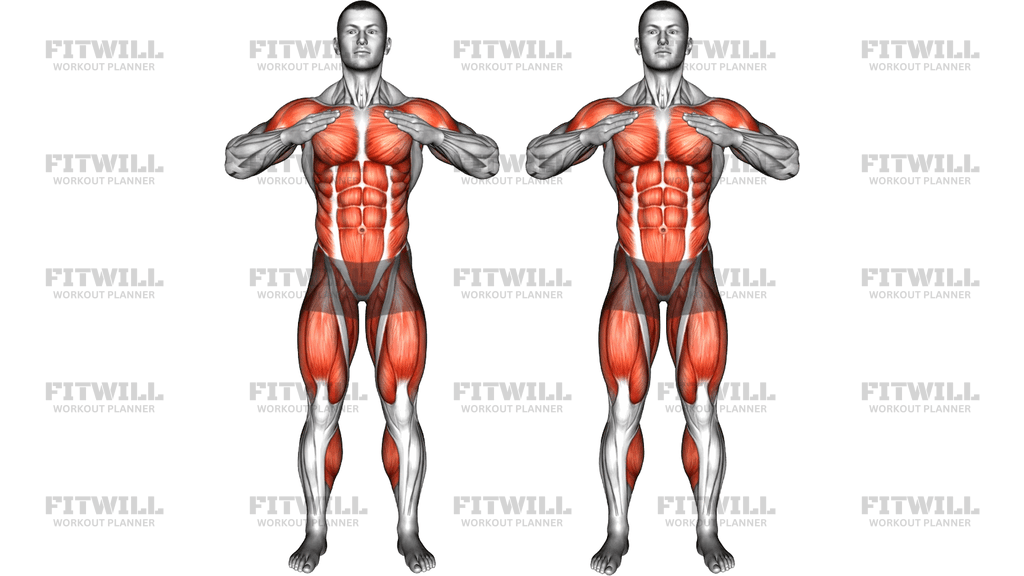
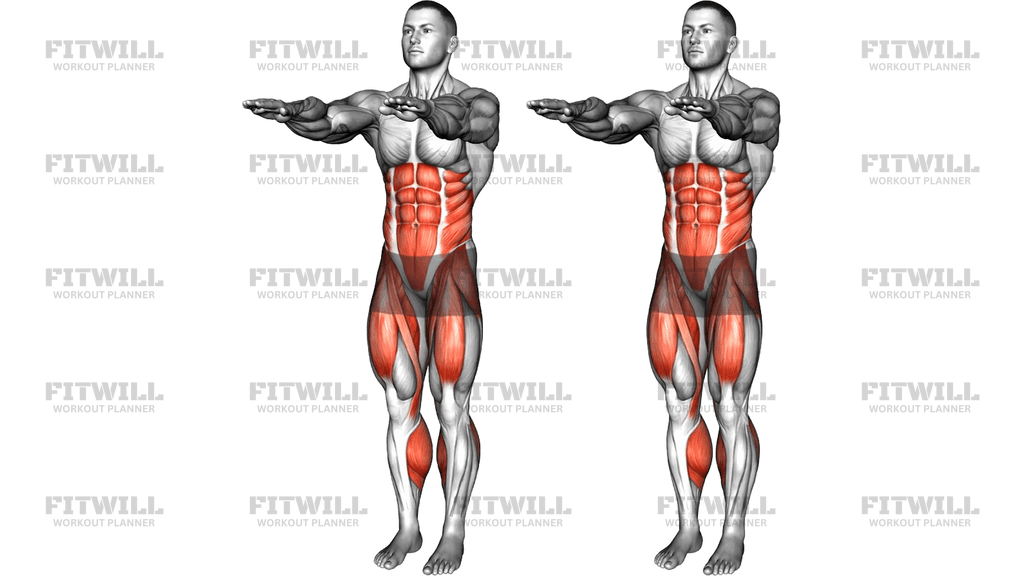
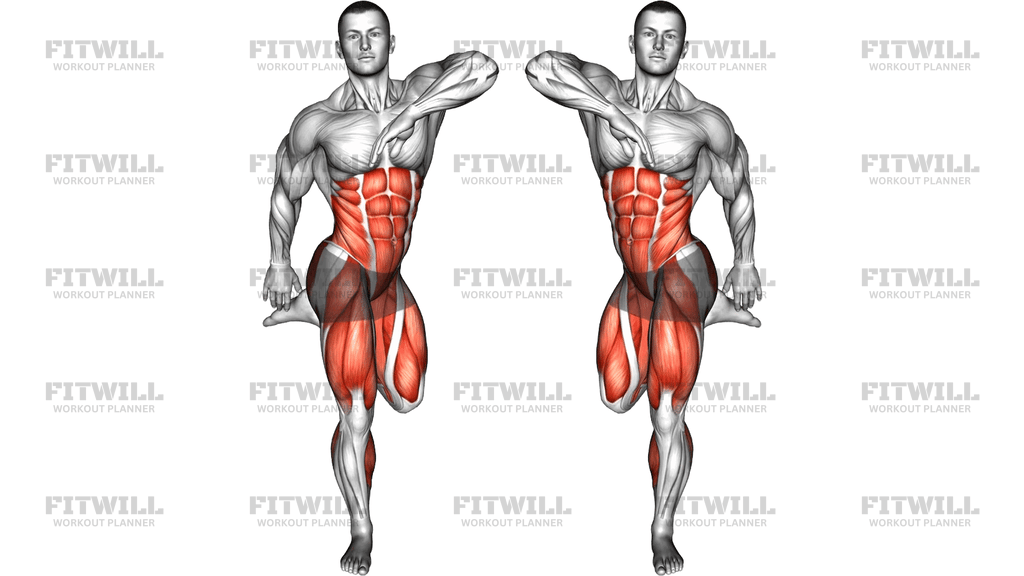
Side Plank Single Knee Drive
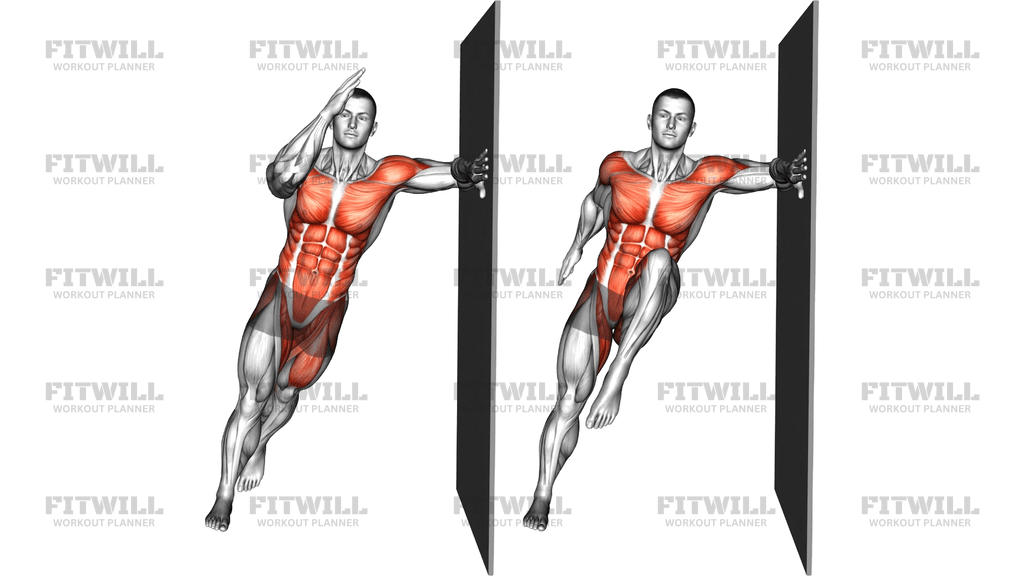
The Side Plank Single Knee Drive is a standing core exercise that takes the anti-lateral-flexion challenge of a side plank and adds a dynamic knee drive. You brace one hand against a wall at shoulder height, lean your body into a straight diagonal line from head to heel, and then drive the knee of your free-side leg up toward your chest while your torso stays rigid. Because your feet, one hand, and the wall are the only contact points, your obliques and deep core have to work hard simply to keep you from collapsing sideways.
This movement is especially useful for anyone who wants oblique and hip strength without getting down on the floor. It trains the same side-of-body chain — obliques, quadratus lumborum, glute medius, and the stabilizing shoulder — that field and court athletes rely on for cutting, throwing, and changing direction. The knee drive adds hip flexor work and forces you to control the pelvis while one leg leaves the ground, which makes it more demanding than a static wall side plank.
Setup matters more than speed here. The height of your hand on the wall determines your lean angle: the lower the hand, the more horizontal your body and the harder the lateral core demand. Your supporting arm should stay long and locked out with the palm flat on the wall, and your body should form one straight line — no sagging through the waist or pushing the hips backward. If your diagonal is crooked, the knee drive will simply exaggerate the error.
To execute well, press firmly through the wall hand and the outside edge of your support foot, squeeze the glutes to lock the pelvis, and drive the free knee up in front of your body to roughly hip height without letting your torso rotate or fold toward the knee. Pause briefly at the top, lower the leg under control back to the staggered stance, and repeat for reps before switching sides. Breathing should be steady: exhale as the knee drives up, inhale as it returns.
You will see this exercise in athletic warm-ups, core circuits, and rehab-style programs that progress from static holds to dynamic anti-rotation work. Start conservatively — a shallower lean and slower knee drives — and only increase the lean or tempo once you can keep the shoulder, hip, and ankle stacked in one plane for every rep. Stop the set as soon as your hips drift or your shoulder starts to complain; form on the last rep should look identical to the first.
[ Workout Log & Planner ]
Put your next workout in Fitwill
Keep your plan and training log ready when you are.


Instructions
- Stand sideways to a wall with your outer arm extended at shoulder height and your palm flat against the wall, fingers pointing up or slightly out.
- Position your feet so the leg closest to the wall is forward and the far leg is behind it, then walk your feet out slightly and lean your body into a straight diagonal line from head to heel, supported by your wall hand and both feet.
- Lock out the supporting arm completely and press the wall away so your shoulder stays packed and stable, not shrugged toward your ear.
- Brace your abs and squeeze the glutes to lock your pelvis so your torso and hips form one rigid line.
- Keeping your torso facing sideways and your hips level, drive the knee of your rear leg up toward your chest until it reaches about hip height.
- Pause for a beat at the top, feeling the obliques on the underside hold your torso still as the knee lifts.
- Lower the leg slowly back to the staggered stance, placing the foot down softly rather than letting it drop.
- Exhale as the knee drives up and inhale as it lowers, keeping your breath steady throughout the set.
- Complete all reps on one side, then turn around and switch hands on the wall so the opposite side works.
Tips & Tricks
- If your hips keep drifting toward the wall, shorten the distance between your feet and the wall so the lean is shallower — most people set up too long before they have earned it.
- A shrugged supporting shoulder is the most common fault; actively push the floor-to-wall connection away so the arm stays long and the shoulder stays packed.
- Do not let the knee drive pull your chest toward your thigh — the torso should stay on the same diagonal whether the knee is down or up.
- Drive the knee slightly across the front of your body rather than straight up; this matches the obliques' diagonal fiber direction and keeps the hip from flaring outward.
- Squeeze the glute of the standing leg hard; if that glute goes quiet, the hip sags and the lower back takes over the stabilizing work.
- Keep the toes of the driving leg relaxed and let the knee, not the foot, lead the movement — this stops you from swinging the leg for momentum.
- If your wrist or shoulder aches before your core does, the wall pressure is too far forward; bring your shoulders and hips slightly back into the lean.
- Slow the lowering half of the knee drive deliberately; the eccentric control is where most of the oblique and hip stabilizing benefit lives.
- Start with 6–8 reps per side and only add lean depth or reps once the last rep looks exactly like the first.
Frequently Asked Questions
Which muscles does the Side Plank Single Knee Drive work the most?
The obliques on the side of your body closest to the wall do the bulk of the work, holding your torso against lateral collapse. The deep core, hip flexors of the driving leg, glute medius of the standing leg, and the supporting shoulder all assist.
Is the Side Plank Single Knee Drive suitable for beginners?
Yes, if you keep the lean shallow by standing close to the wall and performing slow knee drives. Beginners should master a static version first — hand on wall, body in a straight line — before adding the knee drive.
How high should I place my hand on the wall during this exercise?
Start with your hand at shoulder height so the lean is moderate. Lower hand placement makes your body more horizontal and dramatically increases the demand on the obliques and supporting shoulder, so progress down the wall gradually.
Why does my supporting shoulder burn before my abs do?
The locked-out arm is bearing part of your body weight, so a weak or unstable shoulder fatigues first. Press actively into the wall, keep the elbow straight, and if the shoulder still dominates, reduce the lean or build up with a static wall side plank.
What is the most common mistake in the Side Plank Single Knee Drive?
Letting the torso rotate or fold toward the driving knee. The knee travels, not the chest — keep your shoulders and hips in the same diagonal plane throughout every rep.
Can I substitute anything if I do not have a clear wall space?
A sturdy doorframe, squat rack upright, or any stable vertical surface at shoulder height works the same way. Avoid anything that can slide or tip, since your supporting arm carries real load.
How many reps should I do per side?
Six to ten controlled knee drives per side is a solid starting dose. Match both sides exactly, and stop a set when your hips drift or your form changes, not when the burn alone tells you to quit.
Is this exercise safe for people with lower back issues?
The lateral bracing demand is generally back-friendly because the trunk stays rigid, but the single-leg stance requires hip control. Move with a shallow lean, keep the glutes engaged, and if any position reproduces discomfort, scale back or consult a qualified professional.
Should the knee drive be fast and explosive?
Only once you can control slow reps without any torso rotation. Explosive drives are a useful athletic progression, but speed added before stability just turns the movement into a hip flexor swing with a collapsing trunk.